


Bedroom Painting Cost by Room Size
Planning a bedroom repaint is one of the most affordable ways to refresh a home, improve comfort, and support resale value. However, understanding bedroom painting cost is important before starting because pricing can vary significantly depending on room size, labor rates, paint quality, and preparation work. The average cost to paint a bedroom often changes based on square footage, wall condition, ceiling height, trim work, and whether the project is DIY or professionally completed. Small guest rooms generally require lower budgets, while larger primary suites increase labor and material costs.
Paint finish selection also influences pricing. Matte, eggshell, and satin finishes affect both appearance and overall room wall paint estimate calculations. For homeowners planning broader repaint projects, understanding painting price by square footage helps create more accurate budgets and avoid unexpected expenses. This guide breaks down bedroom repaint costing by room size so homeowners can better plan their renovation budgets and painting projects.
What Affects Bedroom Painting Cost?
Several factors influence bedroom painting cost, which is why estimates can vary even for rooms with similar dimensions. Understanding these variables helps homeowners create more accurate budgets before requesting quotes. Room size is usually the biggest factor because larger spaces require more paint, labor, and preparation. This directly affects painting price by square footage, especially in primary bedrooms with higher ceilings or extra wall space.
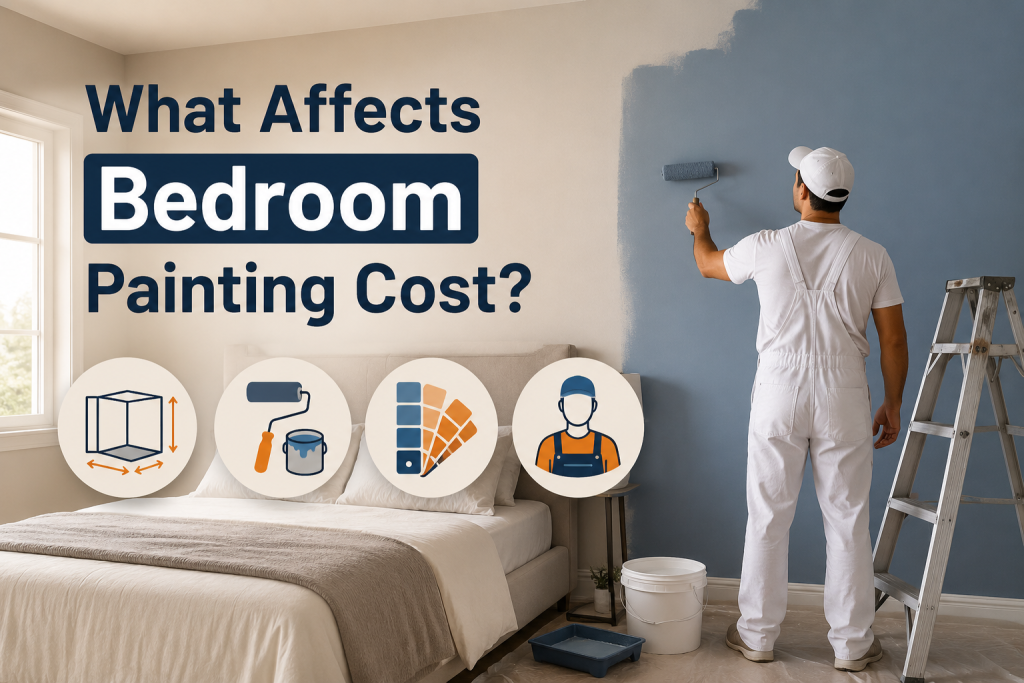
Preparation work also changes pricing. Wall repairs, sanding, patching nail holes, moving furniture, and protecting floors increase labor time and overall interior painting labor price. Paint quality matters as well. Premium products typically cost more upfront but may offer better coverage and durability, reducing future repaint needs. Trim, ceilings, accent walls, and specialty finishes can further increase the final room wall paint estimate. Homeowners planning a small bedroom painting budget often see lower costs because smaller rooms require fewer materials and less labor than larger primary suites.
Cost to Paint a Small Bedroom
A smaller room is usually the most affordable option when estimating painting cost. For homeowners planning a small bedroom painting budget, repainting a standard 10×10 bedroom generally requires less paint, fewer labor hours, and lower preparation costs. Typical small bedrooms range from about 100 to 120 square feet. The average price to paint a bedroom of this size often falls between $200–$500, depending on labor rates, wall condition, trim work, and paint quality. DIY projects usually stay near the lower end because homeowners only pay for materials and supplies.
Professional painters increase costs but often provide faster completion and smoother finishes. Additional features such as ceilings, closets, accent walls, or damaged drywall can increase the overall bedroom repaint cost. Using a painting price by square footage approach also helps homeowners estimate projects more accurately when comparing contractor bids or planning repaint budgets for multiple bedrooms.
Master Bedroom Painting Price Breakdown
Primary suites usually have the highest painting cost because they contain more wall space, larger layouts, and additional features that increase labor time. A typical master bedroom painting price estimate often applies to rooms ranging from about 200 to 300 square feet. Professional repaint projects commonly fall between $400–$900+, depending on preparation work, trim details, and ceiling height. Larger primary bedrooms often include vaulted ceilings, tray ceilings, walk-in closets, accent walls, and additional trim work. These features increase both material use and interior painting labor costs.
Paint finish selection also affects pricing. Premium paints and specialty finishes generally increase the overall bedroom wall paint estimate, especially in larger spaces requiring multiple coats. Using the painting price by square footage helps homeowners compare estimates more accurately because large primary suites vary significantly in layout and complexity. For full-home repaint projects, primary bedrooms are often among the highest-cost interior spaces after open living areas.
Painting price by square footage
Using the painting cost by square footage is one of the easiest ways to estimate bedroom painting cost because it provides a consistent pricing method across different room sizes. Professional interior painting projects commonly range between $2–$6 per square foot, depending on labor rates, prep work, wall condition, and paint quality. Bedrooms requiring repairs or specialty finishes usually fall toward the higher end.
General bedroom size examples include:
- 100 square feet (small bedroom): approximately $200–$500
- 150 square feet (average bedroom): approximately $300–$700
- 250 square feet (primary suite): approximately $500–$900+
These estimates generally include walls only. Ceilings, trim, doors, closets, and repairs can increase the total bedroom repaint cost. Square footage estimates are especially useful when comparing contractor quotes because they help homeowners understand how room size affects the overall price to paint a bedroom and long-term repaint budgets.
Interior Painting Labor Price for Bedrooms
Labor often represents the largest portion of the bedroom painting price, especially when preparation work is extensive. Even smaller rooms can become more expensive if walls require repairs or additional finishing work. Typical interior painting labor price varies by location, contractor experience, and project complexity. Professional painters commonly charge by square footage, by room, or through hourly rates ranging from about $25–$75 per hour in many markets.
Preparation work significantly affects labor expenses. Patching drywall, sanding, removing nails, caulking trim, moving furniture, and protecting floors all add time before painting begins. Bedroom design features such as ceilings, crown molding, accent walls, and specialty finishes may further increase labor requirements and the final room wall paint estimate. Homeowners planning multiple rooms often reduce costs by combining projects because contractors can work more efficiently. For many repaint projects, labor expenses have a greater impact on bedroom repaint costing than the paint materials themselves.
Room wall paint estimate by Finish Type
Paint finish selection affects both appearance and overall room painting cost because different finishes vary in price, coverage, and application requirements. Matte finishes remain popular in bedrooms because they create a soft appearance and reduce glare. They are often one of the most affordable options in a room wall paint estimate, making them common for standard repaint projects. Eggshell finishes cost slightly more but provide improved durability and easier cleaning. Many homeowners choose eggshell because it balances appearance with maintenance.
Satin finishes are less common in bedrooms but may be used in children’s rooms or higher-traffic areas because they resist wear more effectively. Premium paints and specialty products can further increase the price to paint a bedroom, especially when multiple coats are required. Finish selection also influences long-term maintenance, making it an important part of interior painting labor price planning and broader bedroom repaint costing calculations.
Room Repaint Costing for DIY vs Professional Projects
Choosing between DIY painting and hiring professionals can significantly change the cost of a bedroom repaint. The right option usually depends on budget, experience, and project complexity. DIY projects generally have lower bedroom painting costs because homeowners mainly pay for paint, rollers, brushes, tape, drop cloths, and supplies. A standard bedroom repaint often ranges from about $75–$250 in materials, depending on paint quality.
Professional painting costs more but includes labor, preparation work, surface repairs, and faster completion. Hiring painters often increases the price to paint a bedroom, but many homeowners prefer the convenience and finish quality. DIY projects work best for simple rooms with minimal repairs. Larger primary suites, vaulted ceilings, trim work, and damaged walls often justify professional help because labor complexity increases. When comparing options, homeowners should also consider time, cleanup, and potential repaint corrections because mistakes can increase the final interior painting labor price later.
Painting Cost by Bedroom Type
Different bedroom layouts create different room painting cost estimates because wall area, ceilings, and design complexity vary from room to room. Understanding these differences helps homeowners plan repaint budgets more accurately.
Guest bedroom painting cost
Guest rooms are often among the least expensive spaces to repaint because they are usually smaller and contain fewer design features. A typical guest room may fit within a lower budget for a small bedroom, especially when ceilings and trim remain unchanged. These projects often require fewer materials and lower interior painting labor prices.
Children’s Painting Cost
Children’s rooms sometimes increase bedroom repaint pricing because walls may need additional patching, repainting, or color changes from previous designs. Accent walls, murals, and brighter palettes can also affect the overall room wall paint estimate.
Primary Painting Cost
The master bedroom painting price is generally higher because larger layouts require more paint and labor. Tray ceilings, walk-in closets, and extra trim frequently increase costs. Using the painting price by square footage helps homeowners estimate these larger projects more accurately.
Home Office Bedroom Conversion Cost
Bedrooms converted into offices often include accent walls, shelving removal, and additional preparation work, increasing the overall price to paint a bedroom during remodeling projects.
How to Reduce Bedroom Painting Price?
Homeowners can lower bedroom painting costs without sacrificing quality by improving planning and reducing preparation expenses before painting begins.
- One of the easiest ways to save money is to handle preparation work independently. Moving furniture, removing wall décor, patching small holes, and cleaning surfaces can reduce interior painting labor prices and shorten project timelines.
- Buying paint during seasonal sales also helps control the price to paint a bedroom, especially for larger repaint projects involving multiple rooms.
- Color planning matters too. Keeping the same palette across bedrooms may reduce material waste and simplify bedroom repaint costs.
- Limiting accent walls, specialty finishes, and unnecessary trim repainting can further lower the final room wall paint estimate.
For homeowners repainting several spaces, combining projects often improves contractor efficiency and reduces overall painting price by square footage compared with hiring painters room by room.
Hidden Costs That Can Increase Bedroom Painting Cost
Many homeowners focus on paint and labor when estimating bedroom painting price, but several hidden expenses can affect the final budget. Paint selection also matters, especially when choosing the best bedroom colors for sleep to create a more relaxing and comfortable space. Understanding these additional costs helps create a more accurate repaint estimate and prevents unexpected surprises during the project. Wall repairs are one of the most common cost increases. Nail holes, drywall cracks, dents, water stains, and surface imperfections often require patching, sanding, and priming before painting begins. These repairs can add to both material expenses and interior painting labor costs. Furniture moving and room preparation can also increase bedroom repaint pricing. Professional painters may charge additional fees for moving heavy furniture, removing wall décor, protecting flooring, or covering fixtures.
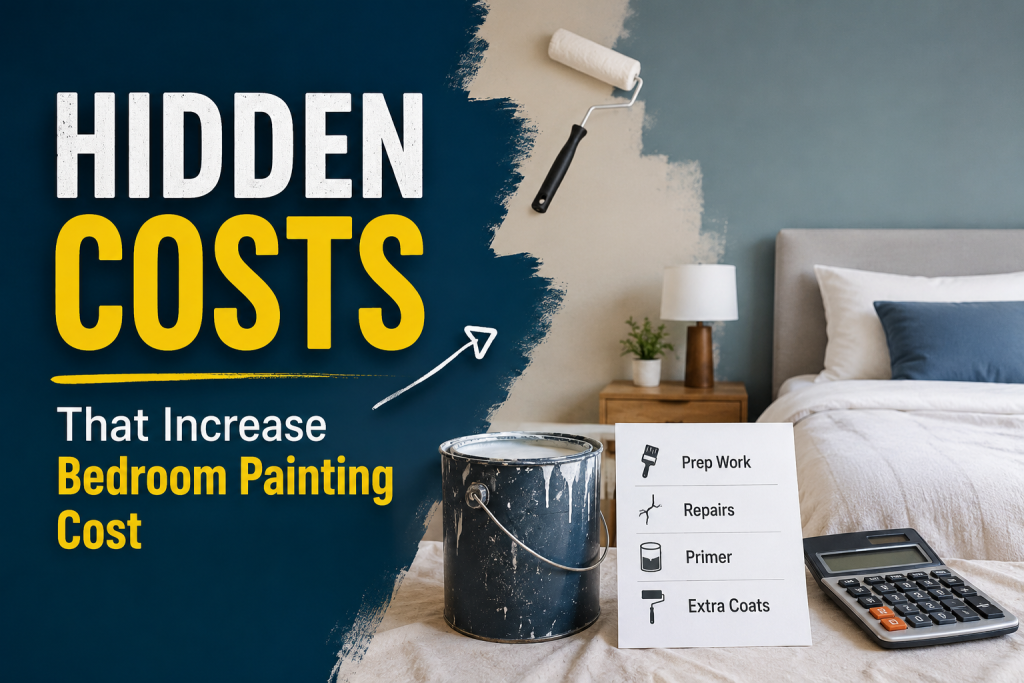
Color changes can impact the cost to paint a bedroom as well. Switching from a dark color to a lighter shade often requires extra primer and additional coats of paint, increasing material usage and labor time. Ceiling painting, trim updates, closet interiors, and accent walls may further affect the final bedroom wall paint estimate. Homeowners who account for these hidden factors during planning are more likely to stay within budget and avoid unexpected project costs.
Final Thoughts
Understanding bedroom painting cost helps homeowners create more realistic budgets and avoid surprises during repaint projects. Room size remains the biggest factor, but labor, preparation work, paint quality, and finish selection all influence the final price. Smaller rooms generally support lower budgets, while larger primary suites increase both material use and interior painting labor price. Using the painting price by square footage can make estimates easier when comparing projects and contractor quotes.
Planning also plays a major role. Organized preparation, finish selection, and color coordination help reduce bedroom repaint costs while improving results. For homeowners estimating the price to paint a bedroom, combining multiple rooms and handling basic preparation work can often reduce expenses. Whether updating a guest room or calculating master bedroom painting price, proper planning usually delivers the best balance between appearance, budget, and long-term value.
Frequently Asked Questions
What is the average bedroom painting cost?
The average bedroom painting cost depends on room size, labor, and preparation work. Small bedrooms often range from $200–$500, while larger primary suites may cost $400–$900+.
What is the price to paint a bedroom?
The price to paint a bedroom varies based on square footage, wall condition, paint quality, and whether the project is DIY or professional.
What affects bedroom repaint costing?
Factors affecting bedroom repaint costing include room size, repairs, labor, ceilings, trim work, paint finish, and overall preparation requirements.
How much is the master bedroom painting price?
Typical master painting cost estimates range between $400–$900+, depending on layout complexity and project scope.
What is the cost by square footage?
painting price by square footage commonly ranges around $2–$6 per square foot for interior projects, although labor rates and repairs can increase pricing.