

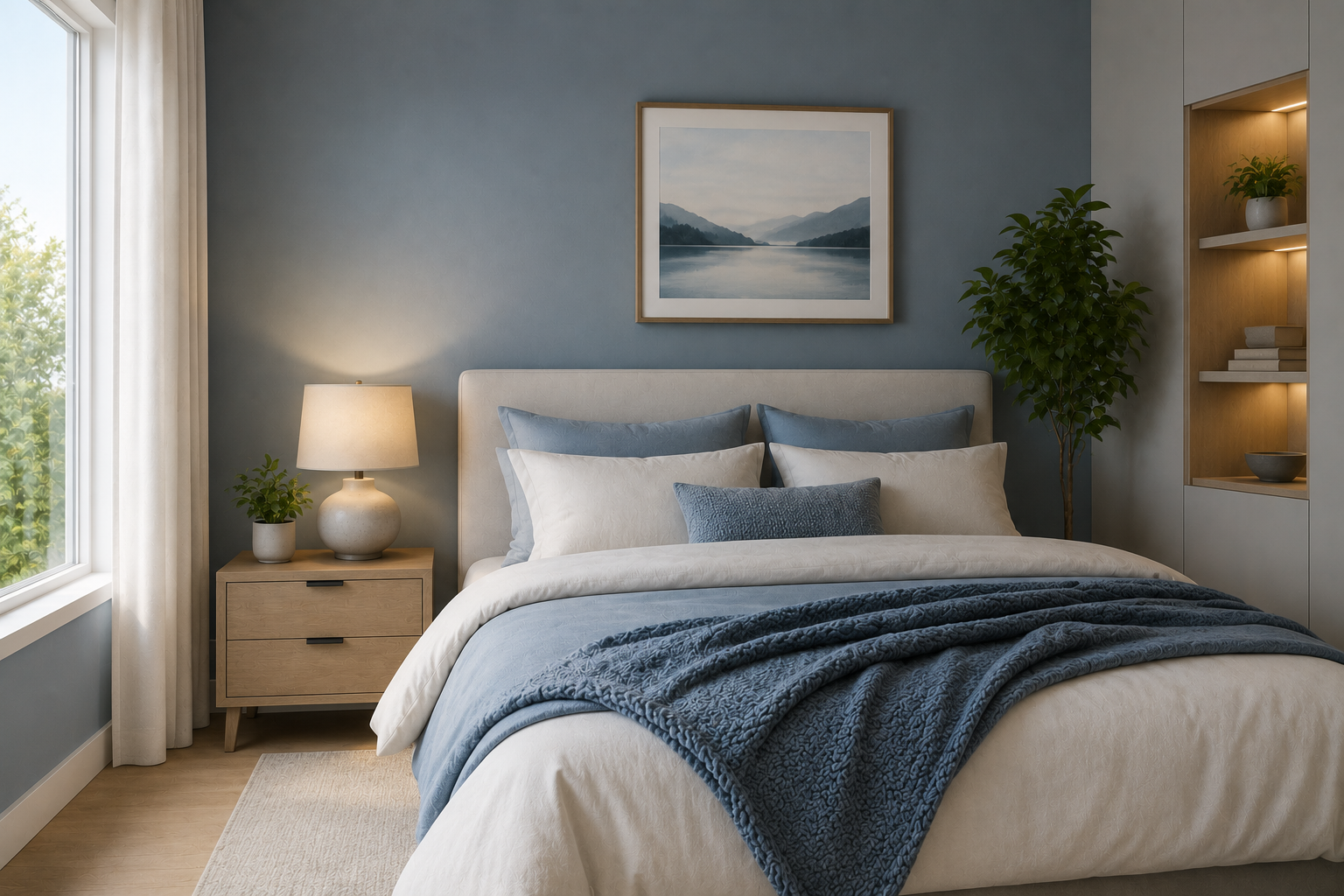
Best Bedroom Colors for Better Sleep
Choosing the right paint color can do more than transform the appearance of your bedroom, it can also influence how relaxed and well-rested you feel. The best bedroom colors for sleep create a calm, inviting atmosphere that encourages your mind and body to unwind after a busy day. From soft blues and gentle greens to warm neutrals, the right color palette can make your bedroom feel more peaceful while complementing your furniture, lighting, and décor.
This guide explores the most effective calming bedroom colors, explains the science behind color psychology, and shares expert recommendations for creating a restful sleep environment. You’ll also discover the best paint colors for bedrooms, popular shades from Sherwin-Williams bedroom colors and Benjamin Moore bedroom paint collections, and practical tips for choosing a color that suits your room size, natural lighting, and personal style. Whether you’re repainting a primary bedroom or updating a guest room, this guide will help you make a confident decision.
Why Bedroom Colors Affect Sleep Quality
The colors surrounding you can influence your mood, stress levels, and overall sense of relaxation, making paint selection an important part of creating a restful bedroom. While no paint color can guarantee better sleep, choosing bedroom colors for sleep that feel calm and soothing can help create an environment that’s more conducive to winding down at the end of the day. Soft, muted tones tend to reduce visual stimulation and promote a peaceful atmosphere, while overly bright or highly saturated colors may feel more energizing.
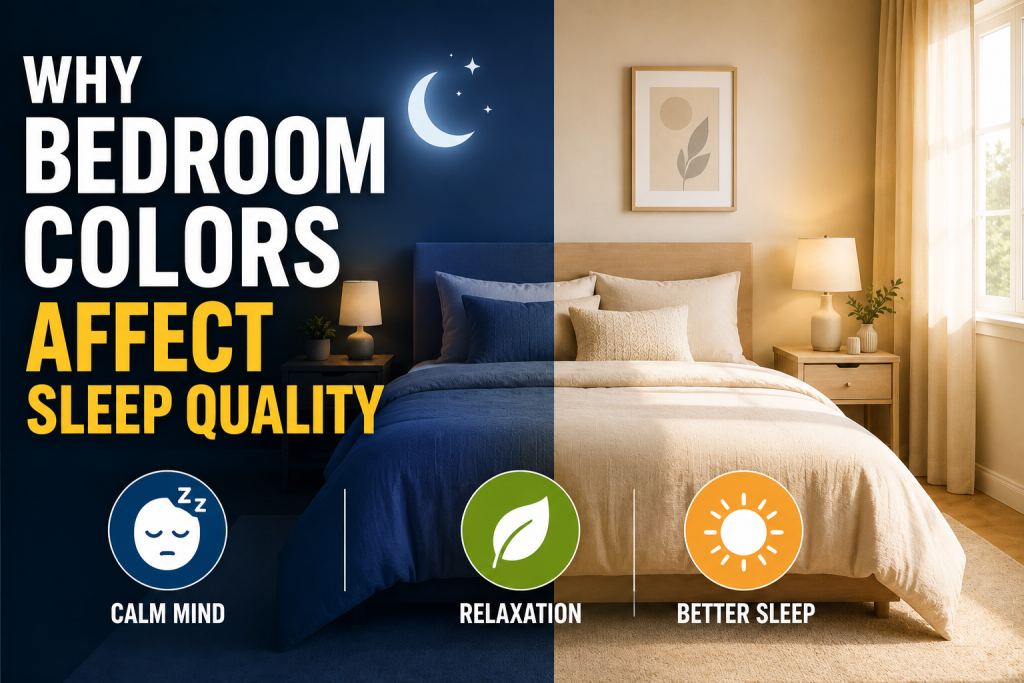
Natural and artificial lighting also affect how paint colors appear throughout the day. A soft blue may look cool and refreshing in a sunlit room but slightly grayer under warm evening lighting. That’s why it’s important to test paint samples before committing to a full room. Combining sleep-friendly paint colors with layered lighting, comfortable bedding, and minimal clutter creates a balanced bedroom environment that supports relaxation and complements your overall interior design. Homeowners planning a larger bedroom upgrade may also want to consider walk-in closet costs when setting their overall renovation budget.
Best Bedroom Colors for Better Sleep
Choosing the right bedroom colors for sleep can transform your bedroom into a calm and inviting retreat. The best options are soft, muted shades that create a relaxing atmosphere without overwhelming the space. While personal preference plays an important role, timeless colors inspired by nature tend to work well in most homes and complement a wide range of furniture styles.
| Color | Why It Works |
| Soft Blue | Creates a peaceful, airy atmosphere and pairs well with natural light. Great for blue bedroom ideas. |
| Sage Green | Brings a calming, nature-inspired feel that works with wood furniture and neutral décor. |
| Warm White | Makes bedrooms feel bright, clean, and spacious while maintaining a cozy ambiance. |
| Light Gray | Offers a modern, sophisticated look that complements various accent colors. |
| Greige | Combines the warmth of beige with the elegance of gray for a versatile finish. |
| Soft Beige | Adds warmth and comfort without making the room feel dark or heavy. |
| Muted Earth Tones | Create a cozy, grounded atmosphere that’s ideal for relaxation. |
These calming bedroom colors for sleep work especially well when paired with soft lighting, natural fabrics, and minimal décor. Choosing a low-sheen finish, such as matte or eggshell, can further enhance the room’s relaxing appearance while helping create a timeless, comfortable bedroom.
Best Paint Colors by Popular Brands
Many homeowners choose trusted paint manufacturers because they offer extensive color collections, durable finishes, and reliable color consistency. If you’re searching for the best paint colors for bedrooms, these popular brands feature timeless shades that complement a wide range of decorating styles while helping create a relaxing atmosphere.
| Brand | Popular Bedroom Colors |
| Sherwin-Williams | Alabaster, Sea Salt, Misty, Agreeable Gray, Accessible Beige |
| Benjamin Moore | White Dove, Pale Oak, Healing Aloe, Gray Owl, Classic Gray |
| Behr | Swiss Coffee, Silver Drop, Breezeway, Blank Canvas |
| PPG Paints | Whiskers, Olive Sprig, Delicate White, Dover Gray |
When selecting Sherwin-Williams bedroom colors for sleep or Benjamin Moore bedroom paint, always test sample swatches on multiple walls before making a final decision. Paint colors can appear dramatically different depending on natural light, room orientation, and the type of artificial lighting used in the evening. Sampling first helps ensure the finished room matches your expectations and complements your flooring, furniture, and décor.
How to Choose the Right Bedroom Colors For Sleep
Selecting the right paint color involves more than choosing your favorite shade. The size of your bedroom, the amount of natural light, and your existing furniture all influence how a color will look once it’s on the walls. Smaller bedrooms often benefit from lighter bedroom colors for sleep, such as warm whites, soft grays, or pale blues, because they reflect light and make the room feel larger. In contrast, spacious bedrooms can comfortably accommodate deeper, muted tones that add warmth and character without making the space feel enclosed.
It’s also important to consider the paint finish. Matte and eggshell finishes are popular choices because they soften light reflections and create a calm, elegant appearance. When comparing sleep-friendly paint colors, test large paint samples on different walls and observe them throughout the day under changing lighting conditions. Coordinating your wall color with flooring, bedding, curtains, and furniture creates a cohesive design while ensuring your chosen shade enhances both comfort and style.
Bedroom Colors to Avoid for Better Sleep
While personal style is important, some colors can make a bedroom feel more energetic than relaxing. Bright reds, vivid oranges, bold yellows, and neon shades tend to create strong visual stimulation that may not suit a restful sleep environment. These colors can be excellent choices for creative spaces or home gyms, but they often overwhelm a bedroom when used across all four walls. High-contrast color combinations, such as black paired with bright white, may also make a room feel visually busy if not balanced with softer elements.
If you enjoy vibrant colors, consider using them as accent pieces rather than primary wall colors. Decorative pillows, artwork, throw blankets, or a single accent wall can introduce personality without overpowering the space. Pairing these accents with calming bedroom colors such as soft blue, sage green, warm white, or light gray creates a balanced design. This approach allows you to enjoy your favorite colors while maintaining a peaceful atmosphere that supports relaxation and complements your overall bedroom décor.
Bedroom Color Ideas by Room Style
The best bedroom colors for sleep should complement your home’s overall design while creating a calm and inviting atmosphere. Different decorating styles work well with specific color palettes, allowing you to achieve both visual harmony and everyday comfort.
| Bedroom Style | Recommended Color Palette |
| Modern | Soft gray, greige, warm white, charcoal accents |
| Scandinavian | Crisp white, light gray, pale wood tones, muted blue |
| Coastal | Seafoam green, soft blue, sandy beige, warm white |
| Farmhouse | Cream, sage green, greige, muted taupe |
| Minimalist | White, light gray, soft beige, natural earth tones |
| Traditional | Warm beige, dusty blue, classic gray, soft green |
If you’re looking for timeless blue bedroom ideas, pair muted blue walls with white trim, natural wood furniture, and textured bedding for a clean, relaxing look. For homeowners who prefer warmer interiors, relaxing bedroom shades like sage green, greige, or creamy white create a cozy atmosphere while remaining versatile enough to complement changing décor and seasonal accessories.
Common Bedroom Painting Mistakes to Avoid
Even the best bedroom colors for sleep may not achieve the desired effect if common painting mistakes are overlooked. One of the biggest errors is choosing a paint color based solely on a small paint chip or an online photo. Colors often look different depending on natural light, artificial lighting, and the room’s orientation. Always test large paint samples on multiple walls and observe them throughout the day before making a final decision. Skipping this step can lead to unexpected results after the entire room is painted.
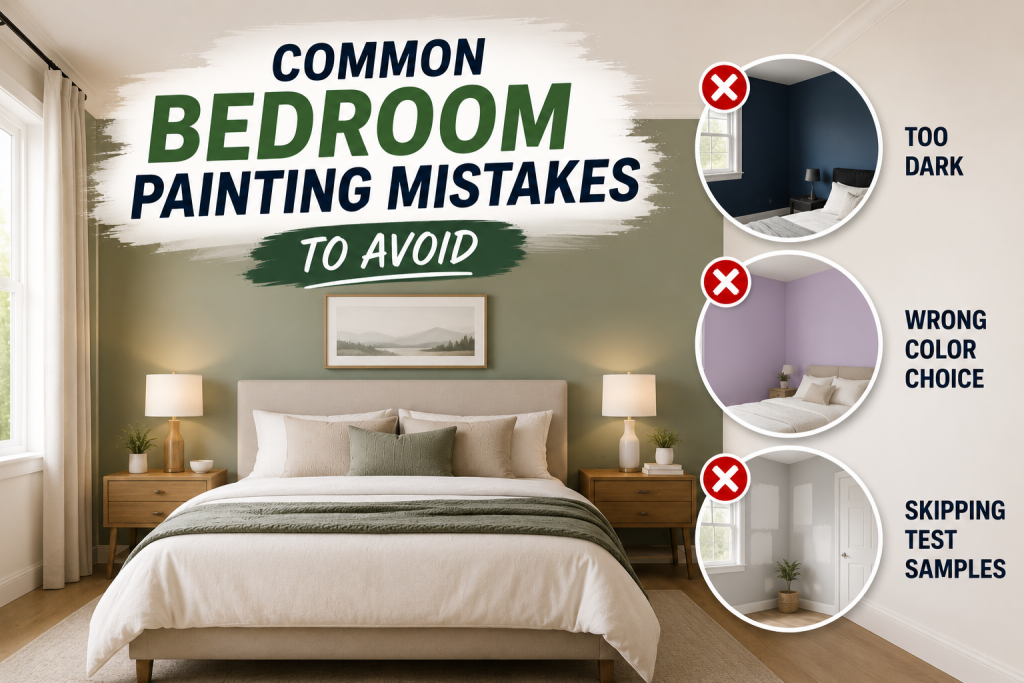
Another common mistake is selecting the wrong bedroom paint finish, which can also influence the overall painting cost. High-gloss finishes reflect more light and can make bedroom walls feel harsh, while matte or eggshell finishes create a softer, more relaxing appearance. Using too many bold accent colors or ignoring how wall color coordinates with flooring, furniture, and bedding can also disrupt the room’s visual balance. Taking time to plan your color palette carefully ensures your bedroom feels cohesive, comfortable, and designed to support restful sleep.
Bedroom Painting Checklist
A successful bedroom makeover starts with careful planning. Before opening a paint can, use this checklist to ensure your chosen bedroom colors for sleep create the relaxing environment you’re aiming for while helping you avoid common painting mistakes.
- Choose a calming color that complements your bedroom style and furnishings.
- Test paint samples on multiple walls and view them at different times of the day.
- Select a matte or eggshell finish for a soft, elegant appearance.
- Repair wall imperfections and clean surfaces before painting.
- Use high-quality primer when changing from dark to light colors.
- Choose low-VOC paint to help minimize odors during and after the project.
- Coordinate wall colors with bedding, curtains, flooring, and furniture.
- Plan lighting that enhances your selected sleep-friendly paint colors.
- Allow the paint to cure completely before moving furniture back into the room.
- Add décor gradually to maintain a balanced, clutter-free space.
Following this checklist will help you create a bedroom that feels comfortable, cohesive, and visually relaxing for years to come.
Conclusion
Selecting the right bedroom colors for sleep is one of the simplest and most effective ways to create a relaxing, comfortable retreat. Soft blues, gentle greens, warm whites, greiges, and light grays can help establish a peaceful atmosphere while complementing a wide range of bedroom styles. When paired with thoughtful lighting, quality bedding, and a clutter-free layout, these colors contribute to a space that feels calm and inviting at any time of day.
As you plan your next bedroom makeover, take time to test paint samples, evaluate how colors look under different lighting conditions, and choose finishes that suit your home’s design. Whether you’re inspired by Sherwin-Williams bedroom colors, Benjamin Moore bedroom paint, or other trusted brands, selecting timeless shades can improve both comfort and long-term style. With careful planning and the right color palette, you can transform your bedroom into a restful sanctuary that supports better sleep and enhances your everyday living experience.
Frequently Asked Questions
What are the best bedroom colors for better sleep?
The best bedroom colors for sleep are typically soft, muted shades such as light blue, sage green, warm white, soft gray, greige, and beige. These colors create a calm atmosphere that helps your bedroom feel more relaxing and comfortable.
Is blue the best color for a bedroom?
Blue is one of the most popular choices because it creates a peaceful, timeless look and pairs well with many decorating styles. If you’re considering blue bedroom ideas, choose muted or dusty shades rather than bright, highly saturated blues for a more relaxing environment.
Which paint finish is best for a bedroom?
Matte and eggshell finishes are generally the best options for bedroom walls. They provide a soft appearance, reduce glare, and help conceal minor wall imperfections better than high-gloss finishes.
What colors should I avoid in a bedroom?
Bright reds, neon colors, vivid oranges, and overly bold yellows can make a bedroom feel more energetic than restful. If you enjoy these colors, use them as decorative accents instead of painting entire walls.
Do paint colors look different in natural light?
Yes. Paint colors can change significantly depending on the amount of natural sunlight, the room’s orientation, and the type of artificial lighting used. Always test paint samples before making a final decision.
Which paint brands offer the best bedroom colors?
Many homeowners choose trusted brands such as Sherwin-Williams, Benjamin Moore, Behr, and PPG Paints because they offer durable finishes and a wide selection of timeless bedroom colors suitable for different home styles.