

Carpet Installation Cost by Room Size (2026 Pricing Guide)
Replacing carpet is one of the fastest ways to refresh a home’s interior while improving comfort, insulation, and noise reduction. In 2026, the average carpet installation cost in the United States ranges from $3 to $11 per square foot installed, depending on carpet quality, padding, labor rates, and room layout. Homeowners in cities like Dallas, Chicago, and Phoenix often see different pricing because labor costs and flooring demand vary by region.
Most installation projects include carpet materials, padding, tack strips, and professional labor. However, extras like furniture moving, stair installation, or old carpet removal can significantly increase final costs. Understanding carpet cost per square foot and room-by-room pricing helps homeowners create realistic remodeling budgets before requesting contractor estimates. Whether you’re upgrading a single bedroom or replacing flooring throughout an entire house, this guide explains average costs, labor fees, and the biggest factors that affect new carpet pricing in today’s market.
Average Carpet Installation Cost in the US
The national average carpet installation cost in 2026 falls between $1,200 and $4,500 for most residential projects. Basic polyester carpet with standard padding typically costs around $3 to $5 per square foot installed, while premium materials like nylon or wool can reach $8 to $11 per square foot. Homeowners replacing carpet in larger homes often benefit from lower per-square-foot labor pricing because installers can complete bigger projects more efficiently.

Here’s a general pricing breakdown for installed carpet:
| Carpet Type | Installed Cost Per Sq. Ft. |
| Basic Builder-Grade Carpet | $3–$5 |
| Mid-Range Nylon Carpet | $5–$8 |
| Premium Stain-Resistant Carpet | $8–$11 |
Professional carpet labor cost usually ranges from $0.75 to $2.50 per square foot depending on room complexity and local labor rates. Contractors in high-cost markets like Los Angeles or Miami generally charge more than installers in smaller Midwest cities. Major flooring brands like Shaw Floors, Mohawk Industries, and Stainmaster also influence pricing because premium warranties and stain-resistant technologies increase material costs.
Carpet Installation Cost by Room Size
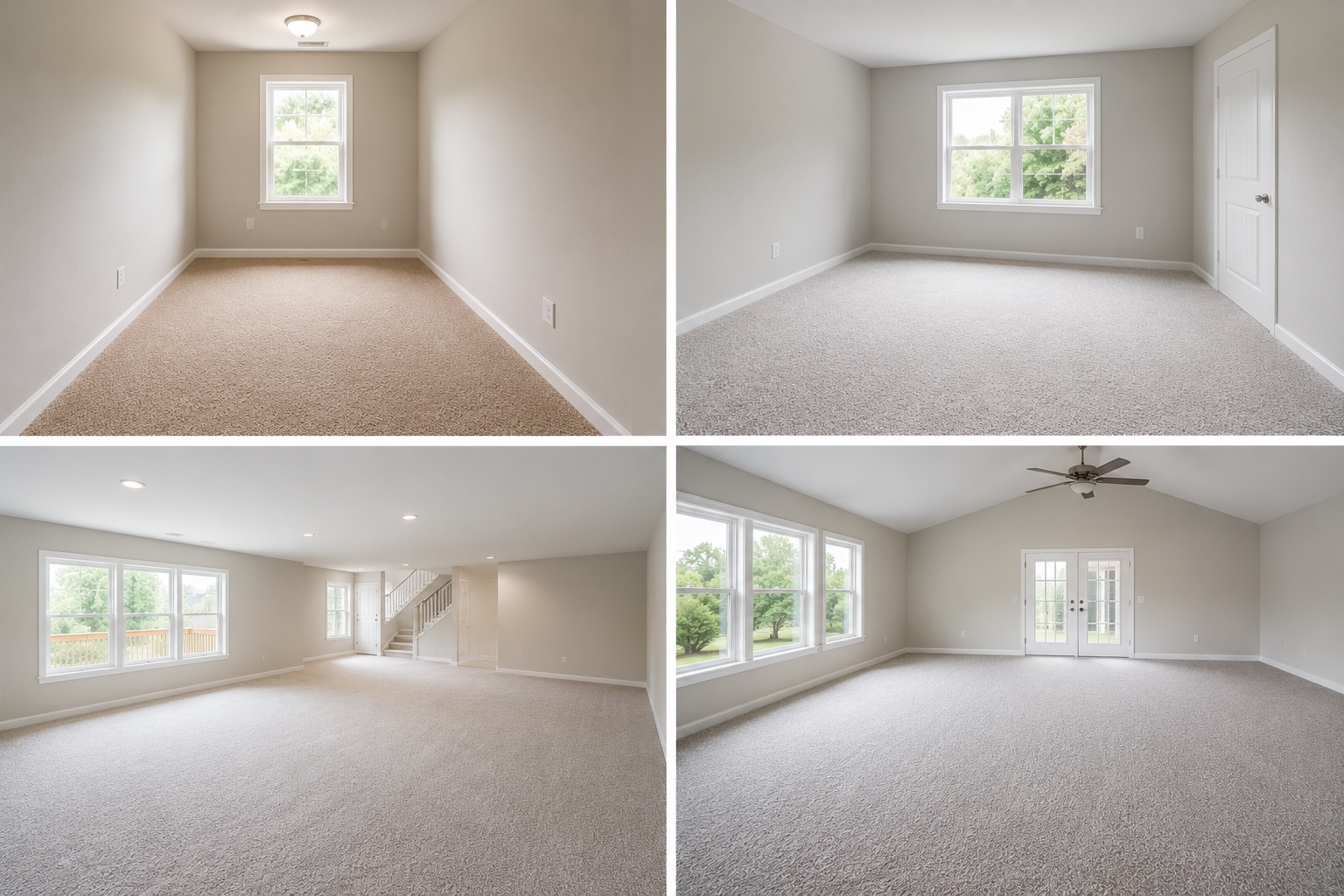
Room size is one of the biggest factors affecting overall carpet replacement pricing. Smaller rooms usually have a higher per-square-foot installation cost because labor minimums still apply, while larger areas benefit from more efficient installation. Most homeowners spend between $300 and $2,500 depending on room dimensions and carpet quality.
Small Bedroom Carpet Installation Cost
A standard 10×12 bedroom typically costs between $600 and $1,400 for complete bedroom carpet installation. Builder-grade polyester carpet is common in guest rooms and rental properties, while homeowners often choose upgraded nylon carpet for master bedrooms because it handles foot traffic better.
Living Room Carpet Cost
The average living room carpet cost ranges from $900 to $2,200 for a 12×18-foot space. Living rooms experience heavy daily traffic, making stain-resistant options from Shaw Floors or Mohawk Industries popular choices for families with pets or children.
Basement and Whole-House Carpet Pricing
Finished basements generally cost more because installers may need moisture barriers or subfloor preparation. Whole-house projects for 2,000 square feet often range from $6,000 to $15,000 depending on carpet grade and labor complexity. In colder Northern states, carpet remains popular for insulation and comfort during winter months.
Carpet Cost Per Square Foot Explained
Understanding carpet cost per square foot helps homeowners compare flooring options more accurately before scheduling installation estimates. In most US markets, carpet materials alone range from $1 to $7 per square foot, while installation and padding increase the final price significantly. The total installed cost depends on carpet fiber, thickness, stain protection, and warranty coverage.
Low-end polyester carpet is commonly used in rental homes and budget renovations because it costs around $1 to $3 per square foot before labor. Mid-range nylon carpet averages $3 to $5 per square foot and offers better durability for busy households. Premium wool or high-performance carpets from brands like Stainmaster can exceed $7 per square foot due to advanced stain resistance and softer textures. These material choices can have a significant impact on the overall carpet installation cost for a flooring project. Padding also impacts new carpet pricing. Standard padding costs about $0.50 to $1 per square foot, while memory foam or moisture-resistant padding may cost more. Homeowners in humid climates like Houston and Orlando often invest in upgraded padding to help reduce moisture buildup and extend carpet lifespan.
Carpet Labor Cost Breakdown
Professional installation is a major part of total carpet labor cost, especially for larger rooms or complicated layouts. Most flooring contractors charge between $0.75 and $2.50 per square foot for labor alone, although prices can increase in competitive metro areas like Seattle or Boston. Some installers also set minimum project fees for small rooms or partial replacements.
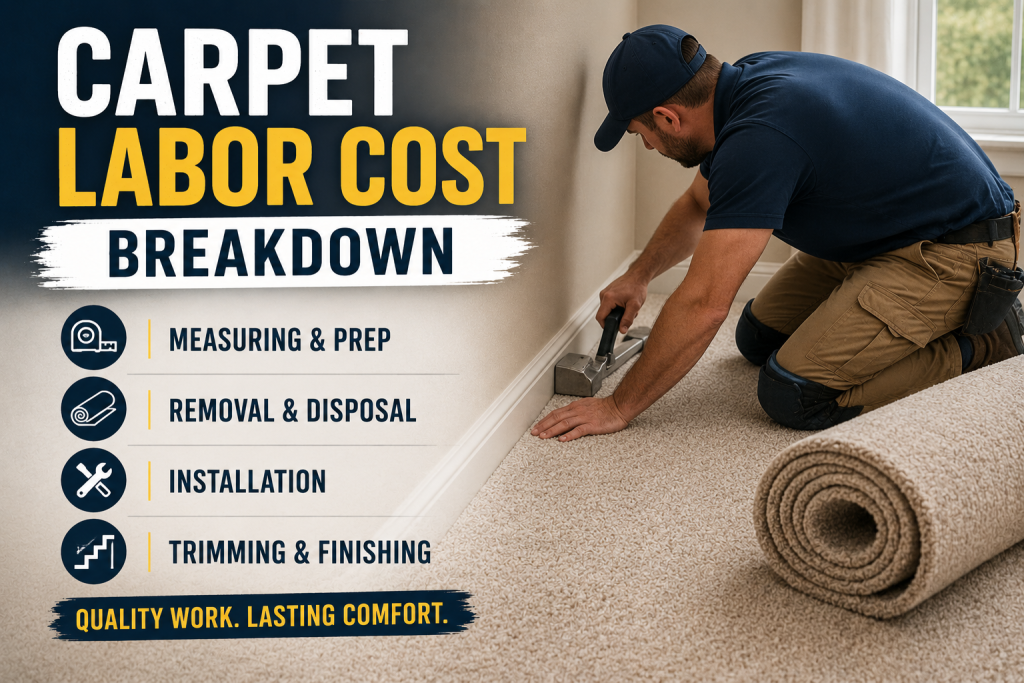
Several additional services can increase the final carpet installer cost:
| Service | Average Cost |
| Old Carpet Removal | $1–$2 per sq. ft. |
| Furniture Moving | $50–$200 |
| Stair Installation | $10–$20 per stair |
| Subfloor Repairs | $200–$1,000+ |
Subfloor preparation is especially important in older homes where moisture damage or uneven flooring may exist. The EPA recommends addressing mold or water-damaged flooring before new carpet installation to improve indoor air quality and long-term durability. These repairs can also affect the overall carpet installation cost, depending on the condition of the existing subfloor.
Many homeowners reduce labor expenses by removing furniture themselves or scheduling installation during slower winter remodeling seasons when contractors may offer discounts, helping to lower the total carpet installation cost of the project.
Factors That Affect New Carpet Pricing
Several variables can dramatically change overall new carpet pricing, even for rooms with similar square footage. Carpet material is one of the biggest cost drivers. Nylon remains one of the most durable options for busy households, while polyester offers a more affordable solution for guest rooms or lower-traffic areas. Wool carpet delivers premium comfort but comes with significantly higher installation costs. Room layout also affects pricing. Rooms with multiple corners, closets, stairs, or unusual floor plans require additional cutting and seam work, which increases carpet installer cost. Large open spaces are generally faster and cheaper to install per square foot. Homes with damaged subfloors or moisture issues may also need repairs before installation can begin.
Geographic location matters as well. Homeowners in Denver may pay more for insulated carpet padding because of colder winters, while residents in humid Southern regions often prioritize moisture-resistant materials. These regional preferences can influence the overall carpet installation cost, depending on the materials and padding selected. Pet-friendly and stain-resistant carpets from Mohawk Industries and Shaw Floors are increasingly popular because they help reduce long-term maintenance and replacement costs in active family homes.
Best Carpet Types for Different Rooms
Choosing the right carpet type can improve durability, comfort, and long-term value. Different rooms experience different levels of foot traffic, moisture exposure, and wear, so homeowners should match carpet materials to each space rather than using the same product throughout the house. Making room-specific flooring choices can also help optimize carpet installation cost by ensuring you invest in the right materials where they are needed most. For bedrooms, plush or textured carpet provides a softer feel underfoot and helps create a quieter environment. Many homeowners prefer nylon carpet in primary bedrooms because it balances comfort with durability. Bedroom carpet installation projects often use upgraded padding for additional insulation during colder winters in Northern states.
Living rooms and hallways usually benefit from stain-resistant options like Berber or frieze carpet. These styles handle heavy traffic better and hide footprints more effectively. Products from Stainmaster remain popular for family homes with pets or children because they resist spills and daily wear. Choosing durable materials for high-traffic areas can help reduce long-term maintenance expenses and improve overall carpet installation cost value. Basements require moisture-resistant carpet and padding, especially in humid regions like Atlanta or Tampa. Many contractors recommend low-pile carpet tiles for basements because damaged sections can be replaced individually without redoing the entire floor. This flexibility can help lower future repair expenses and make the overall carpet installation cost more cost-effective over time.
How to Save Money on Carpet Installation?
Homeowners can lower overall carpet installation cost by planning projects strategically and comparing multiple contractor estimates. One of the easiest ways to save money is by scheduling installation during slower remodeling seasons, especially late fall and winter, when flooring companies may offer discounts to keep crews busy. Comparing quotes from local installers, big-box retailers, and national chains can also help reduce carpet installation cost. Stores like Home Depot and Lowe’s frequently bundle carpet, padding, and labor into promotional pricing packages. However, independent local contractors sometimes provide more personalized service and flexible installation options.
Another effective strategy is choosing mid-range carpet instead of premium luxury materials. Many modern nylon and polyester carpets deliver excellent stain resistance without the higher price tag of wool. Homeowners can also lower carpet labor cost by removing old carpet, moving furniture, or handling baseboard prep themselves before installers arrive. If existing carpet shows widespread wear, stains, or padding damage, full replacement is usually more cost-effective than repeated repairs. New carpet can also improve resale appeal and buyer perception in competitive housing markets.
Is Carpet Still Worth Installing in 2026?
Despite the growing popularity of hardwood and luxury vinyl plank flooring, carpet remains a practical choice for many American homeowners in 2026. Carpet provides warmth, noise reduction, and comfort that hard flooring often cannot match, especially in bedrooms, upstairs living areas, and colder climates across the Midwest and Northeast. When evaluating carpet installation cost, many homeowners find that carpet remains one of the most affordable flooring options for achieving comfort and functionality. Modern carpet products are also more durable than older generations. Manufacturers like Mohawk Industries and Shaw Floors now offer advanced stain-resistant fibers designed for pets, children, and high-traffic households. These improvements help extend carpet lifespan while reducing maintenance concerns, allowing homeowners to maximize the value of their carpet installation cost over the long term.
From a financial perspective, carpet is still one of the most affordable flooring materials available. Compared to hardwood or tile, the average carpet replacement pricing is significantly lower, making it attractive for homeowners preparing rental properties, finishing basements, or upgrading homes before resale. In colder states like Minnesota and Michigan, carpet also improves insulation and comfort during long winter seasons, which can help reduce heating costs and increase overall livability.
Final Thoughts
Understanding carpet installation cost helps homeowners plan flooring upgrades with fewer surprises and more accurate renovation budgets. While prices vary based on carpet material, room size, labor complexity, and regional demand, most US homeowners can expect to spend between $3 and $11 per square foot for professional installation. Room-specific planning is especially important when budgeting for bedroom carpet installation, living room carpet cost, or full-home flooring replacement projects. Investing in durable materials, quality padding, and experienced installers can improve comfort, extend carpet lifespan, and reduce long-term maintenance expenses. For many households, carpet continues to offer a strong balance of affordability, insulation, and everyday comfort compared to more expensive hard-surface flooring options. Whether you’re remodeling a single room or replacing flooring throughout an entire property, comparing estimates and understanding carpet replacement pricing can help you make a smarter long-term investment for your home.
FAQ
How much does carpet installation cost for a 12×12 room?
The average carpet installation cost for a 12×12 room ranges from $600 to $1,400 depending on carpet quality, padding, and labor rates. Budget polyester carpet costs less, while premium nylon or wool options increase total pricing.
What is the average carpet labor cost?
Typical carpet labor cost falls between $0.75 and $2.50 per square foot. Complex layouts, stairs, furniture moving, or subfloor repairs can raise installation expenses.
Does carpet installation include padding?
Most professional installers include basic carpet padding in their estimates, but upgraded moisture-resistant or memory foam padding usually costs extra. Higher-quality padding can improve comfort and extend carpet lifespan.
Is carpet cheaper than hardwood flooring?
Yes. Carpet installation is generally far less expensive than hardwood flooring. While hardwood often costs $8 to $20 per square foot installed, most residential carpet projects remain between $3 and $11 per square foot.
How long does carpet installation take?
Most single-room installations can be completed within a few hours, while whole-house projects may take one to three days depending on square footage and furniture removal requirements.
How long does carpet installation take?
Most residential carpet lasts between 8 and 15 years. Homes with pets, children, or heavy foot traffic may need replacement sooner, especially in busy living rooms and hallways.