

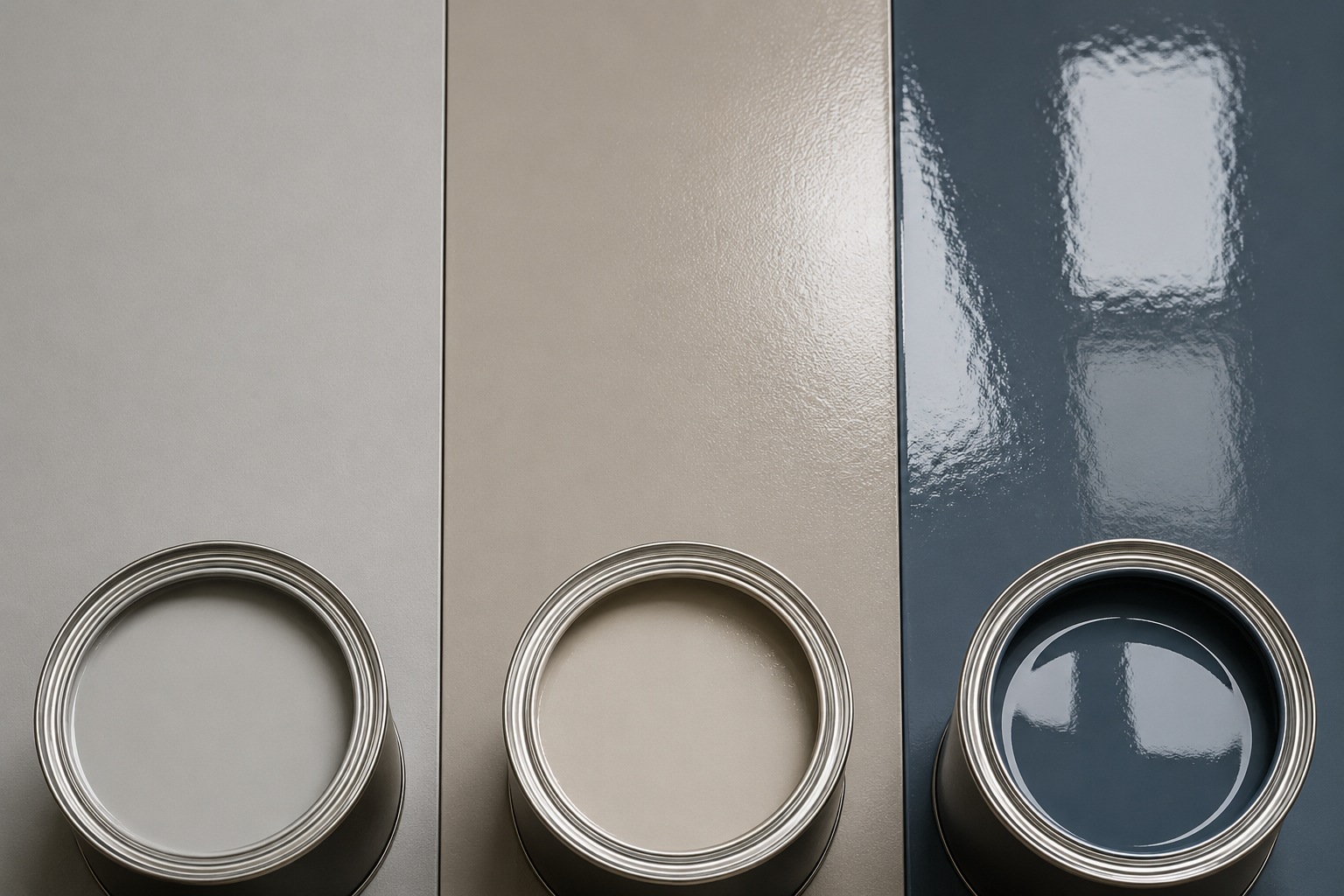
Does High-Gloss Paint Cost More Than Matte or Satin?
If you’re planning an interior painting project, one of the first questions you’ll encounter is whether a higher-sheen finish comes with a higher price tag. In most cases, the answer is yes. The high-gloss paint cost is typically higher than matte or satin finishes because of the specialized resins, increased durability, and additional labor required to achieve a smooth, reflective appearance. For homeowners, paint finish selection affects more than aesthetics. It can influence project budgets, maintenance requirements, long-term durability, and even resale appeal. High-gloss paint is commonly used on trim, doors, cabinets, and architectural details where durability and easy cleaning are priorities. However, its mirror-like finish tends to highlight surface imperfections, often increasing preparation time and labor expenses.
When comparing interior paint costs, the actual difference in material pricing may seem modest on a per-gallon basis. Yet labor, surface preparation, and product quality can significantly impact the total investment. Understanding these factors helps homeowners choose the right finish for their budget, design goals, and maintenance expectations. In this guide, we’ll break down the true high-gloss paint cost, compare it with satin and matte alternatives, and explain when paying more for a glossy finish makes financial sense.
Understanding High-Gloss Paint Cost and What Drives It
The high-gloss paint cost is influenced by several factors beyond the paint itself. While sheen level plays a role, homeowners should also consider product quality, surface preparation, and application requirements. High-gloss coatings contain a higher concentration of resins and binders that create a durable, reflective finish. These ingredients often increase manufacturing costs, which can translate into a higher retail price compared to lower-sheen alternatives.
Why High-Gloss Finishes Require More Expensive Formulations
Many premium paint manufacturers, including Sherwin-Williams, Benjamin Moore, and Behr, formulate high-gloss products with advanced resins designed to withstand frequent cleaning, moisture exposure, and everyday wear. This makes them a popular choice for trim, doors, and cabinetry in busy households. As a result, the high-gloss paint cost can exceed that of flat or low-sheen paints, especially when selecting premium product lines.
Surface Preparation and Labor Requirements
Another major contributor to the high-gloss paint cost is preparation work. Because glossy surfaces reflect more light, even minor dents, nail holes, sanding marks, or uneven textures become highly visible. Professional painters often spend additional time patching, sanding, and priming surfaces before applying high-gloss finishes. These extra labor hours can increase the overall project budget, even when the difference in paint material costs is relatively small. For homeowners seeking flawless results, proper preparation is often the factor that has the greatest impact on the final price.
High-Gloss Paint Cost vs Matte and Satin Finishes
When homeowners compare paint finishes, the material cost difference is usually smaller than expected. However, understanding the relationship between sheen, durability, and maintenance can help determine which finish offers the best overall value. A closer look at high-gloss paint cost alongside other finishes reveals where the additional investment goes and whether it’s justified for your project.
Comparing Material Costs Per Gallon
In a typical gloss paint comparison, high-gloss products often sit at the upper end of a manufacturer’s pricing structure. Entry-level paints may show only a slight difference between finishes, while premium product lines can have more noticeable price gaps.
Homeowners researching matte paint pricing will often find that flat and matte finishes are among the most affordable options. Meanwhile, the average satin paint cost typically falls in the middle, offering a balance between durability and affordability.
| Paint Finish | Typical Cost Per Gallon | Durability | Best Applications |
| Matte | $25–$60 | Moderate | Bedrooms, ceilings, low-traffic areas |
| Satin | $30–$75 | Good | Living rooms, hallways, family spaces |
| High-Gloss | $40–$90+ | Excellent | Trim, doors, cabinets, woodwork |
Comparing Long-Term Maintenance Expenses
While the initial high-gloss paint cost may be higher, many homeowners appreciate its long-term durability. High-gloss finishes resist stains, moisture, fingerprints, and scuffs more effectively than lower-sheen alternatives. They are also easier to wipe clean, making them a practical option for high-touch surfaces.
Matte finishes can require more frequent touch-ups because they absorb light and may show marks that are difficult to clean. Satin offers a middle ground, delivering better washability than matte while avoiding the intense reflectivity of high-gloss coatings. For homeowners focused on durability and reduced maintenance, the higher upfront investment may deliver greater value over time.
Does High-Gloss Paint Cost More for Labor and Installation?
For many painting projects, labor accounts for a larger portion of the budget than materials. This is especially true when working with glossy coatings. While paint itself contributes to the overall high-gloss paint cost, the time and skill required to achieve a smooth, professional-looking finish often have a greater impact on total project expenses.
Why Imperfections Are More Visible
Unlike matte or satin finishes, high-gloss paint reflects a significant amount of light. Every dent, patch, sanding mark, and surface inconsistency becomes easier to notice once the paint dries. Professional painters frequently spend additional hours repairing imperfections and creating a uniform surface before applying the final coats.
This extra preparation can increase labor charges, particularly in older homes where trim, doors, or woodwork have accumulated years of wear and tear. As a result, the overall high-gloss paint cost often extends beyond the price listed on a paint can.
Additional Prep Work for Trim and Doors
The trim paint finish cost is often higher when homeowners choose a high-gloss product. Trim, baseboards, crown molding, window casings, and interior doors require detailed sanding, caulking, cleaning, and priming to ensure a flawless appearance.
Professional painters may also apply multiple thin coats rather than one heavy coat to minimize brush marks and achieve a uniform sheen. While this process increases labor time, it helps create the crisp, polished look that makes high-gloss finishes popular in upscale homes. For homeowners prioritizing durability and appearance, the additional labor expense can be a worthwhile investment.
When Paying a Higher High-Gloss Paint Cost Makes Sense
Not every room or surface benefits from a glossy finish. However, there are situations where the added investment delivers measurable value. Understanding where a higher high-gloss paint cost makes sense can help homeowners maximize durability, appearance, and long-term performance.
Best Rooms and Surfaces for High-Gloss Paint
High-gloss finishes perform exceptionally well on surfaces that experience frequent contact and cleaning. Interior doors, baseboards, crown molding, cabinets, stair railings, and window trim are common applications. Because these areas are prone to fingerprints, scuffs, and everyday wear, a durable glossy coating can reduce maintenance needs over time.
Many homeowners also choose high-gloss products when investing in premium paint finishes that are designed to enhance architectural details. In upscale homes, a reflective finish can create visual contrast and add a polished, custom appearance to interior spaces.
Situations Where Satin or Matte May Offer Better Value
While glossy coatings excel on trim and woodwork, they are not always the most practical option for large wall surfaces. Bedrooms, living rooms, and dining areas often benefit from satin or matte finishes that provide a softer appearance and conceal imperfections more effectively.
When evaluating paint sheen pricing, homeowners should consider the entire project rather than focusing solely on material costs. In many cases, a satin finish offers an excellent balance of affordability, durability, and ease of maintenance. Choosing the right sheen for each area of the home often provides better value than applying a single finish throughout the entire property.
High-Gloss Paint Cost by Brand and Product Quality
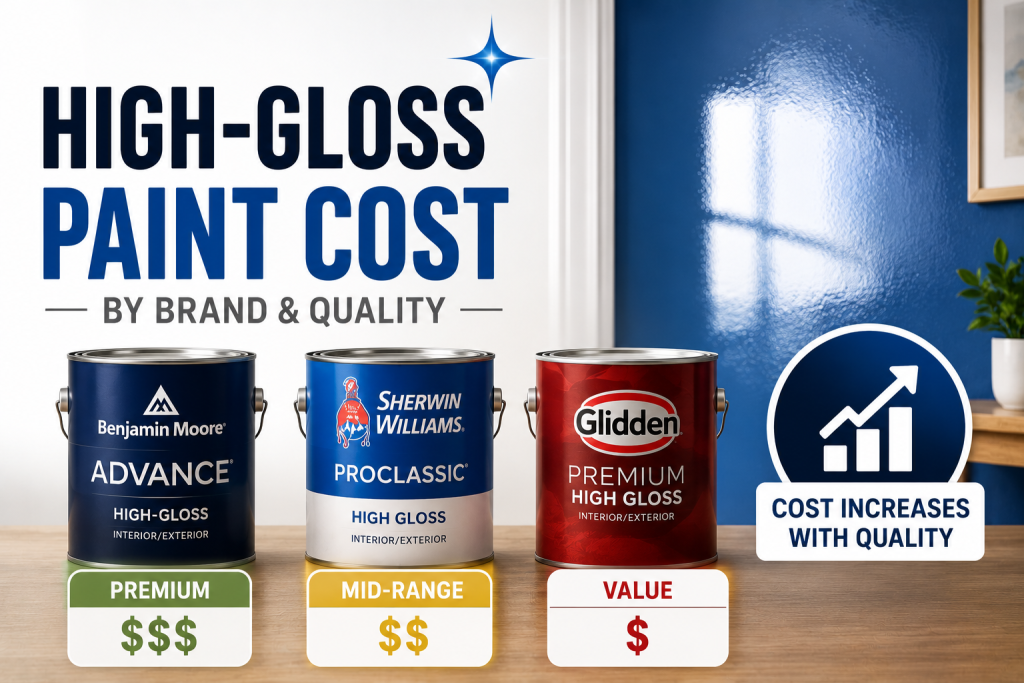
Paint quality plays a major role in determining the final high-gloss paint cost. While sheen level affects pricing, product performance, durability, coverage, and brand reputation can influence costs even more. Homeowners comparing products should evaluate value rather than focusing exclusively on the lowest price per gallon.
Budget Paint Options
Entry-level paints from brands such as Behr and PPG Paints can provide an affordable solution for homeowners working within a limited budget. These products are often suitable for light-traffic areas, rental properties, or cosmetic updates where maximum durability is not the primary concern.
Budget-friendly high-gloss paints typically cost less upfront, but they may require additional coats to achieve full coverage. In some cases, homeowners may also experience reduced stain resistance or shorter repainting intervals compared to premium alternatives.
Premium Paint Options
Higher-end products from Sherwin-Williams and Benjamin Moore are frequently selected for projects where appearance and longevity are priorities. These paints often feature advanced resin technologies, improved leveling characteristics, and enhanced washability.
Although premium products increase the initial high-gloss paint cost, they may reduce long-term maintenance expenses by resisting wear, moisture, and surface damage more effectively. For homeowners planning to stay in their homes for many years, investing in a higher-quality product can often provide better overall value than choosing the least expensive option available. When comparing paint brands, it’s important to consider coverage rates, expected lifespan, warranty support, and finish consistency in addition to the purchase price.
Conclusion
So, does high-gloss paint cost more than matte or satin? In most situations, yes. The high-gloss paint cost is typically higher because of specialized formulations, increased durability, and the additional preparation required to achieve a smooth, reflective finish. While the difference in material pricing may not be dramatic, labor expenses can significantly increase the overall project budget. That said, cost should not be the only factor when choosing a paint finish. High-gloss coatings offer exceptional durability, moisture resistance, and cleanability, making them an excellent choice for trim, doors, cabinets, and other high-touch surfaces.
Satin finishes provide a practical middle ground, while matte paints remain a popular option for homeowners seeking a softer appearance and better concealment of wall imperfections. For the best results, homeowners should evaluate the intended application, maintenance expectations, and long-term value of each finish. By balancing performance and budget, it’s possible to select a paint sheen that delivers both visual appeal and lasting protection for years to come.
FAQ About High-Gloss Paint Cost
Is High-Gloss Paint Worth the Extra Cost?
In many cases, yes. The higher high-gloss paint cost can be justified by improved durability, stain resistance, and ease of cleaning. High-gloss finishes are particularly valuable on trim, doors, cabinets, and other surfaces that experience frequent contact. Homeowners who prioritize long-term performance often find that the added upfront investment helps reduce maintenance and repainting expenses over time.
Does High-Gloss Paint Last Longer Than Satin?
Generally, high-gloss paint is more resistant to moisture, scuffs, and everyday wear than satin finishes. While both options can provide excellent durability when properly applied, high-gloss coatings tend to perform better in high-traffic areas. However, the longevity of any paint job depends on surface preparation, product quality, and environmental conditions.
Which Paint Finish Has the Lowest Cost?
Flat and matte finishes are usually the most affordable options. They require less specialized formulation and are commonly used on ceilings and low-traffic walls. While they offer excellent coverage and hide imperfections well, they are typically less washable than satin or high-gloss alternatives.
Is High-Gloss Paint Cost Worth It for Interior Walls?
In most cases, homeowners avoid using high-gloss paint on large wall surfaces because its reflective finish can emphasize dents, patches, and texture variations. While the high-gloss paint cost may be justified for trim, molding, cabinetry, and accent features, it is often less practical for entire rooms.