

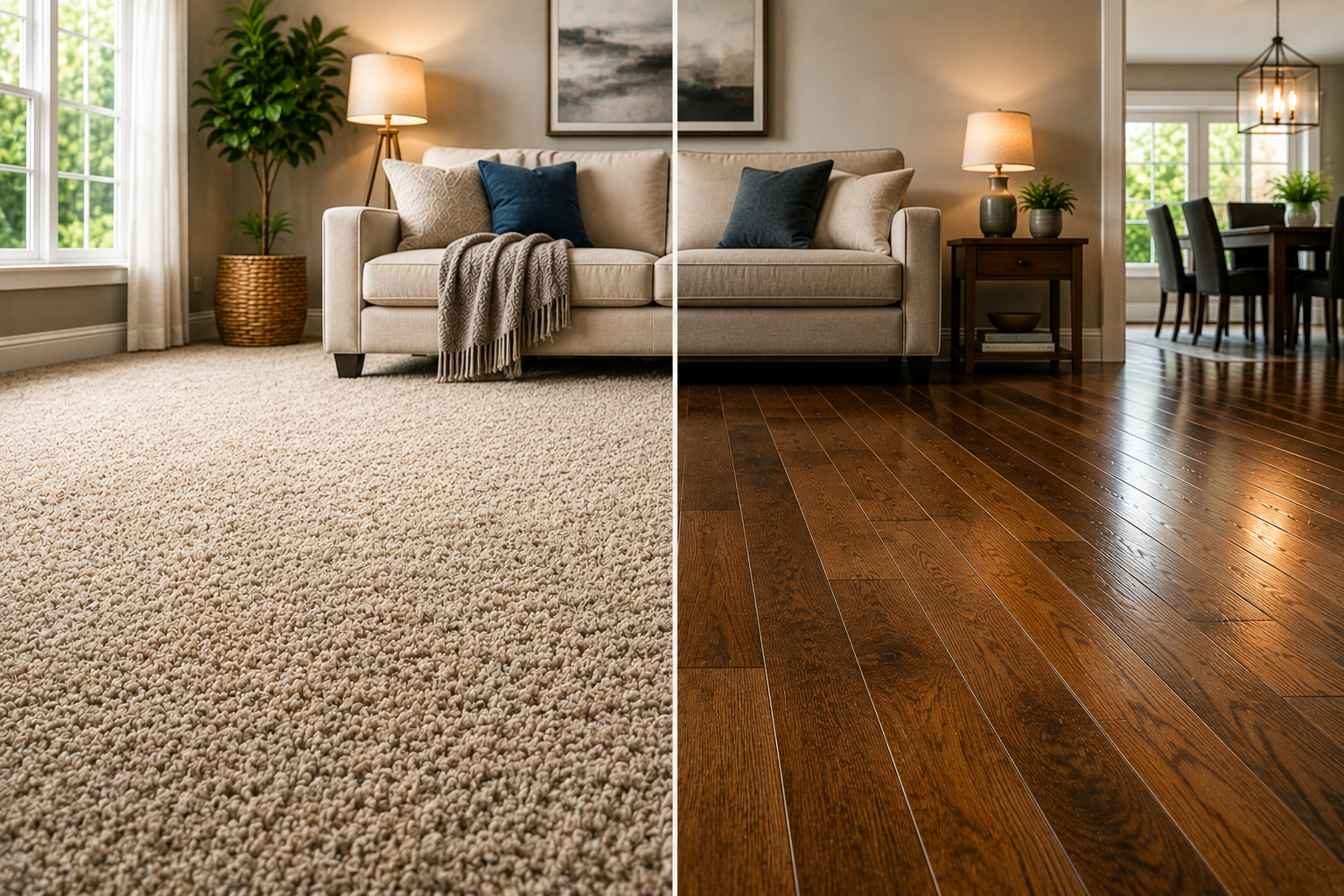
Carpet vs Hardwood Flooring: Pros, Cons, Costs & Comfort Compared
Choosing between carpet and hardwood is one of the most important flooring decisions homeowners make during a renovation or new construction project. Both materials offer unique advantages, but the right choice depends on factors such as comfort, durability, maintenance requirements, budget, and long-term home value. The debate surrounding carpet vs hardwood flooring has become even more relevant as homeowners look for flooring solutions that balance aesthetics with everyday practicality. Hardwood floors are often associated with timeless style, durability, and premium appeal, while carpet remains popular for its warmth, softness, and ability to create a comfortable living environment.
When evaluating carpet vs hardwood flooring, it is important to consider how each material performs in different areas of the home. Bedrooms, family rooms, hallways, and living spaces all have different functional requirements, and a flooring option that works perfectly in one room may not be the ideal choice in another. This comprehensive guide compares carpet and hardwood across key categories including cost, comfort, durability, maintenance, energy efficiency, and long-term value. By understanding the strengths and limitations of both flooring types, homeowners can make a more informed decision that aligns with their lifestyle and future goals.
Understanding Carpet vs Hardwood Flooring
Before making a flooring decision, homeowners should understand the fundamental differences between these two materials. While both serve the same purpose, they provide very different experiences in terms of appearance, comfort, installation, and long-term performance. Carpet consists of textile fibers attached to a backing material and is typically installed over a padded underlayment. In the carpet vs hardwood flooring comparison, carpet products are available in a wide variety of fiber types, including nylon, polyester, triexta, olefin, and wool. These materials offer different levels of durability, stain resistance, softness, and maintenance requirements. Carpet is commonly installed in bedrooms, family rooms, nurseries, and other spaces where comfort is a priority.
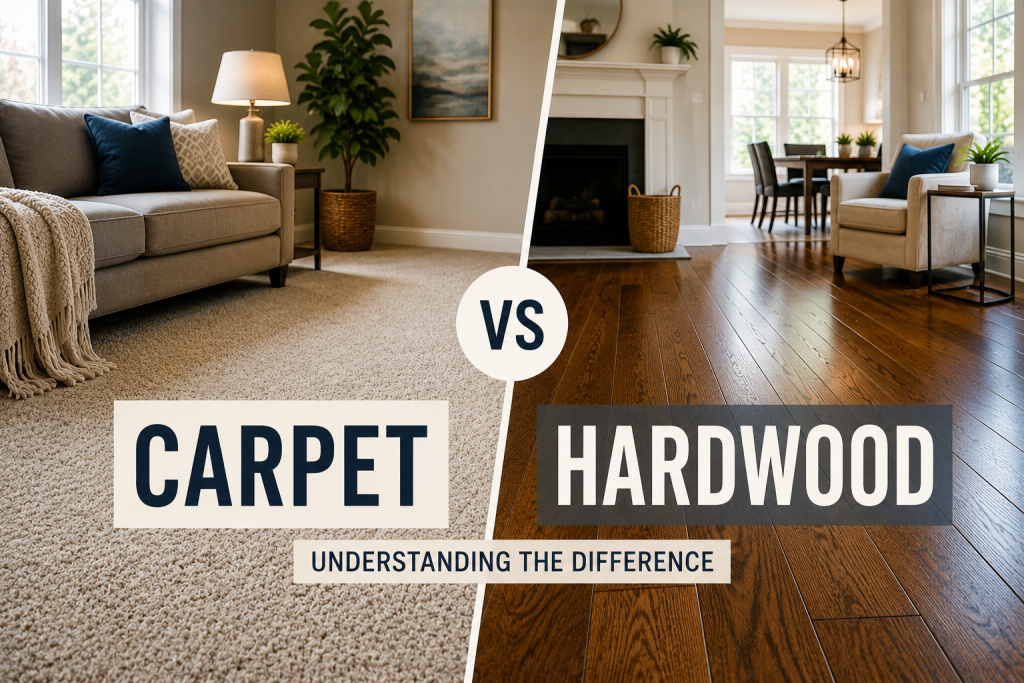
Hardwood flooring is manufactured from solid wood planks or engineered wood products designed to create a durable and attractive surface. In the carpet vs hardwood flooring comparison, popular species include oak, maple, hickory, walnut, and ash. Hardwood is widely valued for its natural appearance, longevity, and ability to complement a wide range of interior design styles. Many homeowners consider hardwood a premium flooring option because it can last for decades when properly maintained.
A proper hardwood flooring comparison should account for factors such as wood species, finish quality, plank construction, and installation method. Likewise, carpet quality varies significantly based on fiber type, density, pile construction, and padding selection. Understanding these differences helps homeowners evaluate flooring options based on performance rather than appearance alone. While both flooring materials continue to evolve through new manufacturing technologies, each remains better suited for certain applications. The key is determining which characteristics are most important for your household’s specific needs.
Comfort and Everyday Living Experience
Comfort is often one of the first factors homeowners consider when choosing flooring. The daily experience of walking, sitting, and spending time on a floor surface can significantly influence overall satisfaction long after installation is complete. In the discussion of carpet vs hardwood flooring, carpet generally provides a softer and warmer surface underfoot. The combination of carpet fibers and padding creates a cushioned feel that many homeowners find more comfortable, especially when standing for extended periods or when children frequently play on the floor. Carpet also offers natural sound absorption, helping reduce echoes and footstep noise throughout the home.
In the carpet vs hardwood flooring comparison, hardwood flooring delivers a different type of comfort. While it lacks the softness of carpet, many homeowners appreciate its solid feel and natural appearance. Area rugs can be added strategically to provide additional cushioning while maintaining the visual appeal of exposed wood flooring. Hardwood also tends to remain comfortable in moderate climates, although it can feel colder during winter months without supplemental heating.
For homeowners evaluating soft flooring vs wood flooring, lifestyle often becomes the deciding factor. Families with young children may appreciate the cushioning provided by carpet, while homeowners who prioritize aesthetics and easy cleaning may prefer hardwood surfaces. Personal preference plays a significant role because comfort is experienced differently from one household to another. Ultimately, neither option is universally superior. The best choice depends on how the space is used, who lives in the home, and which characteristics contribute most to everyday comfort and convenience.
Durability and Long-Term Performance
Durability is a major consideration for homeowners who want flooring that can withstand years of daily use. Foot traffic, furniture movement, pets, children, and environmental conditions all influence how well a floor maintains its appearance over time. When comparing carpet vs hardwood flooring, hardwood generally offers a longer potential lifespan. High-quality hardwood floors can last for several decades and may be refinished multiple times to remove scratches, dents, and surface wear. This ability to restore the surface allows hardwood to maintain its appearance long after many other flooring materials would require replacement.
In the carpet vs hardwood flooring comparison, carpet durability varies significantly depending on fiber type, construction quality, and maintenance practices. Premium nylon and triexta carpets often perform well in active households, resisting crushing and matting better than lower-cost alternatives. However, even high-quality carpet typically has a shorter lifespan than properly maintained hardwood flooring and may eventually require replacement due to wear, staining, or fiber deterioration.
Understanding the major carpet pros and cons is important when evaluating long-term performance. Carpet provides comfort and noise reduction but can be more vulnerable to stains, moisture damage, and visible wear patterns. Hardwood offers exceptional longevity but may develop scratches and dents if not properly protected. For busy households, selecting the right flooring often involves balancing durability with comfort. The best solution depends on how heavily the space is used and the level of maintenance homeowners are willing to perform throughout the floor’s lifespan.
Maintenance and Cleaning Requirements
Maintenance requirements can have a significant impact on the overall ownership experience of any flooring material. A floor that looks attractive on installation day may become less appealing if it requires extensive upkeep to maintain its appearance. One of the most important considerations in the carpet vs hardwood flooring debate is the amount of cleaning each material requires. Carpet tends to trap dust, dirt, pet hair, and allergens within its fibers, making regular vacuuming essential. Spills should be cleaned quickly to prevent staining, and professional deep cleaning is typically recommended every 12 to 18 months to remove embedded debris and maintain appearance. In the carpet vs hardwood flooring comparison, hardwood flooring generally requires less intensive routine maintenance. Sweeping, dust mopping, or vacuuming with a hardwood-safe attachment is usually sufficient for everyday cleaning.

Occasional damp mopping with manufacturer-approved products helps remove surface dirt without damaging the finish. However, homeowners must remain careful about standing water, which can cause warping or other moisture-related issues. A detailed flooring maintenance comparison often reveals that hardwood is easier to keep visually clean on a day-to-day basis, while carpet may require more frequent attention to maintain its original appearance. The tradeoff is that carpet can conceal minor dust and debris more effectively between cleanings, whereas hardwood surfaces tend to show dirt more readily. Ultimately, homeowners should choose a flooring option that aligns with their cleaning habits, household activity level, and willingness to invest time in ongoing maintenance.
Energy Efficiency and Insulation Benefits
Flooring materials influence more than appearance and comfort; they can also affect a home’s energy efficiency and indoor environment. The ability to retain warmth and reduce heat loss becomes especially important in regions that experience long or cold winters. When evaluating carpet vs hardwood flooring, carpet often has an advantage in thermal performance. The combination of carpet fibers and padding creates an additional barrier between the living space and the subfloor, helping reduce heat transfer. This characteristic can make rooms feel warmer during colder months while improving overall comfort. Many homeowners view carpet as a form of insulated flooring because it naturally provides greater thermal resistance than exposed wood surfaces. Bedrooms, upstairs living spaces, and finished basements often benefit from this added insulation, particularly in colder climates where floor temperature can influence comfort levels.
In the carpet vs hardwood flooring comparison, hardwood flooring, while durable and visually appealing, does not provide the same level of insulation. However, it can perform well when combined with area rugs or radiant heating systems. In homes with modern heating technology, hardwood floors can remain comfortable while still delivering the aesthetic advantages many buyers prefer. The importance of energy efficiency varies by location, climate, and personal preference. Homeowners who prioritize warmth and softness may find carpet more appealing, while those focused on longevity and appearance may consider hardwood’s other benefits more important than its lower insulating properties.
Best Rooms for Carpet and Hardwood
Different areas of a home have different functional requirements, which is why many homeowners use a combination of flooring materials rather than relying on a single option throughout the entire house. In a typical carpet vs hardwood flooring comparison, carpet performs exceptionally well in spaces where comfort, warmth, and noise reduction are priorities. Bedrooms are among the most common locations for carpet because the soft surface creates a more comfortable environment for daily living. When exploring bedroom flooring options, many homeowners continue to prefer carpet due to its warmth underfoot and ability to create a relaxing atmosphere. Hardwood flooring is often favored in living rooms, dining rooms, entryways, and open-concept areas where durability and visual appeal are important. The natural beauty of wood can help create a cohesive design throughout the home while offering long-term performance in moderately trafficked spaces.
In the carpet vs hardwood flooring comparison, hallways and family rooms can work well with either material depending on household needs. Active families with children may appreciate the comfort and sound absorption of carpet, while homeowners focused on aesthetics and easy cleaning often lean toward hardwood. Kitchens and bathrooms generally favor hard-surface flooring due to moisture exposure, although engineered wood products may sometimes be used in carefully controlled environments. Matching flooring materials to room function often produces the best overall results. Instead of viewing the decision as an all-or-nothing choice, many homeowners achieve optimal performance by using each material where its strengths provide the greatest benefit.
Home Value and Resale Considerations
For many homeowners, flooring is not only a comfort decision but also a financial investment. The materials chosen today can influence future buyer perceptions and potentially affect marketability when the property is eventually sold. A major factor in the carpet vs hardwood flooring discussion is perceived value. Hardwood flooring is often viewed as a premium feature by prospective buyers because of its durability, timeless appearance, and long lifespan. Many real estate professionals report that homes with well-maintained hardwood flooring attract strong buyer interest, particularly in competitive housing markets. When considering flooring resale value, hardwood generally holds an advantage because it is widely associated with quality and longevity. Buyers often appreciate the ability to refinish hardwood rather than replace it, which can make the home more appealing compared to properties with older or heavily worn carpet.
That said, in the carpet vs hardwood flooring comparison, carpet still has an important place in residential real estate. New, high-quality carpet installed in bedrooms and family spaces can improve comfort, reduce noise, and create a clean, welcoming appearance. Fresh carpeting may also appeal to buyers who prefer softer surfaces in private living areas. The impact on resale ultimately depends on local market preferences, the condition of the flooring, and how well it complements the overall design of the home. In many cases, a thoughtful combination of hardwood and carpet can provide both broad buyer appeal and practical everyday benefits.
Cost Comparison and Budget Considerations
Budget plays a major role in flooring decisions, especially for large renovation projects. Material costs, installation expenses, maintenance requirements, and expected lifespan should all be considered when evaluating overall value. In most carpet vs hardwood flooring comparisons, carpet has a lower upfront cost. Standard carpet products and padding are often less expensive to purchase and install than hardwood flooring, making carpet an attractive option for homeowners seeking immediate affordability. The wide range of available carpet styles also allows buyers to find products that fit various budget levels. Hardwood flooring generally requires a larger initial investment. Material prices vary based on wood species, plank construction, finish quality, and installation complexity. Although the upfront expense is typically higher, hardwood may offer greater long-term value because of its durability and ability to be refinished rather than replaced.
In the carpet vs hardwood flooring comparison, long-term ownership costs should also be considered. Carpet may need replacement after years of wear, especially in high-traffic areas, while hardwood floors can often remain functional for decades with proper care. Maintenance expenses, professional cleaning requirements, and potential repair costs all contribute to the total cost of ownership over time. For homeowners deciding between carpet and hardwood, the best financial choice depends on both short-term budget limitations and long-term expectations. Evaluating total lifecycle costs rather than installation price alone often leads to a more accurate assessment of overall value.
Final Verdict
Choosing between carpet and hardwood ultimately comes down to lifestyle, budget, and personal preference rather than a single universally correct answer. Both flooring types offer clear advantages, but they serve different priorities within the home. In the overall carpet vs hardwood flooring comparison, carpet stands out for comfort, warmth, noise reduction, and affordability. It is especially well-suited for bedrooms, family rooms, and homes where softness and insulation are top priorities. Families with children or pets often appreciate the forgiving nature of carpet and its ability to create a cozy indoor environment. Hardwood flooring, on the other hand, is favored for its durability, long-term value, and timeless appearance. In the carpet vs hardwood flooring comparison, it performs well in high-visibility areas such as living rooms, dining rooms, and entryways, where aesthetics and resale appeal are important. While it may require a higher initial investment, its longevity and refinishing potential make it a strong long-term option. Ultimately, the decision should be based on how each space in the home is used and what matters most to the homeowner. Many modern homes achieve the best results by combining both materials, using carpet where comfort is essential and hardwood where style and durability are priorities. By carefully evaluating the carpet vs hardwood flooring options, homeowners can make a confident flooring decision that enhances daily living while also supporting long-term property value.
Frequently Asked Questions (FAQs)
Which is better overall: carpet vs hardwood flooring?
Neither option is universally better. Carpet is ideal for comfort, warmth, and noise reduction, while hardwood is preferred for durability, aesthetics, and long-term value. The best choice depends on lifestyle and room usage.
What lasts longer, carpet or hardwood?
Hardwood flooring typically lasts significantly longer than carpet. With proper care and occasional refinishing, hardwood can last for decades, while carpet usually needs replacement after years of wear.
Is carpet cheaper than hardwood flooring?
Yes, carpet is generally more affordable to install than hardwood. However, hardwood may offer better long-term value due to its extended lifespan and lower replacement frequency.
Which option is easier to maintain?
Hardwood is easier to maintain on a daily basis since it only requires sweeping and occasional mopping. Carpet needs more frequent vacuuming and periodic deep cleaning.
Does carpet improve insulation compared to hardwood?
Yes, carpet provides better insulation and helps retain warmth in colder climates, making it a popular choice for bedrooms and upstairs living areas.
What flooring is better for resale value?
Hardwood flooring generally provides better resale value because buyers often view it as a premium, long-lasting feature.
Can I use both carpet and hardwood in the same home
Yes, many homeowners combine both, using hardwood in high-traffic and public areas and carpet in bedrooms and comfort-focused spaces for balance.