

Carpet vs Vinyl Flooring: Which Is Better for Your Home in 2026?
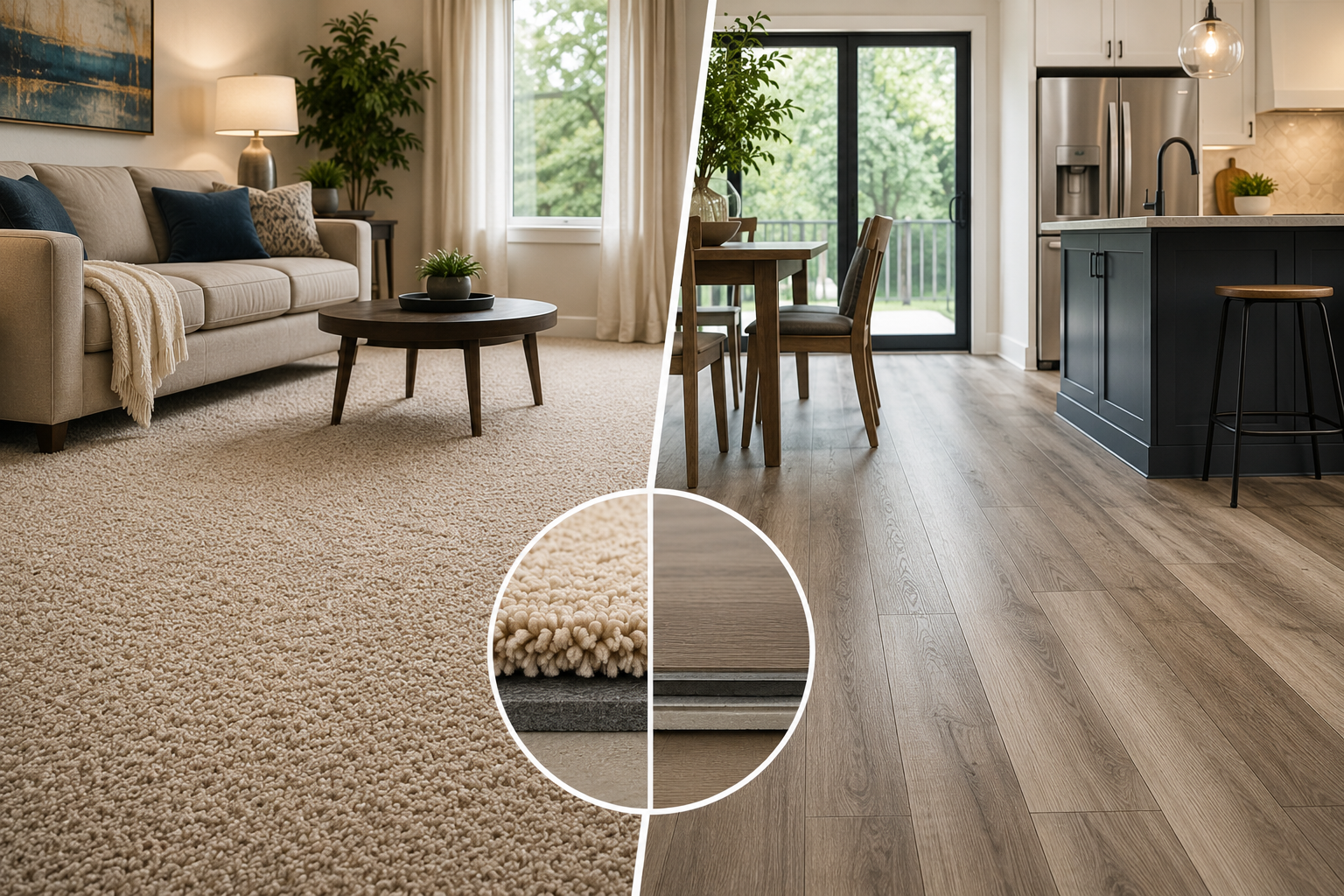
Choosing between carpet and vinyl flooring is one of the most common decisions homeowners face during a remodeling project. Both materials offer distinct advantages, but the right option depends on your budget, lifestyle, maintenance expectations, and the rooms being updated. When comparing carpet vs vinyl flooring, comfort and warmth are often the biggest reasons homeowners choose carpet. Vinyl, on the other hand, has become increasingly popular because of its durability, water resistance, and realistic wood-look designs.
Modern products from brands such as Shaw Floors, Mohawk Industries, COREtec, and Mannington have made vinyl a serious competitor to traditional flooring materials. For families planning a renovation, understanding the differences in cost, lifespan, cleaning requirements, and resale value is essential. This guide provides a detailed comparison to help you determine which flooring option makes the most sense for your home, whether you’re upgrading a bedroom, family room, basement, or an entire house.
Carpet vs Vinyl Flooring at a Glance
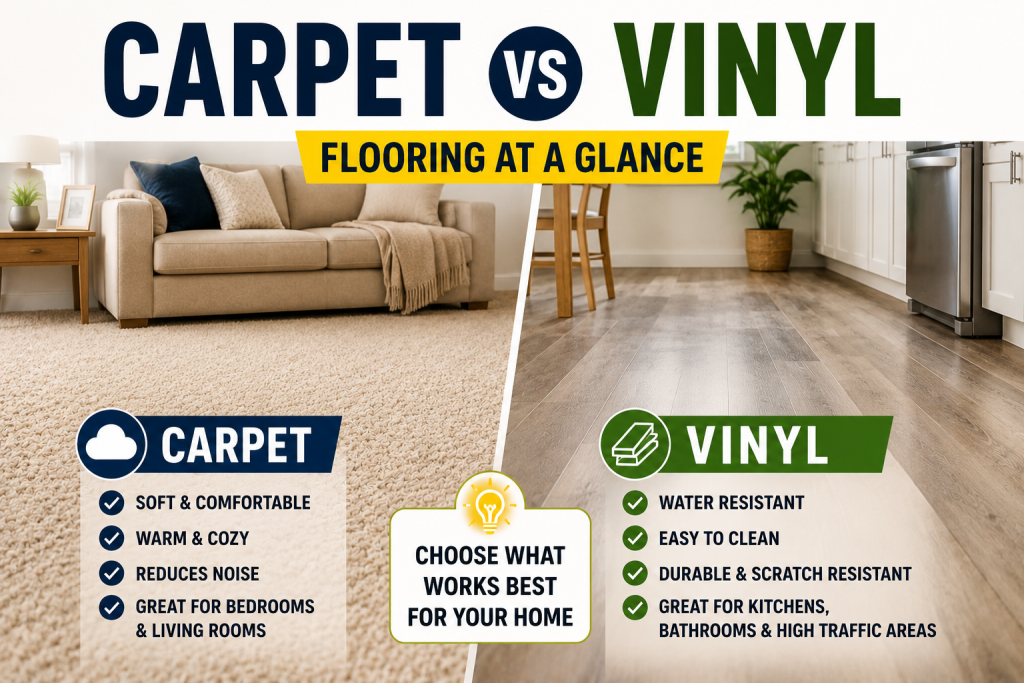
Before diving into the details, here’s a quick overview of how these flooring types compare across the categories homeowners care about most. While both options can work well in residential settings, each excels in different situations.
| Feature | Carpet | Vinyl Flooring |
| Initial Cost | Moderate | Low to Moderate |
| Installation Cost | Moderate | Moderate |
| Comfort Underfoot | Excellent | Good |
| Water Resistance | Poor | Excellent |
| Durability | Moderate | Excellent |
| Pet Friendliness | Moderate | Excellent |
| Noise Reduction | Excellent | Good |
| Cleaning Requirements | Higher | Lower |
| Lifespan | 8–15 Years | 15–25 Years |
| Resale Appeal | Room Dependent | Increasingly Popular |
| Best Rooms | Bedrooms, Family Rooms | Kitchens, Bathrooms, Basements |
In the carpet vs vinyl flooring debate, neither option is universally better. Carpet typically wins for comfort, warmth, and sound absorption, while vinyl outperforms in moisture resistance, durability, and ease of maintenance. Homeowners should evaluate where the flooring will be installed, local climate conditions, and long-term maintenance expectations before making a final decision.
The growing demand for luxury vinyl flooring comparison research reflects how rapidly vinyl products have improved in appearance and performance over the last decade.
What Is Carpet Flooring?
Carpet is a soft-surface flooring material made from fibers attached to a backing layer and installed over a carpet pad. It remains a popular choice in American homes because it provides comfort, insulation, and a quieter living environment. Modern carpets are available in a wide range of styles, including plush, Berber, frieze, and patterned designs.
Many homeowners prefer carpet in bedrooms, family rooms, and upper-level living spaces where comfort is a priority. The material feels warmer underfoot during colder months and helps reduce sound transfer between floors. Carpet can also improve the coziness of large rooms, making it especially appealing in regions that experience long winters.
When evaluating carpet vs vinyl flooring, carpet generally appeals to homeowners seeking a softer walking surface and enhanced comfort. However, it requires more regular cleaning and is typically less resistant to moisture, stains, and heavy wear than vinyl flooring.
What Is Vinyl Flooring?
Vinyl flooring is a resilient flooring material manufactured from multiple layers designed to provide durability, water resistance, and visual appeal. Today’s products are available in several formats, including sheet vinyl, luxury vinyl tile (LVT), and luxury vinyl plank (LVP). Many premium options closely mimic the appearance of hardwood, stone, or ceramic tile while requiring significantly less maintenance.
One reason vinyl continues to gain popularity among U.S. homeowners is its ability to withstand moisture and heavy foot traffic. This makes it a practical choice for kitchens, bathrooms, laundry rooms, basements, and busy family spaces. Brands such as Shaw Floors, COREtec, Lifeproof, and Mannington offer products designed for long-term residential performance.
In the ongoing carpet vs vinyl flooring comparison, vinyl stands out for its durability and versatility. Homeowners researching soft flooring vs waterproof flooring often find vinyl appealing because it combines attractive design options with protection against spills, humidity, and everyday wear.
Carpet vs Vinyl Flooring Cost Comparison
Cost is often one of the biggest factors influencing a flooring decision. In many cases, carpet has a lower upfront material cost, especially when homeowners choose standard synthetic fibers. However, installation expenses can vary depending on carpet padding, room layout, and labor rates in the local market.
Vinyl flooring covers a wider price range. Basic sheet vinyl is among the most affordable flooring products available, while premium luxury vinyl planks can cost considerably more. Despite the higher initial investment, many homeowners find that vinyl’s durability and lower maintenance requirements help offset costs over time.
When comparing carpet vs vinyl flooring, it is important to look beyond the purchase price. Carpet may require professional deep cleaning and earlier replacement, while vinyl often lasts longer with minimal upkeep. For homeowners conducting an affordable flooring comparison, evaluating long-term ownership costs can provide a clearer picture of overall value.
Flooring Durability Comparison
Durability plays a major role in determining how well a floor performs over time. Homes with children, pets, and heavy daily foot traffic often require flooring that can withstand constant use without showing significant wear. In most situations, vinyl flooring has a clear advantage in this category.
Modern luxury vinyl products feature protective wear layers that help resist scratches, dents, stains, and moisture damage. This makes vinyl especially useful in high-traffic areas such as hallways, kitchens, and family rooms. Carpet fibers, while comfortable, can become flattened over time and may show stains or wear patterns in frequently used spaces.
In a typical carpet vs vinyl flooring evaluation, vinyl is often the preferred choice for long-term durability. Homeowners conducting a flooring durability comparison should also consider environmental factors such as humidity, pet activity, and household traffic levels. Under demanding conditions, vinyl generally delivers a longer service life with fewer performance concerns.
Flooring Maintenance Comparison
Maintenance requirements can have a significant impact on homeowner satisfaction over the life of a floor. Carpet typically requires more ongoing care because dust, dirt, pet hair, and allergens can become trapped within the fibers. Regular vacuuming is essential, and many homeowners schedule professional deep cleaning every 12 to 18 months to maintain appearance and hygiene.
Vinyl flooring is much easier to maintain. Most spills can be cleaned with a damp mop or cloth, and routine sweeping is usually enough to remove dirt and debris. Because vinyl does not absorb moisture like carpet, it is less susceptible to staining and odor retention.
When assessing carpet vs vinyl flooring, maintenance is often a deciding factor for busy households. A thorough flooring maintenance comparison reveals that vinyl generally requires less time, effort, and expense to keep looking its best. This advantage is particularly valuable for families with pets, young children, or high-traffic living spaces.
Comfort and Noise Reduction
Comfort is one of the strongest reasons homeowners choose carpet over hard surface flooring. Carpet provides a soft, cushioned feel underfoot, which makes it especially appealing in bedrooms and living areas where people spend a lot of time standing or walking barefoot. It also adds warmth, which can be beneficial in colder northern U.S. climates and homes with tile or slab foundations.
Another major advantage of carpet is its ability to absorb sound. It helps reduce echo and minimizes noise transfer between floors, making it a strong option for multi-level homes or spaces above basements. Vinyl flooring, while improved in recent years with added underlayment options, still does not match carpet’s natural sound-dampening performance.
In the carpet vs vinyl flooring comparison, comfort and acoustics are areas where carpet clearly stands out. For homeowners weighing soft flooring vs waterproof flooring, the decision often comes down to whether comfort or water resistance is the higher priority for the space.
Best Flooring for Pets and Children
For households with pets and young children, flooring needs to balance durability, safety, and ease of cleaning. Spills, scratches, and heavy activity are everyday challenges that can quickly wear down less resilient materials. In most cases, vinyl flooring is better suited for these demands because of its waterproof surface and scratch-resistant wear layer.
Carpet, while comfortable and soft, can be more difficult to maintain in busy family environments. Pet accidents can lead to lingering odors and stains if not addressed quickly, and high-traffic areas may show wear sooner. However, carpet does offer a softer landing surface, which can be beneficial for toddlers learning to walk or play.
When evaluating carpet vs vinyl flooring, families often prioritize practicality over aesthetics alone. In many modern homes, vinyl is becoming the preferred choice for kitchens, playrooms, and family zones due to its resilience and easy cleanup, while carpet is still used in select comfort-focused areas like bedrooms.
Carpet vs Vinyl Flooring by Room
Choosing the right flooring often depends on the function of each room rather than a single whole-home solution. In bedrooms, carpet remains a top choice because it provides warmth, comfort, and a soft surface that feels good underfoot. Many homeowners still prefer carpet when planning bedroom flooring ideas due to its cozy and quiet nature. In living areas such as dens and entertainment spaces, the decision is more balanced. Carpet offers comfort and sound absorption, while vinyl provides durability and easier cleaning for high-traffic use. For family room flooring options, many modern homes are shifting toward vinyl because of pets, kids, and everyday wear.
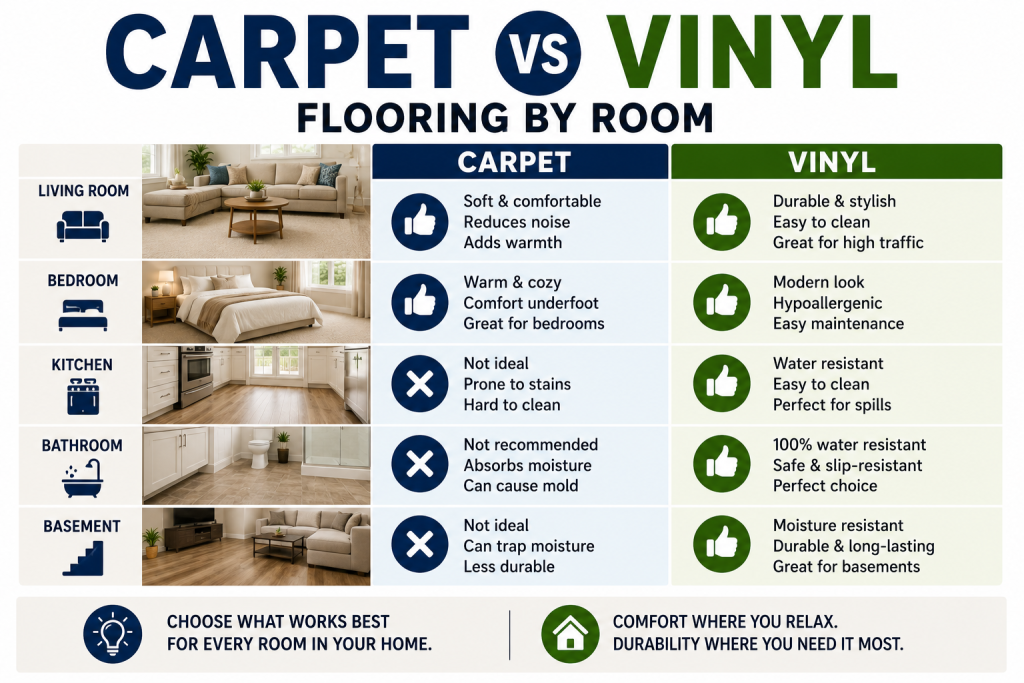
Basements and moisture-prone areas typically favor vinyl due to its water resistance, while carpet is less common unless the space is fully dry and finished. Kitchens and entryways almost always perform better with vinyl, making it a versatile solution across multiple zones in the home.
Which Flooring Adds More Resale Value?
When it comes to resale value, flooring choices can influence how potential buyers perceive a home. Buyers in the U.S. housing market often prioritize clean, modern, and low-maintenance surfaces, especially in competitive real estate regions. While carpet can still be appealing in bedrooms, many buyers today view hard surface flooring as more desirable in main living areas.
Vinyl flooring, particularly luxury vinyl plank, has gained strong acceptance in recent years due to its durability and wood-like appearance. In many mid-range and updated homes, it is now considered a practical alternative to hardwood, especially in kitchens, living rooms, and basements. Carpet, on the other hand, may still be preferred in bedrooms but can sometimes be seen as outdated if heavily worn or poorly maintained.
In the carpet vs vinyl flooring discussion, vinyl generally has an edge in resale appeal due to its modern look and low maintenance requirements. However, well-maintained carpet in the right spaces can still contribute positively to overall home comfort and buyer perception.
Best Flooring Based on Climate
Climate plays a major role in how flooring performs over time, especially in regions with extreme humidity, temperature swings, or seasonal moisture. Homeowners should always consider environmental conditions when deciding between carpet and vinyl flooring to avoid long-term maintenance issues. In humid regions like Florida and along the Gulf Coast, vinyl flooring is typically the better option because it resists moisture and prevents mold or mildew concerns. In hot states such as Texas and Arizona, vinyl also performs well due to its durability and resistance to temperature-related expansion issues when properly installed.
In colder Midwest and Northern climates, carpet remains popular because it adds warmth and insulation during long winters. However, many modern homes in these regions now use vinyl in main living areas and reserve carpet for bedrooms. Overall, the carpet vs vinyl flooring decision often comes down to balancing comfort with environmental performance, ensuring the flooring can handle local weather conditions effectively.
Carpet vs Vinyl Flooring Pros and Cons
Understanding the strengths and weaknesses of each flooring type helps homeowners make a more confident decision during renovation planning. Both carpet and vinyl flooring offer clear advantages, but they serve different lifestyle needs and room functions.
Carpet Pros
- Soft and comfortable underfoot
- Excellent sound absorption
- Adds warmth in colder climates
- Wide range of styles and textures
Carpet Cons
- Can stain easily and absorb moisture
- Requires frequent deep cleaning
- Shorter lifespan in high-traffic areas
- Not ideal for humid environments
Vinyl Flooring Pros
- Highly water-resistant and durable
- Easy to clean and maintain
- Suitable for most rooms in the home
- Modern designs mimic hardwood and stone
Vinyl Flooring Cons
- Less soft underfoot compared to carpet
- Can feel colder in winter without underlayment
- Lower sound absorption unless upgraded with padding
In the carpet vs vinyl flooring decision process, these pros and cons highlight why many U.S. homeowners choose a hybrid approach, using carpet in comfort-focused spaces and vinyl in high-traffic or moisture-prone areas.
Final Verdict
Deciding between carpet and vinyl flooring ultimately comes down to how you use each space, your household lifestyle, and long-term maintenance expectations. There is no single winner in the carpet vs vinyl flooring comparison, but there is a clear best choice depending on the situation. If comfort, warmth, and noise reduction are your top priorities, carpet remains an excellent option for bedrooms and cozy living spaces. It performs especially well in colder climates and homes where soft flooring is preferred underfoot. If durability, water resistance, and low maintenance matter more, vinyl flooring is the stronger choice. It is particularly well-suited for kitchens, bathrooms, basements, and high-traffic areas where spills and heavy use are common. For many modern U.S. homes, the most practical solution is a combination of both materials, carpet in comfort-focused rooms and vinyl in functional spaces. This balanced approach maximizes both comfort and long-term value while meeting the demands of everyday living.
Frequently Asked Questions
Is vinyl flooring cheaper than carpet?
In many cases, basic vinyl flooring can be cheaper than mid-range carpet, but premium luxury vinyl may cost more upfront. When comparing carpet vs vinyl flooring, long-term maintenance and replacement cycles should also be considered, not just initial price.
What lasts longer, carpet or vinyl flooring?
Vinyl flooring generally lasts longer due to its durable wear layer and resistance to moisture, scratches, and stains. Carpet typically needs replacement sooner in high-traffic areas.
Is luxury vinyl flooring worth the extra cost?
Yes, many homeowners find it worth the investment because it offers improved durability, better design realism, and lower maintenance compared to standard flooring options.
Which flooring is better for pets?
Vinyl is usually better for pet owners since it resists scratches and is easier to clean after accidents.
Does carpet increase home value?
Carpet can add comfort appeal in bedrooms, but it does not typically increase resale value as much as updated hard surface flooring in main living areas.
Is vinyl flooring cold in winter?
Vinyl can feel cooler than carpet, but using underlayment or area rugs can improve comfort during colder months.
What is the best flooring for bedrooms?
Carpet is often preferred for bedrooms due to its softness and warmth, especially in colder climates.
Can vinyl flooring be installed over existing floors?
Yes, many vinyl products can be installed over existing floors if the subfloor is level and properly prepared.