


Cost to Repaint a Home With Modern neutral colors paint
Understanding the cost to repaint a house interior starts with recognizing that pricing varies widely based on home size, condition, and the level of finish you choose. In most U.S. markets, homeowners see a broad range because both labor and materials play a major role in the final budget. For a typical project, the whole house painting price is usually calculated per square foot or per room. Smaller homes or condos may fall on the lower end of the range, while larger or multi-story homes with complex layouts can significantly increase the total expense. Surface preparation, wall repairs, and trim work also influence the final number.
Color selection can also impact cost indirectly. Using modern neutral colors, paint is often more efficient because these shades typically require fewer coats and are widely available in standard paint lines, reducing customization needs. When homeowners choose updated palettes like warm whites, beige tones, or soft greige, the result is often a more resale-friendly finish that aligns with current design trends while keeping repainting practical and cost-effective. Overall, the price to repaint a house interior is shaped by a combination of scale, labor, and preparation, not just paint alone.
What Impacts Modern Cost to Repainting a House Interior?
When evaluating modern home repaint cost, it’s important to understand that the final price is influenced by far more than just paint selection. In most residential projects, labor and preparation work account for a significant portion of the total budget.
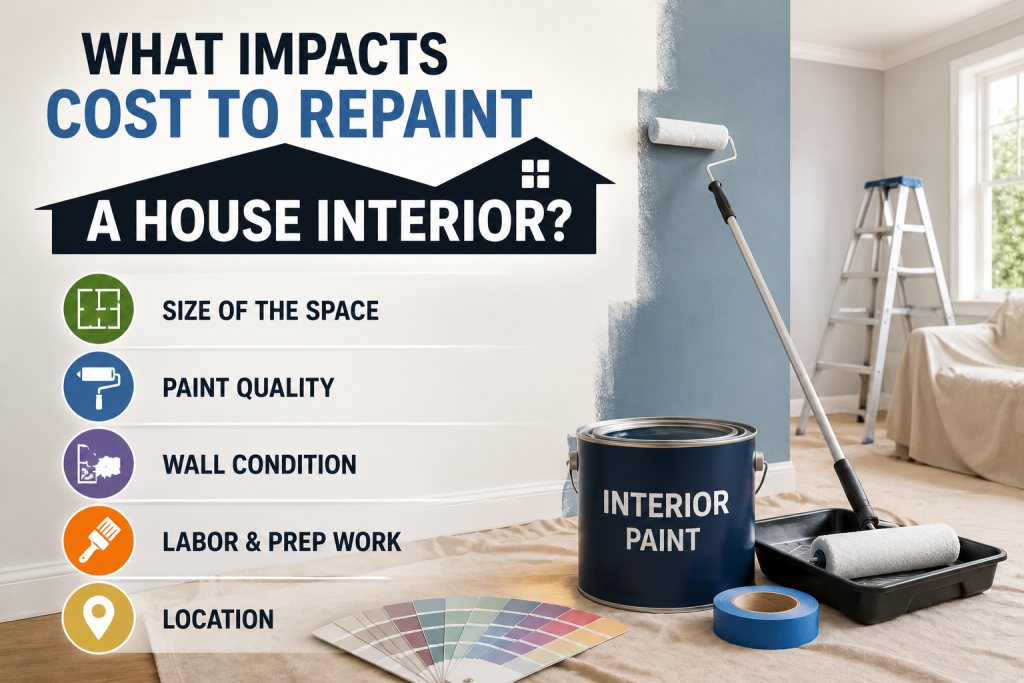
- One of the biggest cost drivers is surface condition. Homes that require patching, sanding, or priming will naturally increase home repaint costing, since prep work takes time and skill before any paint is applied.
- Another key factor is layout complexity. Open floor plans, high ceilings, stairwells, and detailed trim work can increase the cost to repaint a house interior because they require more labor-intensive application techniques and equipment.
- Color choice also plays a subtle role. While modern neutral paint colors are generally efficient and widely available, switching from dark to light shades may require additional coats, increasing material usage and labor time.
- Finally, regional labor rates can significantly affect pricing. In higher-cost housing markets, interior paint labor prices can vary widely compared to national averages.
Together, these factors determine the true cost of a full interior repaint project.
Whole House Painting Price Breakdown
A clear understanding of whole house painting cost helps homeowners plan realistically for a full interior repaint instead of focusing only on paint prices. In most projects, the total cost is split between labor, materials, and preparation work. Labor is typically the largest portion of the cost to repaint a house interior. Professional painters account for surface prep, masking, application, cleanup, and detail work such as trim and ceilings. Homes with complex layouts, staircases, or high ceilings usually increase interior paint labor price due to added time and equipment needs.
Materials include paint, primer, tape, and supplies. While paint itself may seem like the main expense, choosing higher-quality products can actually improve coverage efficiency and reduce the number of coats required. Preparation work is another major factor. Patching drywall, repairing cracks, and sanding surfaces all add to the final home repaint costing, especially in older homes. When combined, these elements give a more accurate picture of what a full repaint actually involves beyond just selecting neutral-color paint or new finishes.
interior paint labor price vs Material Cost
When breaking down the cost to repaint a house interior, it’s important to separate interior paint labor price from material expenses, since each plays a very different role in the total budget. Labor is usually the largest portion of the home repaint costing structure. Professional painters charge for time spent on preparation, application, detailing, and cleanup. Tasks like masking trim, repairing drywall, and cutting in edges around ceilings and corners require skill and significantly increase labor hours, especially in larger or multi-room projects.
Materials, on the other hand, include paint, primer, rollers, brushes, and protective supplies. While these costs are easier to estimate, they can still vary based on product quality. Premium paints often cost more upfront but provide better coverage and durability, which may reduce the need for multiple coats. Choosing modern neutral-color paint can sometimes help optimize material usage because these shades are widely available and often require fewer specialized pigments or custom mixing. Understanding the balance between labor and materials helps homeowners make smarter decisions when estimating the overall modern home repaint price, especially for full-house projects.
Why Are Neutral Colors Dominating Modern Homes?
One of the biggest trends influencing the cost to repaint a house interior is the widespread shift toward neutral colors in modern American homes. These tones are no longer just a safe choice; they’ve become the foundation of contemporary interior design. Neutral shades such as warm white, soft beige, and light greige are popular because they create a clean, flexible backdrop that works with almost any furniture style. This makes them ideal for homeowners planning resale, staging, or long-term design flexibility.
From a cost perspective, neutrals can also support more efficient home repaint costing. These colors often require fewer coats compared to deep or highly saturated shades, helping reduce both labor time and material usage during a full repaint. Another advantage is consistency. Neutral palettes make it easier to maintain a cohesive look across an entire home, which is especially important in open-concept layouts where rooms visually connect. Overall, the popularity of neutral colors paint reflects both design preference and practical value, making them a key driver in modern whole house painting price decisions.
Greige Fence Paint and Its Popularity in 2026 Homes
Among today’s most in-demand neutral colors paint, greige continues to stand out as a top choice for homeowners planning a full repaint. Greige wall paint, a balanced blend of gray and beige, has become a defining feature of modern interiors because it works across a wide range of lighting conditions and design styles. One of the main reasons for its popularity is versatility. Greige adapts well to both warm and cool décor, making it ideal for open-concept layouts where consistency is important. This helps reduce visual breaks between rooms, supporting a more cohesive cost to repaint a house interior strategy focused on long-term design value.
From a budgeting perspective, greige can also support more efficient painting projects. Because it sits in a mid-tone range, it often requires fewer adjustments when transitioning from older wall colors, which can help streamline home repaint costing and reduce additional coat requirements. Design-wise, greige is widely used in modern staging because it appeals to a broad range of buyers. It creates a clean, updated look without feeling too stark or too dark, making it a reliable option in both new builds and older home renovations.
Warm Neutral Paint Thoughts for Modern Interiors
When planning the cost to repaint a house interior, many homeowners are now choosing warm neutral paint ideas to create interiors that feel inviting, comfortable, and timeless. These shades are especially popular in modern U.S. homes where resale appeal and long-term flexibility are key priorities. Warm neutrals typically include soft beige, creamy off-white, sandy taupe, and subtle clay-inspired tones. Unlike cooler grays, these colors add warmth to a space without overwhelming it, making them ideal for living rooms, bedrooms, and shared areas.
From a design perspective, warm neutrals pair well with a wide range of materials such as wood flooring, natural stone, and matte black or brushed metal fixtures. This versatility helps maintain consistent neutral-color paint throughout the home while still allowing variation between rooms. In terms of home repaint pricing, warm neutrals can also be efficient to work with. They often require fewer dramatic transitions between shades and may simplify color selection across multiple rooms, especially in full-house projects. Overall, these tones offer a balanced mix of style and practicality, making them a strong choice for homeowners focused on both aesthetics and long-term value.
How Paint Choice Impacts Total Repaint Pricing?
While many homeowners focus on labor when estimating the cost to repaint a house interior, paint selection itself can also influence the final budget more than expected. The type of paint, its quality, and even the chosen color all play a role in the overall modern home repaint price. Higher-quality paints typically cost more per gallon, but they often provide better coverage, which can reduce the number of coats needed. This may help offset some of the upfront expense in larger projects like a full whole house painting price estimate.
Color choice also matters. Standard neutral colors paint are widely available and usually easier to match across brands, which helps streamline purchasing and reduces customization costs. In contrast, highly saturated or deep colors may require additional primers or multiple coats to achieve even coverage. Finish selection adds another layer. Durable finishes like satin or eggshell may cost slightly more than flat paint, but they improve washability and long-term performance, especially in high-traffic areas. Overall, paint choice doesn’t just affect appearance; it directly influences efficiency, coverage, and long-term value in any interior repaint project.
How to Reduce Cost to Repaint a House Interior Without Sacrificing Quality?
Reducing the price to repaint a house interior doesn’t always mean choosing cheaper paint or cutting corners. In many cases, strategic planning and smarter decisions can significantly lower expenses while still delivering a professional finish.
Cost to repaint a House Interior: Choosing Standardized Neutral-Color Paint
Sticking to widely available neutral colors paint like white, beige, or greige can reduce costs because they are easier to source and often require less custom mixing. These shades also typically need fewer coats, helping lower both labor and material usage.
Painting Multiple Rooms in One Project
Bundling rooms into a single whole house painting price project is usually more cost-effective than painting one room at a time. Contractors can work more efficiently, reducing setup time, labor duplication, and overall scheduling costs.
Preparing Surfaces Before Hiring Painters
Proper prep work such as cleaning walls, patching small holes, and removing fixtures can significantly reduce interior paint labor cost. When painters spend less time on prep, the total project becomes more affordable.
Using Mid-Range Paint Instead of Premium Brands
Mid-tier paints often provide excellent coverage and durability without the higher price tag of premium lines. This helps balance quality and budget while maintaining a professional finish in most interior spaces.
Limiting Complex Color Changes
Avoiding drastic color shifts, such as going from dark navy to light white, can reduce the need for multiple coats and primers. This directly lowers both material consumption and labor time in repaint projects.
Planning a Unified Color Strategy
A coordinated approach using consistent neutral colors throughout the home reduces design complexity and helps streamline the entire repaint process, making the project more efficient and cost-effective overall.
Is Repainting a Home Worth It for Resale?
When evaluating the cost to repaint a house interior, many homeowners ultimately want to know whether the investment will pay off when selling the home. In most U.S. markets, the answer is yes, especially when the project focuses on modern, widely appealing finishes. A fresh coat of paint is one of the fastest ways to improve perceived value and update an older interior. Homes painted with clean neutral colors paint such as soft white, greige, or warm beige, tend to perform better in listings because they appeal to a broader range of buyers and help spaces feel move-in ready.
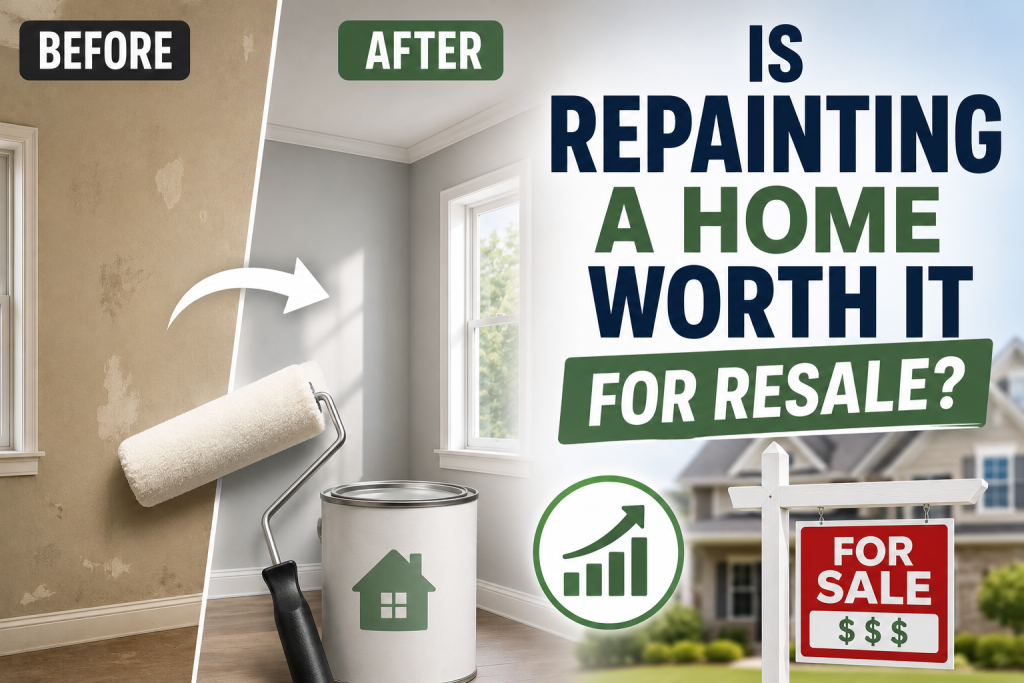
From a cost perspective, the return is often tied to efficiency. A well-planned whole house painting project can significantly improve visual appeal without requiring structural renovations, making it one of the most cost-effective upgrades in real estate preparation. Buyers are also more sensitive to maintenance cues. Fresh paint signals that a home has been cared for, which can positively influence offers and negotiation outcomes. Even if the home repaint costing feels like a major upfront expense, the resale impact often justifies it. In many cases, repainting is less about decoration and more about positioning the home competitively in the market.
Final Thoughts
Planning the cost to repaint a house interior is not just about labor rates or paint gallons; it’s about making smart design decisions that improve efficiency and long-term value. When homeowners choose the right approach from the start, the entire project becomes more predictable and cost-effective. Using modern neutral colors paint helps streamline both design and application. These shades reduce the need for complex color transitions and often require fewer adjustments during application, which can positively influence overall home repaint costing.
A well-planned whole house painting price strategy also ensures consistency across rooms. Instead of treating each space separately, a unified palette creates smoother flow, reduces decision fatigue, and improves resale appeal. At the same time, understanding how finishes, coverage, and preparation affect the final budget allows homeowners to avoid unnecessary surprises. Small choices in paint type or color can significantly impact labor efficiency and material usage. In the end, repainting a home is both a financial and design investment. With the right planning, it delivers a cleaner, more modern interior while supporting stronger long-term property value.
Frequently Asked Questions
What is the cost to repaint a house interior?
The cost to repaint a house interior depends on home size, condition, and labor rates. Most projects are priced per square foot or per room, with additional costs for prep work, ceilings, and trim.
How much is whole house painting price?
Whole house painting price varies widely, but larger homes with more rooms, higher ceilings, and detailed finishes will always cost more due to increased labor and material usage.
What affects modern home repaint price the most?
The biggest factors in modern home repaint price are labor, surface preparation, paint quality, and layout complexity. Homes needing repairs or multiple coats will cost more overall.
What are the best neutral colors paint for resale?
Popular neutral colors paint include warm whites, greige, soft beige, and light taupe. These shades improve buyer appeal and help create a clean, modern look.
Is greige Fence paint still popular?
Yes, greige fence paint remains one of the most popular choices in modern interiors because it balances warmth and coolness, making it highly versatile for different design styles.