


Eggshell vs Satin Paint for Interior Walls
Understanding eggshell vs satin paint starts with recognizing that the main difference is not color, but sheen level and surface reflectivity. Both are popular interior wall paint choices, but they behave very differently once applied to real home environments. An eggshell fence finish has a low sheen with a soft, slightly velvety appearance. It reflects very little light, which helps hide small wall imperfections such as patches, uneven drywall texture, or minor dents. This makes it a common choice for calm, low-traffic areas where appearance matters more than heavy cleaning. Satin paint, on the other hand, has a higher sheen level and reflects more light. This gives it a smoother, more polished look while also improving satin paint stability. It is more resistant to moisture, stains, and frequent cleaning, making it better suited for active living spaces.
This is where the interior paint sheen comparison becomes important. Eggshell prioritizes softness and concealment of flaws, while satin prioritizes strength and washability. The right choice depends on how much wear and cleaning the room will experience. Both finishes are widely used in modern homes from brands like Sherwin-Williams, Benjamin Moore, and Behr, each offering variations suited for different lighting and durability needs. Ultimately, the difference comes down to balancing aesthetics with practicality in your paint sheen lead decisions.
Interior Paint Shine Comparison
A proper interior paint shine comparison is essential when deciding between eggshell vs satin paint, because sheen directly affects how walls look under lighting, how easy they are to clean, and how well they hide imperfections. Sheen refers to how much light a paint surface reflects. Lower-sheen finishes like eggshell absorb more light, creating a soft and subtle look that works well in calm spaces. Higher-sheen finishes like satin reflect more light, creating a smoother, slightly glossier surface that enhances visibility and durability. This difference becomes especially noticeable in real homes. In brighter rooms, satin can highlight architectural details and create a cleaner, more polished finish.
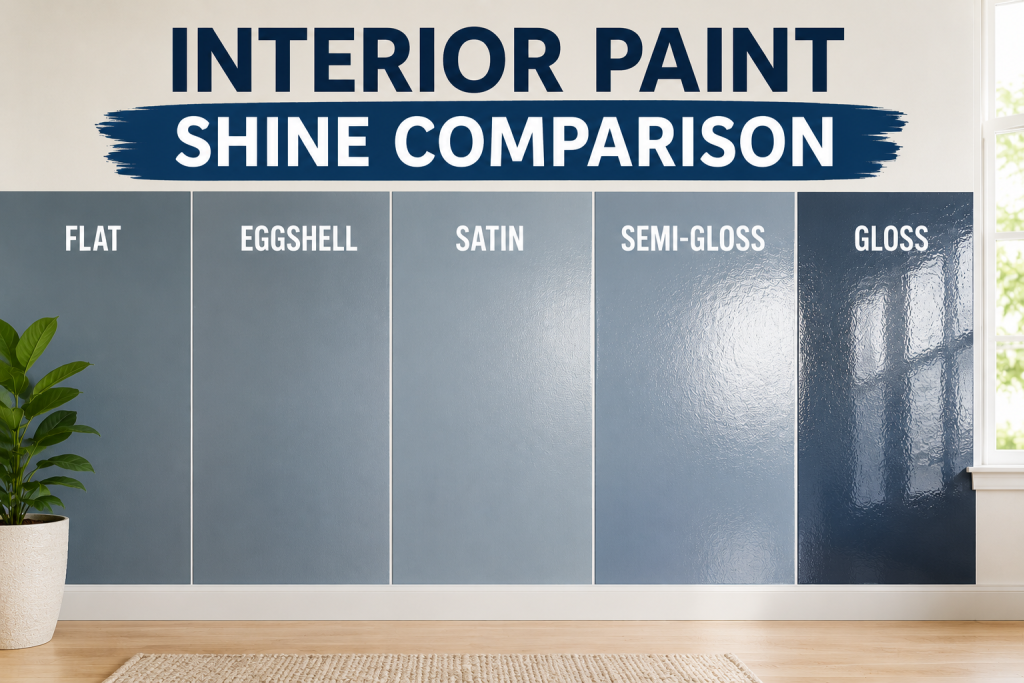
However, it may also expose wall imperfections such as patches or uneven drywall. Eggshell, by contrast, is more forgiving and better at concealing surface flaws, making it a popular choice for standard living room wall paint applications. Durability is another key factor in this paint sheen lead. Satin finishes typically perform better in high-traffic areas because they resist scuffs and allow easier cleaning. Eggshell offers moderate durability but is less resistant to repeated scrubbing, which is important in homes with children or pets. Brands like Sherwin-Williams, Benjamin Moore, and Behr all offer both finishes, allowing homeowners to match sheen levels with room function and lighting conditions for a more balanced interior design.
Eggshell Fence Finish: Pros and Cons
When evaluating eggshell vs satin paint, the eggshell fence finish is often chosen for its soft, low-sheen appearance and ability to create a calm, natural look on interior walls. It sits between flat and satin in terms of reflectivity, making it one of the most commonly used interior wall paint choices in American homes. One of the biggest advantages of eggshell is its ability to hide imperfections. Because it reflects very little light, it helps mask minor drywall flaws, patchwork, and uneven textures. This makes it especially suitable for older homes or spaces where walls are not perfectly smooth. It’s a popular choice for living room fence paint where a relaxed, non-glossy finish is preferred.
Eggshell also offers moderate washability. While it is not as durable as satin, modern formulations from brands like Sherwin-Williams and Benjamin Moore have improved its resistance to light cleaning and everyday marks. However, repeated scrubbing can sometimes dull the finish over time. On the downside, eggshell is less resistant to heavy wear compared to satin. In high-traffic areas, it may show scuffs more easily and require more careful maintenance, especially in busy households. Overall, eggshell works best in lower-traffic rooms where aesthetics and softness are more important than maximum durability in a full paint sheen lead strategy.
Satin paint stability and Performance
When comparing eggshell vs satin paint, satin stands out primarily for its superior satin paint stability and long-term performance in active living spaces. It is designed to handle more wear and tear while still maintaining a smooth, modern appearance, making it one of the most practical interior wall paint choices for busy homes. One of satin’s biggest strengths is its washability. Because it has a slightly higher sheen than eggshell, it creates a tighter, more durable surface film that resists stains, scuffs, and moisture. This makes it an excellent choice for high-traffic areas such as hallways, kitchens, bathrooms, and living room fence paint applications where walls are frequently touched or cleaned. Satin also performs well under different lighting conditions. Its subtle sheen reflects light gently, helping rooms feel brighter and more polished without appearing overly glossy. However, this reflectivity can also make wall imperfections slightly more visible compared to an eggshell fence finish, especially on uneven drywall surfaces.
Premium paint lines from Sherwin-Williams and Benjamin Moore are known for strong satin formulations that balance durability with smooth application. Budget-friendly options from Behr also offer reliable performance for standard residential use. Overall, satin is often preferred in homes that prioritize durability, frequent cleaning, and long-term resilience in a practical paint sheen lead.
Washable Paint Polishes and Maintenance Differences
When evaluating eggshell vs satin paint, one of the most practical differences comes down to washable paint finishes and how each surface responds to cleaning over time. In real homes, especially those with kids, pets, or heavy daily use, maintenance ability can matter more than appearance alone. Satin finishes are generally more resistant to repeated cleaning. Their tighter surface structure allows homeowners to wipe away fingerprints, smudges, and light stains without significantly affecting the sheen or color. This makes satin a strong choice for durable wall paint in high-traffic areas like hallways, kitchens, and family rooms. Eggshell finishes, while still moderately washable, require more care during cleaning. Light wiping is usually fine, but aggressive scrubbing can dull the surface or create uneven patches in sheen. This is why eggshell is often recommended for lower-traffic rooms where maintenance demands are minimal.
High-quality paint lines from Sherwin-Williams and Benjamin Moore have improved both finishes, but satin still maintains an edge in long-term cleanability. Budget-friendly options from Behr also offer solid performance, especially for standard residential cleaning needs. In a practical paint sheen lead, the key takeaway is simple: satin supports frequent maintenance, while eggshell prioritizes appearance over heavy-duty washability.
Best Choice for Living Room Fence Paint
Choosing between eggshell vs satin paint becomes especially important in shared spaces like the living room, where aesthetics, durability, and lighting all play a major role in daily comfort. The living room is often the visual centerpiece of a home, making the right finish a key part of any interior wall paint options decision. For most homeowners, eggshell is a popular choice for living room fence paint because it delivers a soft, low-sheen appearance that feels warm and natural. It helps reduce glare from windows and lighting fixtures while also concealing minor surface imperfections, which is ideal for creating a relaxed, inviting atmosphere.
Satin, however, is increasingly used in modern living rooms due to its improved satin paint stability. It offers better resistance to scuffs, fingerprints, and everyday wear, especially in homes with children, pets, or frequent gatherings. Its slightly higher sheen also adds a subtle polished look that works well in contemporary interiors. Lighting conditions should also guide the decision. In brighter rooms, satin can enhance brightness and depth, while eggshell helps maintain a softer, more muted finish. This is a key consideration in any paint sheen lead for open-concept or naturally lit spaces. Premium paint lines from Sherwin-Williams and Benjamin Moore offer both finishes with strong performance, while Behr provides cost-effective alternatives for standard residential use. Ultimately, the best choice depends on whether you prioritize a softer aesthetic or higher durability in everyday living conditions.
Which Finish Works Best for High-Traffic Areas?
In high-traffic zones, the eggshell vs satin paint decision becomes less about appearance and more about performance. Areas like hallways, entryways, staircases, and kids’ rooms require finishes that can handle frequent contact, cleaning, and everyday wear without breaking down. Satin is generally the stronger performer in these environments due to its higher satin paint stability. Its slightly glossier surface forms a more resilient film that resists scuffs, fingerprints, and moisture better than eggshell. This makes it one of the most reliable choices for busy households where walls are constantly exposed to movement and touch. Eggshell, while visually softer, is less resistant to repeated cleaning. It can work in moderately used spaces, but in tight corridors or high-contact areas, it may show wear faster over time. This is why it is often reserved for lower-traffic rooms in a balanced paint sheen lead approach.
Another factor is lighting. In narrow hallways or stairwells, satin’s subtle reflectivity can actually help brighten the space by bouncing available light, making it feel more open. However, it may also highlight surface imperfections, which should be considered before application. Premium finishes from Sherwin-Williams and Benjamin Moore are commonly used in these areas due to their enhanced scrub resistance, while Behr offers practical options for budget-conscious renovations. Overall, satin is typically the preferred choice for high-traffic spaces where durability and cleanability matter more than ultra-soft aesthetics.
Paint Sheen Lead for Interior Walls
A practical paint sheen guide helps simplify the decision-making process when comparing eggshell vs satin paint, especially for homeowners planning full-room or whole-home repaints. Each sheen level serves a specific purpose, and choosing correctly can improve both durability and visual comfort. Flat and matte finishes sit at the lowest end of the sheen spectrum. They offer the softest appearance and are excellent at hiding imperfections, but they are not highly washable. This makes them better suited for low-traffic rooms where appearance matters more than frequent cleaning. The eggshell fence finish sits just above flat. It provides a subtle sheen with improved durability while still maintaining a soft, natural look. It is commonly used in bedrooms and living rooms where moderate wear is expected, but aesthetics remain a priority. Satin finishes are positioned higher on the sheen scale and offer significantly better washable paint polishes. They reflect more light, which enhances brightness but also increases visibility of surface imperfections. In exchange, they provide stronger resistance to stains, scuffs, and moisture.
Semi-gloss and gloss finishes sit at the top of the durability range. While not typically used for full walls, they are ideal for trim, doors, and high-contact surfaces due to their excellent cleanability and toughness. Premium paint lines from Sherwin-Williams and Benjamin Moore offer consistent performance across all sheen levels, while Behr provides accessible options for standard residential applications. Understanding this sheen hierarchy allows homeowners to match finish type with room function more effectively, reducing maintenance issues and improving long-term results.
Maintenance Tips for Eggshell vs Satin Paint Walls
Even after choosing between eggshell vs satin paint, long-term performance depends heavily on how the walls are maintained. Proper care helps preserve the finish, extend durability, and reduce the need for frequent repainting in busy homes.
Eggshell vs Satin paint: Clean Walls Gently and Regularly
For both finishes, light cleaning on a routine basis is better than waiting for buildup. Use a soft microfiber cloth with mild soap and water to remove dust, fingerprints, and minor marks. This is especially important for living room fence paint and hallways where contact is frequent.
Be Careful With Scrubbing Pressure
While satin is known for stronger satin paint stability, excessive scrubbing can still dull the surface over time. Eggshell finishes are more sensitive, so aggressive cleaning should always be avoided to protect the eggshell wall finish appearance.
Use the Right Cleaning Products
Avoid harsh chemicals or abrasive sponges, as they can damage the surface layer of both finishes. Even high-quality paints from Sherwin-Williams and Benjamin Moore can lose their sheen consistency if cleaned incorrectly.
Spot Touch-Ups for High-Traffic Areas
In areas with frequent wear, such as hallways or entryways, small touch-ups help maintain a consistent finish. Budget-friendly paints from Behr can be used for quick repairs when needed.
Control Moisture and Ventilation
Humidity can affect how washable paint polishes age over time, especially in kitchens or bathrooms. Proper ventilation helps maintain both color stability and surface integrity. With consistent maintenance, both eggshell and satin finishes can remain attractive and durable for years, even in active households.
Eggshell vs Satin Paint
When deciding eggshell vs satin paint, the best choice ultimately depends on how each room is used, how much traffic it gets, and how important durability is compared to visual softness. A room-by-room approach is the most reliable way to apply any paint sheen lead effectively in real homes. For living rooms, eggshell is often the preferred option because it creates a soft, welcoming finish that works well in most lighting conditions. It is ideal for standard living room fence paint where moderate durability is needed, but aesthetics remain the priority. In hallways, entryways, and staircases, satin is usually the better choice. These high-traffic areas benefit from stronger satin paint stability, especially where walls are frequently touched or cleaned. Satin’s washable surface helps maintain a cleaner appearance over time.
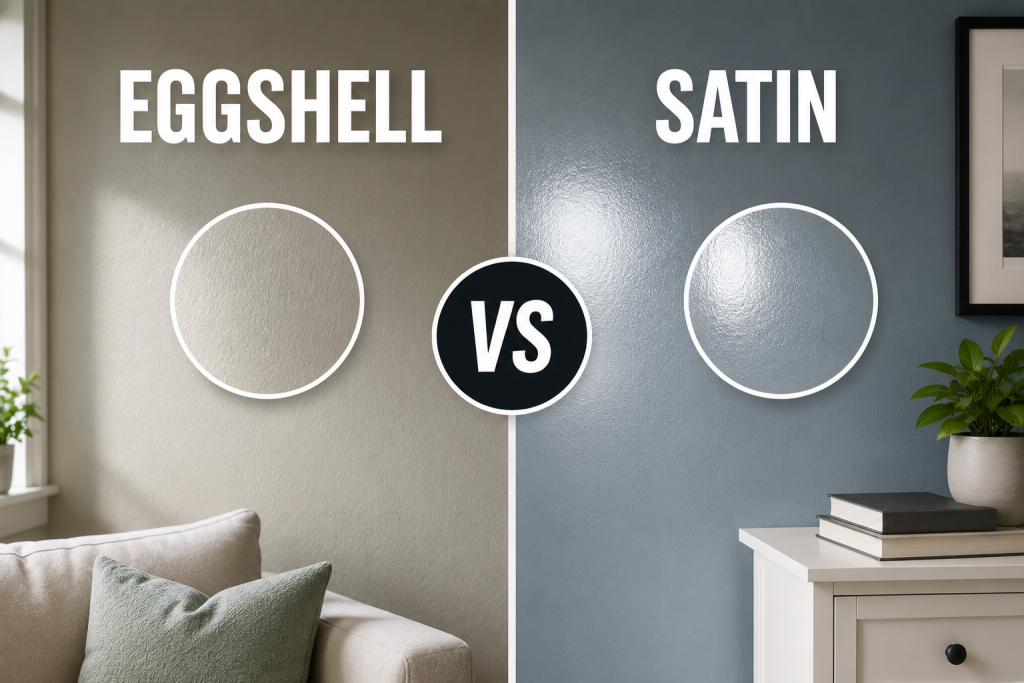
For bedrooms, eggshell is typically recommended due to its low sheen and ability to hide imperfections, creating a calm and comfortable environment. However, in children’s rooms or busy family spaces, satin can be a more practical choice for interior wall paint. Kitchens and bathrooms almost always perform better with satin because of moisture exposure and frequent cleaning needs. The added resistance makes it one of the most reliable washable paint polishes in functional spaces. Premium paint lines from Sherwin-Williams and Benjamin Moore offer both finishes with consistent quality, while Behr provides cost-effective alternatives. In the end, there is no universal winner, only the right finish for the right room and lifestyle.
Common Mistakes
Even when homeowners understand eggshell vs satin paint, there are still several common mistakes that can lead to disappointing results, higher maintenance, or an uneven interior finish. Most issues come from choosing sheen based on appearance alone instead of room function and durability needs.
- One of the biggest mistakes is using eggshell in high-traffic areas. While the eggshell fence finish looks soft and attractive, it is not always strong enough for hallways, entryways, or kids’ rooms. Over time, scuffs and stains become more visible and harder to clean, especially in busy households.
- Another common error is overusing satin in low-traffic spaces. Although satin paint stability is a major advantage, its higher sheen can highlight drywall imperfections, patchwork, or uneven surfaces. In quiet rooms like formal living areas or bedrooms, this can make walls appear less smooth than intended.
- Homeowners also often ignore lighting conditions. The interior paint shine comparison changes significantly under natural and artificial light, which can make satin feel glossier than expected or eggshell appear flatter than anticipated once applied.
- Mixing finishes without a plan is another issue. Using different sheens randomly across connected rooms can disrupt visual flow, making interiors feel inconsistent instead of cohesive.
- Premium brands like Sherwin-Williams and Benjamin Moore help reduce these issues with consistent formulation quality, while Behr offers budget-friendly options when used with proper planning.
Avoiding these mistakes ensures better durability, smoother finishes, and a more intentional interior design result.
Final Thoughts
Deciding between eggshell vs satin paint ultimately comes down to balancing appearance, durability, and how each space is used in everyday life. Both finishes are excellent interior wall paint choices, but they serve different purposes within a well-planned home design. Eggshell is best suited for homeowners who prioritize a soft, low-sheen look that hides imperfections and creates a calm, subtle backdrop. It works especially well in bedrooms and standard living room fence paint applications where heavy cleaning is not required. Satin, on the other hand, is designed for performance. Its stronger satin paint durability makes it ideal for high-traffic areas, families with kids or pets, and rooms that require frequent cleaning. It offers a more polished finish while still maintaining a modern interior look. The most effective paint sheen lead approach is not choosing one finish for the entire home, but matching each room to its function. This ensures that aesthetics and practicality work together instead of competing against each other. Brands like Sherwin-Williams and Benjamin Moore provide consistent quality across both finishes, while Behr offers accessible solutions for budget-conscious projects. In the end, the right choice is the one that fits your lifestyle, not just your visual preference, because the best interior finish is the one that performs well long after the paint has dried.
Frequently Asked Questions
What is the main difference between eggshell vs satin paint?
The main difference in eggshell vs satin paint is sheen and durability. Eggshell has a softer, low-sheen finish that hides wall imperfections, while satin has a slightly higher sheen and better satin paint stability for cleaning and high-traffic areas.
Is eggshell or satin better for living rooms?
For most homes, both work well for living room fence paint, but eggshell is preferred for a softer, more natural look, while satin is better if the space gets heavy use or frequent cleaning.
Which paint finish is more washable?
Satin is generally more washable. It is considered one of the better washable paint polishes because it resists stains, scuffs, and moisture better than an eggshell fence finish.
Does satin paint show more wall imperfections?
Yes, satin reflects more light, so it can highlight imperfections more than eggshell. This is an important factor in any interior paint shine comparison, especially for older or uneven walls.
Which brands offer the best eggshell and satin paints?
Top options include Sherwin-Williams, Benjamin Moore, and Behr, all offering reliable interior wall paint choices in both finishes.