


Matte vs Satin Paint Finish: What’s the Difference?
Choosing the right paint finish is just as important as selecting the color, especially when designing interior spaces that need to balance style and practicality. The debate of matte vs satin paint comes down to durability, appearance, and how each finish performs in different lighting and room conditions. While both options are widely used in modern homes, they serve very different purposes in terms of aesthetics and maintenance. A matte paint finish offers a smooth, non-reflective surface that creates a soft and elegant look, making it popular for low-traffic areas and bedrooms.
In contrast, satin paint provides a subtle sheen that reflects light and offers greater durability, making it suitable for high-traffic areas like living rooms, hallways, and kitchens. This guide breaks down matte paint pros and cons, compares satin paint durability, and explains how different wall sheen comparison levels affect interior design. Whether you’re planning a full renovation or a simple room refresh, this interior paint finish guide will help you choose the right option for your space.
Matte vs Satin Paint: Key Differences Overview
When comparing matte vs satin paint, the differences come down to sheen level, durability, and how each finish interacts with light. Matte paint absorbs light for a smooth, non-reflective appearance, while satin paint reflects a small amount of light, creating a soft glow that highlights wall texture and adds depth.
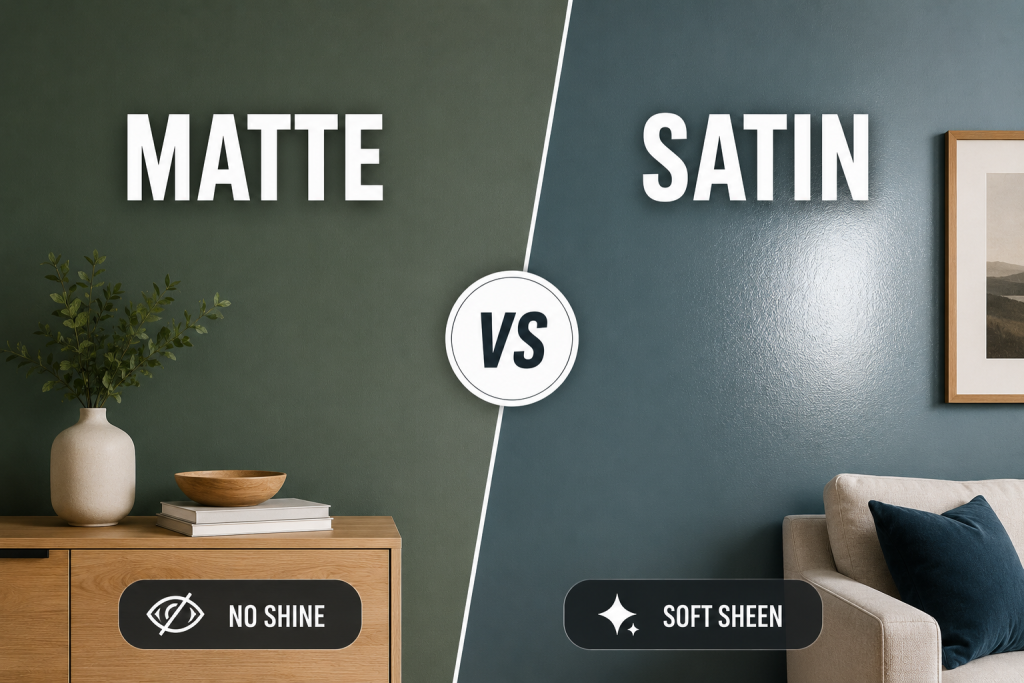
Here’s a quick wall sheen comparison:
| Feature | Matte Paint | Satin Paint |
| Sheen Level | No shine (flat finish) | Soft, subtle shine |
| Appearance | Smooth, velvety look | Slightly glossy, polished look |
| Durability | Lower | Higher (satin paint durability) |
| Washability | Limited | Easy to clean (washable paint options) |
| Best Rooms | Bedrooms, ceilings, low-traffic areas | Living rooms, hallways, kitchens |
| Touch-Up Ability | Easy to blend | Harder to match perfectly |
From an interior paint finish guide perspective, matte is often chosen for style-focused spaces, while satin is preferred where durability and maintenance matter more. The choice depends on whether you prioritize aesthetics or long-term practicality.
Matte Paint Pros and Cons
Understanding matte paint pros and cons is essential when deciding between matte vs satin paint, especially for interior spaces where appearance and maintenance both matter. Matte paint is known for its soft, non-reflective finish that creates a smooth and elegant look on walls. It absorbs light rather than reflecting it, which helps hide surface imperfections such as small cracks, patches, or uneven textures.
Advantages of Matte Paint
- Provides a smooth, velvety, and modern appearance
- Excellent for hiding wall imperfections
- Creates a calm and subtle aesthetic for bedrooms
- Works well in low-traffic areas
- Ideal for ceiling applications and accent walls
Disadvantages of Matte Paint
- Less durable than satin finishes
- Harder to clean once stained
- Not ideal for high-traffic or moisture-prone areas
- Can show marks from touching or rubbing
From a design perspective, matte paint is often favored in bedroom paint sheen selections because it creates a soft, relaxing environment. However, in homes with kids or heavy activity, maintenance can become a challenge compared to more durable finishes. This makes it important to consider both lifestyle and room function when selecting an interior paint finish guide option.
Satin Paint Durability and Benefits
When evaluating matte vs satin paint, satin is often chosen for its superior durability and ease of maintenance. A satin finish has a slight sheen that makes it more resistant to wear, moisture, and stains compared to matte, which is why it is commonly used in high-traffic interior spaces. One of the biggest advantages of satin is its strong satin paint durability. It holds up well in areas that experience frequent contact, such as hallways, living rooms, and children’s bedrooms. The smooth, slightly glossy surface also allows for easier cleaning, making it part of many washable paint options recommended by professionals.
Advantages of Satin Paint
- More durable and long-lasting than matte finishes
- Easy to clean and maintain with mild soap and water
- Better resistance to stains, scuffs, and fingerprints
- Reflects light slightly, improving brightness in darker rooms
- Ideal for active households and busy living spaces
Disadvantages of Satin Paint
- Highlights wall imperfections more than matte
- Can show roller or brush marks if not applied carefully
- Slight sheen may not suit ultra-minimal or soft design styles
From an interior paint finish guide perspective, satin is often recommended for living room paint finishes, kitchens, and hallways where durability is a priority. It offers a practical balance between appearance and functionality while maintaining a clean, polished look.
Living Room vs Bedroom Best Uses
Choosing between matte vs satin paint becomes much easier when you match each finish to the function of the room. Living rooms and bedrooms have very different usage patterns, lighting conditions, and durability needs, which directly affects the ideal interior paint finish guide selection. For bedrooms, matte paint is often the preferred choice because it creates a soft, calming atmosphere that supports rest and relaxation. Its non-reflective surface works especially well as a bedroom paint sheen, helping reduce visual distractions and creating a cozy environment. It also pairs well with minimalist or low-light interior designs where a gentle, muted finish is desired.
In contrast, satin paint is better suited for living rooms and shared spaces. As part of common living room paint finishes, satin offers higher durability and easier cleaning, which is important in high-traffic areas where walls are more likely to experience scuffs, fingerprints, and general wear. Its slight sheen also helps reflect natural and artificial light, making larger spaces feel brighter and more open. Ultimately, the choice depends on balancing comfort and aesthetics with practicality. Bedrooms benefit from softness and subtlety, while living areas benefit from durability and easy maintenance.
Durability, Maintenance, and Cleaning Comparison
When comparing matte vs satin paint, durability and maintenance are often the deciding factors for homeowners choosing an interior finish. While both options can look visually appealing, they perform very differently when it comes to cleaning, wear resistance, and long-term upkeep. Matte paint has a softer surface that is more prone to marking, scuffing, and staining. Once dirt or fingerprints are absorbed into the finish, it can be difficult to clean without affecting the appearance of the wall. This makes matte better suited for low-traffic areas where contact is minimal, such as ceilings or formal bedrooms. It is less ideal for households with children, pets, or high activity levels.
Satin paint, on the other hand, offers significantly better satin paint durability due to its slightly sealed surface. It resists stains and can be wiped clean with mild soap and water, making it part of many modern washable paint options. This makes it a practical choice for hallways, kitchens, and living room paint finishes, where walls are more likely to be touched or exposed to wear. From a maintenance perspective, satin is easier to care for long-term, while matte requires more careful handling to preserve its smooth, even appearance.
Cost, Application, and Coverage Differences
When comparing matte vs satin paint, cost and application performance are important factors that often get overlooked. While the price difference between the two finishes is usually small, the long-term application experience and maintenance requirements can influence overall project value and effort. In most cases, matte paint and satin paint are priced similarly per gallon across major brands like Sherwin-Williams, Benjamin Moore, and Behr. However, satin may slightly increase overall project costs in some cases due to its durability and higher-performance formulation, especially in premium interior paint finish guide lines.
From an application standpoint, matte paint is generally easier to apply and touch up. It absorbs light evenly, which helps hide roller marks and minor inconsistencies, making it more forgiving for DIY projects. Satin paint, however, requires more careful application because its slight sheen can highlight roller lines, brush strokes, or uneven coverage if not applied properly. Coverage also differs in practical use. Matte tends to blend better during touch-ups, while satin can sometimes show patch differences if not matched precisely. This makes matte more suitable for walls that may need frequent repairs, while satin is preferred for long-term durability in living room paint finishes and high-traffic areas.
Best Paint Finish by Room Type
Choosing between matte vs satin paint becomes much clearer when you match each finish to the function of the room. Different spaces in a home have different levels of traffic, lighting, and cleaning needs, which directly impacts the ideal finish selection within an interior paint finish guide. For bedrooms, matte paint is often the preferred choice because it creates a soft, calming environment with minimal light reflection. This makes it an excellent bedroom paint sheen option, especially for primary and guest bedrooms where comfort and relaxation are priorities.
For living rooms, satin paint is typically the better option. As one of the most common living room paint finishes, it offers a subtle sheen that enhances natural light while providing enough durability to handle daily wear, furniture contact, and occasional cleaning. Kitchens and bathrooms almost always benefit from satin or semi-gloss finishes due to moisture and frequent cleaning needs. Hallways and entryways also perform better with satin because of high traffic and frequent wall contact. Matte remains best reserved for low-traffic or decorative areas where aesthetics matter more than washability. Matching the right finish to each room ensures both visual appeal and long-term performance throughout the home.
Common Mistakes When Choosing Paint Finishes
Many homeowners make avoidable errors when deciding between matte vs satin paint, often focusing only on color while overlooking how the finish will perform in daily use. One of the most common mistakes is choosing matte paint for high-traffic areas. While matte offers a beautiful, smooth appearance, it is not designed for frequent cleaning or heavy contact, which can quickly lead to visible wear. Another frequent issue is underestimating lighting effects. Satin paint reflects more light, which can highlight imperfections if walls are not properly prepared. On the other hand, matte can sometimes make darker rooms feel flatter or less vibrant if there is limited natural light. Understanding these differences is essential in any interior paint finish guide.
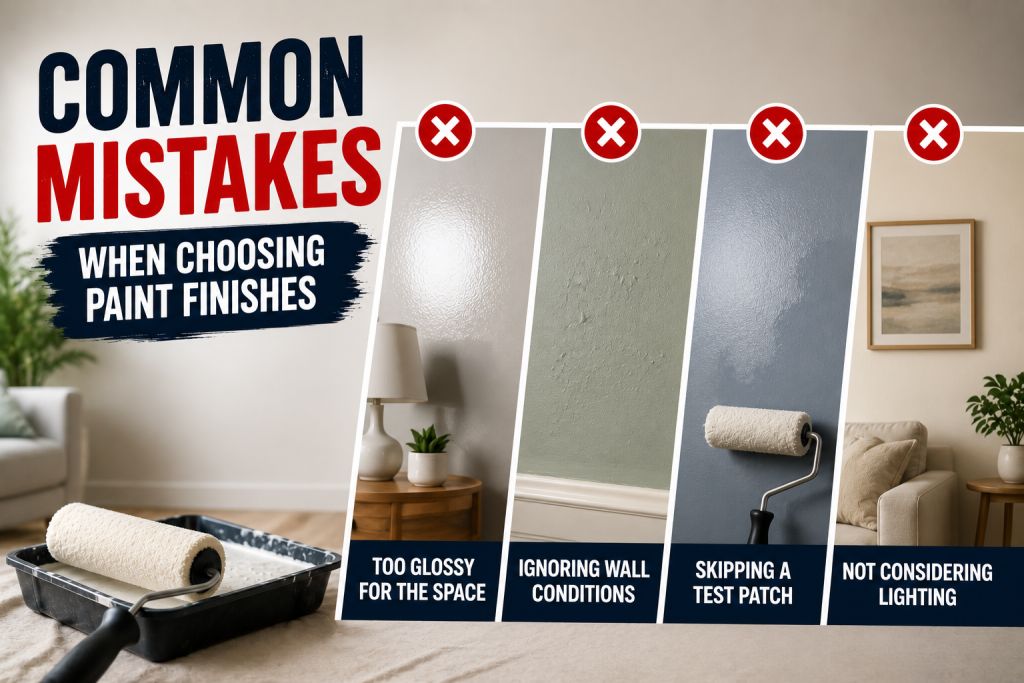
Homeowners also tend to overlook maintenance needs. Choosing the wrong finish for the wrong space often results in higher long-term upkeep costs. For example, using matte in a hallway or kitchen may require frequent touch-ups, while satin may feel too reflective in a relaxing bedroom paint sheen setting. Avoiding these mistakes ensures better performance, longer-lasting walls, and a more balanced design across all living room paint finishes and interior spaces.
Paint Finish Decision Checklist
Before finalizing your choice between matte vs satin paint, use this simple checklist to ensure you select the right finish for both performance and aesthetics. This helps avoid costly repainting and ensures your interior paint finish guide decision aligns with your home’s real-world needs.
- Identify the room type (bedroom, living room, kitchen, hallway, bathroom)
- Determine traffic level (low, medium, or high use)
- Consider cleaning frequency and maintenance expectations
- Evaluate natural and artificial lighting in the space
- Decide if a soft, non-reflective look or subtle sheen is preferred
- Check wall condition (matte hides imperfections better than satin)
- Match finish to function (comfort vs durability)
- Choose satin for high-traffic living room paint finishes or moisture-prone areas
- Choose matte for calm, low-traffic bedroom paint sheen environments
- Test samples on walls before making a final decision
Following this checklist ensures you select a finish that not only looks good but also performs well over time, balancing style, durability, and practicality.
Conclusion
Choosing between matte vs satin paint ultimately comes down to balancing appearance, durability, and room function. Matte paint offers a smooth, non-reflective finish that works beautifully in calm, low-traffic spaces like bedrooms, where a soft bedroom paint sheen helps create a relaxing atmosphere. Satin paint, on the other hand, provides greater durability, easier cleaning, and a subtle glow that makes it ideal for busy areas and living room paint finishes. When following a clear interior paint finish guide, it becomes easier to match each finish to the right space in your home.
Matte is best for hiding imperfections and creating a cozy feel, while satin excels in practicality and long-term maintenance. By understanding how each finish performs, homeowners can make more confident decisions that improve both style and functionality. In the end, the right choice depends on how each room is used, how much maintenance you prefer, and the overall look you want to achieve across your interior spaces.
Frequently Asked Questions
What is the main difference between matte and satin paint?
The main difference in matte vs satin paint is sheen and durability. Matte has a flat, non-reflective finish, while satin has a soft sheen that is more durable and easier to clean.
Is satin paint more durable than matte?
Yes. Satin paint durability is higher because it resists stains, scuffs, and moisture better than matte, making it ideal for high-traffic areas.
Where should I use matte paint in my home?
Matte paint works best in low-traffic areas like bedrooms and ceilings. It is a popular bedroom paint sheen choice because it creates a soft, calming look.
Is satin paint washable?
Yes. Satin is one of the most common washable paint options. It can typically be cleaned with mild soap and water without damaging the finish.
What is better for living rooms: matte or satin?
Satin is usually better for living room paint finishes because it offers durability and easier maintenance while still providing a subtle, attractive sheen.
Does matte paint hide wall imperfections better?
Yes. Matte paint is better at hiding dents, patches, and uneven textures, making it a strong choice for older walls or imperfect surfaces.