

Engineered vs Solid Hardwood Cost Comparison (2026 US Guide)
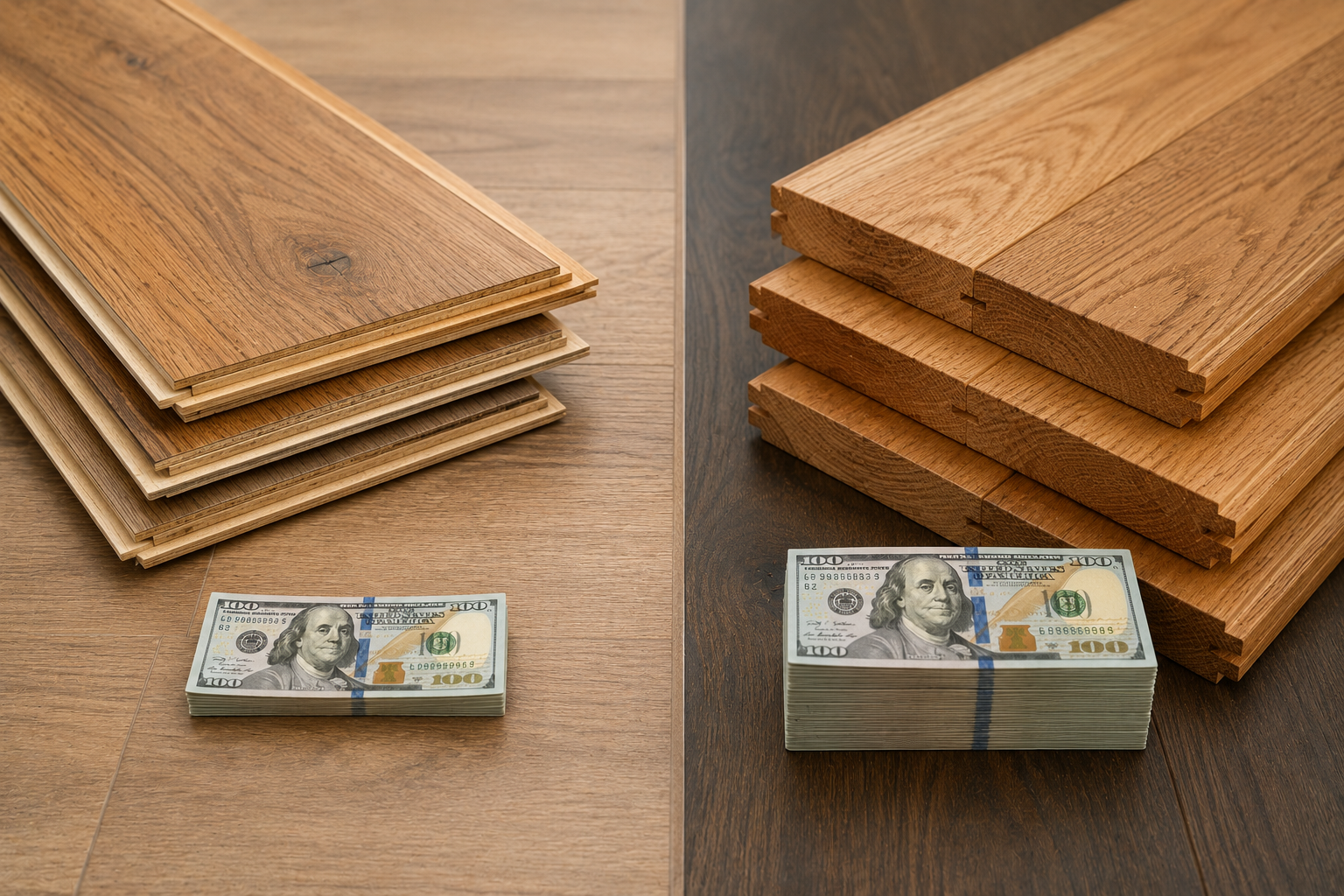
The engineered vs solid hardwood cost comparison is one of the most important decisions US homeowners face when planning a flooring upgrade. While both options deliver the look and feel of real wood, their pricing structures and long-term value are significantly different. Solid hardwood typically requires a higher upfront investment due to material thickness, installation complexity, and finishing requirements. Engineered hardwood, by contrast, is designed to offer a more affordable hardwood flooring entry point while still maintaining a real wood surface layer.
However, cost is not just about purchase price. Installation, maintenance, climate performance, and long-term durability all influence the true lifetime expense. In many US homes, especially across varying climates like the humid Southeast or dry Midwest, these differences can significantly impact total ownership cost. This guide breaks down both options to help homeowners make a financially sound flooring decision.
Solid Hardwood Flooring Pricing Breakdown
solid wood flooring pricing is generally higher because it involves thicker natural wood, more intensive milling, and a more complex installation process. In the US market, solid hardwood is often positioned as a premium flooring choice, especially in homes where long-term value and resale appeal are priorities. When comparing Engineered vs Solid Hardwood Cost, material expenses vary depending on the wood species selected, such as oak, maple, or hickory. Premium or exotic hardwood options can significantly increase overall pricing.
Installation costs also play an important role, as solid hardwood requires proper acclimation, nailing into a wooden subfloor, and sometimes additional leveling work, which can make it more expensive than engineered alternatives. Another factor that affects total expense is finishing. Many solid hardwood floors require on-site sanding and sealing after installation, which increases labor time and cost. However, this investment is often justified by long lifespan and refinishing ability, which enhances long-term wood flooring ROI compared to many alternatives.
Engineered Wood Flooring Cost Breakdown
Engineered wood flooring cost is generally lower than solid hardwood because of its layered construction and more efficient manufacturing process. Instead of being milled from a single block of wood, engineered planks use a real hardwood veneer over a plywood or high-density core, which reduces material waste and overall production expense.
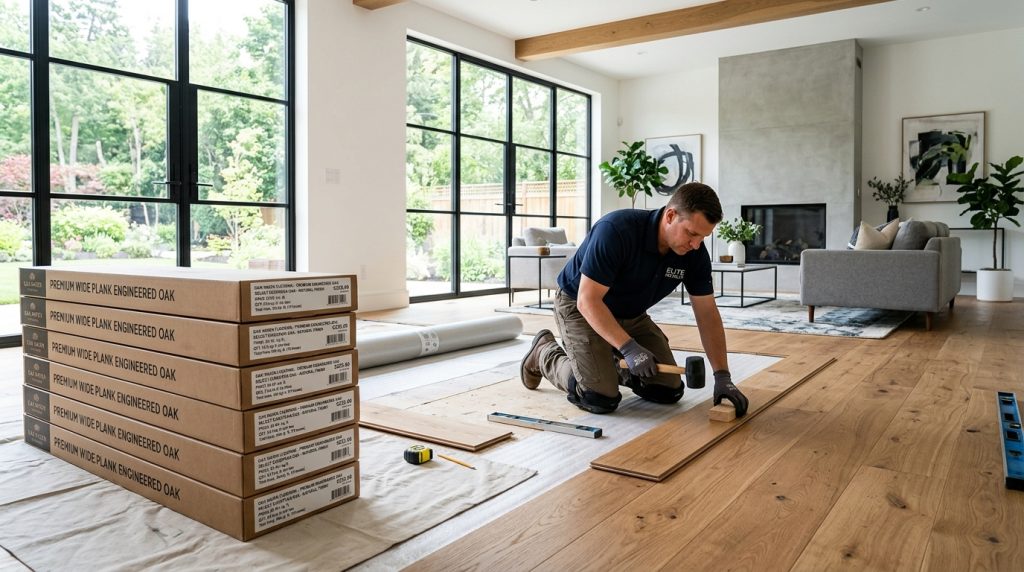
In the US, engineered hardwood is often chosen for projects where homeowners want the look of real wood without the higher upfront investment. It is especially popular in suburban renovations and modern builds where cost efficiency and faster installation are priorities. Installation is also typically more flexible and less labor-intensive. Many engineered products can be floated, glued, or stapled, depending on the subfloor, which can reduce labor time and cost. While it may not offer the same refinishing lifespan as solid hardwood, engineered flooring provides a strong balance between appearance, performance, and hardwood flooring price comparison.
Installation Cost Comparison
When evaluating flooring installation comparison, the difference between engineered and solid hardwood becomes very clear in labor requirements and job complexity. Solid hardwood installation is generally more labor-intensive because it requires nailing into a wood subfloor, proper acclimation time, and often on-site sanding and finishing after installation. These extra steps increase both time and labor cost in many US housing markets. When evaluating Engineered vs Solid Hardwood Cost, engineered hardwood is often more affordable to install because it is designed for faster and more flexible installation.
Depending on the product, it can be floated, glued, or stapled, allowing installers to adapt to different subfloor conditions, including concrete slabs commonly found in modern U.S. homes. This streamlined installation process can reduce labor time and help lower the overall project cost compared to solid hardwood flooring. Regional labor rates also play a role. In high-cost metro areas, installation differences between the two can significantly impact total project pricing, making engineered options more appealing for budget-conscious renovations.
Long-Term Cost (Maintenance + Repairs)
When comparing engineered vs solid hardwood cost, long-term expenses often matter more than upfront pricing. Solid hardwood can be sanded and refinished multiple times, which helps extend its lifespan for decades. However, each refinishing cycle adds labor cost, especially in larger US homes or high-traffic areas where wear appears faster. Engineered hardwood has a different cost profile. While it may require less frequent refinishing, its wear layer is thinner, meaning only certain products can be refinished once or twice, if at all. In some cases, heavily damaged boards must be replaced entirely, which can increase repair costs over time. Maintenance also plays a role in long-term value. Both flooring types require regular cleaning and humidity control, but solid hardwood is more sensitive to environmental changes, which may lead to additional corrective work in humid or dry US climates. This makes lifecycle planning essential when evaluating total ownership cost.
Durability vs Cost Efficiency
When analyzing hardwood flooring durability against cost efficiency, engineered and solid hardwood offer different strengths that directly affect long-term value. Solid hardwood is generally more durable in terms of lifespan because it can be refinished multiple times, allowing homeowners to restore its surface instead of replacing it. This makes it a strong option for long-term ownership in stable indoor environments.
Engineered hardwood, however, is designed for structural stability rather than repeated restoration. Its layered construction reduces movement caused by humidity and temperature changes, making it more reliable in regions with fluctuating climates such as the Southeast, Pacific Northwest, and parts of the Midwest. While it may not last as long as solid hardwood in terms of refinishing cycles, it often performs better in preventing warping or gaps. From a cost-efficiency standpoint, engineered hardwood can reduce upfront and installation costs, while solid hardwood may offer better long-term value in homes focused on longevity and wood flooring ROI.
Which Option Gives Better ROI?
When evaluating wood flooring ROI, both engineered and solid hardwood can deliver strong returns, but the outcome depends heavily on the type of home, location, and buyer expectations in the US market. Solid hardwood generally offers the strongest long-term resale advantage because it is widely viewed as a premium, permanent upgrade that signals higher property quality. Buyers in competitive housing markets such as California, New York, and suburban developments across Texas and Florida often associate solid hardwood with stronger home value flooring upgrades, which can positively influence offers and reduce time on market. Its ability to be refinished multiple times also adds to its perceived lifetime value.
When comparing Engineered vs Solid Hardwood Cost, engineered hardwood often provides strong value despite having a slightly lower resale impact in some markets. It performs particularly well in modern homes and humid regions where dimensional stability is a priority. In many cases, engineered hardwood delivers a balanced return on investment by reducing upfront costs while still offering the appearance, durability, and appeal of genuine wood flooring.
Affordable Hardwood Flooring Options
When homeowners compare engineered vs solid hardwood cost, affordability often becomes the deciding factor. While solid hardwood is typically positioned as a premium investment, there are still budget-friendly options within both categories that can help reduce upfront expenses without sacrificing appearance.
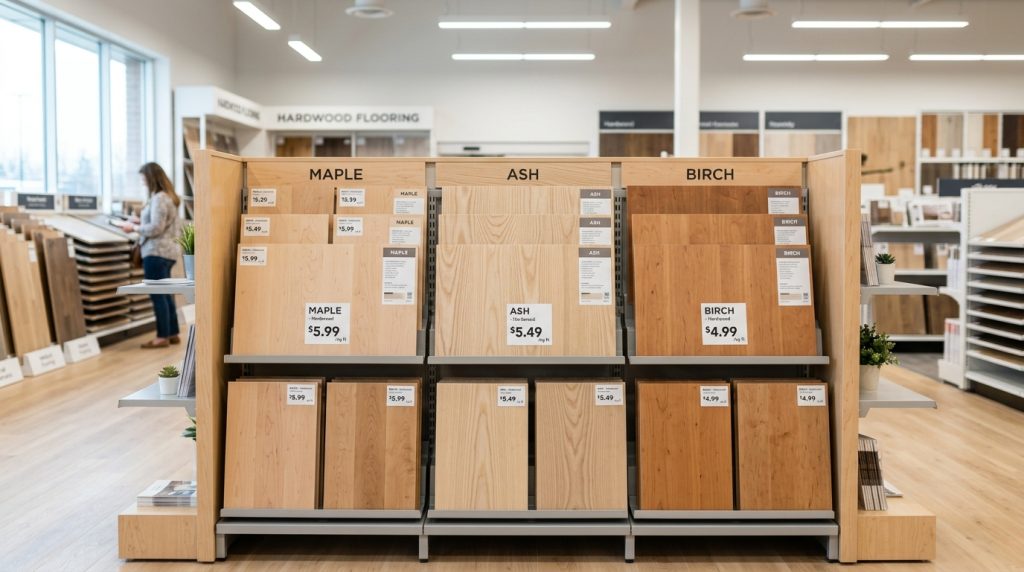
In the engineered category, affordable hardwood flooring options usually come from thinner wear layers or more cost-efficient core materials. These products are widely used in US suburban renovations where homeowners want the look of real wood at a controlled budget. Brands like Mohawk Industries and Shaw Industries offer entry-level engineered collections that balance cost and performance.
When considering Engineered vs Solid Hardwood Cost, affordability on the solid hardwood side often depends on the wood species selected. Oak is typically more budget-friendly than exotic or specialty woods, making it a popular choice for cost-conscious remodels. Choosing simpler finishes and standard plank widths can also help reduce material and installation expenses while still providing an attractive and durable flooring solution.
Best Choice by Home Type
Choosing between engineered vs solid hardwood cost becomes much clearer when you match the flooring type to the home itself. In suburban family homes, engineered hardwood is often the more practical option because it handles humidity changes better and reduces upfront installation costs, making it ideal for large open-plan layouts common in modern US housing. In contrast, luxury homes or high-value resale properties often benefit more from solid hardwood.
Its ability to be refinished multiple times and its strong association with premium construction make it a preferred choice in markets where buyers expect long-term home value flooring upgrades. For rental properties or investment homes, engineered hardwood typically offers better cost efficiency and easier maintenance cycles, especially when turnover between tenants is frequent. Climate also matters, humid coastal regions tend to favor engineered products, while dry inland regions can support solid hardwood more reliably.
Final Verdict
When comparing engineered vs solid hardwood cost, the most cost-effective choice depends on whether you prioritize upfront savings or long-term value. Engineered hardwood is typically more budget-friendly at the installation stage, making it attractive for homeowners focused on immediate affordability and faster project completion. However, solid hardwood often delivers stronger lifetime value due to its ability to be refinished multiple times, extending its usable life for decades. In many US housing markets, this long lifespan contributes to stronger wood flooring ROI, especially in homes where resale value is a priority. Engineered hardwood performs best in climates with humidity fluctuations or in homes built on concrete slabs, where stability matters more than refinishing potential. Solid hardwood remains the preferred option for buyers seeking traditional luxury appeal and maximum long-term return. Ultimately, engineered wins on short-term cost efficiency, while solid hardwood wins on long-term investment performance and resale strength.
FAQs
Is engineered hardwood cheaper than solid hardwood?
Yes, engineered wood flooring costs are typically lower than solid hardwood because it uses a layered core structure that reduces material waste and simplifies manufacturing.
Which lasts longer: engineered or solid hardwood?
Solid hardwood usually lasts longer because it can be refinished multiple times, while engineered hardwood has limited refinishing potential depending on the wear layer.
What is the biggest cost difference between the two?
The main difference in solid wood flooring pricing vs engineered flooring is upfront material cost and installation complexity. Solid hardwood is more expensive to install.
Is engineered hardwood a good long-term investment?
Yes, engineered flooring can offer strong wood flooring ROI, especially in humid or modern homes where stability is more important than repeated refinishing.
Why is solid hardwood more expensive?
Solid hardwood is made from a single piece of natural wood, requiring more raw material, labor, and finishing work, which increases total cost.
Which is better for resale value?
Solid hardwood generally performs better for resale in many US markets due to its premium perception and long lifespan, making it a strong home value flooring upgrade.
What is the most affordable hardwood option?
Lower-cost engineered products and oak-based solid hardwood are often the most affordable hardwood flooring choices for homeowners on a budget.