

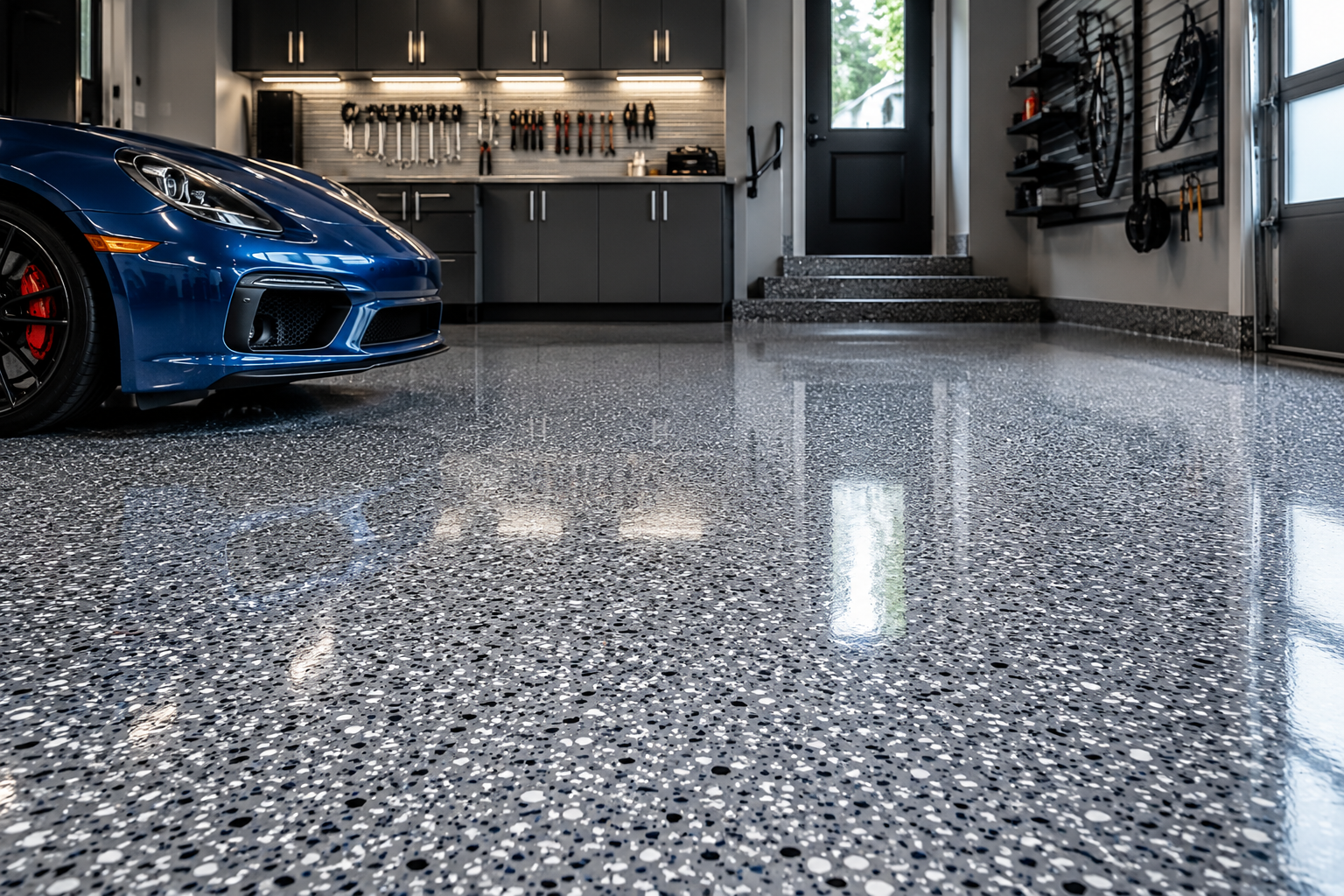
Ultimate Epoxy Flooring Guide
Concrete floors are durable, but they are not always attractive, stain-resistant, or easy to maintain. That’s why many American homeowners and property managers are turning to epoxy flooring as a long-term solution for garages, basements, workshops, and commercial spaces. This epoxy flooring guide explains everything you need to know before investing in an epoxy floor system, from benefits and applications to installation requirements and maintenance expectations.
Unlike ordinary concrete paint, epoxy floor coating creates a strong protective layer that bonds directly to the surface. The result is a seamless finish that can withstand heavy foot traffic, vehicle use, moisture exposure, and chemical spills. Whether you own a home in humid Florida, a snowy property in Minnesota, or a high-heat garage in Arizona, epoxy flooring can provide years of reliable performance when properly installed. In this guide, you’ll learn how epoxy flooring works, where it performs best, what it costs, and whether it’s the right choice for your property.
What Is Epoxy Flooring Guide?
Epoxy flooring is a high-performance surface system created by combining epoxy resin with a hardening agent. When these components are mixed, a chemical reaction occurs that transforms the liquid material into a rigid, durable surface bonded to concrete. Unlike traditional floor paint, epoxy forms a thicker protective layer that offers superior strength and longevity.
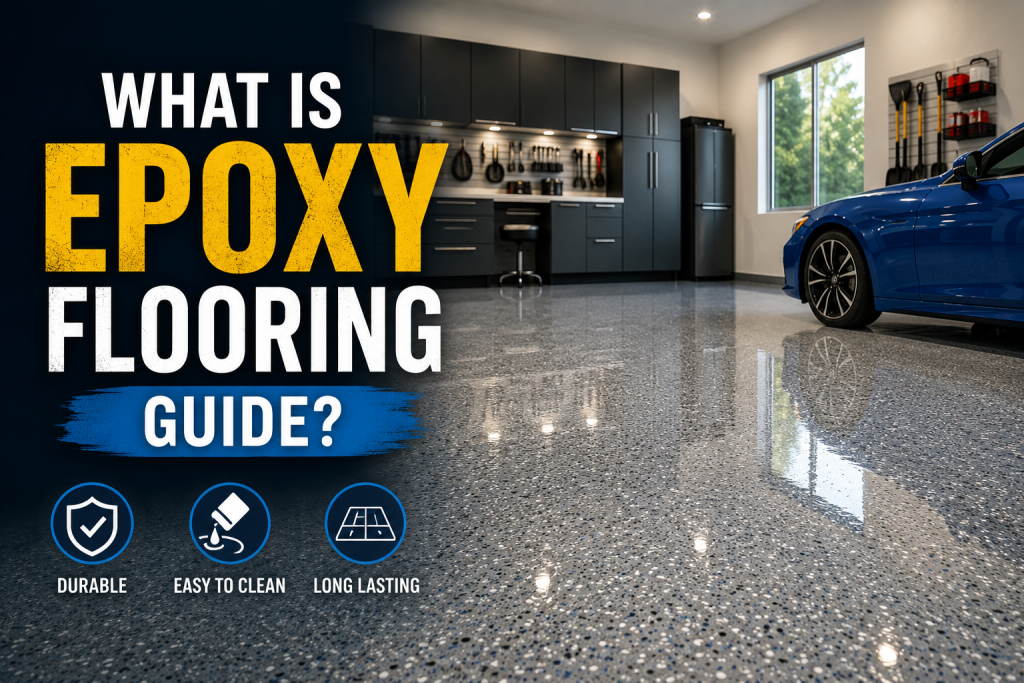
This flooring system is widely used in homes, commercial buildings, and manufacturing facilities because it resists stains, impacts, moisture, and everyday wear. Homeowners often choose epoxy flooring to improve the appearance and functionality of spaces that experience heavy use throughout the year. As you’ll discover throughout this epoxy flooring guide, the success of any epoxy floor depends heavily on proper surface preparation and installation quality. A professionally installed system can provide a seamless finish that remains attractive and functional for many years while protecting the underlying concrete from damage.
Benefits of Epoxy Flooring Guide
One reason epoxy flooring continues to gain popularity across the United States is its ability to combine durability, appearance, and low maintenance in a single solution. Homeowners often choose epoxy because it creates a clean, polished look while protecting concrete surfaces from daily wear and tear.
Some of the most significant benefits include:
- Resistance to stains, chemicals, and moisture
- Excellent durability under heavy traffic
- Easy cleaning and maintenance
- Improved light reflection in garages and workspaces
- Long service life compared to many flooring alternatives
- Enhanced protection against cracking and surface deterioration
Many property owners also consider epoxy among the most reliable durable floor coatings available today. Whether installed in a workshop, utility room, or storage area, the seamless finish helps reduce dust while providing a professional appearance. These advantages make epoxy flooring a practical investment for both residential and commercial properties.
Types of Epoxy Flooring Systems
Not all epoxy flooring systems are designed for the same purpose. The right option depends on your budget, aesthetic preferences, and the level of traffic the floor will experience. Water-based epoxy systems are often chosen for light-duty residential projects because they are easier to apply and produce fewer odors. Solvent-based products offer stronger adhesion but may contain higher levels of VOCs. For maximum durability, many contractors recommend 100% solid epoxy, which creates a thicker and more resilient surface.
Decorative options are also available. Flake epoxy systems incorporate colored vinyl chips that improve texture and visual appeal, while metallic epoxy floors create a unique marble-like appearance that is popular in modern homes. As discussed throughout this epoxy flooring guide, understanding the differences between these systems helps homeowners select a flooring solution that aligns with their performance expectations and long-term maintenance goals.
Best Residential Applications for Epoxy Flooring
Modern homeowners are finding new ways to use epoxy flooring throughout their properties. While garages remain the most popular application, epoxy has expanded well beyond vehicle storage areas. Many homeowners choose garage epoxy flooring because it protects concrete from oil stains, road salt, tire marks, and heavy vehicle traffic. It also creates a cleaner and more attractive space that can serve as a workshop or home gym.
Another growing trend is basement epoxy flooring, particularly in regions where moisture can be a concern. The seamless surface helps improve cleanliness and provides additional protection for the underlying concrete. In addition, residential epoxy floors are becoming common in laundry rooms, utility spaces, mudrooms, and workshops. Their durability, easy maintenance, and modern appearance make them an appealing upgrade for homeowners seeking practical long-term value while improving the functionality of frequently used spaces.
Commercial and Industrial Uses of Epoxy Flooring
Although many homeowners recognize epoxy for its residential benefits, it has long been a trusted flooring solution in commercial and industrial environments. Warehouses, manufacturing plants, automotive facilities, retail stores, and healthcare buildings often rely on epoxy because of its ability to withstand demanding conditions.
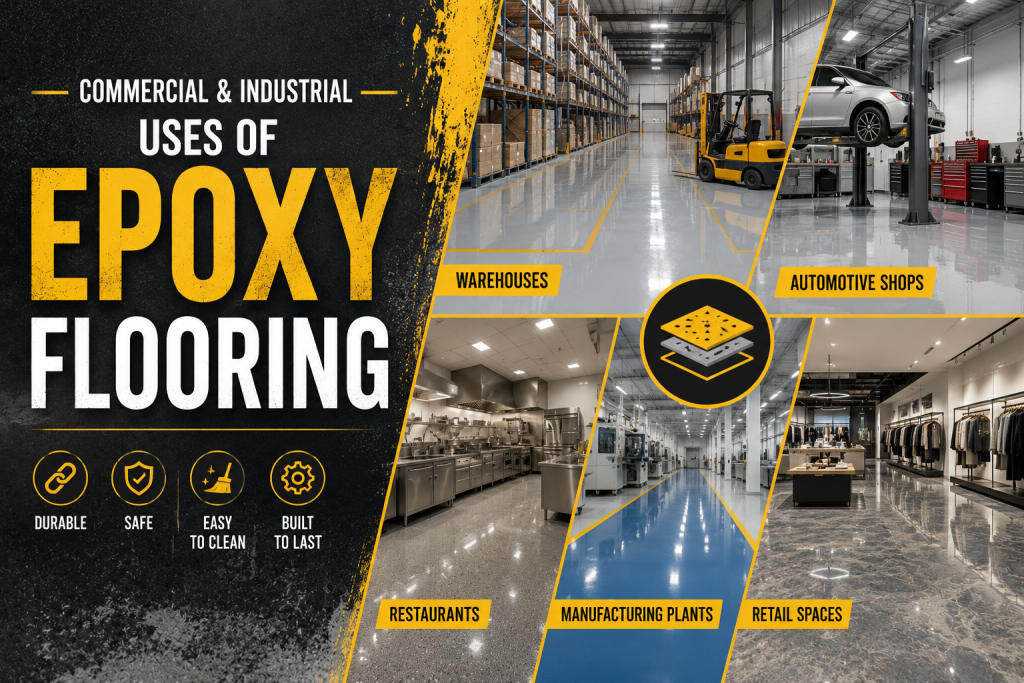
Industrial epoxy flooring is specifically designed to handle heavy equipment, forklift traffic, chemical exposure, and continuous foot traffic without deteriorating quickly. These performance characteristics make it a preferred choice for facilities where durability and workplace safety are top priorities. Many business owners also appreciate epoxy’s seamless surface because it simplifies cleaning and helps maintain a professional appearance. In industries where cleanliness is essential, such as food processing and healthcare, epoxy flooring can contribute to more efficient maintenance routines. Its long lifespan and resistance to damage often result in lower lifecycle costs compared to many traditional flooring materials.
The Epoxy Flooring Installation Process
The long-term performance of an epoxy floor depends heavily on proper preparation and application. A successful epoxy floor installation begins with a thorough inspection of the concrete slab to identify cracks, moisture issues, or surface damage that could affect adhesion.
Once the surface is evaluated, contractors typically grind or mechanically prepare the concrete to create the proper bonding profile. Any cracks or imperfections are repaired before a primer is applied. The epoxy material is then spread evenly across the floor, and decorative elements such as color flakes or metallic pigments may be added if desired. After application, the floor must cure for several days before it can handle vehicle traffic or heavy loads. Skipping preparation steps can significantly reduce the lifespan of the system, which is why professional installation is often recommended for homeowners seeking the best long-term results.
How Long Does Epoxy Flooring Last?
One of the biggest reasons homeowners research an epoxy flooring guide before investing is the impressive lifespan of a properly installed system. While actual performance varies based on traffic levels, maintenance habits, and installation quality, epoxy flooring is known for delivering long-term durability.
In most residential settings, a professionally installed epoxy floor can last between 10 and 20 years. Garages, workshops, and utility spaces often see excellent longevity when the surface is cleaned regularly and protected from excessive abuse. Commercial environments may experience a shorter lifespan due to heavier daily use, but quality systems can still perform well for many years. The factors that most influence longevity include concrete preparation, product quality, environmental conditions, and ongoing maintenance. Following the recommendations outlined in this epoxy flooring guide can help maximize the return on your investment while keeping the floor looking attractive and functional over time.
Epoxy Flooring Costs and Value
Cost is one of the most important considerations for homeowners exploring options in an epoxy flooring guide. The total investment depends on several factors, including floor size, concrete condition, coating type, and the complexity of the installation.
In the United States, basic epoxy projects often range from $3 to $7 per square foot, while decorative systems featuring flakes or metallic finishes can cost significantly more. Additional expenses may include crack repairs, moisture mitigation, surface grinding, or custom design features. Although epoxy flooring may have a higher upfront cost than paint or simple concrete sealers, many homeowners view it as a long-term investment. Its durability, low maintenance requirements, and ability to protect concrete surfaces can reduce future repair expenses. When evaluating overall value, it is important to compare lifecycle costs rather than focusing solely on the initial installation price discussed in this epoxy flooring guide.
Maintenance Tips for Long-Lasting Epoxy Floors
Maintaining an epoxy floor is relatively simple, which is one reason it continues to be recommended in nearly every comprehensive epoxy flooring guide. Unlike many flooring materials that require frequent refinishing or specialized treatments, epoxy surfaces can remain attractive with basic routine care.
Homeowners should sweep or dust mop regularly to remove dirt and debris that may cause surface abrasion over time. Spills should be cleaned promptly, especially chemicals, oils, or automotive fluids that may remain on the floor for extended periods. For deeper cleaning, a mild soap solution and soft mop are typically sufficient. It is also a good idea to place protective pads beneath heavy equipment and avoid dragging sharp metal objects across the surface. By following the maintenance practices outlined in this epoxy flooring guide, homeowners can help preserve both appearance and performance while extending the lifespan of their flooring investment.
Conclusion
Choosing the right flooring solution ultimately depends on your budget, performance expectations, and how the space will be used. As this epoxy flooring guide has demonstrated, epoxy flooring offers a unique combination of durability, visual appeal, and long-term value that few alternatives can match. For homeowners looking to upgrade garages, basements, workshops, or utility areas, epoxy provides protection against stains, moisture, impacts, and everyday wear. It can also improve the appearance of concrete surfaces while reducing maintenance requirements over the years. Before making a final decision, consider the condition of your existing concrete, your desired finish, and whether professional installation is necessary for your project. By using the insights shared throughout this epoxy flooring guide, homeowners can make a more informed investment and choose a flooring system that delivers lasting performance, functionality, and value for years to come.
Frequently Asked Questions
Is epoxy flooring better than concrete paint?
Yes. Epoxy flooring creates a thicker, stronger surface that bonds directly to concrete. While paint mainly improves appearance, epoxy provides superior resistance to moisture, chemicals, impacts, and heavy traffic.
How long does epoxy flooring take to cure?
Most epoxy systems can handle light foot traffic within 24 to 48 hours. However, homeowners should typically wait three to seven days before parking vehicles or placing heavy equipment on the floor.
Can epoxy flooring crack?
The epoxy itself is highly durable, but cracks in the underlying concrete slab may eventually transfer through the coating if they are not properly repaired before installation.
Is epoxy flooring slippery when wet?
A glossy epoxy finish can become slippery when wet. Many installers add anti-slip aggregates or textured finishes to improve traction and safety.
Does epoxy flooring increase home value?
While it may not directly increase a home’s appraised value, a professionally installed epoxy floor can improve functionality, appearance, and buyer appeal, particularly in garages, basements, and workshop spaces.
Can epoxy flooring be installed over old concrete?
Yes. In most cases, older concrete can be coated successfully if it is structurally sound, clean, and properly prepared before application.