

Epoxy Flooring Problems: Causes, Fixes & Prevention (2026 Guide)
Epoxy floors are widely used in U.S. garages, basements, and workshops because they offer durability and a clean, finished appearance over concrete. However, not every installation performs as expected, and many homeowners eventually encounter epoxy flooring problems that affect appearance, adhesion, or long-term durability. Most issues don’t come from the epoxy material itself, but from installation conditions, surface preparation, or environmental factors such as moisture and temperature changes. When these factors are not properly managed, even high-quality systems can develop failures over time.
Understanding problems of epoxy flooring is essential for both homeowners planning a new installation and those dealing with existing floors that are starting to fail. By identifying early warning signs and root causes, it becomes much easier to prevent costly repairs and extend the lifespan of the flooring system. This guide breaks down the most common issues, why they happen, and how to fix or prevent them in real residential settings.
Why Do Epoxy Flooring Problems Occur?
Most epoxy flooring problems are not caused by the epoxy product alone, but by conditions surrounding installation and the underlying concrete slab. Epoxy is highly sensitive to surface preparation, moisture levels, and curing conditions, which means even small oversights can lead to long-term performance issues. One of the most common causes is improper surface preparation. If concrete is not properly ground, cleaned, and profiled, the epoxy may not bond correctly, increasing the risk of future failures. Dust, oil, and old coatings can all interfere with adhesion and create weak points in the system.
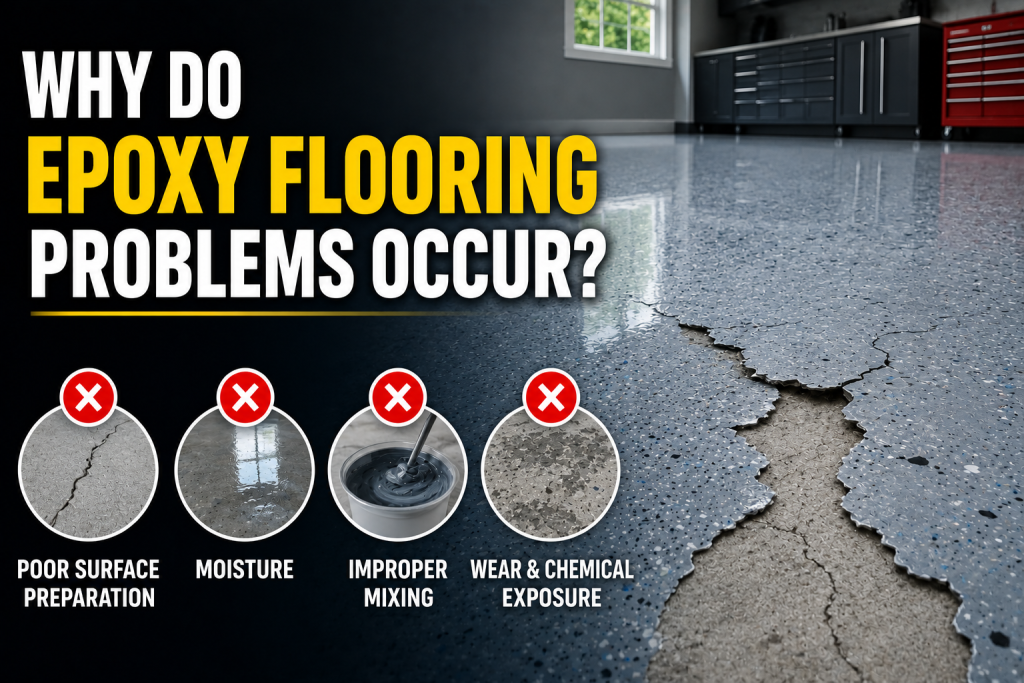
Environmental factors also play a major role in epoxy flooring problems. High humidity, temperature fluctuations, and moisture vapor rising from the slab can prevent proper curing or cause the coating to separate over time. This is especially common in basements and older garage slabs. In many cases, failures are preventable when installation guidelines are followed carefully and the concrete conditions are properly evaluated before application.
Peeling Epoxy Floor Causes & Fixes
One of the most visible epoxy flooring problems homeowners encounter is peeling, where sections of the coating lift away from the concrete surface. This issue typically indicates a breakdown in adhesion between the epoxy layer and the underlying slab. The most common cause of a peeling epoxy floor is poor surface preparation. If the concrete was not properly ground or if contaminants like oil, grease, or curing compounds were left behind, the epoxy cannot form a strong bond. Over time, this weak connection leads to separation, especially in high-traffic areas such as garages.
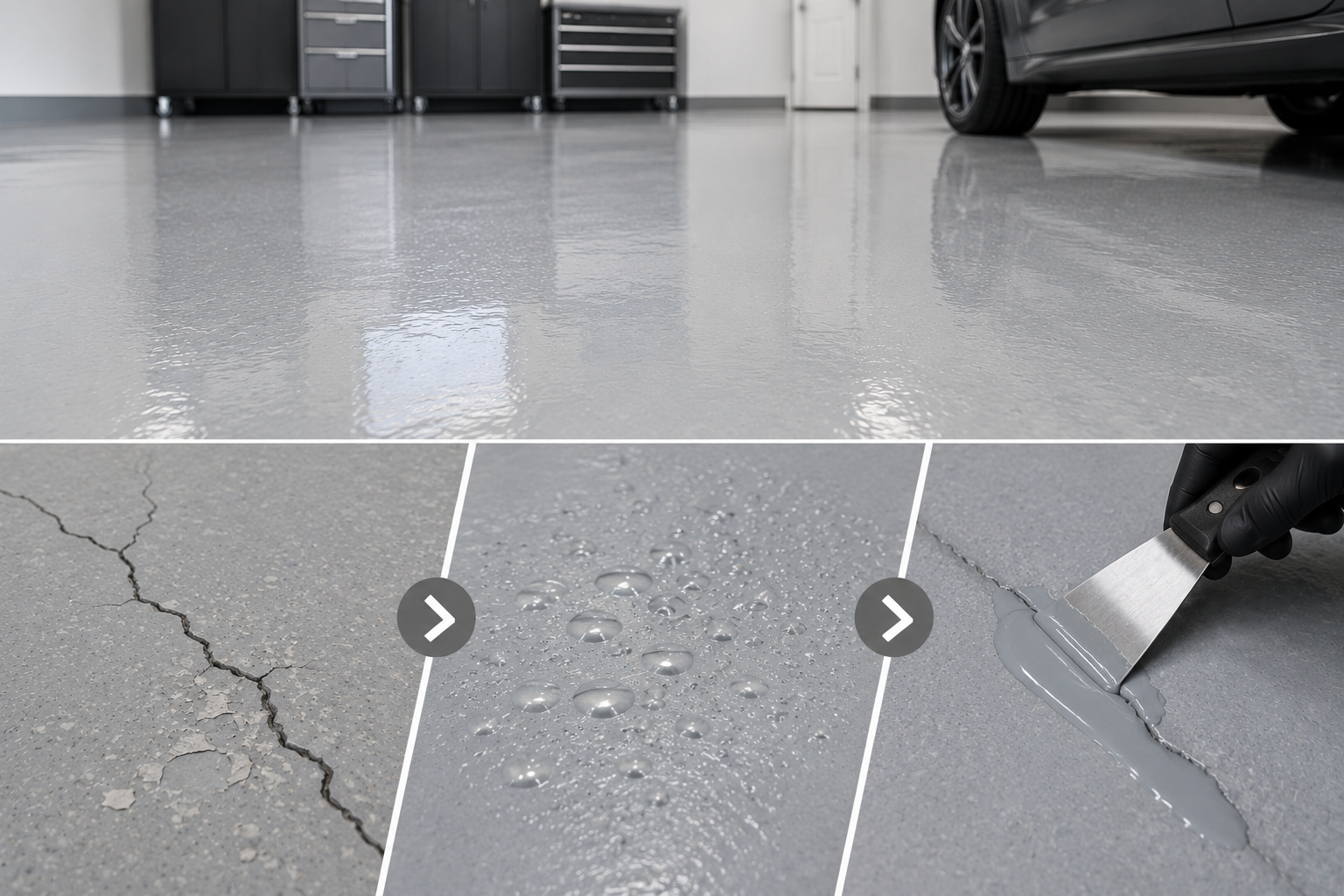
Moisture is another major factor in epoxy flooring problems related to peeling. When vapor rises through the concrete slab, it can push against the coating and cause it to lift. This is especially common in basements or older homes without vapor barriers. Fixing a peeling epoxy floor usually requires removing the failed coating, properly preparing the surface again, and reapplying the system under controlled conditions. In some cases, targeted garage floor coating repair can be used for small affected areas if the underlying slab remains stable.
Bubbling Epoxy Coating Explained
Another common category of epoxy flooring problems is bubbling, which appears as small or large air pockets trapped within the cured coating. These bubbles can affect both appearance and performance, and they often indicate issues that occurred during installation or curing. One of the main causes of a bubbling epoxy coating is outgassing. When concrete warms up during application, air trapped inside the slab expands and escapes through the wet epoxy, forming bubbles as it cures. This is especially common in garages exposed to direct sunlight or temperature fluctuations.
Another frequent cause of problems with epoxy flooring, like bubbling, is improper mixing or application technique. If the epoxy is mixed too quickly or applied too thickly in a single layer, air can become trapped and fail to release before curing begins. High humidity conditions can also contribute to surface defects. Preventing bubbling requires careful surface preparation, controlled environmental conditions, and proper application techniques. In most cases, professional installation significantly reduces the risk of this issue compared to DIY applications.
Cracked Epoxy Flooring Issues
Cracking is one of the more concerning epoxy flooring problems because it often signals movement or stress in the underlying concrete rather than just a surface-level defect. While epoxy itself is flexible to a degree, it is not designed to bridge large structural shifts in the slab.One of the primary causes of a cracked epoxy flooring system is movement in the concrete below. Seasonal expansion and contraction, especially in regions with freeze-thaw cycles, can cause the slab to shift slightly and create stress fractures that eventually reflect through the epoxy layer.
Another factor behind problems with epoxy flooring like cracking, is inadequate substrate repair before installation. Existing cracks in the concrete that are not properly filled or stabilized can continue to propagate through the coating over time. In some cases, heavy impact from dropped tools, vehicles, or machinery can also contribute to surface cracking. While epoxy improves overall durability, it cannot fully prevent damage caused by significant structural stress. Addressing cracked epoxy floors typically involves evaluating whether the issue is cosmetic or structural before deciding on repair or full resurfacing.
Moisture Issues in Epoxy Floors
Moisture-related failures are among the most persistent epoxy flooring problems, especially in basements, ground-level garages, and older concrete slabs without proper vapor barriers. Because epoxy creates a sealed surface, it can trap moisture trying to escape from beneath the concrete, leading to adhesion failures and surface defects. One of the most common moisture-related issues is vapor transmission from the slab. When moisture rises through concrete over time, it can interfere with curing or weaken the bond between epoxy and the substrate. This often results in discoloration, soft spots, or eventual delamination in affected areas.
In many cases, problems with epoxy flooring caused by moisture are not visible immediately after installation. Instead, they develop gradually as seasonal humidity changes or groundwater conditions fluctuate beneath the slab. Basements are particularly vulnerable due to their below-grade positioning. Preventing these issues requires proper moisture testing before installation and, in some cases, the use of moisture-mitigating primers or vapor barriers to stabilize the surface and ensure long-term performance.
Garage Floor Coating Repair Guide
When dealing with epoxy flooring problems in residential garages, repair strategies depend on the severity and cause of the failure. Garage floors are exposed to constant vehicle traffic, temperature changes, and chemical spills, making them one of the most common areas where coating issues develop over time. Minor surface damage, such as small chips or localized wear, can often be addressed with spot repairs. This typically involves cleaning the affected area, lightly grinding the surface, and reapplying epoxy or compatible repair materials. These targeted fixes can extend the life of the floor without requiring a full replacement.
However, more widespread problems with epoxy flooring, such as peeling or extensive delamination, usually require full removal of the failed coating. Once the surface is properly prepared again, a new system can be installed to restore performance and appearance. Successful garage floor coating repair always depends on identifying the root cause first, whether it is moisture, poor adhesion, or surface contamination, to prevent the same issues from recurring after repair.
Epoxy Floor Maintenance Tips (Prevention)
Preventing epoxy flooring problems is far more effective than repairing them after they appear, especially in high-use areas like garages and basements. Proper maintenance plays a major role in extending the lifespan of the coating and preserving its appearance over time. Regular cleaning is one of the simplest ways to reduce the risk of problems with epoxy flooring. Sweeping away dirt, dust, and debris prevents surface abrasion, while occasional mopping with a mild cleaner helps maintain the floor’s sealed finish. Avoiding harsh chemicals or abrasive pads also protects the coating from unnecessary wear.
It’s also important to address spills quickly. Even though epoxy is resistant to many substances, prolonged exposure to oil, automotive fluids, or household chemicals can gradually affect the surface. Routine inspections can help identify early signs of wear, allowing homeowners to take corrective action before issues become more serious. Consistent care not only maintains appearance but also reduces the likelihood of long-term damage, making maintenance a key part of prevention.
Epoxy Floor Troubleshooting Checklist
When diagnosing epoxy flooring problems, a structured troubleshooting approach helps homeowners identify issues early and determine the right fix before damage spreads. Most failures show warning signs that can be linked back to installation, moisture, or surface wear. Start by inspecting the surface for visible defects such as peeling, bubbling, or cracking. These are often the first indicators of underlying problems with epoxy flooring and can reveal whether the issue is localized or systemic across the floor. If damage appears in isolated spots, it may point to surface contamination or impact damage.
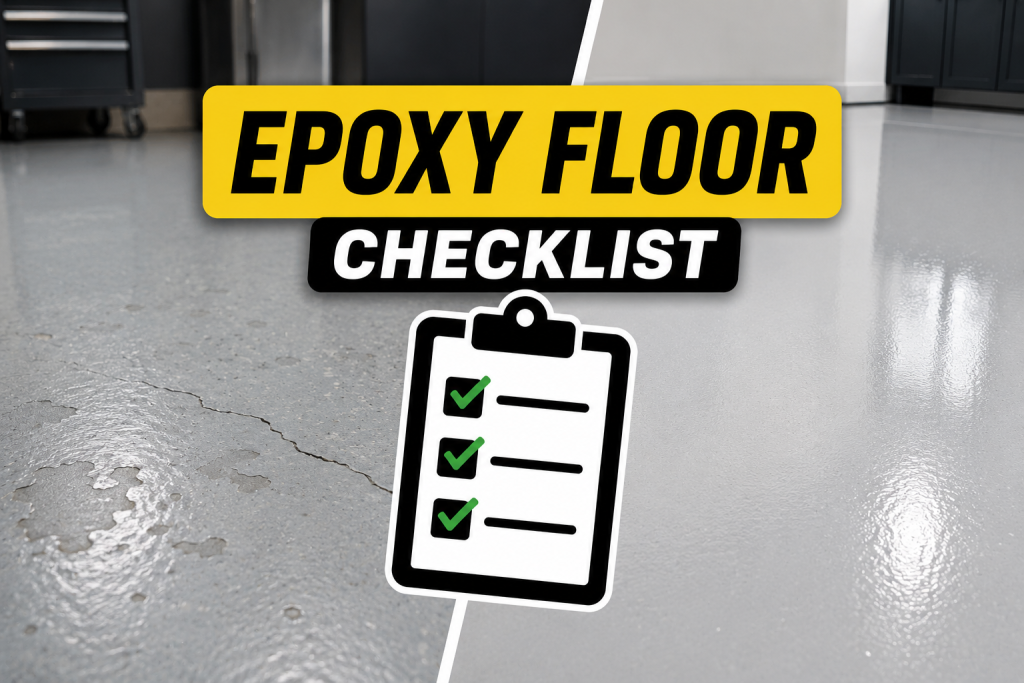
Next, check for moisture-related signs such as discoloration, soft patches, or a cloudy appearance. These symptoms often suggest vapor transmission from the concrete slab, especially in basements or older garages. Identifying moisture early is critical to preventing larger-scale failure. Finally, evaluate maintenance conditions and usage patterns. Heavy traffic, chemical exposure, or improper cleaning methods can all contribute to deterioration. A clear troubleshooting checklist helps narrow down the root cause before deciding on repair or resurfacing.
How to Prevent Epoxy Flooring Problems?
The most effective way to avoid epoxy flooring problems is to focus on prevention during both installation and long-term use. Since most failures originate from surface preparation or environmental conditions, controlling these factors is essential for long-term performance in garages and basements. Proper surface preparation is the foundation of prevention. Concrete must be thoroughly cleaned, mechanically ground, and inspected for cracks or contamination before any coating is applied. Skipping or rushing this step significantly increases the risk of problems with epoxy flooring such as peeling or poor adhesion later on.
Moisture control is another critical factor. Testing the slab for vapor transmission before installation helps identify potential risks early. In areas with higher humidity or below-grade conditions, using appropriate primers or moisture barriers can greatly improve system stability. Finally, correct application conditions—such as temperature, humidity, and curing time, play a major role in performance. When all these factors are properly managed, epoxy flooring systems can deliver long-lasting durability with minimal issues.
Conclusion
Most epoxy flooring problems can be traced back to a small set of predictable causes, including poor surface preparation, moisture issues, and improper installation conditions. While epoxy is a highly durable and reliable flooring system, it still depends heavily on the quality of the concrete substrate and the environment in which it is applied. Understanding the root causes of problems with epoxy flooring helps homeowners make better decisions both before installation and when evaluating existing floors. Many common issues such as peeling, bubbling, or cracking are preventable when proper preparation, moisture testing, and application standards are followed. For homeowners in the U.S., especially those upgrading garages and basements, epoxy flooring remains a strong long-term solution when installed correctly. With proper maintenance and early issue detection, most problems can be minimized or avoided entirely, ensuring the floor performs well for years.
Frequently Asked Questions
What are the most common epoxy flooring problems?
The most common epoxy flooring problems include peeling, bubbling, cracking, and moisture-related failures caused by poor surface preparation or environmental conditions.
Why is my epoxy floor peeling?
Peeling usually happens when the concrete was not properly prepared or when moisture rises through the slab, weakening adhesion over time.
What causes bubbling in epoxy floors?
Bubbling is often caused by outgassing from concrete, trapped air during mixing, or high humidity during application.
Can cracked epoxy flooring be repaired?
Yes, minor cracks can often be repaired, but larger structural issues may require resurfacing or full removal depending on severity.
How do you fix epoxy floor maintenance issues?
Regular cleaning, avoiding harsh chemicals, and prompt spill removal help reduce long-term wear and prevent further damage.
Are moisture issues in epoxy floors preventable?
Yes, moisture testing and using vapor barriers or primers can significantly reduce the risk of moisture-related failures.
What is the best way to prevent epoxy floor failures?
Proper surface preparation, moisture control, and correct installation conditions are the most effective ways to prevent failures.
When should garage floor coating repair be done?
Repair should be done as soon as damage appears to prevent small issues from spreading and becoming more costly.