

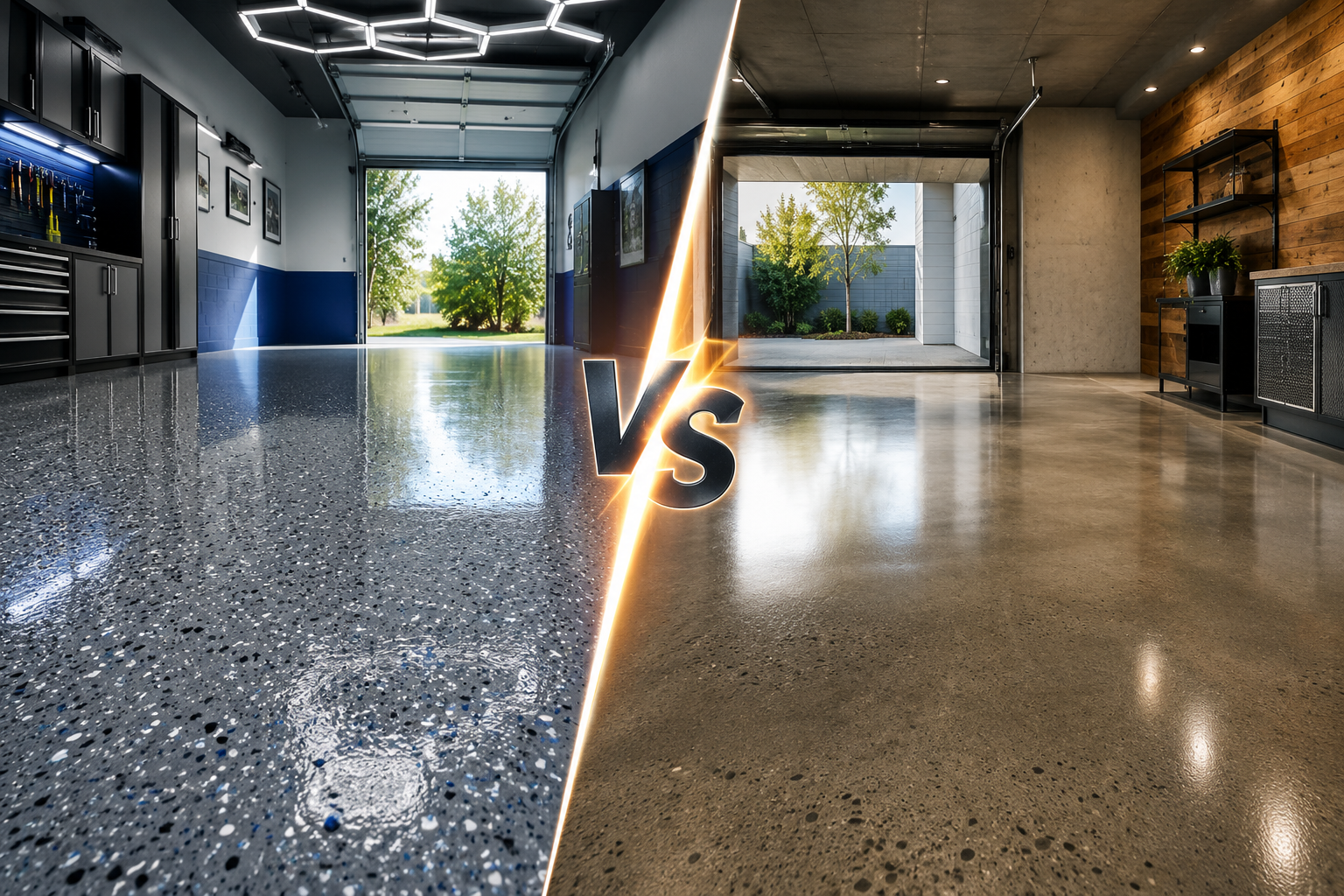
Epoxy Flooring vs Polished Concrete: Which Floor Is Better in 2026?
Modern concrete flooring systems have become a major trend in U.S. home construction and renovation, especially in garages, basements, and open-concept living spaces. Among the most common comparisons homeowners make is epoxy flooring vs polished concrete, since both offer durable, modern-looking surfaces but perform very differently in real-world conditions. Epoxy coatings create a sealed, protective layer on top of concrete, while polished concrete enhances the slab itself through mechanical grinding and densification. Because of these differences, each system offers unique advantages depending on budget, design preference, and intended use.
When evaluating epoxy flooring vs polished concrete, homeowners typically focus on durability, maintenance requirements, cost, and long-term appearance. While both options are considered durable alternatives to traditional flooring, the right choice depends heavily on whether the priority is maximum protection, aesthetic minimalism, or low-maintenance performance in spaces like garages, basements, or commercial-style interiors. This guide breaks down every key difference so you can confidently choose the right system for your home in 2026.
Epoxy Flooring vs Polished Concrete Overview
To properly evaluate the difference, it’s important to understand how each system is created and how it performs once installed. While both start with a concrete slab, the final results are fundamentally different in structure, appearance, and long-term behavior.
Epoxy flooring is a surface coating system where resin and hardener are applied over prepared concrete floor finishes to form a thick, protective layer. This layer seals the surface, improving resistance to stains, chemicals, and moisture. It is commonly used in garages, workshops, and utility spaces where protection is a priority.
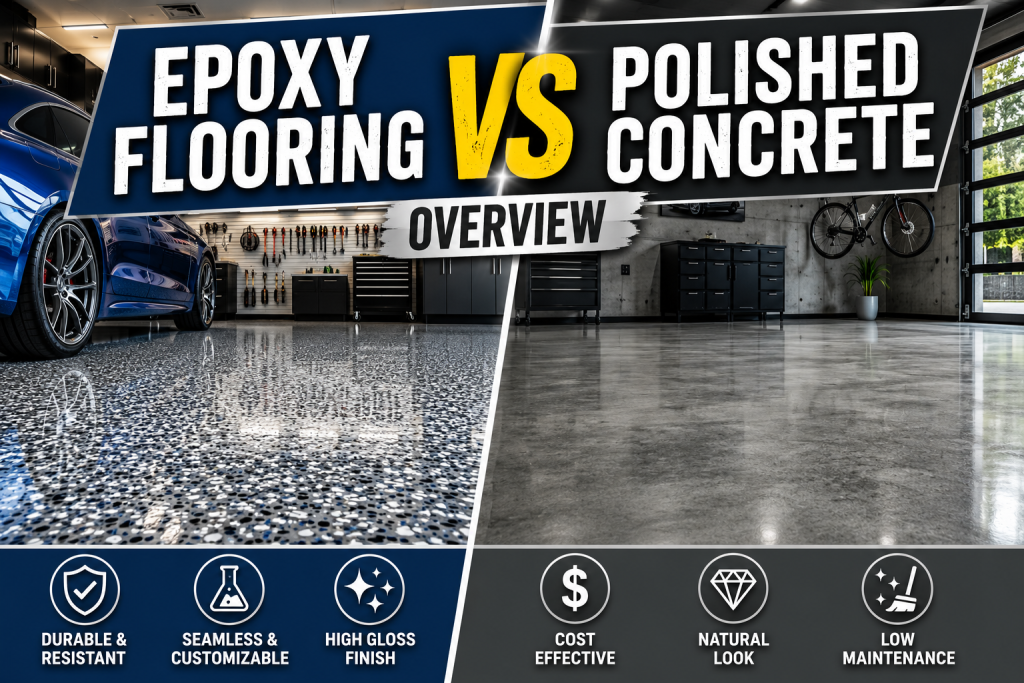
Polished concrete, on the other hand, is created by mechanically grinding and refining the existing slab until it reaches a smooth, reflective finish. Instead of adding a coating, the concrete itself is hardened using densifiers, resulting in a sleek and minimalist appearance. In the comparison, the key distinction is that epoxy adds a protective layer, while polished concrete enhances the existing slab. This difference directly impacts durability, maintenance needs, and overall aesthetic flexibility in residential and commercial settings.
Appearance and Design Differences
When comparing epoxy flooring vs polished concrete, appearance is often one of the most noticeable differences for homeowners and designers. Each system offers a distinct visual style that can dramatically influence the feel of a space, from modern garages to high-end residential interiors.
Epoxy flooring provides a wide range of design flexibility. It can be customized with solid colors, metallic effects, or decorative flakes, allowing homeowners to match specific interior themes or create a bold, high-gloss finish. This makes epoxy especially popular in garages and basements where visual customization is a priority alongside protection.
Polished concrete, in contrast, delivers a more natural and minimalist aesthetic. Its appearance depends on the existing concrete slab, exposure of aggregate, and level of polish achieved during grinding. The result is a sleek, stone-like surface that fits well in modern, industrial-style homes and commercial environments. In the comparison of both, epoxy clearly leads in customization, while polished concrete is preferred for its natural, understated elegance. The final choice often comes down to whether homeowners want a decorative statement or a clean architectural finish.
Durability Comparison
Durability is one of the most important factors in the epoxy flooring vs polished concrete decision, especially for homeowners upgrading garages, basements, or high-traffic spaces. While both systems are designed to be long-lasting, they perform differently under stress, impact, and everyday wear. Epoxy flooring is known for its strong surface protection because it creates a thick, sealed layer over concrete. This coating helps resist chemicals, oil stains, and moisture intrusion, making it highly effective in environments like garages and workshops. However, if the coating is not properly installed or the substrate shifts over time, epoxy can chip or peel in localized areas.
Polished concrete, on the other hand, does not rely on a surface coating. Instead, it strengthens the concrete itself through densification and mechanical polishing. This makes it highly resistant to abrasion and heavy foot traffic, especially in commercial or industrial settings. However, it may show stains more easily if not properly sealed. In the comparison, epoxy excels in chemical and spill resistance, while polished concrete performs better in abrasion-heavy environments. The best choice depends on whether the space experiences more impact, traffic, or exposure to liquids.
Maintenance & Cleaning
Maintenance requirements are a key consideration in the epoxy flooring vs polished concrete decision, especially for homeowners who want a low-effort flooring solution in garages, basements, or utility areas. While both systems are easier to maintain than carpet or raw concrete, their cleaning needs differ in practice. Epoxy flooring is generally very easy to clean because its sealed surface prevents liquids, oil, and dirt from penetrating the floor. Most spills can be wiped or mopped away without staining, making it a popular choice for garages and workshops where messes are common. However, harsh abrasives or improper cleaning tools can dull the surface over time.
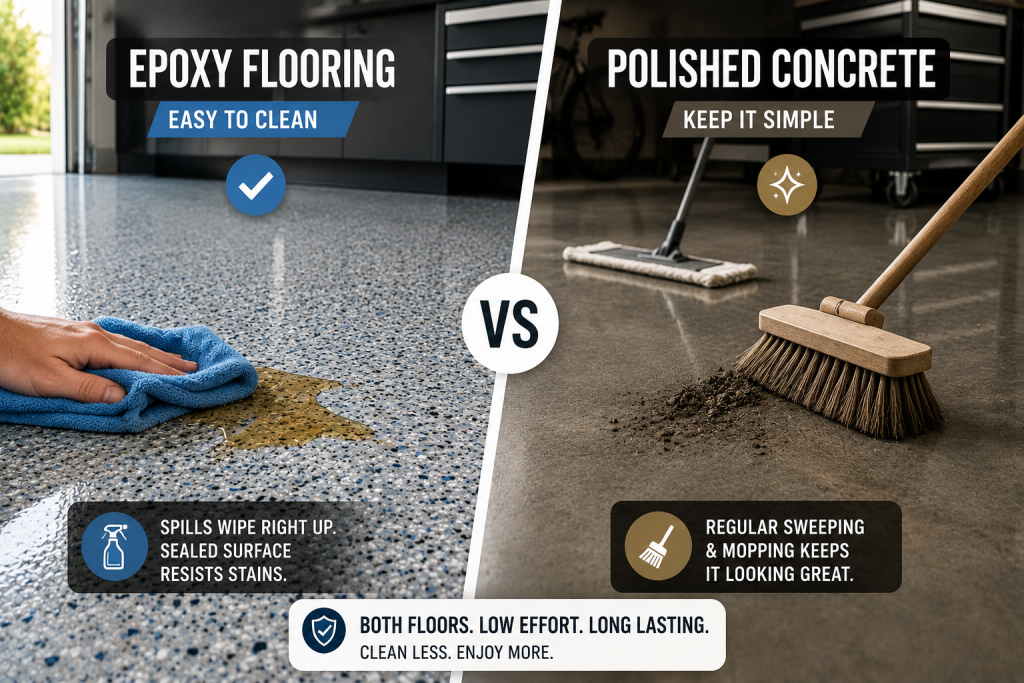
Polished concrete also offers relatively low maintenance but behaves differently. It resists dust and dirt buildup but may require periodic re-sealing or densifier maintenance depending on usage. In some environments, stains can become more noticeable if spills are not cleaned promptly. In the comparison, epoxy typically offers easier day-to-day cleanup, while polished concrete provides long-term simplicity with minimal product upkeep. Both qualify as low-maintenance flooring, but user habits and environment play a major role in performance over time.
Cost Comparison
Cost is often the deciding factor in the epoxy flooring vs polished concrete debate, especially for U.S. homeowners planning garage or basement upgrades. While both options fall into the mid-to-high range compared to basic concrete finishes, their pricing structures differ significantly based on preparation, labor, and finish complexity. Epoxy flooring typically involves multiple layers, including surface preparation, crack repair, primer, epoxy coating, and a protective topcoat. This multi-step process increases labor time, which can make epoxy more expensive in certain residential projects, especially when concrete is damaged or uneven.
Polished concrete, in contrast, relies on mechanical grinding and densification of the existing slab. While the equipment and skill level required can be high, it often eliminates the need for additional materials, which can balance overall costs in larger spaces such as basements or commercial-style garages. In the comparison, epoxy often has higher variability in cost due to coating systems, while polished concrete tends to scale more predictably with square footage. The final price depends heavily on slab condition and desired finish level.
Garage Floor Options
When evaluating epoxy flooring vs polished concrete, garages are one of the most common use cases where homeowners compare performance, durability, and long-term maintenance. Both systems are widely used in modern U.S. garage upgrades, but they serve slightly different priorities depending on how the space is used. Epoxy flooring is often chosen for garages because it creates a sealed, protective surface that resists oil stains, chemicals, and tire marks. It also allows homeowners to customize color and finish, making the garage feel more like a finished extension of the home rather than a utility space. This makes epoxy especially popular in residential upgrades focused on appearance and protection.
Polished concrete is more common in garages where homeowners prefer a minimalist, industrial look with lower maintenance requirements. It performs well under heavy weight and frequent vehicle traffic, but it offers less protection against staining unless properly sealed. In the epoxy flooring vs polished concrete comparison, epoxy is typically preferred for residential garages focused on aesthetics and protection, while polished concrete is chosen for simplicity and long-term structural durability in functional spaces.
Basement Flooring Ideas
Basements present unique challenges for flooring because of moisture exposure, temperature fluctuations, and below-grade concrete conditions. In the epoxy flooring vs polished concrete comparison, basements are one of the most important environments where performance differences become more noticeable.
Epoxy flooring is often used in basements because it creates a sealed surface that helps protect against moisture intrusion and minor spills. This makes it a practical choice for finished basements used as living spaces, gyms, or storage areas. The smooth, coated finish also improves brightness by reflecting light, which can help make lower-level spaces feel more open and usable.
Polished concrete, however, can also be used in basements where homeowners prefer a more natural, industrial aesthetic. While it is durable, it may be more sensitive to moisture issues unless proper vapor barriers and sealing systems are in place during installation. In the epoxy flooring vs polished concrete comparison for basements, epoxy is typically favored for moisture protection and comfort-focused spaces, while polished concrete is selected for minimalist design preferences and structurally stable environments.
Industrial Flooring Comparison
In commercial and industrial environments, the epoxy flooring vs polished concrete debate becomes even more important because flooring must withstand constant traffic, heavy equipment, and long operating hours. Both systems are widely used in warehouses, manufacturing plants, retail stores, and automotive facilities across the U.S., but their performance strengths differ significantly. Epoxy flooring is commonly chosen in industrial settings where chemical resistance and surface protection are critical. Its seamless coating helps prevent liquid penetration, making it suitable for environments exposed to oils, solvents, and frequent spills. It also allows for safety markings and color zoning, which improve workflow organization in busy facilities.
Polished concrete, on the other hand, is favored in large-scale industrial spaces due to its durability and low long-term maintenance requirements. It handles heavy machinery and forklift traffic well, and its reflective surface can improve lighting efficiency in large buildings. In the epoxy flooring vs polished concrete comparison for industrial use, epoxy is often preferred for chemical-heavy or precision environments, while polished concrete is ideal for high-traffic, cost-efficient warehouse operations where long-term durability and minimal upkeep are priorities.
Durable Floor Surfaces Compared
Durability is a core factor in the epoxy flooring vs polished concrete comparison, especially for homeowners and property managers who want long-lasting performance in garages, basements, and commercial spaces. Both flooring systems are considered durable, but they achieve longevity in very different ways. Epoxy flooring provides durability through a protective surface layer that shields the concrete from stains, chemicals, and physical impact. This makes it highly effective in environments where spills, oil exposure, or heavy use are common. However, because it is a coating, its lifespan depends heavily on installation quality and surface preparation.
Polished concrete achieves durability by strengthening the concrete slab itself through mechanical grinding and densification. Instead of relying on a coating, it becomes harder and more resistant to abrasion over time, which makes it ideal for high-traffic environments such as retail spaces and warehouses. In the epoxy flooring vs polished concrete comparison, epoxy offers superior surface protection, while polished concrete provides long-term structural durability. The most durable option depends on whether the priority is surface resistance or inherent slab strength.
Low-Maintenance Flooring Guide
For many homeowners, the appeal of modern concrete systems comes down to how easy they are to maintain over time. In the epoxy flooring vs polished concrete comparison, both options are considered low-maintenance compared to traditional flooring materials like carpet or wood, but they differ in day-to-day care requirements and long-term upkeep. Epoxy flooring is extremely easy to clean on a daily basis because its sealed surface prevents liquids, dirt, and oils from penetrating the floor. Routine sweeping and occasional mopping are usually enough to keep it looking clean. However, over time, the coating may require refinishing if it becomes scratched or worn in high-traffic areas.
Polished concrete also offers minimal maintenance, but it relies on periodic care to maintain its appearance. Depending on usage, it may need occasional re-densifying or resealing to preserve its sheen and stain resistance. While it does not peel or chip like coatings, stains can become more visible if spills are not addressed quickly. In the epoxy flooring vs polished concrete comparison, epoxy generally wins for daily cleaning simplicity, while polished concrete offers long-term low maintenance with fewer surface repairs.
Frequently Asked Questions
Is epoxy flooring better than polished concrete?
In the epoxy flooring vs polished concrete comparison, neither is universally better. Epoxy is stronger for stain and chemical resistance, while polished concrete offers better long-term abrasion durability and a more natural finish.
Which lasts longer: epoxy or polished concrete?
Polished concrete typically lasts longer because it is part of the slab itself. Epoxy flooring can also last many years, but its lifespan depends heavily on surface preparation and installation quality.
Which is cheaper, epoxy flooring or polished concrete?
Costs vary, but polished concrete often becomes more cost-efficient in larger spaces since it requires fewer materials. Epoxy may cost more due to multi-layer coating systems and labor intensity.
Is polished concrete slippery?
Polished concrete can be slippery when wet, but slip resistance can be improved with finishes or surface treatments. Epoxy floors can also be adjusted with anti-slip additives.
Can epoxy be installed over polished concrete?
Yes, epoxy can be applied over polished concrete, but proper surface preparation is required to ensure strong adhesion and prevent peeling over time.