

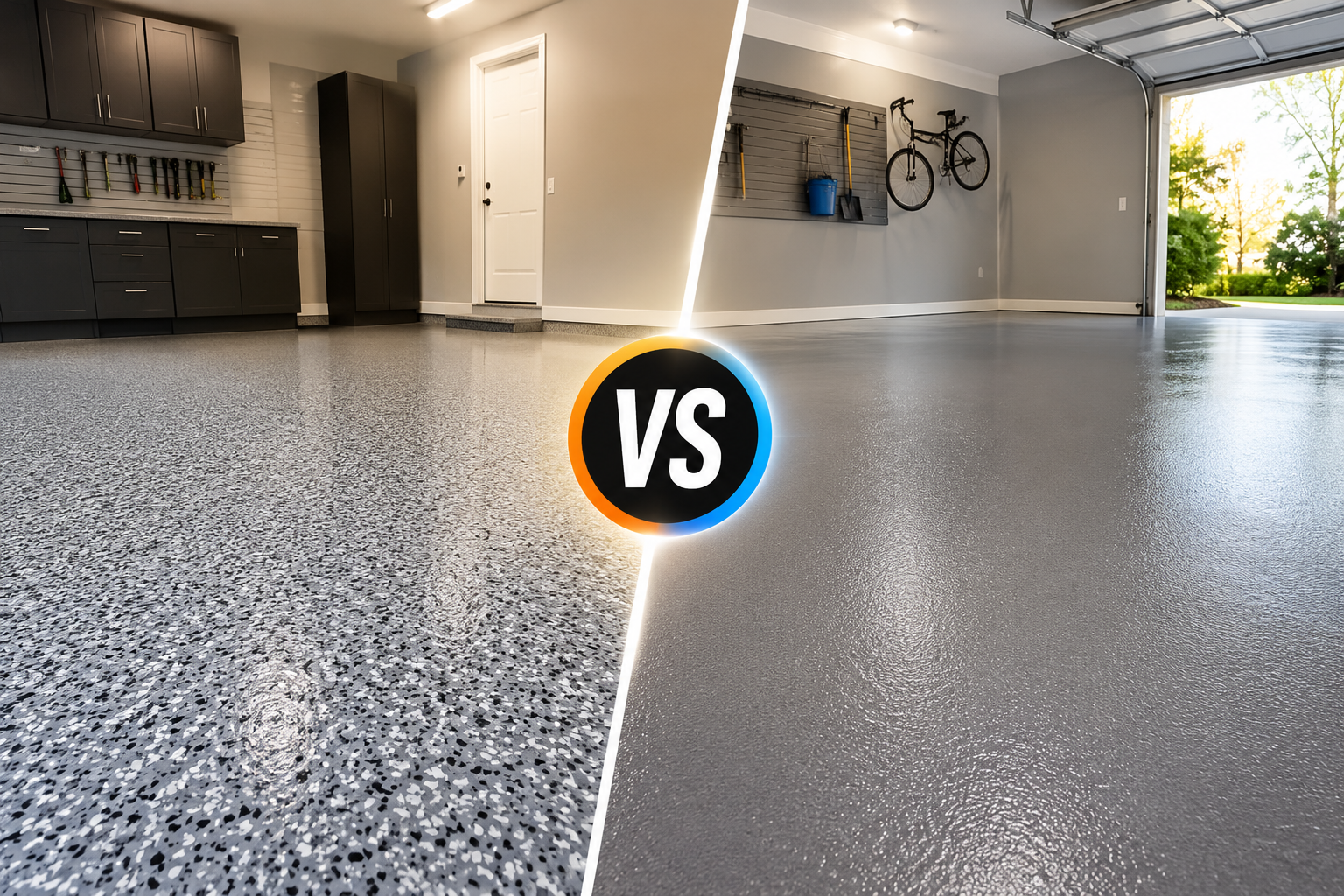
Epoxy vs Polyaspartic Garage Floor: Which Garage Coating Is Better?
A garage floor takes more abuse than many homeowners realize. From vehicle traffic and dropped tools to road salt, oil spills, and temperature fluctuations, the concrete surface must withstand years of wear and tear. That’s why choosing the right floor coating is one of the smartest garage upgrades you can make. When comparing an epoxy vs polyaspartic garage floor, both options offer significant improvements over bare concrete. They enhance appearance, protect against damage, and can even increase a home’s perceived value.
However, they differ in important areas such as installation time, UV resistance, longevity, and overall performance. For homeowners in states like Texas, Florida, Arizona, and Michigan, climate conditions can play a major role in determining which coating delivers the best long-term results. In this guide, we’ll compare epoxy systems and polyaspartic solutions side by side to help you determine which option is best for your garage, budget, and lifestyle.
What Is an Epoxy Garage Floor?
An epoxy garage coating is a resin-based flooring system that creates a hard, protective layer over a concrete garage floor. It is made by combining epoxy resin with a hardening agent, which chemically reacts to form a durable surface that bonds tightly to properly prepared concrete. For decades, epoxy has been one of the most popular concrete floor coating options for residential garages because it offers a balance of affordability, durability, and visual appeal. Homeowners can choose from solid-color finishes, metallic effects, or decorative vinyl flake systems that mimic the appearance of premium flooring.
When professionally installed, epoxy helps protect concrete from oil stains, tire marks, moisture intrusion, and everyday wear. However, traditional epoxy coatings can be sensitive to prolonged UV exposure and often require several days to fully cure. Despite these limitations, epoxy remains a reliable choice for garages with moderate traffic and limited direct sunlight in an epoxy vs polyaspartic garage floor comparison.
What Is a Polyaspartic Floor Coating?
A floor coating is a high-performance concrete system developed from polyurea technology. Originally used in demanding industrial and commercial environments, it has become increasingly popular in residential garages because of its exceptional strength, fast curing time, and long-term durability. Unlike traditional epoxy, polyaspartic coatings penetrate and bond deeply with the concrete surface while maintaining flexibility.
This allows the coating to better withstand impacts, temperature fluctuations, and heavy vehicle traffic without cracking or peeling. One of its biggest advantages is superior UV resistance, meaning the floor is far less likely to yellow or fade when exposed to sunlight. Many professional garage flooring contractors recommend polyaspartic systems because most installations can be completed in a single day. For homeowners seeking maximum durability and minimal downtime, polyaspartic coatings are often considered the premium solution for modern garage flooring.
Epoxy vs Polyaspartic Garage Floor: Key Differences
At first glance, epoxy and polyaspartic coatings may look similar, but their performance can vary significantly over time. When evaluating an epoxy vs polyaspartic garage floor, homeowners should consider factors such as installation speed, durability, UV protection, and maintenance requirements rather than focusing solely on appearance. Epoxy is often chosen for its lower upfront cost and proven track record, making it a practical option for many residential garages. Polyaspartic coatings, on the other hand, are designed to deliver higher performance in demanding conditions. They cure faster, resist sunlight better, and typically offer a longer service life.
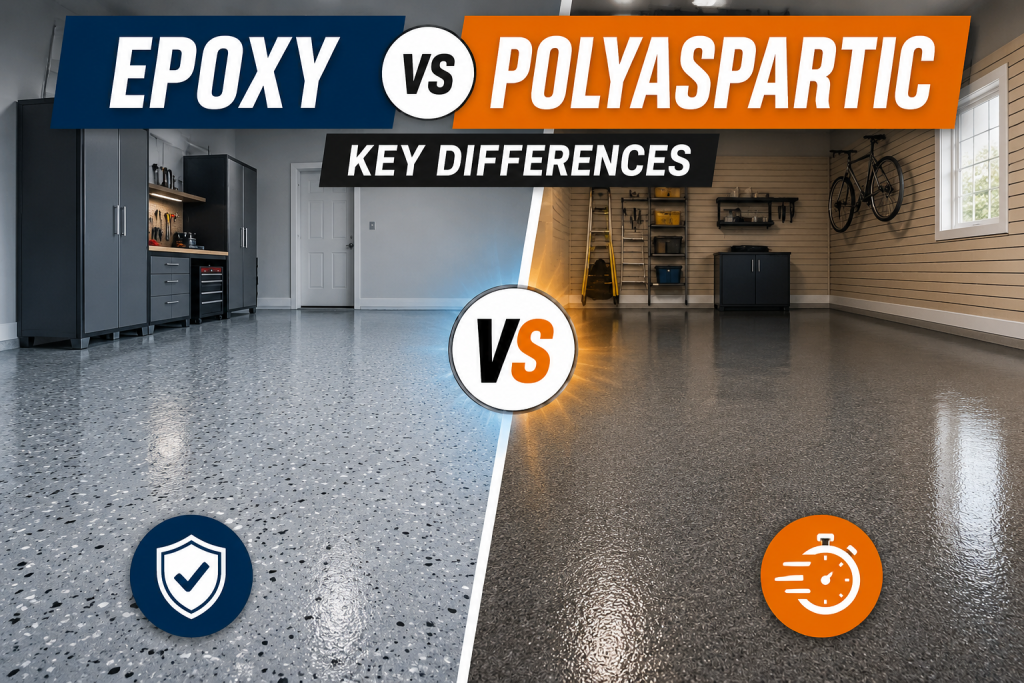
The right choice depends on your priorities. A homeowner in Minnesota dealing with freeze-thaw cycles may have different needs than someone in Arizona facing intense UV exposure. The following comparisons break down the most important factors to help you determine which garage floor coating comparison best fits your home and budget.
Installation Time
Installation time is one of the most noticeable differences in an epoxy vs polyaspartic garage floor comparison. Traditional epoxy coatings typically require multiple stages, including surface preparation, base coat application, and curing periods between layers. Depending on temperature and humidity levels, homeowners may need to wait several days before walking on the floor and up to a week before parking vehicles on it.
Polyaspartic coatings are designed for rapid curing. In many cases, a professional installation can be completed in a single day, with the floor ready for vehicle traffic within 24 hours. This faster turnaround is a major advantage for homeowners who rely on their garage for daily parking, storage, or workshop activities. While quick installation is convenient, proper surface preparation remains critical. Regardless of the coating type, professionally grinding and repairing the concrete before application is essential for long-term performance and adhesion.
Garage Floor Durability
When it comes to garage floor durability, both epoxy and polyaspartic coatings provide a significant upgrade over bare concrete. However, polyaspartic systems generally have an advantage in demanding environments because they are more flexible and resistant to impact damage. Epoxy creates a hard protective surface that performs well under normal residential use. It can withstand vehicle traffic, tool drops, and common garage chemicals when properly maintained. However, because epoxy is more rigid, it may become susceptible to cracking or chipping over time, especially in regions that experience frequent temperature fluctuations.
Polyaspartic coatings are engineered to handle greater stress without compromising performance. Their flexibility allows them to expand and contract with the concrete slab, reducing the risk of surface failure. For homeowners dealing with heavy vehicle use, workshops, or extreme climate conditions, polyaspartic coatings often deliver longer-lasting protection and fewer maintenance concerns over the yeaUV Resistance UV resistance is a major factor in the long-term appearance of any concrete floor coating, especially in garages with windows, open doors, or strong regional sunlight. This is one of the clearest differences in an epoxy vs polyaspartic garage floor comparison.
Epoxy coatings are not fully UV-stable. Over time, exposure to sunlight can cause yellowing, fading, or a dulling of the surface finish. This is especially common in southern states like Florida and Texas, where intense sunlight and heat are constant factors. Polyaspartic coatings, however, are highly UV-resistant. They maintain their color stability and gloss even after years of exposure to direct sunlight. This makes them a preferred choice for garages in bright, high-sun regions or homes with large garage windows. For homeowners prioritizing long-term appearance and curb appeal, UV resistance often becomes a deciding factor in choosing polyaspartic over epoxy.
Chemical Resistance
Chemical resistance is an important factor in any garage flooring pros and cons evaluation, especially for homeowners who store vehicles, lawn equipment, or workshop materials in their garage. Both epoxy and polyaspartic coatings offer strong protection compared to bare concrete, but they perform differently under long-term exposure. Epoxy garage coatings resist many common household chemicals, including motor oil, gasoline, brake fluid, and mild cleaning agents. However, prolonged exposure or improper cleaning can gradually stain or weaken the surface, especially in older epoxy systems.
Polyaspartic coatings generally provide stronger resistance to harsh chemicals and repeated spills. Their tighter molecular structure helps prevent penetration from oil and automotive fluids, making cleanup easier and reducing long-term staining risk. This makes it a strong choice for homeowners who use their garage as a workshop or frequently perform vehicle maintenance in an epoxy vs polyaspartic garage floor comparison. For high-use garages or commercial-style environments, polyaspartic systems typically offer a more resilient and low-maintenance surface over time.
Appearance
Appearance plays a major role in choosing between epoxy and polyaspartic systems, especially for homeowners focused on curb appeal and resale value. In an epoxy vs polyaspartic garage floor comparison, both options can deliver a clean, high-gloss finish that significantly upgrades the look of a standard concrete slab. Epoxy coatings offer a wide range of design options, including solid colors, decorative flakes, and metallic finishes. These systems can create a polished, showroom-style look that works well in residential garages with moderate use.
Polyaspartic coatings provide similar aesthetic flexibility but tend to retain their finish longer. Because they are UV-stable, they are less likely to yellow or dull over time, which helps maintain a fresh, premium appearance for years. For homeowners in competitive real estate markets like Denver, Austin, or Charlotte, a well-maintained polyaspartic floor can contribute to stronger first impressions and improved perceived home quality during resale.
Temperature Performance
Temperature performance is a key factor in garage floor coating comparison, especially in regions that experience extreme seasonal shifts. Concrete naturally expands and contracts with temperature changes, and the coating must be able to move with it without cracking or separating in an epoxy vs polyaspartic garage floor comparison. Epoxy performs well in stable indoor conditions but can become more brittle in extreme cold or under rapid temperature swings. In northern states such as Michigan, Minnesota, and parts of the Midwest, freeze-thaw cycles can place additional stress on epoxy systems over time.
Polyaspartic coatings are more flexible, allowing them to better handle thermal expansion and contraction. They also cure effectively across a wider temperature range, making them suitable for both hot climates like Arizona and colder environments where winter temperatures regularly drop below freezing. For homeowners dealing with seasonal extremes, this flexibility gives polyaspartic coatings a clear performance advantage in long-term durability and stability.
Epoxy vs Polyaspartic Garage Floor Comparison
When homeowners evaluate a garage floor coating comparison, it helps to see the differences side by side. While both epoxy and polyaspartic systems improve durability and appearance, their performance priorities are not the same. Epoxy is often chosen for its affordability and reliable performance in standard residential garages. It creates a strong, glossy surface that works well in mild climates and low-to-moderate traffic environments. Polyaspartic coatings, however, are positioned as a higher-performance system designed for speed, strength, and long-term stability.
The table below highlights the most important differences in an epoxy vs polyaspartic garage floor decision.
| Feature | Epoxy Garage Coating | Polyaspartic Floor Coating |
| Installation Time | 2–5 days | Often 1 day |
| UV Resistance | Low to moderate | High |
| Durability | Strong for light/moderate use | Excellent for heavy use |
| Flexibility | Lower | Higher |
| Chemical Resistance | Good | Excellent |
| Appearance Retention | May yellow over time | Long-term clarity |
| Cost | Lower upfront | Higher upfront |
For many homeowners, this comparison makes the trade-offs clear: epoxy is budget-friendly, while polyaspartic is performance-driven and built for long-term resilience.
Garage Flooring Pros and Cons
Understanding the garage flooring pros and cons of each system helps homeowners choose the right balance between cost, durability, and long-term performance. While both epoxy and polyaspartic coatings improve a concrete garage floor, each has strengths and limitations that matter in real-world use. Epoxy is widely used because it delivers dependable protection at a lower upfront cost.
It works well in many residential settings and offers a solid upgrade over untreated concrete. Polyaspartic coatings, however, are often selected for premium installations where long-term durability, fast installation, and appearance retention are top priorities in an epoxy vs polyaspartic garage floor comparison for homeowners. Below is a clear breakdown of advantages and drawbacks for each system.
Epoxy Pros and Cons
Epoxy remains a popular choice for homeowners looking for a cost-effective epoxy garage coating solution. It provides strong adhesion and a clean, finished look when properly installed.
Pros:
- Lower initial installation cost
- Strong bond to prepared concrete
- Wide range of color and flake options
- Proven long-term use in residential garages
Cons:
- Longer curing time
- Can yellow with UV exposure
- Less flexible under temperature changes
Polyaspartic Pros and Cons
A high-performance floor coating is often considered a premium upgrade in professional garage flooring systems due to its performance advantages.
Pros:
- Fast installation (often same-day use)
- Excellent UV stability
- High resistance to chemicals and abrasion
- Strong performance in extreme climates
Cons:
- Higher upfront cost
- Requires skilled installers
- Fast curing allows less margin for application error
For homeowners deciding between the two, the trade-off usually comes down to budget versus long-term performance expectations.
Which Floor Coating Works Best in Different US Climates?
Climate plays a major role in how well a garage floor coating performs over time. In an epoxy vs polyaspartic garage floor decision, regional weather conditions often matter just as much as cost or appearance. Temperature swings, humidity levels, and UV exposure all impact long-term durability and maintenance needs. In warmer southern states like Florida and the Gulf Coast, constant humidity and strong sunlight can accelerate wear on traditional coatings. In colder northern regions such as Michigan or Minnesota, freeze-thaw cycles can place stress on rigid flooring systems. This is why choosing the right coating for your climate is essential for maximizing long-term durability and appearance retention.
Below is a breakdown of how each system performs across different US regions.
Florida and Gulf Coast States
High humidity, salt air, and intense UV exposure make polyaspartic coatings a strong choice. Their UV stability and moisture resistance help maintain long-term performance and appearance.
Texas and Arizona
Extreme heat and direct sunlight favor polyaspartic systems, especially for homeowners concerned about fading and surface breakdown over time.
Midwest and Northern States
Frequent freeze-thaw cycles and road salt exposure can challenge rigid coatings. Polyaspartic flexibility helps reduce cracking and surface stress in these environments.
Mild Climate Regions
In areas with stable temperatures and limited UV exposure, epoxy can still perform well and offer a cost-effective solution for standard residential garages.
Cost Comparison: Epoxy vs Polyaspartic Garage Floor
Cost is often the deciding factor for homeowners choosing between an epoxy vs polyaspartic garage floor, especially when planning a full garage upgrade or renovation budget. While both systems improve durability and appearance, their pricing structures reflect differences in material performance, installation complexity, and longevity. Epoxy coatings are generally more affordable upfront, making them attractive for homeowners focused on immediate budget savings. They deliver strong value for standard residential garages where extreme durability or rapid installation is not a priority. However, additional long-term maintenance or eventual recoating may increase lifetime costs.
Polyaspartic coatings typically require a higher initial investment due to premium materials and the need for experienced installers. However, their longer lifespan, faster installation, and reduced maintenance requirements can improve overall long-term value. Key cost factors include garage size, concrete condition, surface preparation, decorative flakes, and regional labor rates. Homeowners in higher-cost markets such as California, Colorado, or New York may see higher installation pricing for both systems.
When Should Homeowners Choose Epoxy?
Epoxy is often the right choice when homeowners want a reliable flooring system at a more accessible price point. It remains one of the most widely used concrete floor coating systems in residential garages because it balances cost, appearance, and performance for everyday use.Homeowners may prefer epoxy if the garage does not experience extreme environmental stress, such as constant UV exposure or severe temperature swings. It is also a practical option for garages used primarily for parking vehicles rather than heavy workshop activity or commercial-style use in an epoxy vs polyaspartic garage floor comparison.
Homeowners may prefer epoxy if the garage does not experience extreme environmental stress, such as constant UV exposure or severe temperature swings. It is also a practical option for garages used primarily for parking vehicles rather than heavy workshop activity or commercial-style use. Another key advantage is flexibility in design. Epoxy systems offer a wide range of decorative finishes, including solid colors and flake systems, allowing homeowners to achieve a clean, upgraded look without premium pricing.
When Should Homeowners Choose Polyaspartic?
Polyaspartic coatings are the preferred option for homeowners looking for a high-performance flooring system that prioritizes long-term durability, fast installation, and superior appearance retention. In many modern professional garage flooring systems, this option has become the go-to upgrade over traditional epoxy. Homeowners should consider polyaspartic when the garage is exposed to direct sunlight, heavy vehicle traffic, or frequent temperature fluctuations.
Its UV stability makes it especially valuable in sunny states like Arizona, Florida, and Nevada, where epoxy systems may discolor over time. Another major advantage is speed. Polyaspartic floors can often be installed and ready for use within a single day, making them ideal for busy households that cannot afford extended downtime in an epoxy vs polyaspartic garage floor comparison.
Professional Garage Flooring Installation Considerations
Regardless of whether you choose epoxy or polyaspartic, the quality of installation is the single most important factor in long-term performance. Even the best concrete floor coating will fail prematurely if the surface is not properly prepared or applied. Professional installers begin by mechanically grinding the concrete to remove contaminants and open the pores for better adhesion. They also repair cracks, test for moisture vapor transmission, and ensure the slab meets coating requirements before application begins. This preparation step is critical for preventing peeling, bubbling, or delamination over time in an epoxy vs polyaspartic garage floor comparison.
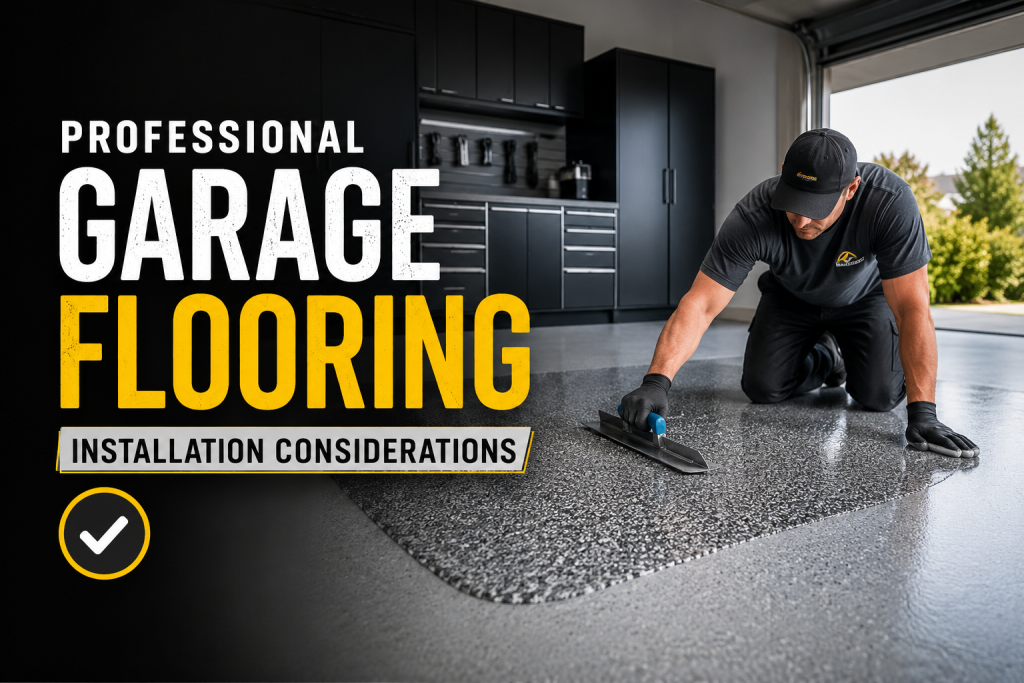
Experienced contractors also understand how local climate affects curing and performance. For example, installers in humid regions like Florida or high-temperature areas like Texas must adjust timing and materials accordingly to ensure optimal results. Choosing a qualified installer for professional garage flooring systems is just as important as selecting the coating itself, since proper application directly impacts durability, appearance.
Final Verdict
Choosing between an epoxy vs polyaspartic garage floor comes down to balancing upfront cost with long-term performance. Both systems significantly improve the durability, appearance, and usability of a concrete garage floor, but they serve slightly different homeowner priorities. Epoxy remains a practical and budget-friendly garage coating option. It delivers solid protection, attractive finishes, and reliable performance for standard residential garages with moderate traffic and limited environmental stress. For many homeowners, it provides an affordable way to upgrade a plain concrete surface without a major investment.
Polyaspartic coatings, however, represent the higher-performance tier. A polyaspartic floor coating offers superior UV resistance, faster installation, and greater long-term durability, especially in demanding climates like Florida, Texas, and the Midwest. It is often the preferred choice for homeowners who want premium garage floor durability and minimal maintenance over time. In the end, epoxy is best for value-focused projects, while polyaspartic is best for long-term performance and premium results. The right choice depends on your budget, climate, and how you use your garage.
Frequently Asked Questions
Is epoxy vs polyaspartic garage floor better for garages?
In an epoxy vs polyaspartic garage floor comparison, polyaspartic coatings are generally considered better in most performance categories. A polyaspartic floor coating typically offers stronger UV resistance, faster installation, improved flexibility, and better long-term durability compared to traditional epoxy systems. However, epoxy can still be a smart choice for homeowners focused on budget-friendly upgrades and moderate garage use. Both options improve garage floor durability, but the right choice depends on climate, usage, and long-term maintenance expectations.
How long does an epoxy garage floor last?
A professionally installed epoxy coating can last several years under normal residential conditions. Lifespan depends on traffic levels, climate exposure, and maintenance habits.
Does polyaspartic yellow over time?
Polyaspartic coatings are UV-stable, meaning they resist yellowing and fading even with long-term sunlight exposure. This makes them ideal for bright or sun-facing garages.
Which garage floor is more cost-effective long term?
While epoxy has a lower upfront cost, polyaspartic often provides better long-term value due to reduced maintenance needs and longer lifespan.
Can either coating be applied over existing concrete?
Yes, both epoxy and polyaspartic systems are designed for concrete floor coating applications, but proper surface preparation is essential for adhesion and durability.