


Best Exterior Paint Colors for Modern Curb Appeal
When it comes to exterior paint colors, the impact goes far beyond aesthetics. The exterior of a home is the first thing people see, and it directly shapes first impressions, neighborhood perception, and even resale value. A well-chosen color scheme can instantly make a property feel more modern, well-maintained, and valuable. Strong curb appeal paint thoughts are not just about choosing trendy colors; they’re about understanding how a home interacts with its surroundings. Roof color, landscaping, driveway materials, and architectural style all influence how exterior tones are perceived. A color that works beautifully on one home may feel completely out of place on another.
In many U.S. markets, buyers make judgments within seconds of seeing a home. This is why house resale paint colors are often designed to be neutral, balanced, and widely appealing rather than highly personalized. Subtle, timeless tones tend to perform better than bold or unconventional choices. Ultimately, exterior color selection is a strategic design decision that combines aesthetics, durability, and market appeal, making it one of the most important upgrades in any home improvement plan.
Best House Colors That Dominate Today’s Market
Today’s best house colors are driven by simplicity, contrast control, and long-term visual appeal. Instead of highly saturated tones, homeowners are leaning toward refined palettes that enhance architectural structure and improve overall curb appeal. Neutral-based exterior paint colors remain the dominant choice across U.S. neighborhoods. Shades like soft gray, warm white, taupe, and muted beige are widely used because they adapt well to different lighting conditions and surrounding landscapes. These tones also pair easily with a variety of roofing materials, from dark asphalt shingles to metal or clay tile.
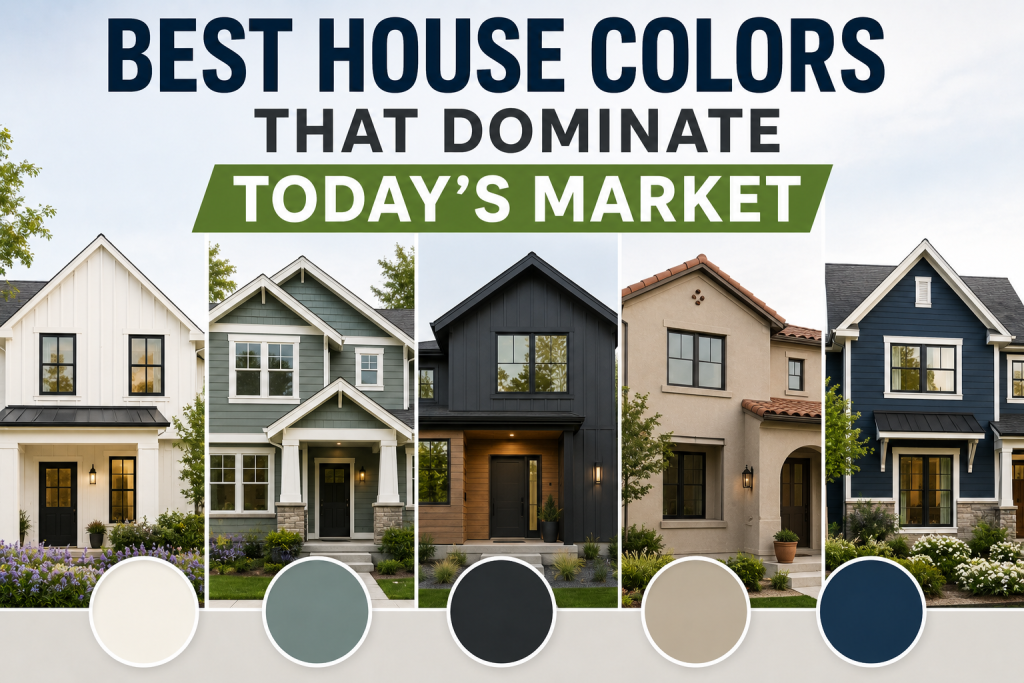
Darker modern palettes are also gaining popularity, especially in contemporary builds. Charcoal, deep navy, and near-black exteriors create a bold, high-contrast look when paired with lighter trim or natural wood accents. These combinations are often used in urban and luxury homes where a more dramatic aesthetic is desired. In suburban settings, balanced exterior color palettes are preferred to maintain harmony with surrounding homes while still offering a refreshed, updated appearance. The goal is not to stand out aggressively, but to achieve a clean, intentional design that feels modern and cohesive. Overall, modern exterior trends prioritize restraint, balance, and architectural enhancement over decorative color experimentation.
Curb Appeal Paint Thoughts That Increase Home Value
When planning exterior paint colors, one of the most important goals for homeowners is improving curb appeal in a way that can also support resale value. The right curb appeal paint thoughts don’t just make a home look attractive; they make it feel well-maintained, modern, and move-in ready. A proven approach is using contrast strategically. Light siding paired with darker trim creates definition and highlights architectural features such as windows, rooflines, and entryways. This simple technique can significantly elevate the overall look of a home without requiring bold or risky color choices.
Front doors also play a key role in curb appeal. A carefully selected accent color, such as deep navy, forest green, or classic black, can create a focal point that draws attention to the entryway while still working within broader best house colors. Another effective strategy is sticking to balanced, neutral-based palettes that appeal to a wide range of buyers. Soft grays, warm whites, and muted taupes are commonly used as house resale paint colors because they reduce visual risk and support stronger market perception. When applied thoughtfully, curb appeal-focused painting becomes one of the most cost-effective ways to improve a home’s exterior presence and overall value.
Neutral External Paint Colors for Timeless Design
When it comes to selecting exterior paint colors, neutral palettes remain the most reliable choice for long-term curb appeal. Neutral external paint is widely used because it adapts easily to changing trends, landscaping updates, and neighborhood styles without looking outdated. Shades like soft white, warm beige, light gray, and taupe create a balanced foundation that works across a wide range of architectural designs. These tones are especially effective for homeowners who want a timeless look that won’t require frequent repainting to stay current.
Neutral palettes also make it easier to coordinate other exterior elements such as roofing, stonework, and trim. For example, a light gray siding can pair with crisp white trim for a clean, modern appearance, while warm beige tones work well with natural wood accents for a softer, more traditional feel. From a resale perspective, house resale paint colors that lean neutral tend to attract more buyers because they reduce personalization barriers. Buyers can more easily envision their own style on a neutral exterior, which often improves marketability. Overall, neutral palettes remain a foundational strategy in exterior color schemes, offering flexibility, longevity, and broad visual appeal.
exterior color palettes
Choosing effective exterior paint colors is not just about personal preference; it also depends on how a home fits within its surrounding neighborhood. Well-planned exterior color palettes help create visual harmony while still allowing a home to stand out in a tasteful, balanced way. One of the most reliable approaches is the classic three-tone structure: a primary siding color, a complementary trim color, and a distinct accent for doors or shutters. This method works across a wide range of architectural styles and helps define structure without overwhelming the design.
Neutral-based palettes remain the most versatile option in this system. Soft grays, warm whites, and muted taupes serve as strong base colors that blend well in most suburban settings. These tones are often used in modern house colors because they offer flexibility while maintaining a clean, updated look. Trim and accent choices are where homeowners can introduce subtle contrast. Crisp white trim creates a traditional, clean finish, while darker tones like charcoal or black add a more modern edge. Accent colors on doors can further enhance curb appeal without disrupting overall balance. A well-structured color scheme ensures the home feels intentional, cohesive, and visually aligned with its environment.
Best Farmhouse Exterior Colors
Among today’s most popular exterior paint colors, modern farmhouse exterior colors continue to dominate suburban and rural home design. This style blends traditional comfort with clean, modern simplicity, creating a look that feels both timeless and updated. The foundation of this palette is typically a bright or soft neutral siding color. Warm whites and off-whites are commonly used because they create a clean backdrop that highlights architectural details like board-and-batten siding, gables, and porch structures. These tones also pair well with natural materials like wood and stone, which are central to the farmhouse aesthetic.
Trim and accent colors play a major role in defining contrast. Black or charcoal trim is often used to frame windows and rooflines, adding structure and visual depth. This contrast is a defining feature of many best house colors within the farmhouse category. Wood accents are another signature element, often used on front doors, shutters, or porch beams to introduce warmth and texture. These details help soften the overall look while maintaining a cohesive exterior color scheme. Overall, modern farmhouse palettes are designed to balance simplicity with character, making them one of the most enduring curb appeal paint ideas in the current housing market.
House Resale Paint Colors That Attract Buyers
When selecting exterior paint colors, one of the most important considerations is how the home will appeal to future buyers. The right home resale paint colors are typically those that feel neutral, clean, and universally attractive, rather than highly personalized or trend-specific. Buyers tend to respond best to balanced, low-risk palettes. Soft grays, warm whites, and muted beige tones remain top choices because they make a home feel well-maintained and easy to envision as their own. These shades also align closely with popular best house colors, which helps keep the property visually current in competitive markets.
Contrast is also important in resale-focused design. Subtle differences between siding, trim, and accent elements help highlight architectural details without overwhelming the overall appearance. For example, light siding paired with crisp white trim and a darker front door creates a simple yet effective curb appeal paint idea that appeals to a wide range of buyers. Consistency with neighborhood styles is another key factor. Homes that fit naturally within their surroundings often perform better than those with overly bold or mismatched exterior color palettes. Ultimately, resale-friendly palettes focus on broad appeal, visual cleanliness, and long-term adaptability.
Siding Color Thoughts for Different Home Styles
Choosing the right exterior paint colors for siding depends heavily on the home’s architectural style, material, and surrounding environment. Well-planned siding color ideas help create balance between structure, trim, and landscape, while also supporting long-term durability and curb appeal. For traditional homes, soft neutrals like beige, warm gray, and cream remain popular choices. These tones create a classic appearance that pairs well with brick foundations, stone accents, and symmetrical designs. They also align closely with timeless exterior color palettes that tend to age well over time.
Modern homes often lean toward more minimal palettes. Cool gray siding, crisp white exteriors, or even darker tones like charcoal are commonly used to emphasize clean lines and geometric shapes. These selections are frequently seen in contemporary best house colors where simplicity and contrast are key design elements. Farmhouse-style homes typically combine light siding with darker accents. White or off-white siding paired with black trim and natural wood elements creates one of the most recognizable modern farmhouse exterior color combinations. Vinyl, fiber cement, and wood siding each respond differently to paint, so selecting the right finish and tone is essential for both appearance and long-term performance.
How to Choose Exterior Paint Colors Like a Professional Designer?
Selecting the right exterior paint colors becomes much easier when you approach it like a designer instead of focusing only on individual shades. Professionals evaluate architecture, environment, and long-term visual balance before making final decisions.
Exterior Paint Colors: Start With Your Home’s Architectural Style
Every home style naturally pairs with certain best house colors. For example, colonial homes often look best with balanced neutrals, while modern builds support darker contrasts or minimalist palettes. Matching color to structure ensures the home feels intentional rather than randomly painted.
Evaluate Fixed Exterior Elements First
Before selecting paint, look at roofing, stone, brick, and driveway materials. These elements cannot be changed easily, so your exterior color palettes should complement them rather than compete. This step helps avoid clashing tones and improves overall curb appeal.
Use Contrast to Highlight Key Features
Strategic contrast can dramatically improve curb appeal paint thoughts. Lighter siding with darker trim helps define windows, rooflines, and entry points, while accent colors on doors can create a strong focal point without overwhelming the design.
Consider Long-Term Resale Appeal
If resale is a priority, sticking with house resale paint colors like soft grays, warm whites, and beige tones reduces risk. These neutral palettes appeal to a broader buyer audience and maintain relevance across changing trends.
Test Colors in Real Outdoor Lighting
Exterior colors shift dramatically in sunlight, shade, and different weather conditions. Always test samples on multiple sides of the home before finalizing your neutral exterior paint selection to ensure consistency throughout the day.
How Climate Affects Exterior Paint Choices?
Climate plays a major role in selecting the right exterior paint colors, because weather conditions directly impact both appearance and long-term durability. A color that performs well in one region may fade, darken, or require more maintenance in another. In hot, sunny climates, lighter neutral external paint is often preferred because it reflects heat and helps reduce surface fading. Bright sun exposure can quickly break down darker pigments, making color retention an important consideration for long-term curb appeal. Homes in these regions often rely on softer whites, light grays, and beige tones as part of their exterior color palettes.
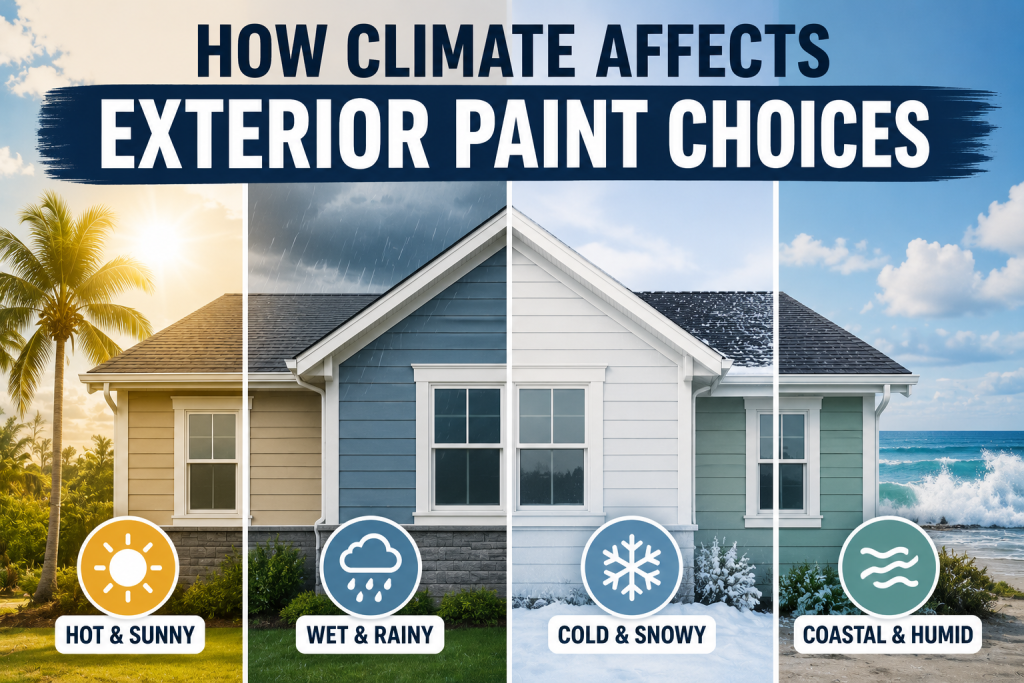
In colder or snowy climates, slightly darker or more saturated tones can help create contrast against winter landscapes. These homes often use deeper grays, muted blues, or earthy shades to maintain visual balance throughout the year. High-humidity or coastal areas require special attention to moisture resistance and UV stability. Salt air and moisture can accelerate wear, so durable coatings and carefully selected finishes are essential for maintaining consistent best house colors over time. Ultimately, climate influences not just color choice, but also how well a home maintains its curb appeal across seasons and environmental conditions.
Final Thoughts
Choosing the right exterior paint colors is one of the most impactful design decisions a homeowner can make. Unlike interior updates, exterior changes shape first impressions instantly and influence how a property is perceived from the street. Well-balanced best house colors not only improve curb appeal but also help a home feel more cohesive with its surroundings. Whether using soft neutrals, bold contrast, or best farmhouse exterior colors, the goal is to create a look that feels intentional and well-maintained. For many homeowners, the safest and most effective approach is sticking to proven exterior color palettes that balance siding, trim, and accent elements. This ensures architectural features are highlighted without overwhelming the overall design. From a resale perspective, house resale paint colors such as warm whites, grays, and taupes continue to perform well because they appeal to a wide range of buyers and adapt easily to changing trends. Ultimately, exterior paint is not just about color. It’s about durability, harmony, and long-term value. A thoughtful selection can elevate curb appeal today while protecting investment value for years to come.
Frequently Asked Questions
What are the best exterior paint colors for curb appeal?
The best exterior paint colors for curb appeal are typically neutral-based tones like warm white, soft gray, taupe, and beige. These shades create a clean, modern look and align with popular curb appeal paint trends that appeal to most buyers.
What are the best house colors trending right now?
Current best house colors include minimalist whites, charcoal gray, muted earth tones, and soft greiges. These colors focus on simplicity, contrast, and long-term visual balance rather than bold or highly saturated shades.
What are the best neutral external paint options?
The most popular neutral external paint options include warm whites, light taupe, and soft gray tones. These colors are widely used in exterior color palettes because they work across many architectural styles.
What are good farmhouse exterior colors?
Best farmhouse exterior colors typically combine white or off-white siding with black trim and natural wood accents. This contrast creates a timeless, high-appeal design.
What siding color trends increase home value?
Strong siding color trends for resale include neutral tones with clean contrast, such as light siding with darker trim and a bold front door accent. These combinations enhance curb appeal and improve marketability.