


Exterior Paint Peeling and Cracking: Causes & Prevention Guide
Understanding exterior paint peeling is essential for maintaining a durable, attractive, and well-protected home exterior. When paint starts to fail, it’s not just a cosmetic issue—it often signals deeper problems such as moisture intrusion, poor surface preparation, or weather-related stress. Over time, peeling and cracking can expose siding to damage, leading to costly repairs if not addressed early.
The most common causes of exterior paint peeling vary depending on climate, siding type, and maintenance history. Homes exposed to heavy rain, high humidity, intense sunlight, or freezing temperatures are especially vulnerable. In this guide, we’ll break down the main reasons behind peeling and cracking paint, explain warning signs like bubbling and moisture damage, and provide practical prevention strategies. You’ll also learn how to fix existing issues and maintain a long-lasting exterior finish that protects your home year-round.
What Causes Exterior Paint Peeling?
One of the most common causes of exterior paint peeling is poor surface preparation before painting. When dirt, dust, mildew, or loose old paint is not properly removed, new paint cannot bond effectively, leading to early failure. In many cases, skipping primer or using the wrong type of primer also weakens adhesion and increases the risk of peeling over time.
Another major factor is moisture trapped beneath the paint surface. This type of paint failure causes issues such as lifting, flaking, and separation from the siding. When water seeps into wood or other materials and cannot escape, it pushes the paint outward as it evaporates. Homes with damaged caulking, unsealed gaps, or aging siding are especially vulnerable to this problem. Addressing these underlying issues is essential to preventing recurring peeling and ensuring long-term paint performance.
Common Reasons for Cracked Exterior Paint
Cracked paint is another visible form of exterior paint peeling problems and often develops when paint becomes brittle over time. This usually happens as coatings age and lose flexibility, especially when exposed to repeated expansion and contraction caused by temperature changes. Homes in regions with hot summers and cold winters are particularly prone to this issue, as the siding constantly shifts beneath the paint layer.
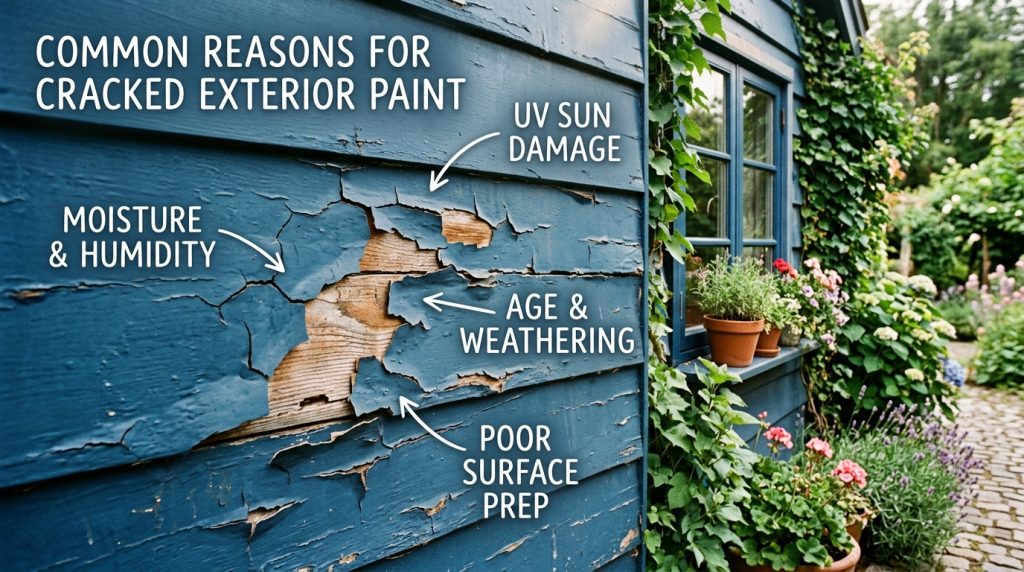
Another frequent cause of cracked exterior paint is applying paint too thickly or using incompatible layers of different paint types. When coatings dry unevenly, they can harden on the surface while remaining unstable underneath, leading to visible cracking patterns. Poor-quality materials or skipping proper priming can also contribute to this type of failure. Regular inspection and timely repainting are key parts of exterior paint maintenance, helping prevent small cracks from developing into larger peeling or structural damage over time.
Paint Bubbling Issues and What They Mean
Paint bubbling issues are often an early warning sign of deeper problems beneath the surface, and they frequently lead to exterior paint peeling if not addressed quickly. Bubbles form when air, moisture, or heat becomes trapped under the paint film, causing it to lift away from the siding. This is commonly seen in areas exposed to direct sunlight, high humidity, or moisture intrusion from behind the wall surface.
One of the most serious underlying causes of bubbling is siding moisture damage, which occurs when water seeps into wood or other porous materials and pushes outward as it evaporates. Painting over damp surfaces, applying paint during high heat, or failing to use proper primers can all contribute to this issue. Once bubbling begins, it typically spreads, weakening the entire coating system and increasing the risk of peeling, cracking, and long-term exterior deterioration.
How Moisture Leads to Paint Failure
Moisture is one of the most destructive forces behind exterior paint peeling, and it often goes unnoticed until visible damage appears. When water penetrates siding through cracks, unsealed joints, or damaged caulking, it becomes trapped beneath the paint layer. As temperatures rise, this moisture expands and pushes against the coating, leading to bubbling, blistering, and eventual peeling. This cycle is especially common in humid regions or homes with poor ventilation behind the exterior walls.
Over time, persistent moisture exposure weakens the entire paint system and accelerates siding moisture damage, especially on wood and fiber cement surfaces. Even small leaks around windows, doors, or rooflines can contribute to long-term deterioration if not repaired promptly. Proper surface preparation, sealing gaps, and ensuring adequate drainage are essential steps in preventing moisture-related paint failure causes and maintaining a stable, long-lasting exterior finish.
Most Common Paint Failure Causes Explained
Several factors can contribute to exterior paint peeling, and in many cases, more than one issue is involved. One of the most frequent paint failure causes is poor surface preparation, including painting over dirt, chalky residue, or loose old coatings. Without a clean and stable surface, new paint cannot properly bond, which leads to early lifting and separation from the siding.
Another major cause is environmental stress. Constant exposure to UV rays, heavy rain, and temperature swings gradually weakens the paint film, making it more prone to cracking and peeling. Inadequate priming, using incompatible paint products, or applying paint in unsuitable weather conditions can also increase the likelihood of failure. Understanding these combined factors helps homeowners identify the root cause of deterioration and take the right steps toward long-term protection and prevention.
How to Prevent Exterior Paint Peeling
Preventing exterior paint peeling starts with proper preparation and choosing the right materials for your home’s siding and climate. Before painting, all surfaces should be thoroughly cleaned to remove dirt, mildew, and loose coatings. Any cracks or gaps should be sealed with high-quality caulk, and damaged areas should be repaired to ensure a smooth, stable base for the new paint. Applying a suitable primer is also essential, especially on bare wood or previously damaged surfaces, as it improves adhesion and helps prevent future failure.
Using high-quality, weather-appropriate products is equally important. Selecting paints designed for your specific environment can significantly reduce risks associated with paint failure causes, such as moisture intrusion and UV exposure. Avoid painting in extreme heat, cold, or high humidity, as these conditions can affect drying and bonding. Consistent attention to weather damage prevention ensures a longer-lasting finish and reduces the likelihood of peeling, cracking, or bubbling over time.
Fixing Peeling House Paint the Right Way
When dealing with exterior paint peeling, proper repair is essential to prevent the issue from returning. The first step is to remove all loose, flaking, or damaged paint using scraping tools or light sanding. Any remaining weak edges should be smoothed to create a stable surface. Ignoring damaged areas or painting over peeling sections will only lead to recurring failure and more extensive repairs later.
Once the surface is prepared, it’s important to address the underlying paint failure causes. This may include repairing damaged caulk, fixing moisture entry points, or replacing deteriorated siding sections. After repairs, a high-quality primer should be applied to ensure strong adhesion between the surface and the new paint layer. Finally, use a durable exterior paint suited for the local climate to complete the restoration. These peeling house paint solutions help restore both protection and appearance while extending the life of the exterior finish.
Exterior Paint Maintenance Tips for Long-Term Protection
Regular exterior paint maintenance is essential to prevent recurring issues like exterior paint peeling, cracking, and bubbling. Homeowners should inspect their home’s exterior at least twice a year, paying close attention to areas around windows, doors, gutters, and trim where moisture is most likely to enter. Early detection of small issues allows for quick repairs before they develop into larger, more expensive problems.
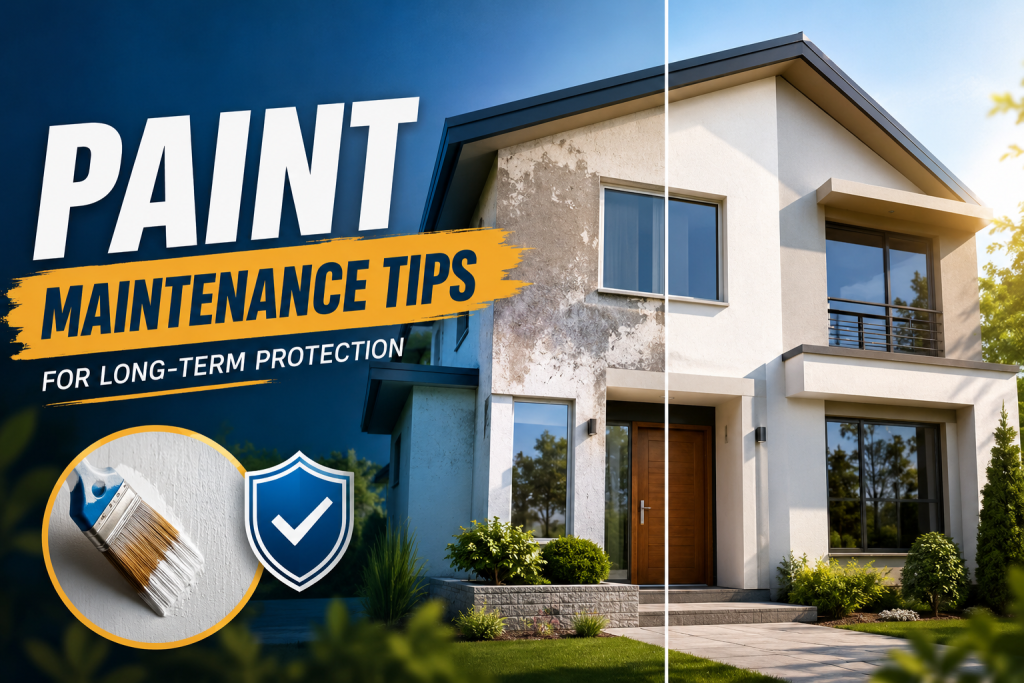
Routine cleaning also plays a key role in protecting the paint surface. Washing away dirt, pollen, and mildew helps maintain adhesion and reduces surface breakdown caused by environmental exposure. Touching up small chips or cracks as soon as they appear is another important step in weather damage prevention, as it prevents moisture from seeping beneath the coating. Combined with proper caulking and occasional repainting when needed, these maintenance practices help extend the lifespan of your exterior finish and preserve your home’s appearance and protection.
Conclusion
Understanding exterior paint peeling is key to protecting your home from long-term damage and costly repairs. Most issues stem from moisture, poor preparation, or environmental stress, but they can be prevented with proper maintenance and high-quality materials. By addressing the root causes, performing regular inspections, and following best practices for preparation and application, homeowners can maintain a durable, attractive exterior that stands up to weather and time.
Frequently Asked Questions
What causes exterior paint peeling?
The most common causes of exterior paint peeling include poor surface preparation, moisture trapped beneath the paint, low-quality materials, and painting over dirty or damp surfaces. Environmental factors like UV exposure and temperature changes can also weaken adhesion over time.
How do you stop exterior paint from peeling?
To prevent exterior paint peeling, ensure proper surface cleaning, repair any cracks or gaps, apply a high-quality primer, and use durable exterior paint suited for your climate. Avoid painting in extreme heat, cold, or high humidity.
Can moisture cause paint to peel?
Yes. Siding moisture damage is one of the leading reasons paint fails. When water gets trapped beneath the surface, it expands and pushes the paint outward, causing bubbling, cracking, and eventual peeling.
What are paint bubbling issues a sign of?
Paint bubbling issues often indicate trapped moisture, poor adhesion, or painting over a damp surface. If not addressed quickly, bubbling can lead to widespread peeling and surface deterioration.
How do you fix peeling exterior paint?
Fixing peeling house paint solutions involves scraping away loose paint, sanding the surface, repairing any damage, applying primer, and repainting with a high-quality exterior coating designed for your climate.
What causes exterior paint to peel and crack?
Exterior paint peels and cracks due to poor surface preparation, moisture trapped under the paint, low-quality materials, and extreme weather exposure. These issues weaken adhesion and lead to visible paint failure causes over time.
How can you prevent exterior paint from peeling and cracking?
Prevention includes proper surface cleaning, repairing damaged areas, using high-quality primer, and applying durable exterior coatings. Regular exterior paint maintenance and weather damage prevention practices also help extend paint life and reduce future issues.