

Best Hardwood Flooring Brands for US Homeowners (2026 Guide)
Choosing the best hardwood flooring brands is not just about picking a name you recognize; it’s about long-term performance, resale value, and how well the flooring holds up in real US home conditions. From humid Southern states like Florida and Texas to cold, dry climates in the Midwest and Northeast, hardwood behaves very differently depending on where it’s installed.
For most homeowners, residential hardwood flooring is a major investment that impacts both daily comfort and property value. The best brands balance durability, finish quality, and stability under seasonal expansion and contraction. They also need to offer reliable product lines across both solid and engineered options. In this guide, we break down top-performing brands based on real-world durability, climate suitability, and long-term value, not just marketing reputation.
How Does The US Climate Affect Hardwood Flooring Performance?
US climate conditions play a major role in how hardwood flooring performs over time, and this is where many homeowners make costly mistakes. In humid regions like Florida, Louisiana, and coastal Texas, moisture in the air can cause wood to expand, cup, or warp if the material is not properly engineered. In contrast, dry inland areas such as Arizona or parts of Colorado can lead to shrinkage and small gaps between planks during winter months.
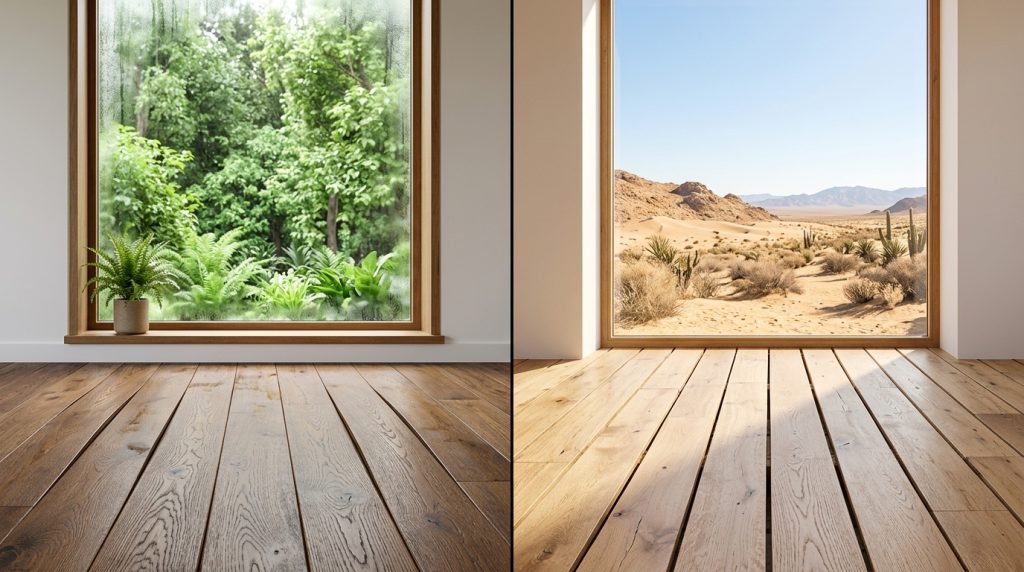
This is why choosing durable hardwood flooring is not just about surface hardness; it’s about dimensional stability. Engineered products often outperform solid hardwood in moisture-heavy environments because their layered construction reduces movement. In colder northern states like Minnesota or Michigan, temperature swings also stress flooring systems, especially in older homes with inconsistent insulation. Understanding your regional climate is essential before selecting any flooring brand, as it directly impacts lifespan, maintenance, and long-term performance.
Mohawk Hardwood Flooring – Best for Versatility and Innovation
Mohawk Industries is one of the most widely recognized names in the American flooring industry, largely because of its scale, product variety, and consistent innovation. For homeowners comparing the best hardwood flooring brands, Mohawk stands out for offering a broad mix of solid and engineered options that work across nearly all US climate zones. One of the biggest strengths of Mohawk hardwood floors is versatility. The brand produces flooring designed for everything from budget-friendly suburban remodels to higher-end residential projects.
Its engineered wood collections are especially popular in humid states like Florida and Georgia, where moisture resistance is a priority. Mohawk also invests heavily in protective finishes that improve scratch resistance and everyday durability, making it suitable for families with pets or high foot traffic. While not always positioned as the most luxury-focused brand, it delivers strong performance-to-value balance for most US homeowners.
Bruce Hardwood Flooring – Classic American Hardwood Standard
Bruce Flooring has long been associated with traditional American hardwood craftsmanship and remains a recognizable name for homeowners seeking time-tested flooring solutions. When evaluating the best hardwood flooring brands, Bruce often appeals to buyers who value classic styling, solid wood construction, and strong resale perception in established housing markets. Known for its straightforward product lineup, Bruce hardwood flooring is frequently used in renovation projects involving older homes, particularly in the Northeast and Midwest.
Its solid hardwood offerings can be sanded and refinished multiple times, which adds long-term value for homeowners planning to stay in their property for decades. However, Bruce performs best in stable indoor environments. In highly humid coastal regions, solid hardwood may require more careful moisture control compared to engineered alternatives. Still, for traditional residential properties, it remains a dependable choice rooted in American flooring history and long-standing contractor familiarity.
Engineered Wood vs Solid Hardwood (Critical Decision Section)
One of the most important decisions when evaluating engineered wood flooring brands versus traditional hardwood is understanding how each performs in real US home conditions. Solid hardwood is made from a single piece of wood, which allows it to be sanded and refinished multiple times. This makes it appealing for long-term homeowners who want maximum lifespan and classic value.
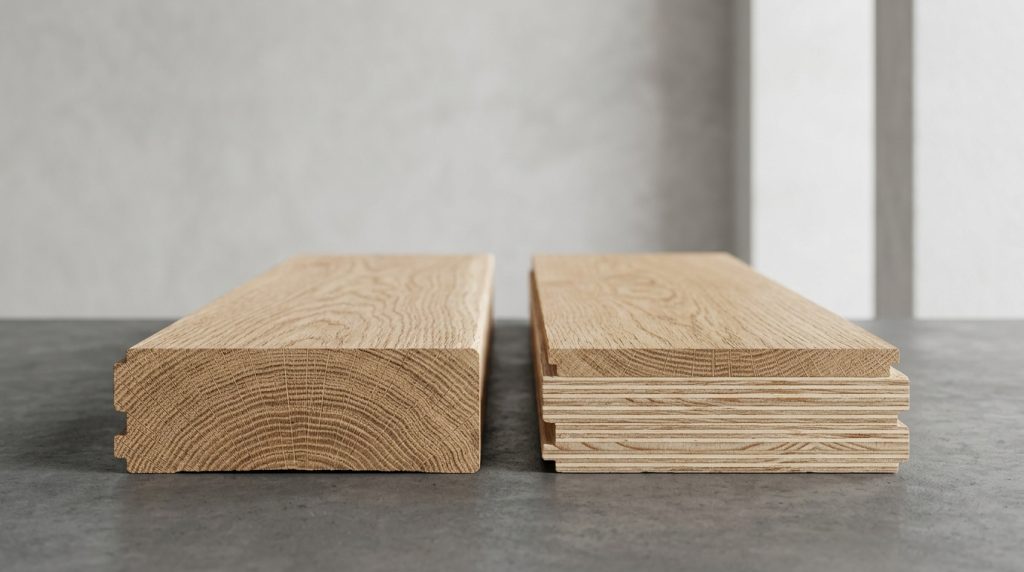
Engineered hardwood, however, is built in layers with a real wood surface and a stable core beneath. This structure makes it far more resistant to humidity changes, which is critical in coastal states like Florida or humid regions across the Southeast. It also performs better in basements and slab foundations commonly found in newer suburban construction. For many homeowners comparing the best hardwood flooring brands, the choice often comes down to climate and lifestyle. Solid wood excels in dry, stable environments, while engineered options provide broader durability across unpredictable temperature and moisture conditions.
Durability, Maintenance, and Long-Term Cost Breakdown
When homeowners evaluate the best hardwood flooring brands, durability is only part of the equation; long-term maintenance and lifecycle cost often matter just as much. Even premium flooring will show wear over time depending on traffic levels, cleaning habits, and indoor climate control. In busy US households with pets and children, surface protection and finish quality become critical factors.
Most modern hardwood systems use factory-applied finishes designed to resist scratches, stains, and UV fading. However, even the most durable hardwood flooring still requires periodic maintenance such as refinishing every 7–15 years for solid wood, depending on usage. Engineered options may offer limited refinishing cycles but reduce the need for frequent intervention in humid climates. Over a 10–20-year period, costs include installation, refinishing, and potential plank replacement. Homeowners should also consider HVAC control costs, since maintaining stable indoor humidity significantly extends flooring lifespan and protects long-term resale value.
How to Choose the Best Hardwood Flooring Brands for Your Home?
Selecting among the best hardwood flooring brands comes down to matching product performance with your specific home environment, lifestyle, and long-term plans. There is no single “best” option for every homeowner, only the best fit for your climate zone, budget, and usage patterns. Start by evaluating your region. Homes in humid Southern states often benefit from engineered products due to moisture stability, while dry climates in the Mountain West may perform well with solid hardwood. Next, consider household activity. Families with pets, kids, or heavy foot traffic should prioritize scratch resistance and protective finishes.
Budget also plays a role, but it should be balanced against lifecycle cost rather than upfront price alone. For most residential hardwood flooring decisions, homeowners should weigh installation quality, warranty coverage, and expected maintenance over time. A well-matched flooring choice reduces long-term repair costs and improves resale appeal in competitive US housing markets.
Cost Expectations in the US Market (Material + Installation)
Cost is one of the biggest deciding factors when comparing the best hardwood flooring brands, and in the US market, pricing varies significantly based on material type, installation method, and regional labor rates. On average, homeowners can expect hardwood flooring costs to range from mid-tier engineered options to premium solid hardwood installations, with total installed pricing influenced heavily by contractor availability in each region.
In high-demand metro areas like Chicago, Dallas, and Atlanta, installation labor can increase overall project cost compared to smaller suburban or rural markets. Engineered products are typically more cost-efficient because they install faster and require less subfloor preparation, while solid hardwood often involves additional leveling and acclimation time. Over the long term, it’s important to factor in refinishing costs, especially for solid wood floors. Although upfront investment may be higher, quality flooring can significantly increase home resale value, making it a strategic upgrade for many US homeowners focused on equity growth.
Final Verdict
Choosing among the best hardwood flooring brands ultimately comes down to matching brand strengths with homeowner priorities rather than searching for a single universal winner. Each leading manufacturer serves a different type of residential need, especially across varied US climates and housing styles. Mohawk Industries stands out as the most versatile option overall, offering a strong balance of durability, affordability, and climate-adaptable engineered products suitable for most US regions. Shaw Industries is better positioned for homeowners who want a more premium look and enhanced surface protection, especially in high-traffic family homes. Meanwhile, Bruce Flooring remains the go-to choice for traditional solid hardwood appeal, particularly in older homes where long-term refinishing value matters. For most homeowners, the smartest approach is to prioritize climate compatibility, lifestyle demands, and long-term maintenance rather than brand name alone. When those factors align, hardwood flooring becomes not just a design upgrade but a lasting investment in home value and livability.
FAQs About Best Hardwood Flooring Brands
What is the best hardwood flooring brand for most US homes?
The best hardwood flooring brands depend on climate and lifestyle, but Mohawk Industries is often considered the most versatile choice due to its wide engineered and solid wood options. It performs well across humid Southern states, dry Western climates, and colder Northern regions. For homeowners wanting a balance of durability, affordability, and design variety, Mohawk is typically the safest all-around option.
Is engineered hardwood better than solid hardwood?
Engineered hardwood is often better in moisture-prone areas because it resists expansion and contraction. It performs well in basements, coastal regions, and homes with fluctuating humidity. Solid hardwood, however, offers longer refinishing potential and traditional value. The right choice depends on whether stability or long-term refinishing matters more in your home.
Is Shaw a good hardwood flooring brand?
Shaw Industries is considered a premium option in the US flooring market. It is known for strong surface durability, stylish finishes, and family-friendly performance. Many homeowners choose Shaw for high-traffic areas because it balances aesthetics with long-term wear resistance.
Is Bruce hardwood flooring still a good option today?
Bruce Flooring remains a trusted choice for traditional solid hardwood installations. It is especially popular in older US homes where refinishing and long-term durability are priorities. While it may not offer as many engineered options, it still holds strong value in classic home renovations.
Is Bruce hardwood flooring still a good option today?
Bruce Flooring remains a trusted choice for traditional solid hardwood installations. It is especially popular in older US homes where refinishing and long-term durability are priorities. While it may not offer as many engineered options, it still holds strong value in classic home renovations.
What is the most durable type of hardwood flooring?
The most durable hardwood flooring options are high-quality engineered hardwood with thick wear layers and factory-applied protective finishes. These perform especially well in humid climates and high-traffic households. Solid hardwood can also be extremely durable but requires more climate control to prevent movement and damage.
How long does hardwood flooring last in US homes?
Well-maintained hardwood flooring can last 20–50 years depending on the material and maintenance level. Solid hardwood typically lasts longer due to its ability to be refinished multiple times, while engineered hardwood lifespan depends on the thickness of its top layer and environmental conditions.
Which hardwood flooring brands are best for resale value?
Brands like Mohawk Industries and Shaw Industries tend to perform well for resale value because buyers associate them with quality and reliability. However, resale impact also depends on installation quality, wood species, and overall home condition—not just the brand itself.