

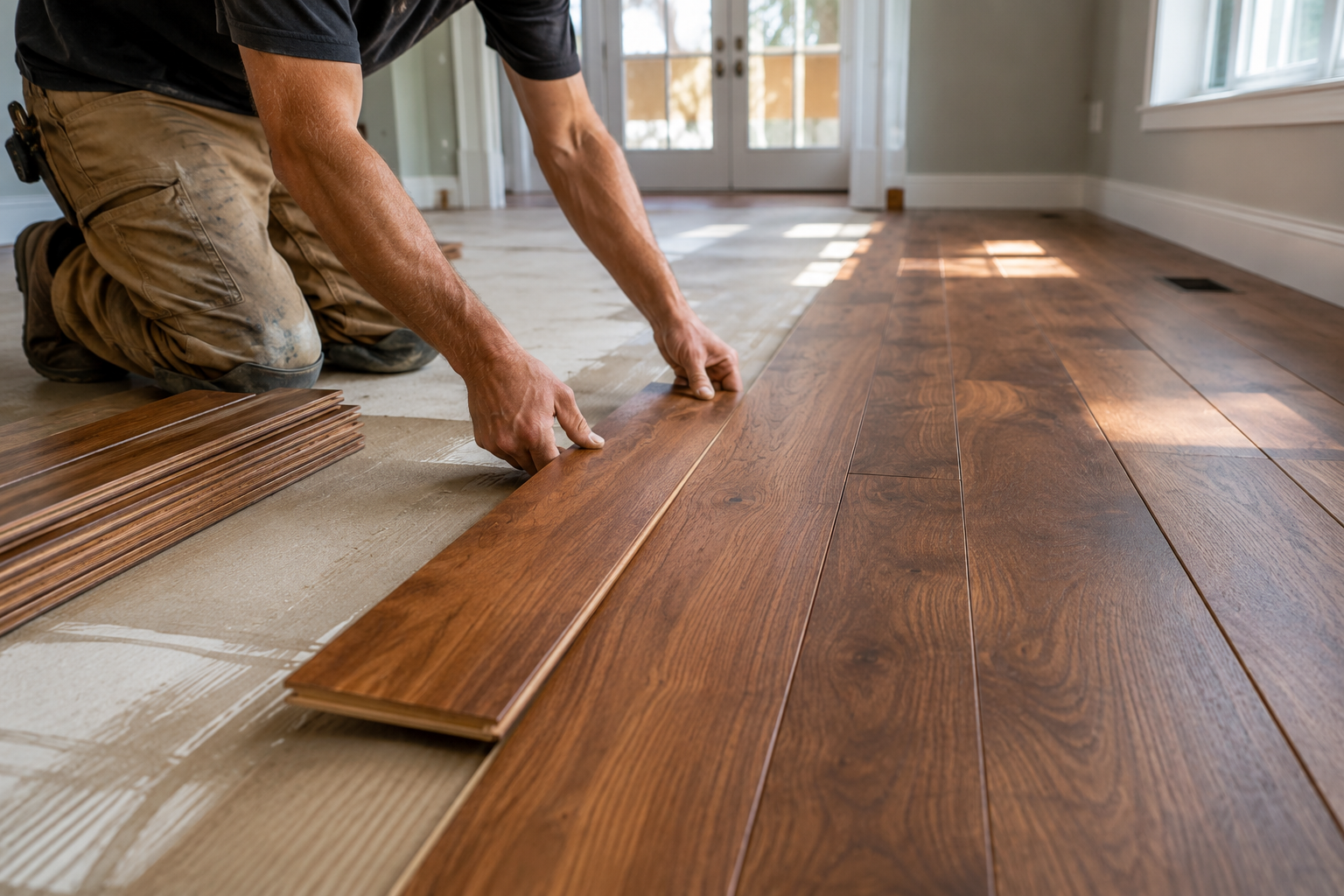
Average Hardwood Flooring Installation Cost in the US (2026 Update)
In 2026, the hardwood flooring installation cost for most US homeowners typically ranges between $8 and $18 per square foot installed, depending on material quality, labor conditions, and regional demand. Lower-end projects using basic oak or builder-grade products may start closer to $8 per square foot, while premium installations in high-cost metro areas can exceed $18 per square foot.
Most of the total expense comes from a combination of materials and labor, with labor alone often accounting for nearly half the budget. Homes in cities like Chicago or Boston generally see higher pricing due to contractor demand, while areas in Texas or the Midwest may be more affordable. Older homes requiring subfloor repairs or full tear-outs can push costs significantly higher, especially during full renovations. Overall, the installation cost reflects both material choice and local market conditions, making early budgeting essential for homeowners planning upgrades.
Hardwood Floor Cost Per Square Foot Breakdown
Understanding the hardwood flooring installation cost starts with breaking it down into a clear per-square-foot structure, which is how most US contractors and retailers estimate pricing. For homeowners, this is the most practical way to compare quotes and control budget expectations before committing to a project. On the lower end, basic hardwood installations typically range from $6 to $9 per square foot installed. Mid-range options generally fall between $9 and $14 per square foot, while premium hardwood, such as wide-plank oak, walnut, or custom finishes, can reach $14 to $25+ per square foot depending on finish quality and installation complexity.
Location also plays a major role. Coastal states and major metropolitan areas tend to sit at the higher end of pricing due to labor demand and permitting requirements, while smaller cities often see more competitive rates. For homeowners planning renovations, understanding installation cost at the per-square-foot level helps prevent underestimating total project budgets and avoids surprises during contractor bidding.
Solid Hardwood Flooring Cost vs Engineered Hardwood
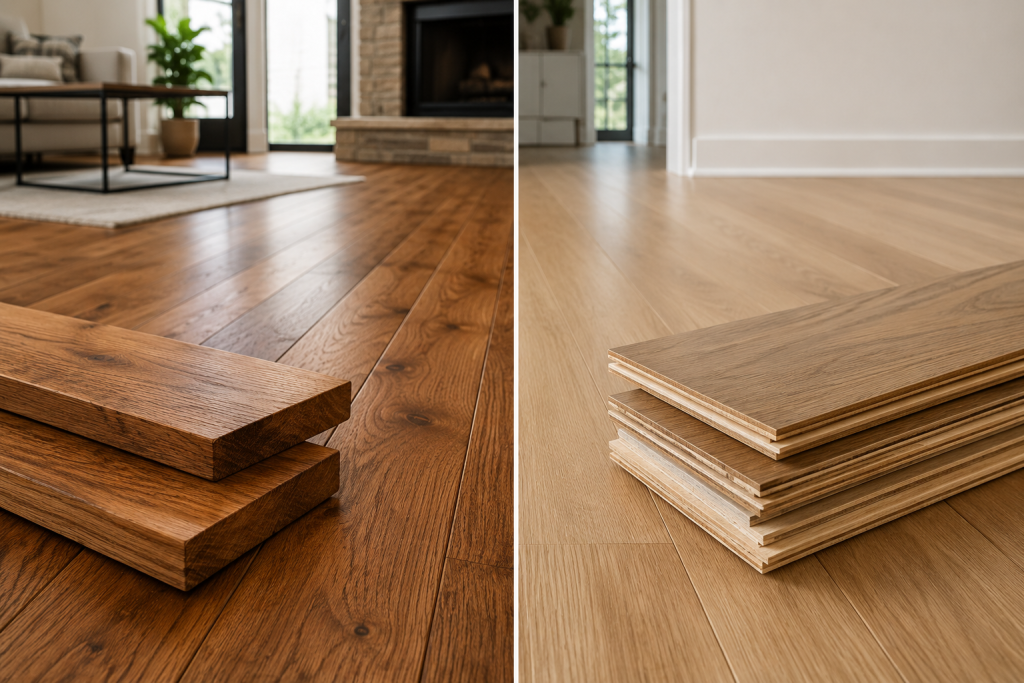
When evaluating the hardwood flooring installation cost, one of the most important decisions US homeowners face is choosing between solid and engineered materials. Each option carries different pricing structures, durability benefits, and climate performance considerations that can significantly affect long-term value. Solid hardwood generally comes at a higher upfront investment, often ranging from $10 to $20+ per square foot installed depending on wood species and finish quality. It is prized for its longevity and ability to be refinished multiple times, making it a strong option for long-term homeowners focused on resale value.
Engineered hardwood typically falls between $7 and $15 per square foot installed and is designed with layered construction that improves stability in humid environments. It performs especially well in regions like the Southeast and coastal states where moisture levels fluctuate throughout the year. While it may not be refinished as many times as solid wood, it offers a more budget-friendly entry point without sacrificing appearance or performance in many residential settings.
Wood Floor Installation Pricing: What Labor Actually Costs
Labor is one of the most overlooked components of the hardwood flooring installation cost, yet it often accounts for nearly 40%–60% of the total project budget in many US homes. On average, wood floor installation labor ranges from $3 to $8 per square foot, depending on the complexity of the job and the contractor’s experience level. Simple installations, such as straight-lay plank flooring in a modern home with a clean subfloor, tend to sit at the lower end of this range. However, costs increase significantly when contractors must handle old flooring removal, subfloor leveling, moisture correction, or intricate layouts like diagonal or herringbone patterns.
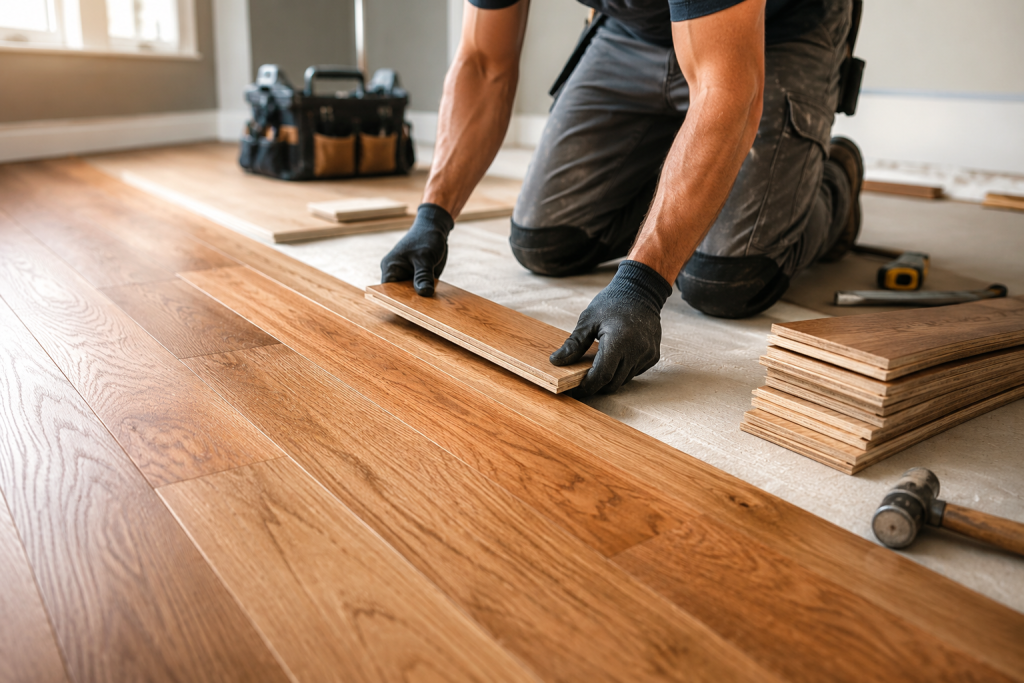
Urban areas such as New York City, Los Angeles, and San Francisco typically see higher labor pricing due to demand, licensing requirements, and scheduling constraints. In contrast, smaller markets often offer more competitive rates. For homeowners, understanding installation cost at the labor level is critical for accurately comparing contractor bids and avoiding underquoted estimates that later increase during installation.
Hardwood Floor Replacement Cost (Full Tear-Out Projects)
A full tear-out significantly increases the hardwood flooring installation cost, especially in older US homes where existing flooring, subfloors, or moisture issues must be addressed before new installation begins. On average, homeowners can expect hardwood floor replacement projects to range from $10 to $22 per square foot, depending on demolition complexity and material selection. Removal of existing flooring typically adds $2 to $5 per square foot, with additional disposal fees depending on local regulations and landfill requirements. If the subfloor is damaged or uneven, repairs can add another layer of expense that often surprises homeowners during renovation planning.
Replacement projects also tend to include hidden costs such as baseboard removal and reinstallation, furniture moving, and moisture barriers in humid or flood-prone regions. In water-damaged homes, common in hurricane-affected areas like Florida or Texas Gulf Coast, costs can escalate further due to remediation requirements. Overall, hardwood flooring increases sharply in replacement scenarios compared to new construction or simple overlay projects.
Flooring Labor Cost by US Region
Regional differences play a major role in the hardwood flooring installation cost, especially when it comes to labor pricing across the United States. Labor rates can vary significantly depending on local demand, cost of living, and contractor availability, making location one of the biggest budget factors in flooring projects. In the Northeast, cities like New York and Boston, labor costs tend to be the highest, often pushing installation rates toward the upper end of national averages. The West Coast, including California metro areas, also sees elevated pricing due to strict building regulations and strong remodeling demand.
In contrast, the Midwest generally offers more moderate labor costs, while many Southern states provide some of the most competitive installation pricing in the country. Rapid housing growth in Sun Belt states such as Texas, Florida, and Arizona has increased contractor demand, which can occasionally drive prices upward during peak remodeling seasons. As a result, hardwood flooring is not just about materials, it is heavily shaped by regional labor markets and construction activity trends.
Hardwood Flooring Cost by Material Brands
Brand selection has a direct influence on the hardwood flooring installation cost, especially when homeowners compare durability, warranty coverage, and finish quality across leading US manufacturers. Premium and mid-range brands often differ not just in price, but in long-term performance and resale appeal. Mohawk Industries offers widely used engineered hardwood installation cost options that balance affordability with durability, making it common in mid-range residential wood flooring prices of projects.
Shaw Industries is known for strong residential performance and consistent quality across a broad price range, often chosen for family homes and high-traffic areas. For traditional solid hardwood, Bruce Hardwood Flooring remains a recognizable option, especially in classic American home designs. Budget-conscious homeowners often turn to LL Flooring for competitive pricing and broad selection across styles. Ultimately, brand choice influences both upfront and long-term hardwood flooring, particularly when factoring in warranty length, refinishing potential, and regional availability.
Cost Factors That Increase Hardwood Flooring Installation Cost
Several hidden variables can significantly raise the hardwood flooring installation cost, even when the initial material quote seems straightforward. One of the biggest cost drivers is subfloor condition, homes with uneven, damaged, or moisture-affected subfloors require extra preparation work before installation can begin, adding both time and labor expenses. Another major factor is flooring layout complexity. Designs such as herringbone, diagonal planks, or mixed-width patterns require more precise cutting and longer installation times, which increases labor costs. Stairs also add a premium due to the detailed craftsmanship required for each step.
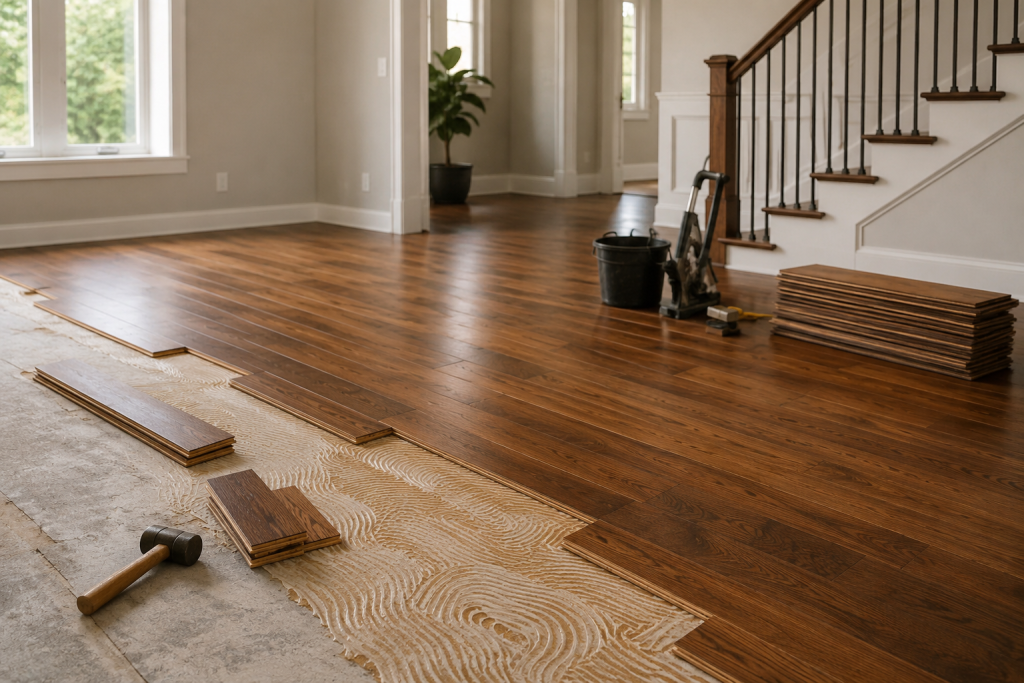
Homeowners in coastal or humid regions may also face added expenses for moisture barriers and acclimation periods to prevent future warping or cupping. Additionally, removing old flooring, especially glued-down materials, can significantly increase project difficulty and disposal costs. Together, these factors explain why the final hardwood flooring installation cost often exceeds early estimates, particularly in full renovation projects or older homes.
Conclusion
Despite the upfront investment, many US homeowners still consider hardwood one of the strongest long-term flooring upgrades in terms of resale value and aesthetic appeal. The hardwood flooring installation cost often pays off over time, especially in competitive housing markets where buyers prioritize move-in-ready interiors and durable finishes. Real estate data in many suburban and urban US markets shows that homes with hardwood floors tend to sell faster and often at higher price points compared to homes with carpet or lower-end laminate. This is particularly true in family-oriented neighborhoods and higher-income metro areas where design consistency and durability matter. Beyond resale value, hardwood flooring also offers long-term lifestyle benefits such as easier maintenance, improved indoor air quality compared to carpet, and strong visual appeal across modern and traditional home styles. While the initial installation cost can be significant, many homeowners view it as a strategic investment rather than just a cosmetic upgrade.
FAQs About Hardwood Flooring Installation Cost
How much does hardwood flooring cost for 1,000 sq ft?
Nylon is generally considered the most durable carpet fiber for high-traffic residential areas. It performs well in busy households with children and pets because it resists crushing, wear, and long-term fiber damage better than many other materials.
Is engineered hardwood cheaper than solid hardwood?
Yes, engineered options generally have a lower upfront cost and better performance in humid regions, making them a popular choice for Southeast and coastal homes.
What is the cheapest hardwood flooring option?
Lower-grade oak and select engineered products are typically the most affordable while still maintaining a natural wood appearance.
How long does installation take?
Most standard residential projects take 2–5 days, depending on home size and subfloor condition.
Does hardwood flooring increase home value?
In many US markets, yes, hardwood floors are widely seen as a premium feature that improves resale appeal and buyer interest.