


Why the Importance Of Paint Finish Matters
When most homeowners plan a painting project, color is usually the first decision, but the finish is just as important. The importance of paint finish goes beyond aesthetics, directly influencing durability, maintenance, lighting, and how a room feels over time. Choosing the wrong finish can lead to faster wear, difficult cleaning, and a mismatched look that doesn’t suit the space. Different paint finish types behave differently depending on how a room is used.
A finish that works well in a bedroom may not perform well in a kitchen or hallway. This is why professionals always consider function first during interior paint selection, not just color or style. This guide explains how paint finishes impact real-world performance, highlights paint durability benefits, and breaks down how room-specific paint finishes improve both design and long-term maintenance.
What is the importance of Paint Finish?
A paint finish refers to the level of sheen or shine a paint has once it dries, and it plays a major role in both appearance and performance. In simple terms, the importance of paint finish comes from how it affects light reflection, durability, and how easily a surface can be cleaned. While color determines the look of a wall, the finish determines how that surface behaves over time. Paint finishes are created by adjusting the ratio of pigments, binders, and additives in the paint formula. This is what produces different levels of sheen, from completely flat to highly glossy. These variations are commonly categorized into standard paint finish types such as flat, eggshell, satin, semi-gloss, and gloss.
Light reflection is the key factor that separates these finishes. Lower-sheen paints absorb light, creating a soft and muted appearance, while higher-sheen finishes reflect light, making surfaces appear brighter and more polished. This difference also affects how imperfections, textures, and wall conditions are perceived. Understanding these basics is essential for effective interior paint selection, since the right finish ensures both visual appeal and functional performance in each room.
Why Paint Finish Impacts Durability and Maintenance
One of the most practical reasons behind the importance of paint finish is how directly it affects durability and long-term maintenance. While paint color influences style, the finish determines how well a surface withstands daily wear, cleaning, and environmental exposure. This is especially important in busy households where walls are frequently touched, cleaned, or exposed to moisture.
Higher-sheen paint finish types like satin, semi-gloss, and gloss create a more sealed surface. This makes them more resistant to stains, scuffs, and moisture, which is why they are often used in kitchens, bathrooms, hallways, and trim work. These finishes support stronger paint durability benefits, allowing surfaces to be wiped clean without damaging the coating.
On the other hand, lower-sheen finishes like flat and eggshell are more porous. While they offer a softer and more elegant appearance, they are less resistant to scrubbing and may require more frequent touch-ups. This is why wall paint maintenance is significantly easier with higher-sheen finishes in high-traffic areas. Understanding this relationship helps homeowners choose finishes that reduce long-term upkeep while maintaining a clean and polished interior.
How Paint Finish Affects Room Function
One of the most overlooked aspects of the importance of paint finish is how directly it impacts the function of each room. Different areas of the home experience different levels of activity, moisture, and cleaning needs, which makes room-specific paint finishes essential for long-term performance and comfort. In bedrooms, lower-sheen finishes like flat or eggshell are often preferred because they create a calm, soft environment. These finishes support relaxation and reduce glare, making them ideal for rest-focused spaces. However, they are not designed for heavy cleaning, which is acceptable in low-traffic areas.
In living rooms, satin is commonly used because it offers a balance between appearance and durability. It handles moderate traffic and occasional cleaning while maintaining a smooth, attractive look. Kitchens and bathrooms require more durable finishes such as semi-gloss or gloss due to moisture, grease, and frequent washing. These higher-sheen options provide stronger protection and easier maintenance. Hallways and entryways benefit from semi-gloss finishes because they experience frequent contact and wear. Choosing the correct finish for each room ensures better interior paint selection, reduces maintenance issues, and improves the overall functionality of the home.
Paint Finish and Home Aesthetics
Beyond durability and function, the importance of paint finish also lies in how it influences the overall aesthetics of a home. Different paint finish types interact with light in unique ways, which can dramatically change how a space looks and feels throughout the day. This makes finish selection a key part of both interior paint selection and overall design planning. Lower-sheen finishes like flat and eggshell absorb light, creating a soft, muted appearance that feels calm and understated. These finishes are often used in bedrooms or relaxing spaces where a subtle visual effect is preferred. However, they can make darker rooms feel slightly heavier if natural light is limited.
Higher-sheen finishes such as satin, semi-gloss, and gloss reflect more light, which can make rooms appear brighter, cleaner, and more spacious. This is especially useful in smaller areas or rooms with limited natural light. However, excessive shine can also highlight wall imperfections, which is why balance is important in design decisions. Paint finish also affects mood perception. Softer finishes tend to feel cozy and relaxed, while shinier finishes feel more energetic and polished. Choosing the right combination of finishes helps create visual hierarchy and enhances the overall flow of interior spaces.
Common Mistakes When Choosing Paint Finishes
Even when homeowners understand the importance of paint finish, mistakes still happen during the selection process, often leading to higher maintenance, uneven aesthetics, or poor long-term performance. One of the most common errors is choosing a finish based only on appearance rather than function. While a glossy look may seem attractive, it may not be practical for every room or wall condition. Another frequent issue is ignoring room-specific paint finishes. For example, using flat paint in high-traffic areas like hallways or kitchens can result in stains and frequent repainting. On the other hand, using high-sheen finishes in poorly prepared spaces can highlight imperfections and create an uneven surface appearance.
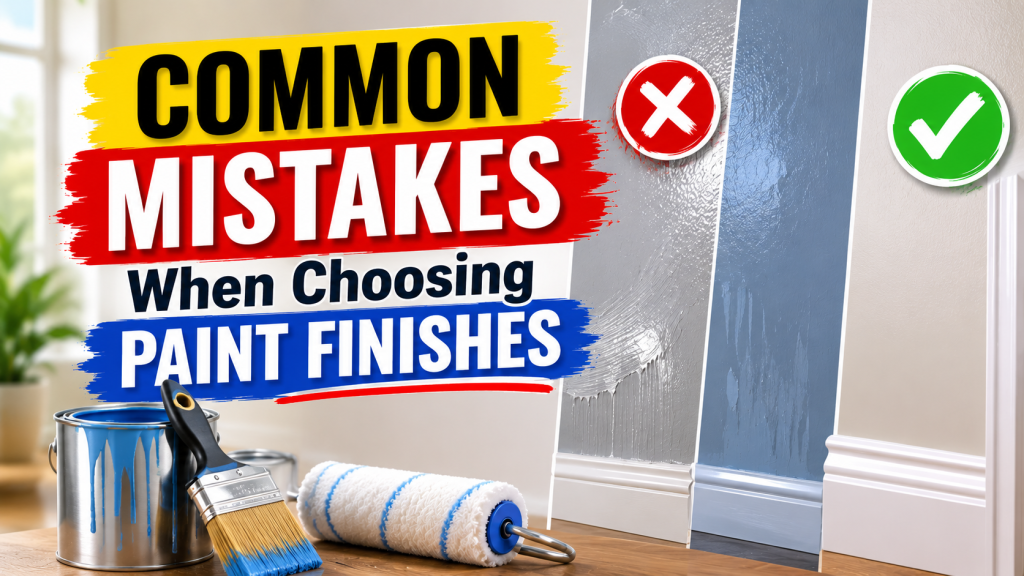
Many homeowners also overlook lighting conditions. Natural and artificial lighting significantly affect how paint finish types appear once applied. A finish that looks subtle in one room may appear overly reflective in another, leading to unexpected results after painting. Finally, skipping proper surface preparation is a critical mistake. Without sanding, priming, and cleaning, even high-quality finishes will fail to perform as expected. Understanding these pitfalls ensures better wall paint maintenance, improved durability, and more consistent results across the home.
Paint Finish Selection Checklist
Before finalizing your interior paint selection, use this checklist to ensure you choose the right finish for both performance and design. Understanding the importance of paint finish in practical terms helps avoid costly repainting and ensures long-term satisfaction with your space.
- Identify the function of each room (sleep, cook, entertain, work)
- Evaluate traffic level (low, medium, or high usage areas)
- Consider moisture exposure (bathrooms, kitchens, laundry rooms)
- Check lighting conditions (natural vs artificial light reflection)
- Decide on desired visual effect (soft, balanced, or high-shine finish)
- Choose flat or eggshell for low-traffic, calm environments
- Use satin for balanced durability in everyday living areas
- Select semi-gloss for trim, doors, and high-contact surfaces
- Reserve gloss for decorative or high-impact features
- Review paint durability benefits based on cleaning needs
- Test samples on walls before committing to a full application
Following this structured checklist ensures that your paint finish types are matched correctly to each space, improving both aesthetics and long-term wall paint maintenance.
Conclusion
The importance of paint finish goes far beyond aesthetics, it directly influences how your home looks, performs, and ages over time. While color sets the mood, paint finish types determine durability, maintenance needs, and how each surface interacts with light and daily use. Choosing the right finish ensures your walls not only look good on day one but continue to perform well for years. By applying the right room-specific paint finishes, homeowners can significantly improve both functionality and design.
Lower-sheen finishes offer softness and calm for private spaces, while higher-sheen options deliver strength and easy cleaning in high-traffic areas. This balance is key to achieving a cohesive, practical interior. Ultimately, thoughtful interior paint selection helps reduce maintenance effort, improves long-term durability, and enhances overall home aesthetics. When you understand how each finish behaves, you can make smarter design decisions that support both style and everyday living.
Frequently Asked Questions
Why is paint finish important?
The importance of paint finish lies in its impact on durability, maintenance, and appearance. It determines how well a surface holds up over time and how it interacts with light in a room.
What is the best paint finish for interior walls?
It depends on the room. Satin is often preferred for general use, while eggshell works well for bedrooms. These paint finish types balance durability and appearance for most homes.
How does paint finish affect durability?
Higher-sheen finishes provide better paint durability benefits because they are more resistant to stains, moisture, and wear, making them easier to clean and maintain.
What are room-specific paint finishes?
Room-specific paint finishes refer to selecting different sheens based on room function, such as flat for ceilings, satin for living rooms, and semi-gloss for kitchens and trim.
Does paint finish affect wall maintenance?
Yes. Wall paint maintenance is easier with higher-sheen finishes like satin or semi-gloss because they can be cleaned more easily without damaging the surface.
What happens if I choose the wrong paint finish?
Choosing the wrong finish can lead to higher maintenance, faster wear, or an undesirable look. For example, using flat paint in high-traffic areas may result in frequent repainting.