


Common Paint Finish Mistakes Homeowners Make
Many homeowners focus heavily on color when painting a room, but overlook one of the most critical decisions: the finish. The result is often a series of avoidable paint finish mistakes that affect durability, maintenance, and overall visual quality. While paint color sets the tone, the finish determines how the surface performs over time. From selecting the wrong paint sheen for a room to underestimating maintenance needs, these errors can lead to premature wear, frequent touch-ups, or disappointing visual results.
Even high-quality paint cannot compensate for a poorly chosen finish. This guide explores the most common interior painting mistakes, explains why they happen, and shows how to avoid bad wall paint choices that lead to long-term frustration and extra costs.
Mistake #1: Choosing the Wrong Paint Sheen for the Room
One of the most common paint finish mistakes homeowners make is selecting the wrong sheen for a specific room. This often happens when people prioritize appearance over function, leading to finishes that don’t match the demands of the space. Using a wrong paint sheen can quickly result in visible wear, poor durability, or an inconsistent look across the home.
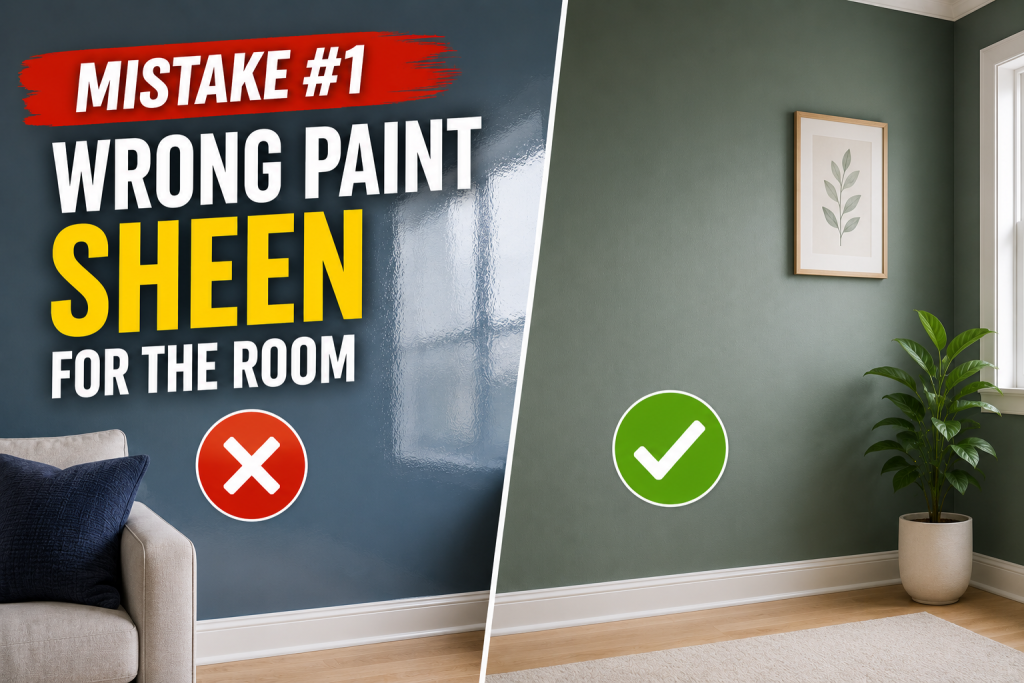
For example, using flat or matte paint in high-traffic areas like hallways or kitchens can cause frequent staining and difficult maintenance. On the other hand, applying high-gloss finishes in large living spaces may create excessive reflection, highlighting imperfections and making the room feel overly harsh. These are classic paint finish mistakes that can easily be avoided with proper planning.
Why it happens:
- Choosing based on color samples instead of finish performance
- Lack of understanding of choosing paint finishes by room function
- Ignoring traffic levels and cleaning needs
Impact:
- Faster wall wear and staining
- Increased maintenance and repainting costs
- Poor visual balance in interior spaces
Fix:
Match sheen levels to room usage: matte or eggshell for low-traffic areas, satin for general living spaces, and semi-gloss for high-contact surfaces. This simple approach prevents most paint durability issues and ensures long-term performance.
Mistake #2: Using Glossy Paint in the Wrong Spaces
Another frequent paint finish mistake is overusing glossy or high-sheen finishes in areas where they are not appropriate. While glossy paint can look polished and modern, it is also the most reflective option, which means it can easily expose wall imperfections and uneven surfaces.
Many homeowners choose glossy finishes expecting a premium look but end up with visible brush marks, dents, and texture flaws. This is one of the most common glossy wall paint problems, especially in older homes or poorly prepped walls. The higher the sheen, the more every surface detail becomes noticeable.
Why it happens:
- Assuming more shine always means better quality
- Copying modern design trends without considering wall condition
- Ignoring lighting impact on reflective surfaces
Impact:
- Highlights imperfections and uneven drywall
- Creates excessive glare in bright rooms
- Makes spaces feel visually harsh or overwhelming
- Leads to dissatisfaction with final finish
Fix:
Reserve high-gloss finishes for specific applications like trim, doors, or cabinetry rather than full walls. In most cases, satin or semi-gloss provides a more balanced alternative. Proper wall preparation and priming are also essential to reduce visibility of flaws and avoid common paint durability issues linked to improper application.
Mistake #3: Ignoring Maintenance Needs of Matte Paint
A common paint finish mistake many homeowners make is underestimating how much maintenance matte finishes require. While matte paint offers a smooth, elegant look, it is also one of the least durable options when it comes to cleaning and long-term upkeep. This leads to frequent frustration, especially in active households.
The issue becomes more noticeable when homeowners use matte paint in spaces that experience daily contact or accidental touching. Because matte surfaces are more porous, stains and smudges can settle into the finish, making them difficult to remove without damaging the wall. This is one of the most overlooked matte paint maintenance challenges in interior painting.
Why it happens:
- Choosing matte purely for its aesthetic appeal
- Lack of awareness about cleaning limitations
- Using matte in high-traffic or multi-use rooms
Impact:
- Stains and marks become permanent over time
- Frequent repainting or touch-ups required
- Reduced overall paint durability issues in lived-in spaces
- Walls lose their uniform appearance faster
Fix:
Use matte paint only in low-traffic areas like ceilings or formal bedrooms. For everyday spaces, switch to eggshell or satin finishes that offer better cleanability. This improves durability while still maintaining a soft appearance without compromising long-term maintenance.
Mistake #4: Poor Surface Preparation Before Painting
One of the most damaging paint finish mistakes homeowners make is skipping or rushing surface preparation before applying paint. Even the highest-quality finish will fail if the wall underneath is not properly cleaned, sanded, and primed. This leads to uneven coverage, poor adhesion, and early paint durability issues that shorten the life of the entire paint job.
Many interior painting mistakes happen because homeowners assume new paint will automatically cover imperfections. However, without proper prep, flaws like cracks, grease stains, or uneven drywall texture become even more visible, especially with satin, semi-gloss, or glossy finishes.
Why it happens:
- Rushing the painting process
- Underestimating the importance of primer
- Assuming new paint will “fix” wall imperfections
- Lack of professional knowledge of paint finishes
Impact:
- Uneven color and patchy coverage
- Paint peeling or poor adhesion over time
- Visible brush and roller marks
- Reduced lifespan of the paint finish
Fix:
Always clean walls thoroughly, sand rough areas, and apply primer before painting. Proper preparation ensures even absorption and a smooth base for any finish, significantly reducing the risk of bad wall paint choices and improving long-term performance.
Mistake #5: Mismatching Paint Finish Mistakes Across Rooms
A subtle but important paint finish mistake happens when homeowners use inconsistent sheen levels across connected spaces without a clear design strategy. While variety in choosing paint finishes can work well when intentional, random mismatching often leads to a disjointed and visually inconsistent home interior.
For example, using flat paint in a hallway and then switching to high-gloss in an adjacent living room without transition or purpose can disrupt visual flow. This creates uneven light reflection, making rooms feel disconnected rather than cohesive. It can also exaggerate paint durability issues if higher-traffic areas are finished with less durable sheens.
Why it happens:
- Choosing finishes room-by-room without overall planning
- Focusing on color instead of interior painting mistakes like sheen consistency
- Lack of awareness about how sheen affects visual continuity
- Mixing finishes based on preference rather than function
Impact:
- Broken visual flow between rooms
- Inconsistent lighting reflection across spaces
- Uneven durability in high-traffic areas
- Less polished, uncoordinated interior appearance
Fix:
Develop a consistent sheen strategy for the entire home. For example, use flat or eggshell for private spaces, satin for common areas, and semi-gloss for trim and doors. This structured approach prevents bad wall paint choices and ensures a more unified, professional-looking interior design.
Mistake #6: Overlooking Lighting Effects on Paint Finish
One of the most underestimated paint finish mistakes is ignoring how lighting changes the appearance of a surface once it is applied. The same paint can look completely different depending on natural daylight, artificial lighting, and even the direction a room faces. This often leads to disappointment after painting, especially when choosing paint finishes without testing them in real conditions.
Higher-sheen finishes like satin, semi-gloss, and gloss reflect more light, which can brighten a room but also exaggerate imperfections under strong lighting. On the other hand, matte finishes absorb light, which can make rooms feel softer but sometimes darker or flatter in low-light spaces. These lighting interactions are a major factor behind many paint finish mistakes in interior painting.
Why it happens:
- Testing paint samples under only one lighting condition
- Ignoring differences between daylight and artificial lighting
- Assuming color alone determines final appearance
- Lack of planning in bad wall paint choices for specific rooms
Impact:
- Unexpected shine or dullness after application
- Uneven appearance throughout the day
- Overly reflective or too-dim wall surfaces
- Poor overall room balance and mood
Fix:
Always test paint samples on multiple walls and observe them at different times of day. Consider both natural and artificial lighting before finalizing your paint finish types. This helps avoid costly repainting and ensures the finish performs well in real living conditions.
Paint Finish Mistake Checklist
Before starting any painting project, use this checklist to avoid the most common paint finish mistakes and ensure your choosing paint finishes decisions lead to long-lasting, professional results. This simple framework helps prevent costly interior painting mistakes and improves overall finish quality.
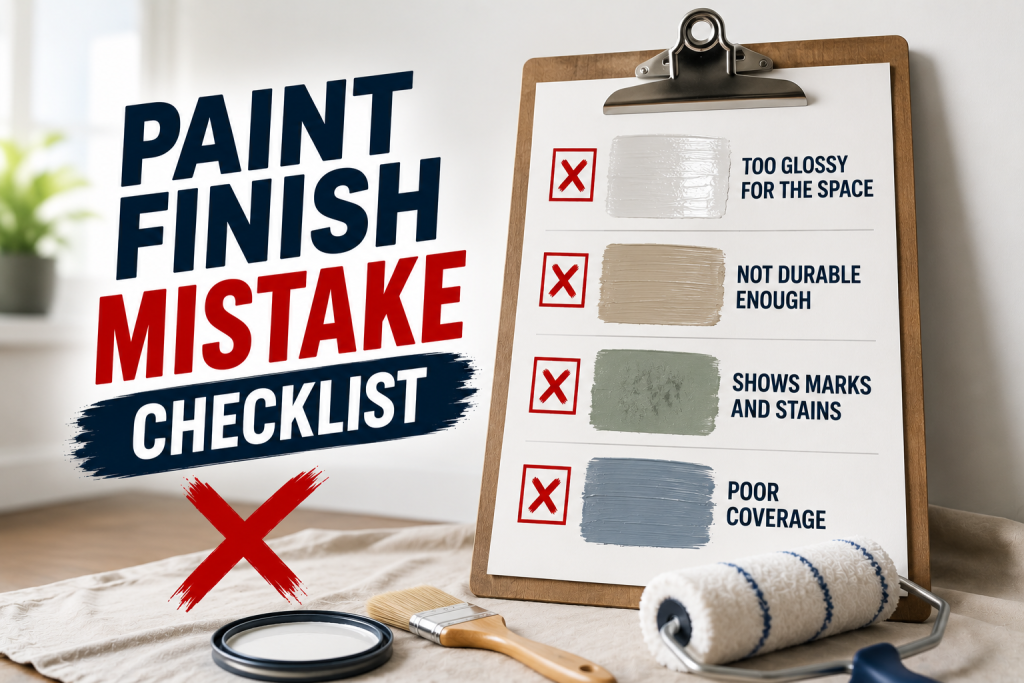
- Confirm the function of each room before selecting a finish
- Match sheen level to traffic and usage (low, medium, high)
- Avoid using wrong paint sheen in high-traffic areas
- Test paint samples under multiple lighting conditions
- Evaluate wall condition before selecting glossy finishes
- Ensure proper surface preparation (cleaning, sanding, priming)
- Use matte only in low-contact, low-traffic areas
- Reserve glossy finishes for trim, doors, or accents
- Maintain consistency in sheen across connected rooms
- Consider paint durability issues before final selection
- Avoid selecting finish based only on color or trend
Following this checklist helps eliminate most bad wall paint choices and ensures a balanced, durable, and visually consistent interior result.
Conclusion
Avoiding common paint finish mistakes is just as important as choosing the right color when planning an interior painting project. The finish determines how your walls perform over time, influencing durability, maintenance, and overall appearance. Many homeowners only realize the impact of a wrong paint sheen after issues like staining, glare, or uneven wear begin to appear. By understanding how different paint finish types behave in real-world conditions, you can prevent most interior painting mistakes before they happen.
Matching finishes to room function, preparing surfaces properly, and considering lighting are all essential steps in avoiding bad wall paint choices that lead to costly repaints. A thoughtful approach to choosing paint finishes ensures your home not only looks better but also stays easier to maintain for years. When selected correctly, paint finishes enhance both the beauty and performance of every space in your home.
Frequently Asked Questions
What are the most common paint finish mistakes?
The most common paint finish mistakes include using the wrong paint sheen for a room, ignoring lighting conditions, poor surface preparation, and selecting finishes based only on appearance instead of function.
What happens if I use the wrong paint sheen?
Using a wrong paint sheen can lead to poor durability, visible wall imperfections, and increased maintenance. For example, matte in high-traffic areas can stain quickly, while gloss may highlight flaws.
Why do glossy wall paint problems occur?
Glossy wall paint problems usually happen when walls are not properly prepared or when gloss is used on imperfect surfaces, causing dents, brush marks, and uneven textures to become more visible.
Is matte paint hard to maintain?
Yes, matte paint maintenance can be more difficult because matte surfaces absorb stains and are less washable than satin or semi-gloss finishes, especially in active living spaces.
How can I avoid paint durability issues?
You can avoid paint durability issues by matching paint finish to room function, preparing surfaces properly, and choosing more durable finishes like satin or semi-gloss for high-use areas.
What are the biggest interior painting mistakes homeowners make?
The biggest interior painting mistakes include ignoring room function, skipping primer, mismatching finishes across rooms, and not testing paint under different lighting conditions.