


Why the Importance Of Remodeling Budgets Matters?
The importance of remodeling budgets becomes clear the moment a home renovation begins. Without a structured budget, even small projects can quickly expand in cost due to material upgrades, labor adjustments, and unexpected issues. In US home improvement projects, budgeting is not just a financial tool, it is a control system that guides every decision from planning to completion. A well-defined budget helps homeowners set realistic expectations, align with contractors, and avoid financial stress during construction. It also ensures that spending is distributed properly across labor, materials, permits, and contingency needs.
Most importantly, a strong budget prevents emotional or impulsive decisions during the renovation process. When homeowners understand the importance of remodeling budgets, they gain clarity, reduce risk, and maintain control over both cost and project scope from start to finish.
What Is a Remodeling Budget and Why Does It Exist
A remodeling budget is a structured financial plan that defines how much will be spent on a renovation and how those funds are allocated across different remodel project management categories. At its core, the importance of remodeling budgets lies in creating financial boundaries that guide decisions before and during construction. Without a clear budget, homeowners risk making unplanned upgrades, underestimating labor, or overlooking essential costs like permits and inspections. A proper budget accounts for materials, labor, design fees, contingency funds, and contractor payments, ensuring that every dollar has a defined purpose.
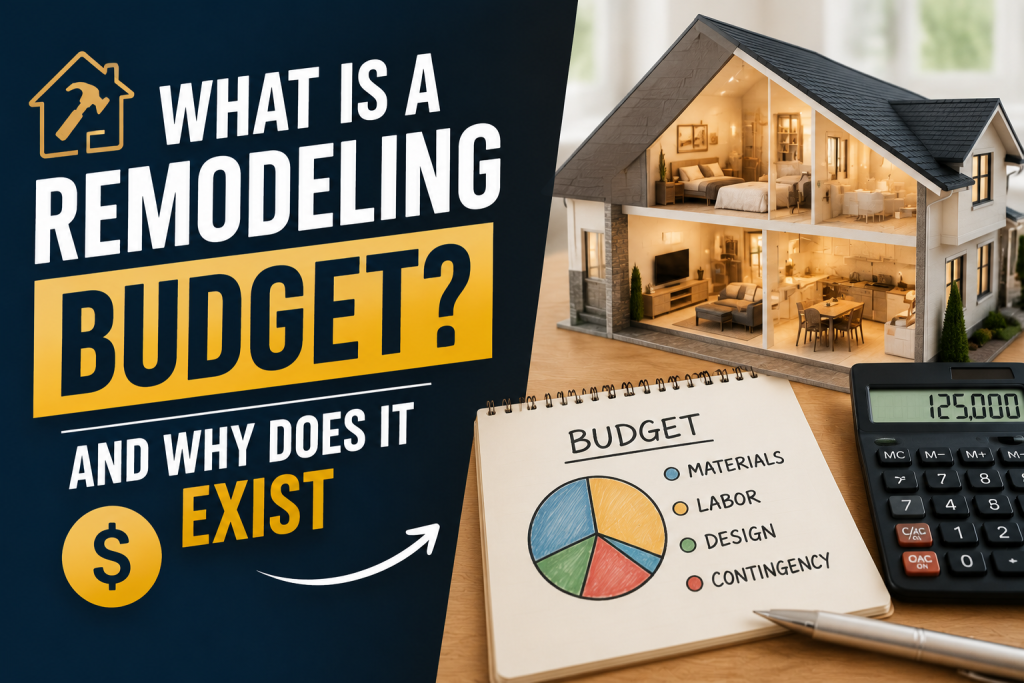
In US home renovation projects, budgets also serve as a communication tool between homeowners and contractors. They help set expectations, prevent misunderstandings, and establish a clear framework for home improvement budgeting. Ultimately, a remodeling budget exists to transform a vague idea of a renovation into a controlled, predictable, and financially manageable process.
How Remodeling Budgets Prevent Overspending
One of the clearest reasons behind the importance of remodeling budgets is their ability to prevent overspending during a renovation. Without financial boundaries, projects often expand beyond their original scope due to design changes, material upgrades, or unexpected construction challenges. A well-structured budget supports remodeling cost control by assigning clear limits to each category of spending, including labor, materials, permits, and contingency funds.
This structure makes it easier to track where money is going and quickly identify when a category is exceeding its planned allocation. Budgets also reduce emotional spending. During a remodel, homeowners may be tempted to upgrade finishes or add features mid-project, which can significantly increase costs. A defined budget acts as a decision filter, helping homeowners evaluate whether changes fit within their financial plan. In US renovation projects, this level of control is essential for keeping costs predictable and avoiding financial strain as construction progresses.
The Role of Renovation Financial Planning
Renovation financial planning is a core part of understanding the importance of remodeling budgets, because it turns a rough project idea into a structured financial roadmap. Instead of reacting to costs as they appear, homeowners plan ahead for labor, materials, permits, and contingency expenses before any work begins. Strong financial planning helps align expectations with reality. In many US remodeling projects, homeowners underestimate true costs due to fluctuating material prices and regional labor differences. A structured plan helps reduce this gap by forcing early decisions about scope, finishes, and contractor involvement.
It also improves communication with contractors. When a clear financial framework exists, bids become easier to compare, and project scope is less likely to shift unexpectedly. This directly supports better remodel project management and reduces disputes during construction. Ultimately, renovation financial planning ensures that every stage of the project is backed by realistic cost assumptions and controlled decision-making.
How Budgets Help Avoid Renovation Debt
One of the most critical aspects of the importance of remodeling budgets is their role in preventing homeowners from falling into renovation debt. Without a clear financial structure, it becomes easy to underestimate total project costs and rely too heavily on credit cards, personal loans, or high-interest financing. A well-planned budget establishes spending limits before construction begins, ensuring that every expense is accounted for within a defined range. This includes materials, labor, permits, and a contingency fund for unexpected issues.
By doing this, homeowners reduce the likelihood of needing emergency borrowing mid-project, which often leads to unfavorable repayment terms. Strong budgeting also supports better home improvement budgeting discipline by encouraging homeowners to prioritize essential upgrades over optional enhancements. In US renovation projects, this financial control is especially important, as scope changes and delays can quickly increase costs. Ultimately, budgets act as a safeguard, helping homeowners complete renovations without long-term financial strain or debt accumulation.
Why Home Improvement Budgeting Improves Decision-Making
A major part of the importance of remodeling budgets is how they improve decision-making throughout a renovation. When homeowners have a clear financial structure, every choice, materials, finishes, layout changes, and contractor options, can be evaluated against a defined cost framework instead of guesswork. Home improvement budgeting creates clarity by turning abstract ideas into measurable limits. For example, if a kitchen upgrade is capped at a certain amount, homeowners can immediately assess whether premium countertops or upgraded appliances fit within that boundary.
This reduces impulsive spending and keeps the project aligned with overall financial goals. It also improves remodel project management by helping prioritize needs over wants. Essential repairs like plumbing or electrical updates are addressed first, while cosmetic upgrades are evaluated based on remaining budget capacity. In US renovation projects, this structured decision-making process prevents scope creep and ensures that every upgrade supports both function and long-term value.
Contractor Payment Planning and Budget Alignment
A key reason behind the importance of remodeling budgets is how they directly shape contractor payment structures and overall project execution. In most US renovation projects, contractors do not work on a single lump-sum payment alone, payments are typically broken into milestones tied to project progress. This is where contractor payment planning becomes essential. A well-defined budget ensures that payments align with specific phases such as demolition, rough-in work, installation, and final finishes.
This structure protects both homeowners and contractors by creating transparency and accountability at each stage of the remodel. Strong budget alignment also reduces disputes and delays. When financial expectations are clearly mapped out, contractors can schedule labor and materials more efficiently, supporting better remodel project management. It also helps homeowners avoid overpaying upfront or running out of funds before project completion. Ultimately, budgeting ensures that financial flow matches construction progress, keeping the entire renovation organized and predictable.
How Renovation Expense Tracking Keeps Projects on Track
A major part of the importance of remodeling budgets is the ability to actively track spending throughout the renovation process. Without consistent renovation expense tracking, even well-planned projects can drift off course as small, unmonitored costs accumulate over time. Expense tracking involves recording every cost in real time, materials, labor invoices, permit fees, and change orders, then comparing them against the original budget. This creates visibility into how each category is performing and whether adjustments are needed before overspending occurs.
In US home renovation projects, this practice is especially important because prices can fluctuate during construction due to material shortages or unexpected site conditions. Tracking expenses allows homeowners to respond quickly, reallocate funds, and maintain control over remodeling cost control. It also improves remodel project management by making financial progress as measurable as construction progress. When both are aligned, projects are far more likely to finish on time and within budget.
Common Problems Without a Remodeling Budget
When homeowners skip proper planning, the importance of remodeling budgets becomes obvious very quickly through costly mistakes and project instability. Without a defined budget, renovations often suffer from uncontrolled spending, where small decisions gradually push total costs far beyond the original expectation. One of the most common issues is scope creep, continuous additions or upgrades that were never part of the original plan. Without home improvement budgeting, these changes accumulate and significantly increase overall expenses.
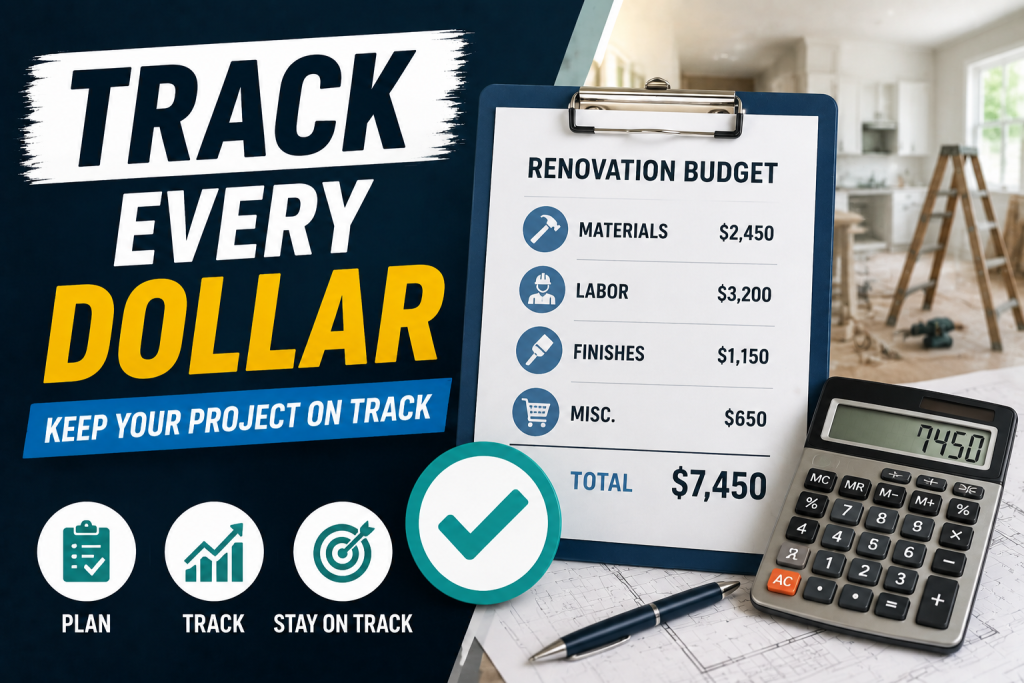
Another frequent problem is poor remodel project management, where contractors and homeowners lack a shared financial framework, leading to confusion and misaligned expectations. Lack of budgeting also increases the risk of unfinished projects. Funds may run out mid-renovation, forcing delays or compromises in quality. Additionally, poor tracking of renovation expense tracking can result in overlooked costs such as permits, change orders, or material price increases. In US remodeling projects, these issues often lead to financial stress, debt, and reduced property value improvement.
Conclusion
The importance of remodeling budgets cannot be overstated when planning any home renovation. A well-structured budget provides financial clarity, supports better decision-making, and ensures that every stage of the project is aligned with realistic spending expectations. From renovation financial planning to contractor payment planning, budgeting helps homeowners maintain control over costs while avoiding unnecessary debt.
It also improves remodeling cost control by organizing expenses into clear categories and tracking them throughout the project. Ultimately, a strong budget is not just about limiting spending, it is about creating structure, reducing risk, and ensuring that your renovation delivers both functional and financial value without unexpected setbacks.
FAQ About Importance of Remodeling Budgets
Why is a remodeling budget important?
The importance of remodeling budgets lies in providing financial control, preventing overspending, and ensuring that renovation decisions stay aligned with a homeowner’s financial limits throughout the project.
What happens if you don’t have a renovation budget?
Without a budget, homeowners often face scope creep, unexpected costs, and poor remodel project management, which can lead to unfinished work or renovation debt.
How does budgeting help with remodeling cost control?
A structured budget breaks spending into clear categories like labor, materials, and permits, making it easier to track and adjust expenses during construction.
What are the main remodeling budget types?
The main remodeling budget types include fixed renovation budgets, flexible remodeling budgets, and phased renovation budgeting. Each method offers a different level of control, adaptability, and long-term planning structure depending on project size and complexity.
What is renovation expense tracking?
It is the process of monitoring all renovation costs in real time and comparing them against the planned budget to avoid overspending and maintain financial control.