

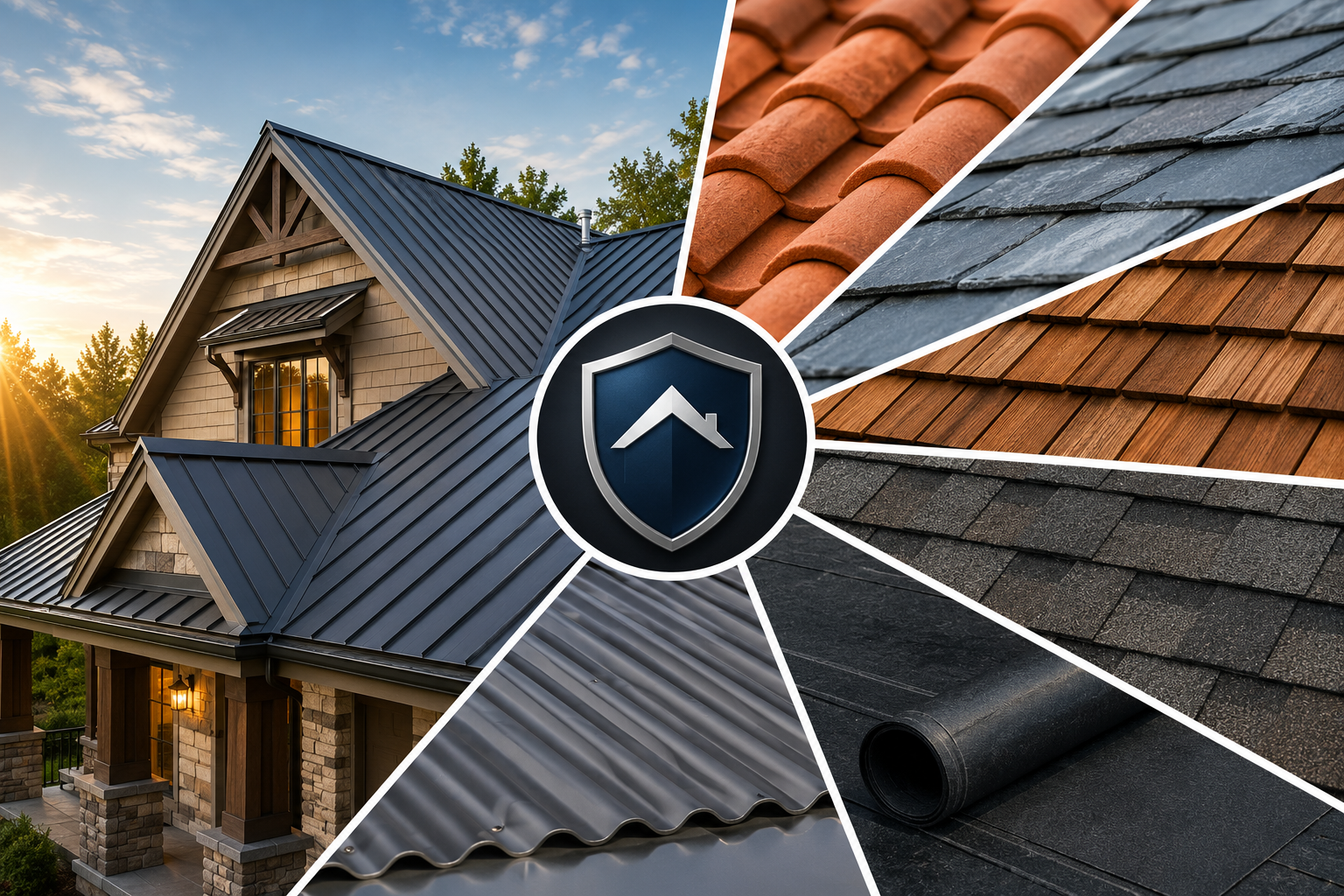
Best Roofing Materials for Longevity: Which Is the Longest Lasting Roofing Material?
Your roof is one of the most important investments you can make as a homeowner. Beyond protecting your home from rain, snow, wind, and extreme temperatures, the right roofing material can significantly affect maintenance costs, energy efficiency, insurance premiums, and resale value. Many homeowners focus primarily on installation costs when replacing a roof. However, the true value of a roofing system comes from its ability to withstand decades of weather exposure while requiring minimal repairs. A roof that lasts twice as long may ultimately cost less over its lifetime than a cheaper alternative that needs frequent replacement.
The ideal roofing material often depends on where you live. Homeowners in hurricane-prone states like Florida face different challenges than those dealing with heavy snowfall in Colorado or intense heat in Arizona. Climate, maintenance expectations, and long-term ownership plans should all influence your decision. If you’re searching for the longest lasting roofing material, you’ll find several options ranging from traditional slate and clay tiles to modern metal roofing systems. Each offers unique advantages in durability, appearance, and lifetime value. In this guide, we’ll compare the most durable roofing choices and help you determine which option makes the most sense for your home.
What Is the Longest Lasting Roofing Material for U.S. Homes?
For most homeowners, slate is widely considered the longest lasting roofing material available. A properly installed slate roof can last 75 to 150 years or more, making it one of the few residential building materials that may outlive multiple generations of homeowners.
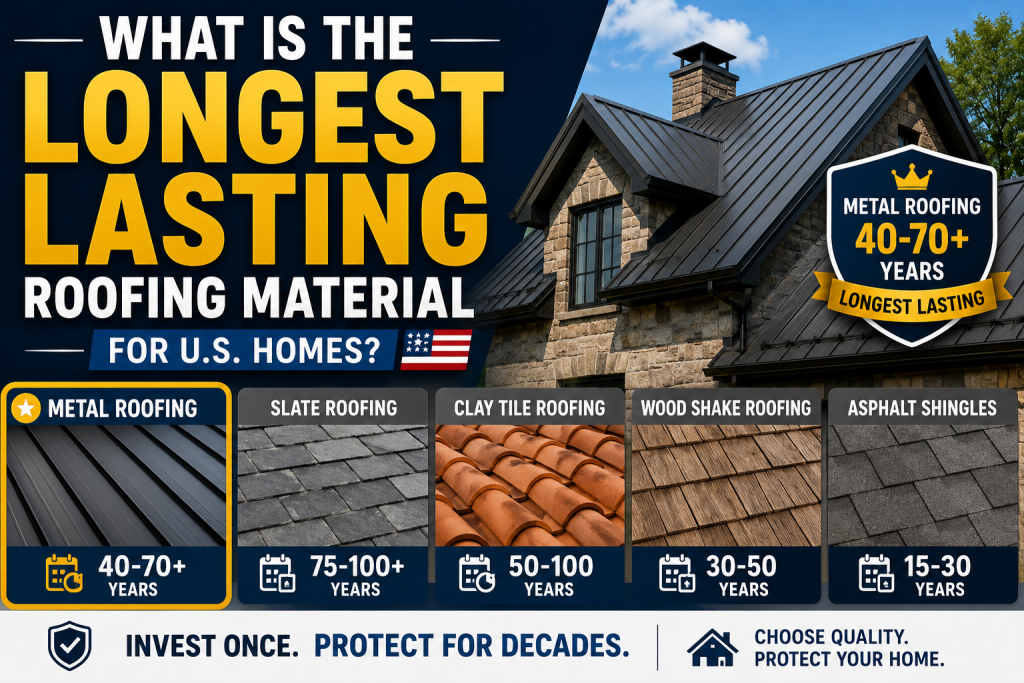
That doesn’t mean slate is automatically the best choice for every property. Weight requirements, installation costs, local climate conditions, and architectural style all play important roles in determining the right roofing system. Other highly durable roofing materials such as metal roofing and clay tiles can also provide exceptional longevity while offering different benefits. For homes in coastal regions, choosing roofing materials designed for hurricanes can provide better wind resistance and long-term protection.
When evaluating roofing options, consider the following lifespan ranges:
| Roofing Material | Typical Lifespan |
| Slate Roofing | 75–150+ Years |
| Clay Tile Roofing | 50–100 Years |
| Metal Roofing | 40–70 Years |
| Cedar Shake Roofing | 25–40 Years |
| Architectural Asphalt Shingles | 20–30 Years |
While lifespan is important, homeowners should also evaluate maintenance requirements, storm resistance, energy performance, and long-term ownership costs. The best roofing investment is often the one that balances durability with practical value for your specific region and budget.
Lifespan vs. Upfront Cost
One of the biggest mistakes homeowners make is focusing solely on installation costs. Premium roofing materials typically require a larger upfront investment, but they often deliver significantly better long-term value. For example, a slate roof may cost several times more than asphalt shingles initially. However, if the slate roof lasts over a century while asphalt shingles require multiple replacements during the same period, the lifetime cost comparison becomes much more favorable. Similarly, standing seam metal roofing systems have become increasingly popular because they combine excellent durability with strong energy performance. Many homeowners find that lower maintenance expenses and improved efficiency help offset the higher installation cost over time.
When calculating value, consider:
- Expected roof lifespan
- Repair frequency
- Maintenance costs
- Energy savings
- Insurance incentives
- Impact on resale value
Looking beyond the initial price tag often leads to a smarter long-term investment.
Climate Conditions That Affect Roof Life
Even the longest lasting roofing material can fail prematurely if it is not suited to local weather conditions. Climate is one of the most important factors influencing roof performance and longevity. In coastal areas such as Florida, roofs must withstand hurricanes, salt exposure, and high humidity. Choosing the longest lasting roofing material for these conditions can help improve durability and reduce long-term maintenance needs. In northern states, freeze-thaw cycles, ice dams, and heavy snow loads create different challenges. Meanwhile, homeowners in Texas and Arizona often deal with prolonged UV exposure and extreme summer temperatures.
Organizations such as the National Association of Home Builders (NAHB) and FEMA emphasize selecting roofing materials that match regional environmental conditions. Materials that perform exceptionally well in one climate may experience accelerated wear in another. For this reason, homeowners should evaluate both lifespan ratings and regional performance before deciding which roofing material is the best fit for their property.
Comparing the Longest Lasting Roofing Material Options
Choosing the right roof involves more than simply looking at lifespan numbers. Homeowners must balance durability, maintenance requirements, climate suitability, aesthetics, and overall value. While several materials can provide decades of protection, some consistently outperform others in terms of longevity. The longest lasting roofing material for one home may not be the ideal choice for another. A historic property in the Northeast, for example, may benefit from natural slate, while a modern home in Texas might achieve better performance with a standing seam metal roof. Understanding the strengths and limitations of each option can help homeowners make a more informed investment.
Slate Roofing
When discussing the longest lasting roofing material, slate is usually the benchmark. Made from natural stone, slate roofs have protected homes, churches, and historic buildings for more than a century. One of the biggest advantages of slate is its exceptional resistance to weather, fire, insects, and moisture. Properly installed slate can often last between 75 and 150 years, with some roofs exceeding that range. This remarkable slate roofing durability makes it one of the most desirable premium roofing options available.
Benefits of slate roofing include:
- Extremely long lifespan
- Outstanding curb appeal
- Excellent fire resistance
- Minimal weather-related deterioration
However, slate is also one of the most expensive roofing materials on the market. Because of its weight, homes may require structural reinforcement before installation. Specialized contractors are often needed as well, increasing labor costs. For homeowners planning to stay in their property long term, slate remains one of the strongest investments available.
Clay Tile Roofing
Clay tile roofing has been used for centuries and remains especially popular in warm-weather regions throughout the Southern and Southwestern United States. A major reason for its popularity is the impressive clay tile roofing lifespan, which typically ranges from 50 to 100 years. Clay tiles perform exceptionally well in areas exposed to intense sunlight, making them a common sight in states such as Arizona, California, and Florida.
Advantages include:
- Excellent heat resistance
- Long service life
- Distinct architectural appearance
- Strong resistance to rot and insects
Like slate, clay tiles are heavy and may require additional structural support. Individual tiles can also crack if impacted by falling debris or foot traffic. Despite these considerations, clay remains one of the most reliable long-term roofing solutions for suitable climates.
Metal Roofing
Metal roofing has experienced tremendous growth in recent years due to its balance of durability, energy efficiency, and relatively low maintenance requirements. The average metal roofing lifespan ranges from 40 to 70 years, depending on material quality, installation standards, and environmental conditions. Standing seam systems often deliver the longest performance and are increasingly used on both residential and commercial properties.
Key benefits include:
- Excellent wind resistance
- Strong performance in snow-heavy regions
- Reflective energy-saving properties
- Lightweight construction
- Fire resistance
Metal roofing is particularly attractive for homeowners seeking low-maintenance roofing without sacrificing durability. It performs well in diverse climates, from snowy areas in Colorado to hot regions across Texas and Arizona. Although installation costs are higher than asphalt shingles, the long-term value often justifies the investment.
Architectural Asphalt Shingles
Asphalt shingles remain the most common residential roofing material in the United States because they offer affordability and broad availability. While they are not the longest lasting roofing material, modern architectural shingles can still provide dependable performance. The typical asphalt shingle lifespan ranges from 20 to 30 years, depending on product quality and weather exposure.
Advantages include:
- Lower installation costs
- Wide variety of styles and colors
- Easier repairs
- Availability across all regions
Leading manufacturers such as GAF, Owens Corning, and CertainTeed continue to improve shingle technology through enhanced impact resistance and longer warranty coverage. For homeowners working within a tighter budget, architectural shingles often provide the best balance between upfront cost and reliable performance, even if they do not match the lifespan of slate, clay, or metal roofing systems.
How to Choose the Longest Lasting Roofing Material for Your Climate
Even the longest lasting roofing material will not deliver its full lifespan if it is exposed to weather conditions it was not designed to handle. Climate plays a major role in roof performance, maintenance requirements, and overall return on investment. Homeowners should evaluate local weather patterns, seasonal temperature swings, humidity levels, storm risks, and building code requirements before selecting a roofing system.
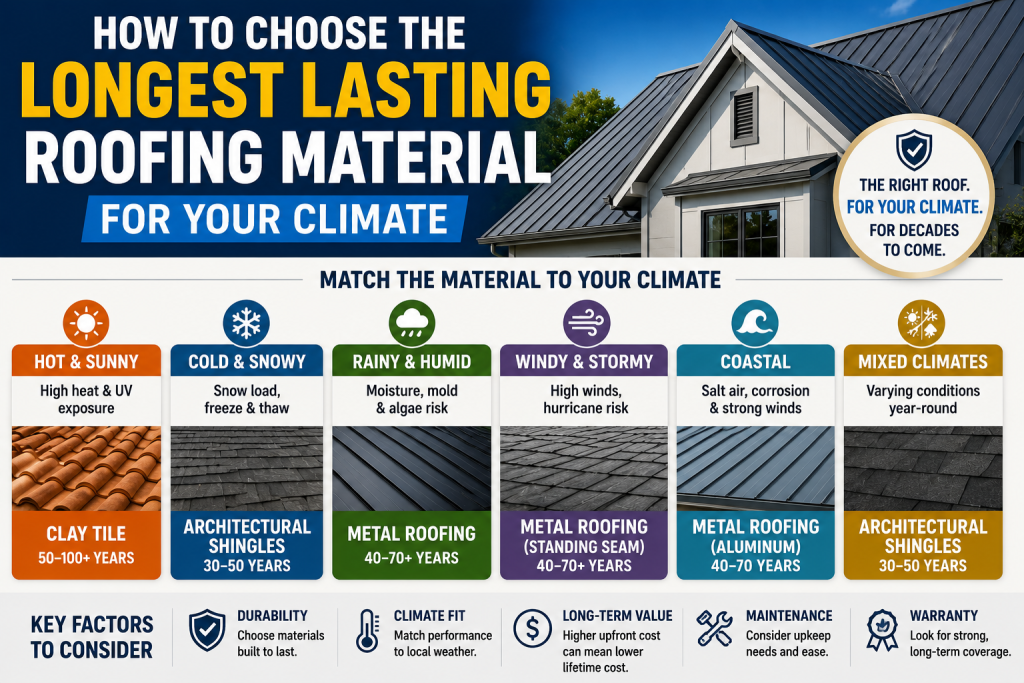
When choosing the longest lasting roofing material, it is important to consider how well it performs in the specific climate and environmental conditions of the area. Materials that excel in dry desert climates may not perform as well in humid coastal environments, while roofs designed for hurricane resistance may differ from those built for heavy snow loads. Matching your roof to your region can extend its lifespan, reduce maintenance costs, and improve long-term property value.
Hurricane-Prone States Like Florida
In Florida and other coastal regions, roofs face constant exposure to high humidity, salt air, tropical storms, and hurricanes. Wind resistance is often just as important as material lifespan. Metal roofing and properly installed clay tile systems are popular choices because they offer excellent wind performance and durability. Many homeowners also choose impact-rated roofing products that meet recommendations from FEMA and local building authorities.
Key considerations include:
- High wind resistance
- Corrosion protection
- Impact resistance
- Moisture management
Premium roofing systems designed for coastal environments often provide additional protection against severe weather events while helping homeowners qualify for certain insurance benefits.
Snow-Heavy Regions Like Colorado
In colder climates, roofs must withstand snow accumulation, ice dams, freeze-thaw cycles, and fluctuating winter temperatures. Metal roofing performs exceptionally well because snow tends to slide off the surface more easily than on traditional roofing materials. Slate roofing is another excellent option due to its durability and resistance to moisture-related damage.
Homeowners in northern states should prioritize:
- Snow load capacity
- Ice dam resistance
- Freeze-thaw durability
- Proper attic ventilation
A roof that can efficiently shed snow and manage moisture often experiences less long-term wear and fewer structural issues.
Hot Climates Like Arizona and Texas
Extreme heat and prolonged ultraviolet exposure can shorten the lifespan of many roofing products. In states such as Arizona and Texas, roofing materials must be able to handle intense sunlight and high summer temperatures for extended periods.
Clay tile and metal roofing are often among the best-performing options in these regions. Their reflective properties can help reduce attic heat buildup and improve overall energy efficiency. Many products also qualify for programs associated with ENERGY STAR, helping homeowners lower cooling costs.
Important factors for hot-weather climates include:
- UV resistance
- Heat reflectivity
- Energy efficiency
- Minimal thermal expansion issues
Choosing a roofing material designed for high-temperature environments can contribute to lower utility bills and better long-term durability. Regardless of location, homeowners should consult qualified roofing professionals and review local building requirements before making a final decision. Climate-specific performance is often just as important as choosing the longest lasting roofing material available.
Cost vs Value of the Longest Lasting Roofing Material
Many homeowners experience sticker shock when comparing premium roofing options to traditional asphalt shingles. However, focusing only on installation costs can lead to an incomplete picture of a roof’s true value. When evaluating the longest lasting roofing material, it is important to consider both upfront expenses and long-term performance. The real cost of a roofing system should be evaluated over its entire lifespan. Factors such as maintenance expenses, repair frequency, replacement cycles, energy efficiency, insurance benefits, and resale value all contribute to long-term ownership costs. In many cases, a higher upfront investment can result in significant savings over several decades. This is why homeowners often compare lifetime value rather than initial installation price alone when selecting the longest lasting roofing material for their home.
Lifetime Cost Analysis
A roofing material that lasts twice as long does not necessarily cost twice as much. In fact, some premium options can deliver lower ownership costs when replacement expenses are considered over a 50- to 100-year period.
| Roofing Material | Typical Lifespan | Relative Upfront Cost | Long-Term Value |
| Slate Roofing | 75–150+ Years | Very High | Excellent |
| Clay Tile Roofing | 50–100 Years | High | Excellent |
| Metal Roofing | 40–70 Years | Moderate to High | Very Good |
| Architectural Asphalt Shingles | 20–30 Years | Low | Moderate |
For example, a homeowner who installs asphalt shingles may need multiple roof replacements during the same period that a slate roof remains in service. Labor costs, material inflation, disposal fees, and future construction expenses can significantly increase the total cost of repeated replacements. This is one reason why many homeowners view premium roofing products as long-term investments rather than short-term expenses.
Insurance and Resale Benefits
Roofing materials can also influence property value and insurance costs. Buyers often view durable roofing systems as a major advantage because they reduce the likelihood of expensive future repairs.
A home equipped with metal, slate, or clay tile roofing may benefit from:
- Higher perceived resale value
- Greater buyer confidence
- Improved curb appeal
- Reduced maintenance concerns
- Enhanced weather protection
In some regions, insurers may offer favorable rates for roofs that provide superior fire resistance, wind resistance, or impact protection. While savings vary by location and carrier, choosing the longest lasting roofing material can sometimes contribute to lower long-term insurance costs due to its durability and resistance to damage. For homeowners planning to remain in their property for many years, the value equation often extends beyond simple installation costs. A roof that delivers decades of dependable performance, protects against severe weather, and enhances marketability may provide a stronger overall return on investment.
In many cases, investing in the longest lasting roofing material can help maximize both property protection and long-term value. When evaluating roofing options, the goal should not simply be finding the cheapest solution. Instead, homeowners should focus on selecting the longest lasting roofing material that offers the right balance of longevity, performance, maintenance requirements, and long-term financial value.
Are Premium Roofing Systems Worth the Investment?
For many homeowners, the decision to upgrade from standard roofing materials comes down to one question: will the additional investment pay off over time? In many cases, the answer is yes, especially for those planning to stay in their homes for decades or those seeking maximum protection and long-term value. Unlike budget roofing products that may require replacement after a few decades, premium roofing systems are designed to deliver superior durability, weather resistance, and performance throughout their service life. While installation costs are higher, the long-term benefits often outweigh the initial expense. Premium roofing options such as slate, clay tile, and standing seam metal roofs are particularly attractive for homeowners who prioritize longevity and reduced maintenance.
Long-Term Return on Investment
The value of a premium roof extends beyond its lifespan. Homeowners often benefit from fewer repairs, stronger weather resistance, and improved property appeal.
Potential long-term advantages include:
- Fewer replacement cycles
- Lower maintenance expenses
- Better protection against severe weather
- Enhanced curb appeal
- Increased buyer confidence during resale
Because roofing replacement is one of the largest home improvement expenses, avoiding multiple replacement projects over several decades can generate substantial savings.
Energy Efficiency Benefits
Many modern roofing products are engineered to improve energy performance. Reflective metal roofs and certain tile systems help reduce heat absorption, which can lower cooling demands during hot summer months. This can be especially valuable in states such as Texas, Arizona, and Florida, where air conditioning costs often represent a significant portion of household energy bills. For homeowners evaluating the longest lasting roofing material, energy efficiency can be an important factor alongside durability and maintenance requirements.
Energy-efficient roofing may provide:
- Reduced attic temperatures
- Lower cooling costs
- Improved indoor comfort
- Better overall home efficiency
These benefits can add measurable value over the lifespan of the roof while contributing to a more comfortable living environment.
Who Should Consider a Premium Roof?
Premium roofing materials are not necessary for every homeowner. However, they often make sense for those who:
- Plan to remain in their home long term
- Live in areas with severe weather conditions
- Prioritize durability and low upkeep
- Want to maximize property value
- Prefer high-end architectural aesthetics
Homeowners who expect to move within a few years may not fully realize the long-term financial benefits. In contrast, those viewing their home as a long-term investment often find that premium roofing options provide greater peace of mind and stronger overall value. Ultimately, the best roofing decision depends on budget, climate, and ownership goals. For many households, investing in higher-quality materials today can help avoid costly repairs and replacements in the future. When evaluating the longest lasting roofing material, it is important to consider not only lifespan but also maintenance requirements, energy efficiency, and overall lifetime value.
Which Roofing Material Requires the Least Maintenance?
While lifespan is a major consideration, maintenance requirements can have a significant impact on the overall cost and convenience of owning a roof. Some materials can provide decades of reliable service with minimal attention, while others require regular inspections, repairs, and upkeep to maintain peak performance. Homeowners seeking low-maintenance roofing often prioritize materials that resist weather damage, moisture intrusion, insect activity, and routine wear.
Choosing a roof with lower maintenance demands can reduce long-term expenses and minimize the time spent addressing roofing issues. Understanding how different materials perform over time can help homeowners select the best option for their lifestyle and property needs.
Best Materials for Busy Homeowners
Metal roofing is often considered one of the best choices for homeowners who want minimal maintenance. Its resistance to rot, insects, moisture, and fire allows it to perform reliably for decades with relatively little intervention. Slate roofing is another strong option and is frequently regarded as the longest lasting roofing material available. Once properly installed, slate requires very few repairs and can withstand harsh environmental conditions for generations.
Clay tile roofing also offers excellent durability and generally requires limited maintenance, provided individual tiles remain undamaged. Homeowners with demanding schedules often appreciate roofing systems that require only periodic inspections and occasional cleaning rather than frequent repairs. Top low-maintenance options include:
- Standing seam metal roofing
- Natural slate roofing
- Clay tile roofing
- High-quality synthetic roofing products
These materials typically offer the best balance between longevity and minimal upkeep.
Materials That Need More Upkeep
Although asphalt shingles remain the most common residential roofing material, they generally require more maintenance than slate, tile, or metal roofing systems.
Over time, shingles may experience issues such as:
- Granule loss
- Wind damage
- Cracking
- Curling
- Moisture-related deterioration
Wood shake roofs also tend to require more attention due to their vulnerability to moisture, mold, insects, and weather-related wear. Regular inspections are particularly important for these roofing systems, especially in regions exposed to severe storms, heavy snowfall, or prolonged humidity. While maintenance requirements should not automatically eliminate a roofing option from consideration, homeowners should understand the long-term commitment associated with each material. A roof that demands less maintenance often delivers greater convenience and lower ownership costs over its service life.
Best Roofing Material by Category
After comparing lifespan, maintenance requirements, climate performance, and long-term value, slate remains the clear winner for homeowners seeking the longest lasting roofing material. With a potential lifespan of 75 to 150 years or more, few residential roofing products can match its durability and timeless appeal. However, the best roofing choice depends on more than longevity alone. Budget, climate conditions, maintenance expectations, and ownership goals all play important roles in determining the ideal solution.
| Category | Recommended Material |
| Longest Lifespan | Slate Roofing |
| Best Overall Value | Metal Roofing |
| Best for Hot Climates | Clay Tile Roofing |
| Best for Extreme Weather | Standing Seam Metal Roofing |
| Best Budget Option | Architectural Asphalt Shingles |
| Lowest Maintenance | Metal Roofing |
Homeowners who plan to stay in their property for decades often find that slate, metal, or clay tile roofing delivers the strongest return on investment. Although these materials require a larger upfront commitment, their longevity and durability can significantly reduce replacement and maintenance costs over time. Metal roofing stands out as the most balanced option for many American homeowners. It offers excellent weather resistance, impressive lifespan, strong energy efficiency, and relatively low maintenance requirements without the structural demands associated with slate or clay tile roofs. For homeowners focused primarily on affordability, modern architectural asphalt shingles remain a practical choice.
While they do not offer the lifespan of premium materials, they provide dependable protection at a lower installation cost. Ultimately, the right roof is the one that aligns with your home’s climate, budget, and long-term ownership plans. Homeowners searching for the longest lasting roofing material should evaluate both upfront costs and lifetime performance rather than focusing solely on installation expenses. Whether you prioritize maximum durability, energy efficiency, or overall value, choosing the longest lasting roofing material for your specific climate can help protect your home and reduce maintenance costs for decades to come. The sections below answer some of the most common questions homeowners ask when comparing roofing materials.
Conclusion
Choosing the right roofing material is one of the most important decisions homeowners make when protecting their property. While slate stands out as the longest lasting roofing material, other options such as metal and clay tile roofing also offer exceptional durability and long-term value. The best choice ultimately depends on your climate, budget, maintenance expectations, and how long you plan to own the home. Homeowners in hot Southern states may benefit from clay tile roofing, while those facing heavy snow or severe storms often find metal roofing to be a reliable solution.
For budget-conscious projects, architectural asphalt shingles continue to provide dependable performance at a lower upfront cost. Rather than focusing solely on installation price, consider the total lifetime value of the roofing system. A roof that lasts decades longer, requires fewer repairs, and improves energy efficiency can deliver substantial savings over time. When selecting the longest lasting roofing material, homeowners should weigh both upfront costs and long-term performance. By taking a comprehensive approach, they can confidently invest in a roofing solution that enhances protection, curb appeal, and property value for years to come.
Frequently Asked Questions
How long does a slate roof last?
A properly installed slate roof can last between 75 and 150 years, and some historic slate roofs have remained functional for even longer. Its natural stone composition makes it highly resistant to weather, fire, moisture, and insect damage. However, achieving this lifespan depends on quality installation, proper structural support, and periodic inspections.
Is metal roofing better than asphalt shingles?
Metal roofing generally offers a longer lifespan, greater durability, and lower maintenance requirements than asphalt shingles. While metal roofs cost more upfront, they can last 40 to 70 years compared to the typical 20 to 30 years for architectural shingles. Many homeowners also appreciate the improved energy efficiency and weather resistance that metal roofing provides.
What roofing material lasts the longest in Florida?
In Florida’s hurricane-prone and humid climate, metal roofing and clay tile roofing are among the most durable options. Both materials perform well against strong winds, intense sunlight, and moisture exposure. Homeowners should also ensure that the roofing system meets local building codes and wind-resistance requirements.
Which roofing option offers the best long-term value?
For many homeowners, metal roofing provides the best balance of cost, durability, maintenance, and lifespan. While slate offers the greatest longevity, its higher installation cost may not fit every budget. Metal roofing often delivers strong long-term value because it combines durability, energy efficiency, and relatively low maintenance requirements.
Can a roof really last more than 100 years?
Yes. Certain roofing materials, particularly natural slate, can exceed 100 years when installed correctly and maintained properly. Factors such as climate conditions, roof design, ventilation, and installation quality all influence whether a roof reaches its maximum expected lifespan.