


Metal Roof vs Shingles: Which Roofing Option Is Better for Your Home?
Choosing a new roof is one of the most important investments a homeowner can make. Whether you’re replacing an aging roof or building a new home, the decision often comes down to metal roof vs shingles. Both materials are widely used across the United States, but they differ significantly in cost, lifespan, maintenance requirements, and overall performance. Asphalt shingles remain the most common roofing material because of their affordability and familiar appearance. Metal roofing, on the other hand, has gained popularity among homeowners looking for durability, energy savings, and long-term value.
From the humid conditions of Florida to the snow-heavy winters of Minnesota, the right roofing material can impact everything from utility bills to resale value. This guide provides a detailed comparison of metal roof vs shingles, covering costs, durability, energy efficiency, maintenance, and climate suitability. By the end, you’ll have a clear understanding of which roofing system best fits your budget, home style, and long-term goals.
Metal Roof vs Shingles: Key Differences at a Glance
When evaluating metal roof vs shingles, homeowners should look beyond the initial installation cost. The best choice often depends on how long you plan to stay in your home, your local climate, and your maintenance expectations.
| Feature | Metal Roofing | Asphalt Shingles |
| Lifespan | 40–70 years | 15–30 years |
| Upfront Cost | Higher | Lower |
| Maintenance | Minimal | Moderate |
| Energy Efficiency | High | Average |
| Weather Resistance | Excellent | Good |
| Resale Appeal | Strong | Moderate |
A metal roof typically requires a larger upfront investment, but it may last two to three times longer than a traditional shingle roof. Shingles remain attractive because they are budget-friendly and widely available through contractors across the country. For homeowners evaluating different roof replacement options, understanding the long-term ownership costs is just as important as comparing installation prices. Factors such as repair frequency, energy savings, and replacement cycles can significantly influence the total cost of ownership over several decades.
When Asphalt Shingles Make More Sense
Asphalt shingles are often the preferred choice for homeowners working with a limited budget or planning to sell their property within the next several years. Because installation costs are significantly lower, shingles provide a practical solution for many residential roofing projects. They are also widely available, making repairs and replacements relatively straightforward in most markets.
Another advantage is design flexibility. Modern shingle products are available in a wide range of colors, textures, and profiles that complement many residential roofing styles, from traditional suburban homes to Craftsman and Colonial designs. Homeowners can often achieve an attractive appearance without paying the premium associated with metal roofing systems. For buyers primarily focused on affordability and short-to-medium-term value, asphalt shingles remain one of the most common roofing materials used throughout the United States.
When Metal Roofing Is Worth the Investment
A metal roof often makes sense for homeowners who prioritize longevity, durability, and lower maintenance requirements. While the upfront investment is higher, many metal systems can last 40 to 70 years with proper installation and maintenance. Premium options such as standing seam metal roofing are especially popular in regions exposed to severe weather, including high winds, heavy snowfall, and intense sun exposure.
These systems offer exceptional protection while maintaining a clean, modern appearance. Homeowners planning to stay in their property for decades frequently view metal roofing as one of the most cost-effective solutions over the long term. Reduced maintenance needs, fewer replacement cycles, and improved durability can help offset the higher installation cost over time.
Metal Roof vs Shingles Cost Comparison
For many homeowners, cost is the deciding factor when comparing metal roof vs shingles. Asphalt shingles generally cost less to purchase and install, making them the most budget-friendly roofing option in the United States. Depending on roof size, material quality, and labor rates, a shingle roof can often be installed for thousands of dollars less than a metal roof. Metal roofing requires specialized materials and experienced installers, which increases upfront expenses. However, focusing solely on installation costs can be misleading. A metal roof may last two to three times longer than shingles, reducing the likelihood of multiple replacements during homeownership.

When evaluating overall value, homeowners should consider maintenance expenses, expected lifespan, and future replacement costs. This broader perspective creates a more accurate asphalt shingles comparison, especially for those planning to remain in their homes for 20 years or more. In many cases, the lower initial investment of shingles appeals to budget-conscious buyers, while metal roofing attracts homeowners looking for stronger long-term returns on their investment.
Upfront Budget Considerations
The initial cost difference between metal roofing and asphalt shingles is often substantial. Material pricing, labor requirements, roof complexity, and regional market conditions all influence the final project cost. In most cases, asphalt shingles remain the more affordable option because they are easier to install and require less specialized labor. Homeowners replacing a roof after storm damage or preparing a property for sale frequently prioritize lower upfront expenses.
A quality shingle roof can provide reliable protection while keeping renovation costs manageable. This approach is especially common in areas where long-term ownership is uncertain. However, choosing a roof based solely on installation cost may overlook future expenses. Maintenance, repair frequency, and expected lifespan should all be considered before making a final decision. A lower initial price does not always translate into the lowest lifetime cost.
Lifetime Value and Replacement Cycles
Long-term value often tells a different story than upfront pricing. While asphalt shingles typically last between 15 and 30 years, many metal roofing systems can remain in service for 40 to 70 years. As a result, homeowners may need to replace a shingle roof multiple times during the lifespan of a single metal roof. This difference becomes particularly important when evaluating ownership costs over several decades.
Future labor rates, material inflation, and disposal fees can significantly increase the cost of each replacement project. Avoiding one or more roof replacements can produce meaningful savings over time. For homeowners focused on durability and long-term planning, metal roofing is often considered one of the most practical investments available in modern residential construction.
Metal Roof vs Shingles Durability and Lifespan
Durability is one of the biggest factors homeowners consider when comparing metal roof vs shingles. While both materials can provide dependable protection, their long-term performance differs significantly under demanding weather conditions. Metal roofs are designed to withstand extreme temperatures, strong winds, heavy snowfall, and prolonged sun exposure. Many premium systems can remain functional for several decades with minimal maintenance. Asphalt shingles also offer reliable protection, but they are generally more vulnerable to gradual wear caused by UV exposure, moisture, and temperature fluctuations.
A detailed roofing durability comparison often highlights the superior lifespan of metal roofing, especially in regions prone to severe weather. Metal panels are less likely to crack, curl, or deteriorate over time, helping homeowners avoid frequent repairs. For buyers seeking long-lasting roofing materials, durability can be just as important as cost. A roof that performs consistently for decades may provide greater value than one with a lower initial purchase price but a shorter service life.
Metal Roof vs Shingles in Hurricane-Prone Regions
Homeowners in coastal states such as Florida, Louisiana, and parts of Texas face unique roofing challenges. High winds, wind-driven rain, and flying debris can place significant stress on roofing systems during major storms. In many cases, metal roofing performs exceptionally well because properly installed panels can achieve high wind-resistance ratings and offer enhanced structural strength.
When evaluating metal roof vs shingles in hurricane-prone regions, durability and attachment methods become critical considerations. Architectural shingles can provide solid protection, but they may be more susceptible to wind damage if they age prematurely or are not installed correctly. Insurance considerations also play a role. Some homeowners may qualify for insurance benefits or reduced storm-related repair costs when investing in roofing systems designed to withstand severe weather events.
Metal Roof vs Shingles in Snow and Freeze-Thaw Climates
Northern states such as Minnesota, Colorado, and parts of the Northeast often experience heavy snowfall and repeated freeze-thaw cycles. These conditions can accelerate wear on roofing materials and increase the risk of ice dams. In a comparison of metal roof vs shingles for cold-weather climates, metal roofs often have an advantage because snow tends to slide off more easily. This can reduce excess roof loads and minimize moisture-related issues.
Metal roofing also resists cracking and deterioration caused by repeated freezing and thawing. Asphalt shingles remain a viable option for colder regions when properly installed with quality underlayment and ventilation systems. However, homeowners expecting decades of performance under harsh winter conditions often view metal roofing as the more resilient long-term solution.
Energy Efficiency and Home Comfort
Energy performance can have a noticeable impact on annual utility costs, particularly in regions that experience long summers or extreme temperatures. Roofing materials influence how much heat is absorbed, retained, or reflected by a home, making roof selection an important part of overall energy planning. Metal roofing is widely recognized as an energy-efficient roofing solution because many products are manufactured with reflective coatings that reduce solar heat absorption. In warm climates such as Arizona, Texas, and Florida, this can help lower attic temperatures and reduce the workload on air conditioning systems during peak summer months.
Asphalt shingles generally absorb more heat than reflective metal surfaces, although modern shingle technologies have improved their energy performance. Ventilation, insulation, roof color, and attic design also play significant roles in determining overall efficiency. For homeowners seeking greater comfort and potential energy savings, roofing performance should be evaluated alongside local climate conditions and the home’s existing insulation strategy. A well-designed roofing system can contribute to lower utility bills and a more consistent indoor environment throughout the year.
Appearance and Design Flexibility
A roof plays a major role in a home’s curb appeal, making appearance an important consideration alongside cost and performance. Today’s homeowners have access to a wide variety of roofing styles, colors, and profiles that can complement almost any architectural design. Asphalt shingles remain popular because they offer exceptional design versatility. Available in numerous colors and textures, shingles can blend seamlessly with traditional suburban homes, Craftsman properties, Colonial architecture, and many HOA-regulated communities. Their familiar appearance appeals to homeowners who want a classic residential look without drawing significant attention to the roof itself.
Metal roofing has evolved considerably in recent years and is no longer limited to agricultural or industrial applications. Modern metal roofs are available in sleek panel systems, textured finishes, and profiles designed to mimic traditional materials. These options are especially popular in contemporary homes, modern farmhouses, mountain properties, and custom-built residences. When evaluating roofing aesthetics, homeowners should consider neighborhood standards, resale expectations, exterior color schemes, and long-term design goals. The best roofing choice is often one that balances visual appeal with durability, performance, and overall property value.
Maintenance Requirements and Long-Term Ownership
Maintenance requirements can significantly influence the true cost of a roofing system over its lifetime. While both asphalt shingles and metal roofing require periodic inspections, the frequency and type of maintenance often differ. Asphalt shingles may need occasional repairs due to missing tabs, wind damage, granule loss, or age-related deterioration. In humid regions, homeowners may also encounter algae growth, moss accumulation, or moisture-related issues that require cleaning and preventive maintenance. Regular inspections help identify minor problems before they develop into costly repairs.
Metal roofing generally requires less routine maintenance. Most systems are resistant to rot, insect damage, and many of the issues commonly associated with aging shingle roofs. Homeowners should still schedule periodic inspections to check fasteners, flashing, sealants, and roof penetrations, particularly after major storms. Long-term ownership considerations extend beyond maintenance alone. Factors such as repair frequency, warranty coverage, insurance implications, and expected service life all contribute to overall value. Homeowners planning to remain in their property for several decades often prioritize roofing systems that minimize future maintenance demands while providing dependable protection year after year.
Which Roof Is Best for Your Climate?
Climate is one of the most important factors when selecting a roofing material. A roof that performs exceptionally well in one region may not be the ideal choice in another. Understanding local weather patterns can help homeowners make a more informed investment. In hot states such as Texas and Arizona, roofing systems are exposed to intense sunlight and prolonged heat. Metal roofing often performs well in these environments because reflective surfaces can help reduce heat absorption. In hurricane-prone areas such as Florida, wind resistance becomes a primary concern, making proper installation and material quality especially important.
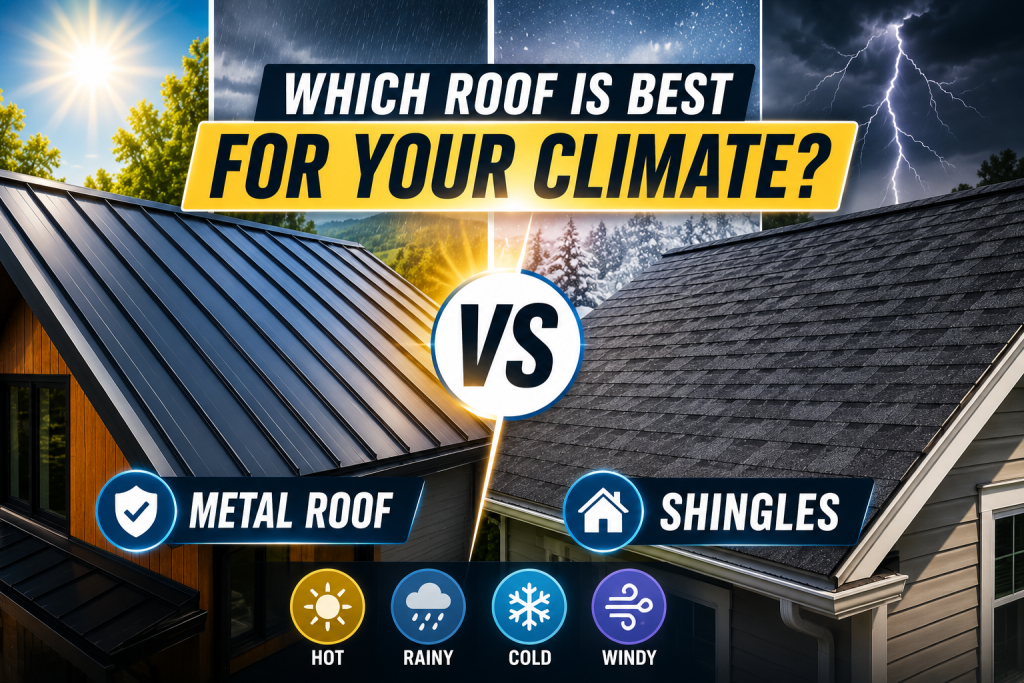
Cold-weather regions present a different set of challenges. States such as Minnesota and Colorado experience heavy snow, ice accumulation, and repeated freeze-thaw cycles. Roofing systems must withstand moisture intrusion, fluctuating temperatures, and seasonal weather extremes. Coastal environments also require special consideration due to salt exposure, humidity, and frequent storms. Homeowners living near the ocean should prioritize corrosion resistance, weather performance, and long-term durability when evaluating roofing materials. Ultimately, the best roof for your home depends on local climate conditions, budget, expected ownership period, and overall performance goals. Matching the roofing material to regional weather patterns can help maximize both lifespan and long-term value.
Metal Roof vs Shingles: Which Should You Choose?
The decision between metal roof vs shingles ultimately comes down to your priorities as a homeowner. Both roofing materials offer distinct advantages, but the right choice depends on your budget, climate, maintenance expectations, and long-term plans for the property. If affordability is your primary concern, asphalt shingles remain a practical solution. They provide dependable protection, a familiar appearance, and lower upfront installation costs. For homeowners planning to move within the next decade, shingles often deliver the best balance between cost and performance. On the other hand, homeowners seeking exceptional durability, reduced maintenance, and a longer service life may find greater value in metal roofing. Although the initial investment is higher, the long-term benefits can offset the added expense over time.
When evaluating metal roof vs shingles, it is important to consider more than the purchase price alone. Climate conditions, future replacement costs, energy savings, insurance considerations, and resale value should all be part of the decision-making process. For many homeowners, the best outcome comes from working with a qualified roofing contractor who can assess the property’s specific needs and recommend the most suitable roofing system. By carefully comparing metal roof vs shingles, you can make a confident investment that protects your home for years to come.
Conclusion
Choosing between metal roof vs shingles is not simply a matter of cost, it’s a decision that can affect your home’s durability, energy performance, maintenance requirements, and long-term value for decades. Asphalt shingles remain the go-to choice for homeowners seeking a lower upfront investment and a traditional appearance that fits most neighborhoods. They offer reliable protection and are widely available across the United States, making them a practical option for many roof replacement projects.
Metal roofing, however, stands out for its exceptional lifespan, weather resistance, and ability to deliver long-term savings through reduced maintenance and fewer replacement cycles. In regions prone to hurricanes, heavy snowfall, extreme heat, or severe storms, a metal roof can provide an added layer of protection and peace of mind. The best roofing material ultimately depends on your budget, local climate, how long you plan to stay in your home, and your long-term ownership goals. By carefully weighing the pros and cons of metal roof vs shingles, homeowners can make a more informed investment that enhances curb appeal, protects property value, and delivers reliable performance for years to come.
Frequently Asked Questions
Is a metal roof worth the extra cost?
For many homeowners, yes. A metal roof can last significantly longer than asphalt shingles and typically requires less maintenance. The higher upfront investment may be offset by lower long-term ownership costs.
How much longer does metal roofing last than shingles?
Most asphalt shingle roofs last between 15 and 30 years, while quality metal roofing systems can last 40 to 70 years or more when properly maintained.
Does a metal roof increase home value?
In many markets, a metal roof can improve resale appeal due to its durability, longevity, and low-maintenance characteristics. However, the exact impact depends on local market conditions and buyer preferences.
Are metal roofs louder during rain?
Modern metal roofing systems are typically installed over solid roof decking and underlayment. As a result, the difference in indoor noise levels is often much smaller than many homeowners expect.
Which is better: metal roof vs shingles?
There is no universal answer because every home is different. When comparing metal roof vs shingles, shingles generally offer lower upfront costs, while metal roofing provides superior longevity and durability. The best choice depends on your budget, climate, and long-term ownership goals.