


Minimalist vs Japandi Homes: What’s the Difference and Which Style Fits Your Space?
Choosing between minimalist vs Japandi design can be challenging because both styles prioritize simplicity, functionality, and clutter-free living. At first glance, they may appear nearly identical, but each approach creates a distinctly different atmosphere within a home. Minimalism focuses on reducing distractions and emphasizing only the essentials. Originating from modern design principles, it embraces clean lines, open spaces, and intentional furniture choices. Japandi, on the other hand, blends Japanese craftsmanship with Scandinavian comfort, creating interiors that feel both refined and welcoming. As homeowners increasingly seek calm, organized spaces, both styles have gained popularity across the United States. From urban apartments in Chicago to modern homes in Austin and Seattle, these design philosophies offer practical solutions for creating more livable interiors. In this guide, we’ll explore minimalist vs Japandi design in detail, comparing their philosophies, design elements, costs, and real-world applications to help you determine which style best suits your lifestyle and home.
Minimalist vs Japandi: Understanding the Core Difference
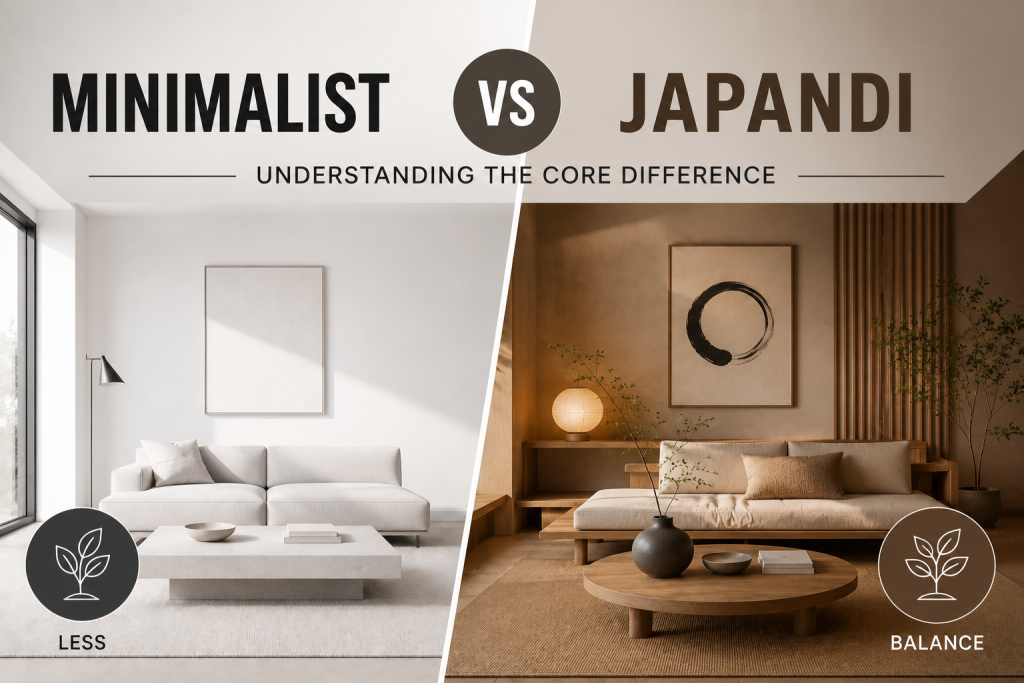
While discussions about minimalist vs Japandi often focus on furniture and decor, the biggest distinction lies in their underlying philosophy. Both styles encourage intentional living and discourage unnecessary clutter, yet they achieve those goals in different ways. Minimalism emphasizes reduction and visual simplicity, whereas Japandi balances simplicity with warmth and natural character. Understanding these foundations can make it easier to choose a style that aligns with your daily habits, aesthetic preferences, and long-term vision for your home.
What Is Minimalist Interior Design?
Minimalist interior design is built around the idea that less is more. Spaces are carefully curated to include only items that serve a clear purpose or provide meaningful value. Clean lines, open floor plans, and restrained color palettes help create a calm environment free from visual distractions. Many modern minimalist home styles prioritize functionality over decoration. Furniture tends to have simple forms, storage is often concealed, and accessories are kept to a minimum. The goal is not to make a room feel empty but to create a sense of clarity and order that supports everyday living.
What Is Japandi Interior Design?
Japandi combines Japanese design principles with Scandinavian comfort, resulting in spaces that feel simple yet inviting. Inspired by concepts such as wabi-sabi and hygge, Japandi embraces craftsmanship, natural materials, and subtle imperfections that add personality to a room. Unlike strict minimalism, Japandi encourages texture and warmth through wood finishes, handmade decor, and layered materials. These Scandinavian Japanese interiors often feature earthy tones, organic shapes, and thoughtfully selected furnishings that create a relaxed atmosphere without sacrificing simplicity. The result is a home that feels balanced, practical, and deeply connected to nature.
Minimalist vs Japandi Design Philosophy Compared
A deeper look at minimalist vs Japandi reveals that both styles value simplicity, but they define it differently. Minimalism seeks to remove anything that does not serve a purpose, creating spaces that feel highly organized and visually restrained. Japandi embraces simplicity as well, but it also prioritizes comfort, craftsmanship, and a stronger connection to natural materials. These philosophical differences influence everything from furniture selection to the overall mood of a home.
The Influence of Scandinavian and Japanese Traditions
Japandi emerged from the shared values found in Japanese and Scandinavian design cultures. Both traditions appreciate functionality, quality craftsmanship, and a slower approach to living. However, Japanese design often celebrates imperfection through natural textures, while Scandinavian interiors focus on comfort and practicality. This blend creates distinctive Japandi aesthetics that feel calm, balanced, and timeless. Natural wood, handmade accents, and muted colors help create interiors that are simple without feeling stark or overly polished.
How Functionality Shapes Both Styles
Functionality is a cornerstone of both design approaches, but the execution differs. Minimalist spaces typically prioritize efficiency, streamlined layouts, and reduced visual noise. Every object is carefully evaluated for its usefulness. Japandi takes a softer approach by combining functionality with comfort. Instead of eliminating decorative elements entirely, it incorporates purposeful pieces that add warmth and character. This emphasis on comfort often results in a warm minimalist design that feels more welcoming for families, guests, and everyday living while still maintaining a clean and uncluttered appearance.
Minimalist vs Japandi Interiors: Key Design Elements
When comparing minimalist vs Japandi interiors, the visual differences become much easier to identify. Although both styles favor uncluttered spaces and thoughtful design, they use color, materials, and furnishings in unique ways. These design choices influence how a room feels, functions, and ages over time. For homeowners planning a renovation or room makeover, understanding these elements can help create a more cohesive and intentional interior.
Color Palettes and Materials
Minimalist interiors often rely on white, gray, black, and other subdued tones to create a clean, open appearance. Surfaces are typically smooth, and decorative details are limited to maintain visual simplicity. Japandi spaces also embrace simplicity but introduce greater depth through natural materials and earthy hues. Wood, stone, linen, and handmade ceramics are commonly used to add texture and warmth. While both styles can feature a neutral interior design palette, Japandi generally incorporates softer and more organic color variations that create a more relaxed atmosphere.
Furniture, Decor, and Layout Choices
Furniture selection is another major distinction in the minimalist vs Japandi conversation. Minimalist homes often feature sleek furnishings with simple geometric forms and very little ornamentation. Decor is intentionally limited to avoid visual distractions. Japandi furniture tends to emphasize craftsmanship, natural finishes, and comfort. Decorative elements are used sparingly but purposefully, creating a subtle sense of personality. This difference is often highlighted in a Japandi decor comparison, where homeowners notice that Japandi interiors feel more layered and inviting while still maintaining the simplicity associated with modern minimalist living.
Which Style Creates a More Comfortable Living Space?
For many homeowners, the decision between minimalist vs Japandi ultimately comes down to comfort. Both styles aim to create peaceful living environments, but they deliver that experience in different ways. Some people thrive in highly simplified spaces with minimal visual stimulation, while others prefer interiors that feel softer and more inviting. Your daily routine, family size, and personal preferences can all influence which approach feels most comfortable over the long term.
Why Some Homeowners Prefer Minimalism
Minimalist interiors appeal to homeowners who value organization, efficiency, and visual clarity. By reducing excess furniture and decor, rooms often feel larger and easier to maintain. This streamlined approach can also reduce decision fatigue and create a stronger sense of order throughout the home. Many people who appreciate cozy minimalist homes achieve that balance by incorporating soft textiles, comfortable seating, and carefully selected personal touches without introducing clutter. The result is a clean environment that still feels livable and welcoming.
Why Japandi Feels More Warm and Inviting
Japandi design tends to prioritize emotional comfort alongside functionality. Natural wood tones, layered textures, and handcrafted pieces help create spaces that feel relaxed and lived in. Rather than focusing solely on reduction, Japandi encourages homeowners to surround themselves with meaningful objects that contribute to the overall atmosphere. In the ongoing minimalist vs Japandi discussion, many families find Japandi more approachable because it balances simplicity with warmth. The combination of natural materials, subtle textures, and comfortable furnishings often creates interiors that feel serene without appearing overly strict or formal.
Room-by-Room Comparison for Modern Homes
Evaluating minimalist vs Japandi on a room-by-room basis can help homeowners determine which style aligns best with their daily needs. While both approaches support organized and functional living, their design choices can influence how each space feels and performs. From entertaining guests in the living room to maintaining focus in a home office, the practical differences become more noticeable when applied throughout an entire home.
Living Rooms and Bedrooms
Minimalist living rooms typically feature streamlined furniture, open floor space, and limited decorative elements. The emphasis is on simplicity, allowing architectural features and natural light to take center stage. Bedrooms often follow the same principle, creating restful environments with minimal visual distractions. Japandi living rooms and bedrooms introduce additional warmth through natural wood finishes, textured fabrics, and handcrafted details. These elements help create spaces that feel calm and comfortable while maintaining a clean and uncluttered appearance.
Kitchens and Home Offices
In kitchens, minimalist design focuses on efficiency through concealed storage, clean surfaces, and simple cabinetry. This approach can make daily maintenance easier and contribute to a highly organized environment. Japandi kitchens often incorporate natural materials and softer finishes that add visual interest without creating clutter. In home offices, the contrast between minimalist vs Japandi becomes particularly noticeable. Minimalist workspaces prioritize focus through simplicity, while Japandi offices combine functionality with comfort, helping create a more balanced environment for long hours of work, creativity, and productivity.
Cost, Maintenance, and Long-Term Appeal
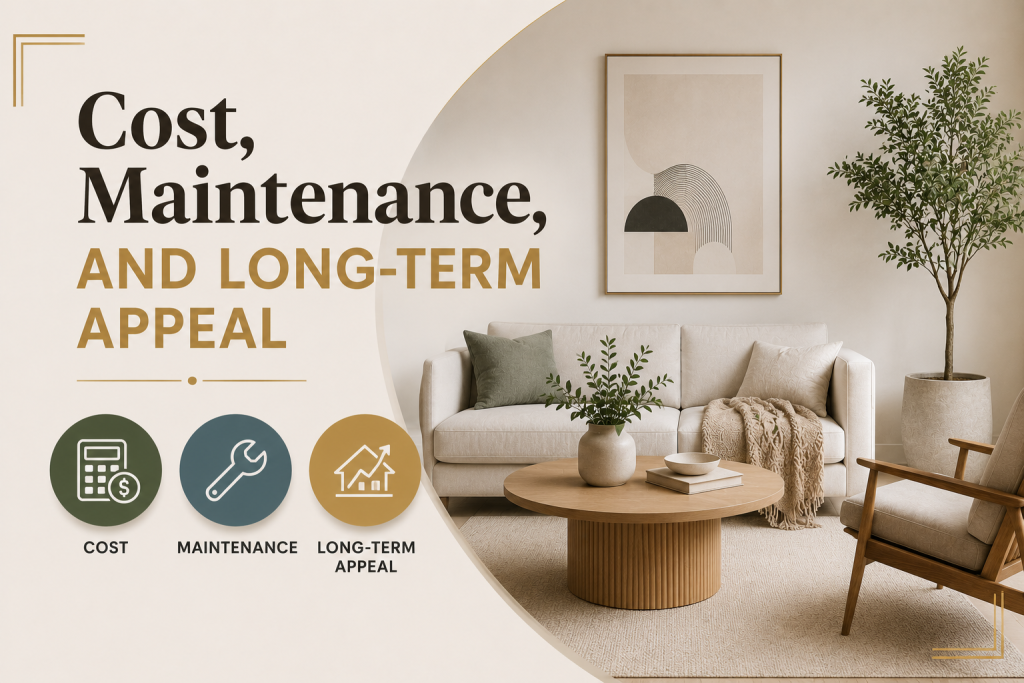
Beyond aesthetics, homeowners often compare minimalist vs Japandi based on budget, upkeep, and long-term value. While both styles emphasize quality over quantity, the materials, furnishings, and decorative elements associated with each approach can affect overall costs. Understanding these practical considerations can help homeowners make a design choice that aligns with both their lifestyle and financial goals.
Budget Considerations
Minimalist interiors can be relatively affordable when the focus remains on fewer furnishings and a restrained design palette. However, high-end minimalist spaces often feature premium materials, custom storage solutions, and designer furniture that can significantly increase costs. Japandi interiors may require a larger investment in natural wood furniture, handcrafted accessories, and high-quality textiles. Because the style emphasizes craftsmanship and durability, homeowners often view these purchases as long-term investments rather than short-term decorative updates.
Resale Value and Timelessness
Both styles offer strong long-term appeal because they avoid trends that quickly become outdated. Clean layouts, functional spaces, and neutral color schemes tend to attract a broad range of buyers in competitive housing markets. When assessing minimalist vs Japandi from a resale perspective, neither style holds a clear advantage. However, homes that successfully balance functionality, comfort, and visual appeal often generate stronger buyer interest. Whether you choose minimalist simplicity or Japandi warmth, investing in quality materials and thoughtful design decisions can help maintain value for years to come.
How to Choose Between Minimalist and Japandi Design
The choice between minimalist vs Japandi depends largely on how you want your home to look, feel, and function. Both styles promote intentional living and discourage unnecessary clutter, but they appeal to different personalities and lifestyles. By evaluating your design preferences, daily habits, and long-term goals, you can determine which approach will create the most satisfying living environment.
Best Homes for Minimalism
Minimalism is often ideal for homeowners who appreciate structure, organization, and visual simplicity. It works particularly well in contemporary homes, urban apartments, and spaces where maximizing openness is a priority. Those who prefer streamlined interiors and low-maintenance environments may find minimalist design easier to manage over time. The emphasis on simplicity can also make future updates and renovations more straightforward.
Best Homes for Japandi Style
Japandi is often a better fit for homeowners who want simplicity without sacrificing warmth and personality. The style works exceptionally well in family homes, cozy retreats, and spaces where comfort plays a major role in daily life. When comparing minimalist vs Japandi, many homeowners choose Japandi because it creates a softer and more welcoming atmosphere. Natural textures, handcrafted elements, and organic materials help make rooms feel lived-in while preserving the sense of calm and order that both styles share.
Conclusion
The debate around minimalist vs Japandi is less about determining which style is better and more about identifying which one aligns with your lifestyle. Minimalism offers clarity, simplicity, and a highly organized environment, making it attractive to homeowners who value efficiency and clean design. Japandi combines those same principles with warmth, texture, and craftsmanship, creating interiors that feel both functional and inviting. Whether you’re redesigning a single room or planning a whole-home transformation, understanding the differences between these styles can help you make more confident decisions. By focusing on your personal preferences and how you use your space every day, you can create a home that feels timeless, comfortable, and uniquely your own.
Frequently Asked Questions
Is minimalist furniture a good long-term investment?
Yes. Minimalist furniture typically emphasizes timeless design, durable materials, and functional construction. These qualities can reduce replacement costs and help furniture remain visually relevant for many years.
Is minimalist furniture a good long-term investment?
Yes. Minimalist furniture typically emphasizes timeless design, durable materials, and functional construction. These qualities can reduce replacement costs and help furniture remain visually relevant for many years.
Is minimalist furniture a good long-term investment?
Yes. Minimalist furniture typically emphasizes timeless design, durable materials, and functional construction. These qualities can reduce replacement costs and help furniture remain visually relevant for many years.
Is minimalist furniture a good long-term investment?
Yes. Minimalist furniture typically emphasizes timeless design, durable materials, and functional construction. These qualities can reduce replacement costs and help furniture remain visually relevant for many years.
Is minimalist furniture a good long-term investment?
Yes. Minimalist furniture typically emphasizes timeless design, durable materials, and functional construction. These qualities can reduce replacement costs and help furniture remain visually relevant for many years.