


Mulch vs Rock Landscaping: Which works better for your home?
Choosing the right ground cover can influence maintenance requirements, water efficiency, plant performance, and overall curb appeal. For many homeowners, the decision between mulch and rock goes beyond appearance and becomes a long-term landscaping investment. Both materials offer distinct advantages depending on climate conditions, maintenance expectations, and landscape goals. Organic materials can support soil health and moisture retention, while stone-based solutions often provide durability and lower replacement frequency.
Understanding the differences in mulch vs rock landscaping helps homeowners create outdoor spaces that balance appearance, function, and long-term upkeep. Homeowners researching rock landscaping ideas and evaluating mulch landscaping benefits often discover that selecting the right material depends heavily on regional climate and property priorities.
Mulch vs Rock Landscaping: Why Homeowners Compare Both Options
Homeowners often compare landscaping materials because ground cover choices affect more than appearance alone. Maintenance needs, water usage, plant performance, replacement frequency, and long-term ownership costs all influence the decision. Mulch and rock each solve different landscaping challenges depending on climate and outdoor goals. Organic materials may improve planting conditions and support healthier growth, while stone surfaces can reduce replacement cycles and create a more permanent appearance.
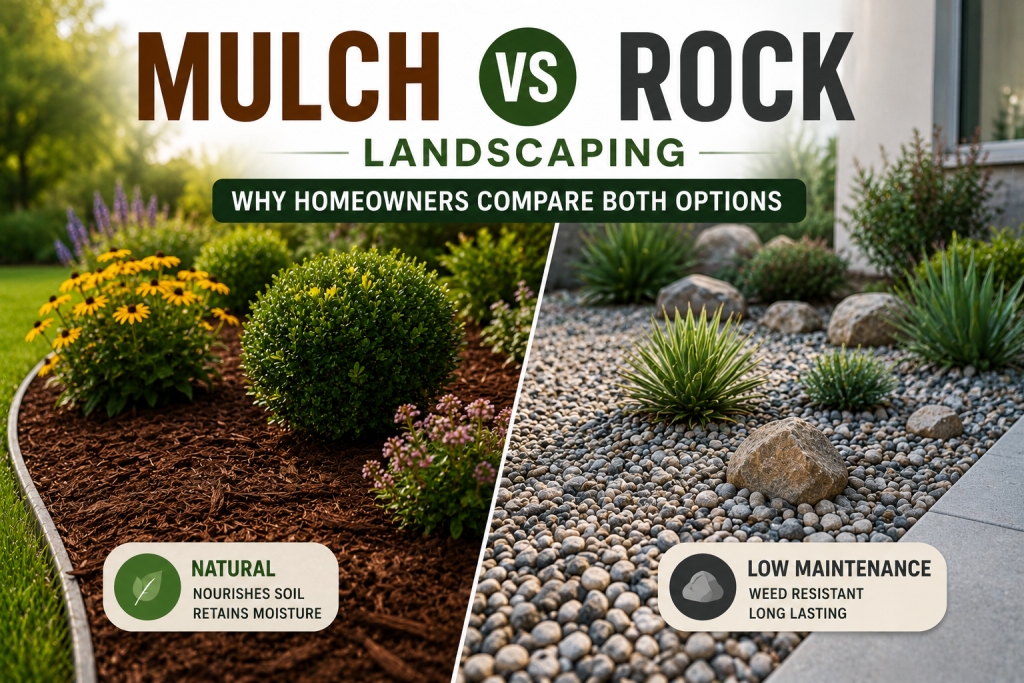
Comparing mulch vs rock landscaping helps homeowners evaluate which option aligns better with maintenance expectations and overall landscape function. Many landscaping decisions begin with a broader landscaping materials comparison, while homeowners researching gravel vs mulch often prioritize durability, moisture control, and long-term maintenance requirements.
Appearance and Design Flexibility
Visual appeal plays a major role when selecting landscape materials. The choice between mulch and rock often depends on whether homeowners prefer a softer, natural appearance or a cleaner, more structured design. Mulch can create warmer planting areas and blend naturally with gardens and landscape beds. Rock surfaces offer stronger visual contrast and can support more contemporary or drought-conscious landscape styles. When comparing mulch vs rock landscaping, appearance should be evaluated alongside maintenance expectations and long-term usability. Homeowners exploring decorative rock landscaping often use stone to create cleaner lines and lower-maintenance outdoor spaces, while understanding organic mulch benefits helps support planting areas that prioritize soil improvement and seasonal flexibility.
Maintenance and Long-Term Upkeep
Maintenance expectations often influence whether homeowners choose mulch or rock for long-term landscaping projects. While both materials require periodic attention, the type of upkeep differs significantly. Mulch generally needs seasonal refreshing and redistribution as materials naturally break down over time. Rock surfaces typically last longer but may require occasional cleaning, weed management, and adjustments to maintain appearance. Homeowners conducting a detailed landscaping materials comparison often weigh replacement frequency against appearance goals, while reviewing mulch landscaping benefits can highlight advantages related to planting flexibility and seasonal updates.
Water Retention and Plant Health
Water retention and soil performance play a major role in landscape durability and long-term plant health. The material placed around planting areas can influence moisture levels, temperature regulation, and root development. Mulch is commonly selected for its ability to help retain moisture and support more stable growing conditions. Rock can reduce soil coverage loss but may affect surface temperatures differently depending on climate and placement. Understanding organic mulch benefits can help support healthier planting environments, while homeowners interested in water-conscious design often explore xeriscape landscaping materials that align with lower irrigation requirements.
Mulch vs Rock Landscaping Cost and Installation Considerations
Installation cost and long-term ownership expenses can influence which landscaping material delivers better value. While upfront pricing matters, replacement frequency, maintenance effort, and landscape goals should also be considered. Mulch generally requires lower initial investment but may involve recurring costs due to replenishment over time.
Rock installations often cost more upfront yet may reduce replacement needs across multiple seasons. Comparing mulch vs rock landscaping through a cost perspective helps homeowners understand ownership beyond installation day. Homeowners evaluating gravel vs mulch frequently compare initial pricing against future upkeep, while those researching rock landscaping ideas often prioritize durability and reduced maintenance over time.
Climate Performance and Regional Use
Climate conditions can significantly affect how landscaping materials perform over time. Temperature extremes, rainfall patterns, humidity levels, and water availability all influence whether mulch or rock becomes the more practical option. In hotter and drier regions, rock-based landscapes are often selected to reduce watering demands and maintain appearance during extended heat periods. In cooler or moisture-sensitive environments, mulch may support healthier soil conditions and seasonal flexibility.
When comparing mulch vs rock landscaping, homeowners should evaluate regional climate patterns alongside maintenance expectations and planting goals. Homeowners planning decorative rock landscaping in arid regions frequently explore xeriscape landscaping materials because they support lower water usage and more climate-adapted landscape designs.
Which Material Works Best for Different Landscapes
There is no single landscaping material that works best for every property. The right choice depends on climate conditions, maintenance expectations, planting goals, and the overall appearance homeowners want to achieve. Mulch may work well in planting beds, gardens, and areas where soil improvement and moisture retention are priorities. Rock can perform well in landscapes focused on durability, reduced replacement, and long-term visual consistency.

Conclusion
Choosing between mulch and rock involves more than selecting a preferred appearance. Long-term maintenance, water management, climate conditions, plant performance, and ownership costs all influence which material creates better results. Both options offer advantages depending on landscape goals and regional conditions. Mulch can support healthier planting environments and seasonal flexibility, while rock often delivers durability and lower replacement demands. Understanding the tradeoffs in mulch vs rock landscaping helps homeowners make more informed decisions based on practical needs rather than short-term trends. The best landscape solution is often the one that balances maintenance expectations, climate performance, curb appeal, and long-term usability for the property.
Frequently Asked Questions
Is mulch vs rock landscaping better for landscaping?
There is no universal answer. The better option in mulch vs rock landscaping depends on climate conditions, maintenance expectations, planting goals, water management needs, and the desired appearance of the landscape.
Does rock landscaping require less maintenance than mulch?
Rock often requires less frequent replacement, but both materials still require upkeep depending on climate, weeds, and long-term landscape conditions.
Is mulch better for plant growth?
Mulch may help support moisture retention and improve growing conditions, especially in planting areas designed to benefit from organic material.
Which landscaping material saves more water?
Water performance depends on climate, irrigation strategy, and plant selection. In some landscapes, rock-based designs may reduce watering requirements.
Can homeowners combine mulch and rock in one landscape?
Yes. Many homeowners combine both materials to balance plant health, appearance, drainage performance, and maintenance expectations across different areas of the yard.