


Paint Sheen Levels Explained: Flat to High Gloss
Understanding paint sheen levels is essential for achieving a well-balanced and professional interior finish. While color often gets most of the attention, the sheen of a paint determines how light interacts with your walls, how durable the surface is, and how easy it is to maintain over time. Choosing the right finish is just as important as selecting the right shade. Interior paints range from completely non-reflective finishes like flat paint finish to highly reflective surfaces such as high gloss.
In between, options like eggshell, satin, and semi-gloss offer different levels of durability, shine, and washability. Each plays a specific role in interior design and is suited to different rooms and surfaces. This guide breaks down every level of the paint finish types, explains their real-world uses, and provides a practical interior paint sheen chart so you can confidently choose the right finish for your home.
Paint Sheen Levels Chart (Flat to High Gloss)
Understanding paint sheen levels is easiest when viewed as a progression from least reflective to most reflective. Each step on the sheen scale affects durability, washability, and how light interacts with the surface. This interior paint sheen chart breaks down the full range of paint finish types used in modern homes.
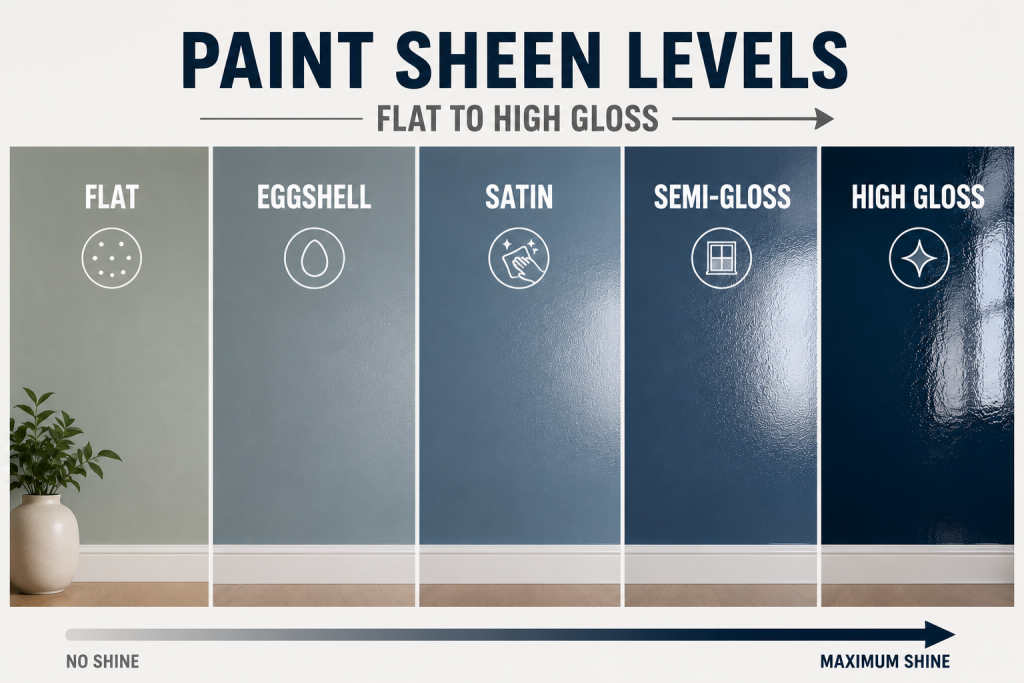
Paint Sheen Comparison Chart
| Sheen Level | Appearance | Durability | Washability | Best Use |
| Flat / Matte | No shine, soft look | Low | Low | Ceilings, low-traffic rooms |
| Eggshell | Slight softness, minimal sheen | Moderate | Light cleaning | Bedrooms, living rooms |
| Satin | Soft glow, smooth finish | High | Washable | Hallways, living areas |
| Semi-Gloss | Noticeable shine | Very high | Easy to clean | Trim, doors, kitchens |
| High-Gloss | Mirror-like finish | Maximum | Highly washable | Cabinets, accents |
As the sheen level increases, so does durability and reflectivity. However, higher sheen also highlights surface imperfections more easily. This makes proper wall preparation essential when working with finishes like semi-gloss or high-gloss paint walls. From a design perspective, this scale helps homeowners balance aesthetics with practicality, especially when choosing finishes across multiple rooms.
Flat Paint Finish
The flat paint finish, also known as matte, sits at the lowest end of the paint sheen levels spectrum and is known for its completely non-reflective surface. It creates a soft, smooth appearance that helps walls look uniform and calm, making it a popular choice in low-traffic interior spaces. One of the biggest advantages of flat paint is its ability to hide imperfections. Because it does not reflect light, it minimizes the appearance of dents, patches, and uneven textures. This makes it especially useful for older walls or ceilings where surface flaws are more visible. However, it is less durable than other paint finish types, which means it is not ideal for areas that require frequent cleaning.
Advantages of Flat Paint
- Excellent at hiding wall imperfections
- Soft, modern, non-reflective look
- Ideal for ceilings and low-traffic areas
- Creates a smooth, uniform appearance
Disadvantages of Flat Paint
- Difficult to clean and maintain
- Not suitable for high-traffic spaces
- Can show smudges if touched frequently
In most homes, flat paint is best used in ceilings, formal spaces, or bedrooms where durability is less important than visual softness. It is a key foundational option in any interior paint sheen chart because it establishes the base level of reflectivity in a home’s overall design.
Eggshell Paint Sheen
The eggshell paint sheen sits just above flat paint in the paint sheen levels hierarchy and is one of the most commonly used interior finishes in residential homes. It offers a subtle, low-luster appearance that resembles the soft surface of an eggshell, providing a gentle balance between aesthetics and practicality. Eggshell is popular because it delivers a cleaner look than flat paint while still maintaining a soft, non-glossy finish. It reflects a small amount of light, which adds depth to walls without making imperfections overly visible. This makes it a versatile option in many paint finish types, especially for living spaces that require both style and moderate durability.
Advantages of Eggshell Paint
- Soft, elegant finish with slight sheen
- More durable than flat paint
- Easier to clean with light wiping
- Good balance between appearance and practicality
- Works well in most main living areas
Disadvantages of Eggshell Paint
- Not as washable as satin or semi-gloss
- Can still show marks in high-traffic zones
- Touch-ups may be slightly visible
Eggshell is commonly used in bedrooms, dining rooms, and living rooms, making it a strong mid-range option in any interior paint sheen chart. It is especially useful for homeowners who want a subtle upgrade from flat paint without committing to higher-gloss finishes.
Satin Paint Guide
The satin paint guide sits in the middle of the paint sheen levels spectrum and is one of the most popular choices for modern interiors. It offers a smooth, slightly glossy finish that strikes a strong balance between durability and visual appeal, making it a go-to option for busy households. Satin paint reflects more light than eggshell, giving walls a soft glow while still maintaining a refined look. This makes it a versatile option across many paint finish types, especially in spaces that need both style and practicality. It is also significantly more durable and washable, which adds to its long-term performance.
Advantages of Satin Paint
- Highly durable and long-lasting finish
- Easy to clean and maintain
- Soft sheen enhances natural light
- Works well in high-use interior spaces
- Balanced appearance between matte and gloss
Disadvantages of Satin Paint
- Can highlight surface imperfections more than eggshell
- Requires careful application to avoid streaks
- Touch-ups may not blend perfectly
Satin is commonly used in living rooms, hallways, and children’s rooms due to its durability and ease of cleaning. It also performs well in kitchens and bathrooms when moisture resistance is important. In any interior paint sheen chart, satin is often considered the “all-purpose” finish for modern homes.
Semi-Gloss Paint Uses
Semi-gloss paint sits higher on the paint sheen levels scale and is known for its durability, moisture resistance, and noticeable shine. It is one of the most practical choices among paint finish types for areas that experience frequent contact, cleaning, or wear. Because it reflects more light than satin, semi-gloss creates a cleaner and more defined look on architectural features. This makes it especially popular for trim, baseboards, doors, and cabinetry, where durability and easy maintenance are more important than subtle aesthetics.
Advantages of Semi-Gloss Paint
- Very durable and resistant to wear
- Easy to clean and maintain
- Ideal for high-traffic or high-contact areas
- Enhances architectural details and trim definition
- Moisture-resistant for kitchens and bathrooms
Disadvantages of Semi-Gloss Paint
- Highlights surface imperfections more easily
- Can feel too shiny for large wall areas
- Requires well-prepared surfaces for best results
Semi-gloss is most commonly used on trim, doors, and cabinetry, making it a key finish in any interior paint sheen chart. It is especially effective in kitchens, bathrooms, and hallways where surfaces need frequent cleaning and long-term durability.
High-Gloss Paint Walls
High-gloss paint represents the highest level of paint sheen levels, offering a mirror-like finish that reflects the most light and delivers maximum visual impact. Among all paint finish types, it is the most durable, most reflective, and also the most demanding in terms of surface preparation and application. Because of its extreme shine, high-gloss paint creates a bold, dramatic effect that is often used for statement features rather than full-room applications. It enhances architectural details and gives surfaces a polished, almost lacquered appearance, making it popular in modern, luxury interiors and select high-gloss paint walls designs.
Advantages of High-Gloss Paint
- Maximum durability and moisture resistance
- Extremely easy to clean and wipe down
- Creates a bold, luxury-level finish
- Enhances architectural details dramatically
- Ideal for statement surfaces and accents
Disadvantages of High-Gloss Paint
- Highlights every surface imperfection
- Requires very smooth, well-prepared walls
- Can feel overly reflective in large areas
- More difficult to apply evenly
High-gloss is typically used for cabinets, interior doors, furniture accents, and decorative trim rather than full walls. In a complete interior paint sheen chart, it represents the top tier of reflectivity and is best reserved for spaces where durability and visual impact are more important than subtlety.
Best Paint Sheen by Room
Choosing the right option from the paint sheen levels scale becomes much easier when you match each finish to the function of the room. Different spaces in a home require different levels of durability, washability, and light reflection, which is why no single finish works everywhere. For bedrooms, lower-sheen options like flat or eggshell paint sheen are typically preferred. These finishes create a soft, calming environment and are ideal for low-traffic areas where comfort and subtle aesthetics matter more than heavy cleaning needs. Bedrooms benefit from reduced reflection, which supports a more restful atmosphere.
Living rooms perform best with satin, as it provides a balance between style and durability. It’s a popular middle-ground in paint finish types, offering enough washability for daily use while maintaining a smooth, elegant look. Kitchens and bathrooms require more durable finishes like semi-gloss due to moisture and frequent cleaning needs. Hallways and entryways also benefit from semi-gloss because of high traffic and frequent contact. For cabinetry, doors, or decorative accents, high-gloss paint walls or surfaces can be used selectively for added visual impact.
Room Guide Summary
- Bedrooms: Flat or eggshell
- Living Rooms: Eggshell or satin
- Kitchens: Semi-gloss
- Bathrooms: Semi-gloss or gloss
- Hallways: Satin or semi-gloss
- Cabinets/Accents: High-gloss
This breakdown ensures each space uses the most appropriate finish from the interior paint sheen chart, balancing durability and design across the home.
Common Mistakes When Choosing Paint Finishes
Even when homeowners understand paint sheen levels, mistakes often happen during the final selection process, leading to finishes that don’t perform well in real-world conditions. One of the most common errors is choosing a finish based only on appearance without considering durability or room function. For example, using flat paint in high-traffic areas can quickly lead to stains and visible wear. Another frequent mistake is overusing high-sheen finishes. While high-gloss paint walls or trim can look elegant, applying them across large surfaces can make imperfections more noticeable and create excessive glare in bright rooms. This is especially problematic in spaces with uneven lighting or older wall surfaces.
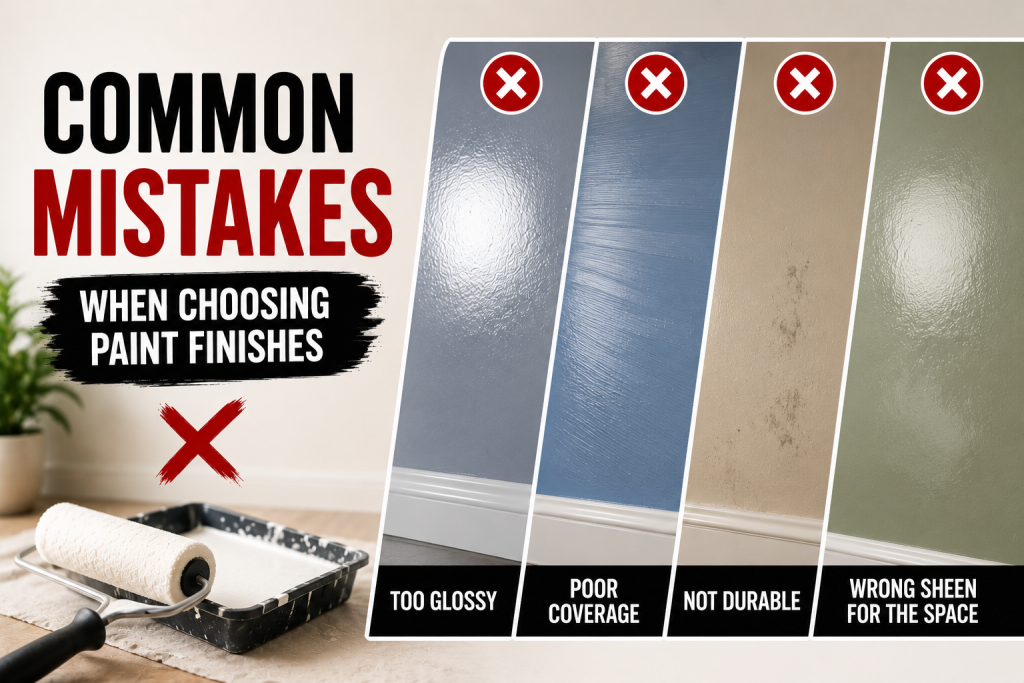
Homeowners also often mismatch finishes across rooms, ignoring consistency in their overall interior paint sheen chart planning. Inconsistent sheen levels can make a home feel disjointed rather than cohesive. Additionally, many underestimate surface preparation needs, particularly for semi-gloss and gloss finishes, which require smooth, properly primed walls to avoid visible streaks and flaws.
Key Mistakes to Avoid
- Ignoring room function when selecting sheen
- Overusing glossy finishes in large areas
- Skipping proper surface preparation
- Inconsistent sheen choices across connected spaces
- Choosing style over practicality in high-traffic areas
Avoiding these mistakes ensures better durability, cleaner finishes, and a more balanced use of paint finish types throughout the home.
Paint Sheen Decision Checklist
Before finalizing your choice from the paint sheen levels, use this checklist to ensure you select the right finish for both performance and design consistency. A thoughtful approach helps you avoid mismatched paint finish types and ensures each room functions as intended.
- Identify the room type and its primary use (sleep, cooking, entertaining, etc.)
- Evaluate traffic level (low, medium, or high use areas)
- Consider how often walls will need cleaning or maintenance
- Check lighting conditions and how they affect surface reflection
- Decide desired visual effect (soft, balanced, or high-impact shine)
- Choose flat or eggshell paint sheen for low-traffic, calm spaces
- Use satin for balanced durability in everyday living areas
- Select semi-gloss for trim, doors, and moisture-prone areas
- Reserve high-gloss paint walls for accents or decorative features
- Test samples in actual lighting before committing to a full room
Following this checklist ensures your selections align with both aesthetics and practicality, helping create a cohesive and functional interior paint sheen chart across your home.
Conclusion
Understanding paint sheen levels is essential for creating a well-balanced, functional, and visually appealing home interior. From flat paint finish used in calm, low-traffic spaces to high-gloss paint walls that deliver bold, reflective impact, each finish plays a specific role in overall design and durability. By using a structured interior paint sheen chart, homeowners can confidently match the right paint finish types to each room. Soft options like eggshell paint sheen work well in bedrooms, while satin offers versatility for everyday living spaces.
Semi-gloss remains the most practical choice for trim and doors due to its durability, and high gloss is best reserved for accents and statement features. Choosing the right sheen is not just about appearance, it directly affects maintenance, longevity, and how a space feels over time. When selected thoughtfully, paint sheen enhances both style and performance throughout your home.
Frequently Asked Questions
What are paint sheen levels?
Paint sheen levels refer to how much light a paint finish reflects, ranging from flat (no shine) to high gloss (very reflective). Each level affects durability, appearance, and washability.
What is the best paint finish for bedrooms?
Flat or eggshell paint sheen is typically best for bedrooms because it creates a soft, calming look with minimal reflection, making it ideal for relaxation.
Is satin or semi-gloss better for walls?
Satin is better for most interior walls because it offers a balance of durability and appearance. Semi-gloss is usually reserved for trim, doors, and moisture-prone areas.
Where should I use high-gloss paint?
High-gloss paint walls are best used for accents, cabinets, or decorative trim where a bold, reflective finish is desired. It is not ideal for large wall surfaces.
What is included in an interior paint sheen chart?
An interior paint sheen chart typically includes flat, eggshell, satin, semi-gloss, and high gloss, along with their durability, washability, and best-use recommendations.
Which paint finish is easiest to clean?
Semi-gloss and high gloss are the easiest to clean due to their smooth, sealed surfaces. These finishes are commonly used in kitchens, bathrooms, and high-traffic areas.