


Semi-Gloss vs Gloss Paint for Trim and Doors
Choosing the right finish for trim and doors is a key detail in achieving a polished interior look. While wall colors often get the most attention, the sheen used on woodwork has a major impact on durability and overall design contrast. The debate of semi-gloss vs gloss paint typically centers on how shiny, durable, and easy to maintain each finish is in real-world use. Semi-gloss paint is the most commonly used option for trim in modern homes because it offers a balance of durability and subtle shine.
Gloss paint, on the other hand, provides a highly reflective, polished finish that creates a bold visual statement, especially on interior door paint ideas and decorative woodwork. This guide explores trim paint finishes, compares durability, highlights door paint sheen options, and breaks down a practical paint sheen comparison so you can confidently choose the best finish for your home’s trim and doors.
Semi-Gloss vs Gloss Paint: Key Differences Overview
When comparing semi-gloss vs gloss paint, the key differences come down to shine level, durability, and how each finish interacts with light on trim and doors. Both are considered high-sheen options, but they serve slightly different design and functional purposes in interior spaces.
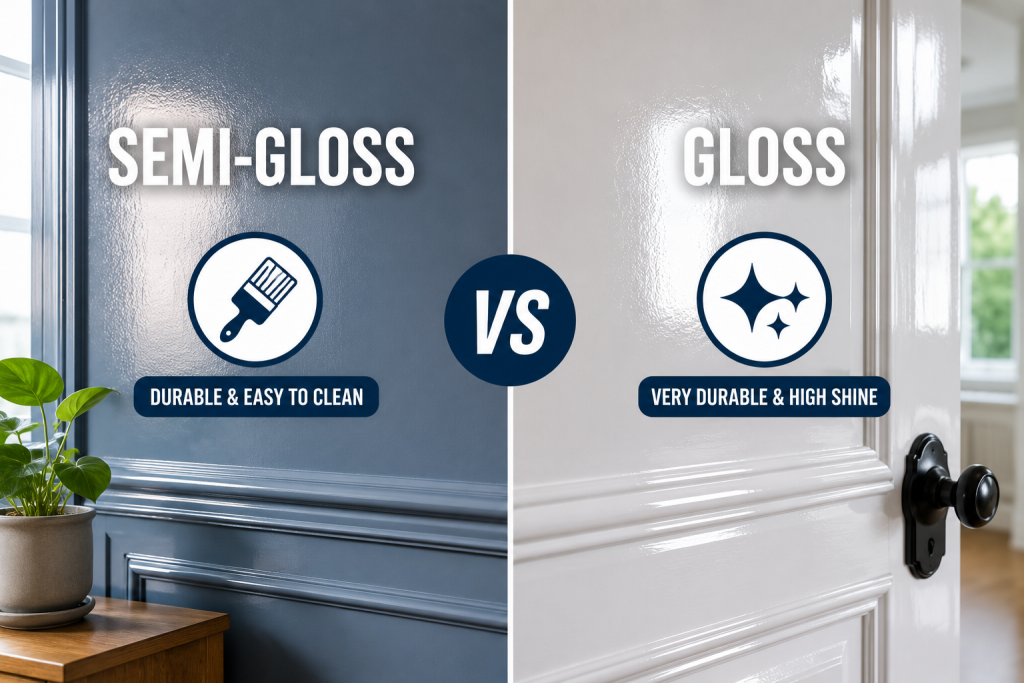
Semi-gloss provides a moderate shine that enhances trim paint finishes without becoming overly reflective. Gloss paint, also known as high-gloss, delivers a mirror-like surface that emphasizes detail and creates a bold, polished look, especially on architectural features.
Paint Sheen Comparison
| Feature | Semi-Gloss Paint | Gloss Paint |
| Shine Level | Medium sheen | Very high sheen |
| Appearance | Clean, soft shine | Bold, reflective finish |
| Durability | High | Very high |
| Cleanability | Easy to clean | Extremely easy to clean |
| Surface Imperfections | Moderately visible | Highly visible |
| Best Use | Baseboards, trim, doors | Accent trim, cabinets, statement doors |
From a paint sheen comparison perspective, semi-gloss is more forgiving and widely used for residential interiors, while gloss is often reserved for decorative or high-impact areas where a strong visual finish is desired.
Semi-Gloss Paint for Trim and Doors
Semi-gloss is the most commonly used finish in trim paint finishes because it strikes a practical balance between durability and appearance. When evaluating semi-gloss vs gloss paint, semi-gloss is often preferred for everyday residential interiors since it provides a clean, slightly reflective surface without becoming overly shiny or distracting.
One of the biggest advantages of semi-gloss is its strong durability and ease of maintenance. It resists moisture, fingerprints, and scuff marks, making it ideal for high-touch areas like baseboards, window casings, and interior door paint ideas. Its surface is also easy to wipe clean, which is especially useful in homes with children or pets.
Advantages of Semi-Gloss Paint
- Durable and long-lasting for interior trim
- Easy to clean and maintain
- Subtle shine enhances architectural details
- Works well across most rooms and lighting conditions
- Less likely to highlight imperfections than gloss
Disadvantages of Semi-Gloss Paint
- Still reflects some light, which may highlight uneven surfaces
- Not as dramatic or bold as high-gloss finishes
- Can require careful application for a smooth finish
From a design standpoint, semi-gloss is considered the standard door paint sheen for most homes because it enhances trim definition without overwhelming the overall interior style. It is especially effective when paired with satin or matte walls for balanced contrast.
Gloss Paint for Trim and Doors
Gloss paint is the most reflective option in the semi-gloss vs gloss paint comparison, often used to create a bold, high-impact finish on interior trim and doors. As one of the most durable trim paint finishes, it delivers a smooth, glass-like surface that enhances architectural details and adds a polished, upscale appearance to interiors.
Because of its high reflectivity, gloss paint is frequently used on statement elements such as interior doors, built-in cabinetry, and decorative molding. It is especially popular in modern and luxury interior door paint ideas, where homeowners want trim and doors to stand out as design features rather than blend into the background.
Advantages of Gloss Paint
- Extremely durable and resistant to wear
- Very easy to clean and maintain
- Creates a bold, high-end visual impact
- Enhances architectural detail and contrast
- Ideal for statement trim or cabinetry
Disadvantages of Gloss Paint
- Highlights every surface imperfection
- Can appear too shiny for some interior styles
- Requires careful surface preparation and application
- May feel overpowering in large areas
From a paint sheen comparison perspective, gloss is best used strategically rather than across all trim in a home. It works particularly well in spaces where homeowners want a dramatic finish or where durability is the top priority, such as kitchens, bathrooms, or accent doors.
Best Uses by Room
Choosing between semi-gloss vs gloss paint becomes much easier when you match each finish to the function of the room. Because trim and doors experience different levels of contact, moisture, and visibility depending on location, selecting the right trim paint finishes helps balance durability with design impact. In most homes, semi-gloss is the default choice for living areas, hallways, and bedrooms. It works well for baseboards, window trim, and standard door paint sheen applications because it provides durability without being overly reflective.
This makes it ideal for high-traffic but visually balanced spaces where a subtle shine is preferred. Gloss paint, on the other hand, is best used more selectively. It is commonly applied to interior doors, cabinetry, and decorative trim where homeowners want a more dramatic effect. In kitchens and bathrooms, gloss can also be beneficial due to its strong resistance to moisture and frequent cleaning.
Room-by-Room Guide
- Living Room: Semi-gloss for trim, gloss for accent doors
- Bedrooms: Semi-gloss for trim; gloss only for statement features
- Kitchen: Gloss for cabinets; semi-gloss for trim
- Bathroom: Gloss or high-sheen finishes for moisture resistance
- Hallways: Semi-gloss for durability and easy maintenance
From a paint sheen comparison perspective, semi-gloss offers versatility across the home, while gloss is best reserved for areas where durability or visual emphasis is the priority.
Durability, Maintenance, and Cleaning Comparison
When evaluating semi-gloss vs gloss paint, durability and maintenance are two of the most important factors for trim and doors, since these surfaces experience frequent contact and wear. Both finishes are significantly more durable than matte or satin wall paints, but they perform differently depending on sheen level and usage conditions. Semi-gloss offers strong durability while remaining more forgiving in everyday interiors. It resists moisture, fingerprints, and light scuffs, making it a reliable choice for most trim paint finishes in residential spaces. It can be cleaned easily with a damp cloth and mild detergent, which helps maintain a fresh appearance over time without frequent repainting.
Gloss paint delivers the highest level of durability in the paint sheen comparison, forming a harder, more sealed surface that is extremely resistant to stains, moisture, and heavy cleaning. This makes it ideal for high-contact areas such as interior doors, kitchen cabinets, and detailed woodwork. However, its highly reflective surface also means that scratches, dents, or imperfections are more visible.
Maintenance Summary
- Semi-gloss: Easy maintenance, good balance of durability and appearance
- Gloss: Maximum durability, but requires well-prepared surfaces for best results
From a practical standpoint, both finishes are washable paint options, but gloss provides the highest resistance, while semi-gloss offers a more balanced, everyday-friendly solution for most homes.
Application, Surface Prep, and Cost Differences
When comparing semi-gloss vs gloss paint, application technique and surface preparation play a major role in achieving a professional-looking finish. Both finishes require more attention to detail than flatter paints because their reflective surfaces highlight imperfections more easily. Surface preparation is critical for both trim paint finishes. Walls, doors, and woodwork must be properly sanded, cleaned, and primed before painting. Any dents, scratches, or uneven areas will become more visible once the paint dries, especially with gloss finishes. Semi-gloss is slightly more forgiving, but still benefits from careful prep work to ensure smooth coverage and clean edges.
In terms of application, semi-gloss is easier for DIY projects because it provides a more balanced sheen and is less likely to show brush or roller marks. Gloss paint, however, requires more precision and often performs better with high-quality brushes or sprayers to achieve a flawless, mirror-like surface. This is why professionals often recommend gloss for interior door paint ideas or cabinetry rather than large, highly visible trim runs. From a cost perspective, both finishes are typically similar in price per gallon across major brands, but gloss projects can become more expensive if professional application is required. In the paint sheen comparison, semi-gloss is often the more cost-effective and user-friendly option for most homeowners.
Common Mistakes When Choosing Trim Paint Finishes
Many homeowners run into avoidable issues when selecting between semi-gloss vs gloss paint, often because they focus only on appearance instead of performance and room function. One of the most common mistakes is using gloss paint throughout the entire home. While it creates a bold, reflective finish, it can feel overwhelming and highlight every surface flaw, especially on older trim or imperfect walls. Another frequent error is underestimating surface preparation. Both finishes require properly sanded and primed surfaces, but gloss in particular will amplify any dents, brush marks, or uneven patches. Skipping prep work leads to inconsistent results that reduce the quality of trim paint finishes.
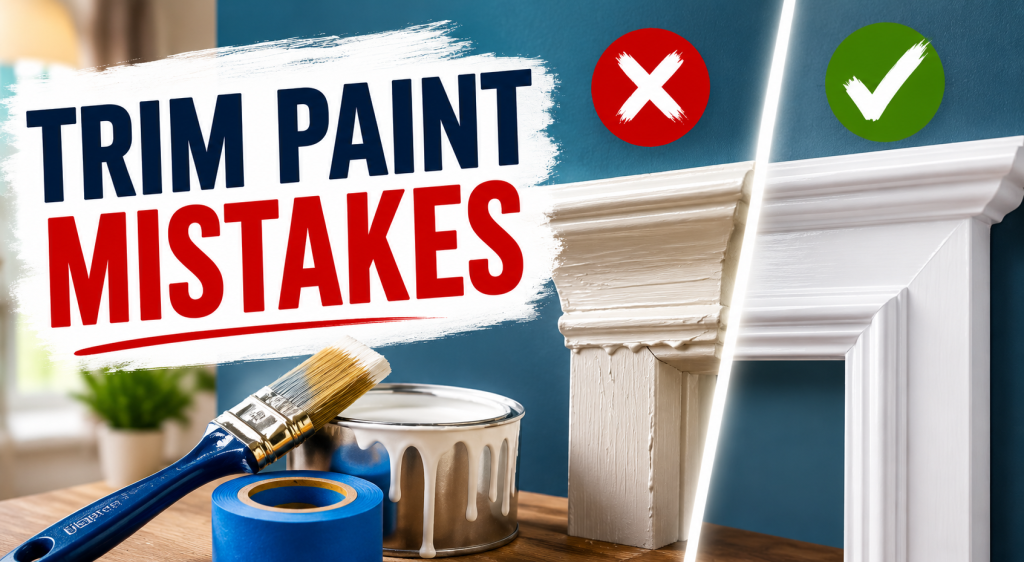
Homeowners also often mismatch sheen levels across the home. Using inconsistent door paint sheen or trim finishes in similar spaces can create a disjointed look. For example, combining high-gloss trim in one room with dull semi-gloss in another without a design purpose can disrupt visual continuity. Finally, many people overlook lighting conditions. Gloss finishes reflect more light, which can look great in bright spaces but too harsh in dim rooms. Understanding how sheen interacts with lighting is essential in any proper paint sheen comparison.
Trim Paint Decision Checklist
Before finalizing your semi-gloss vs gloss paint choice, use this checklist to ensure your trim and doors have the right balance of durability, style, and practicality. A careful selection will help you avoid repainting issues and achieve a professional-quality finish across all trim paint finishes.
- Identify the surface type (trim, baseboards, doors, cabinets, molding)
- Evaluate room function (high-traffic, moisture exposure, decorative space)
- Check lighting conditions (natural and artificial reflection impact)
- Decide desired visual impact (subtle shine vs bold, reflective finish)
- Choose semi-gloss for versatile, everyday door paint sheen applications
- Choose gloss for high-impact or decorative features like cabinets or accent doors
- Ensure proper surface preparation (cleaning, sanding, priming)
- Match sheen levels consistently across similar rooms for visual harmony
- Consider maintenance needs and cleaning frequency
- Test paint samples on actual trim before full application
Following this checklist helps ensure your paint sheen comparison decision leads to a durable, cohesive, and visually balanced interior finish.
Conclusion
Choosing between semi-gloss vs gloss paint ultimately depends on how much durability, shine, and visual impact you want for your trim and doors. Semi-gloss remains the most versatile choice for everyday trim paint finishes, offering a clean, durable, and slightly reflective surface that works well in most interior spaces. Gloss paint, on the other hand, delivers a bold, high-shine finish that enhances detail and creates a more dramatic look, especially for statement interior door paint ideas and cabinetry. When making your final decision, consider lighting, surface condition, and maintenance needs.
Semi-gloss is easier to manage and more forgiving, while gloss provides maximum durability and a premium aesthetic when applied correctly. In most homes, a combination of both finishes delivers the best balance, semi-gloss for general trim and gloss for accent features. A thoughtful paint sheen comparison ensures your interior details not only look polished but also perform well over time, creating a cohesive and long-lasting finish throughout your home.
Frequently Asked Questions
What is the main difference between semi-gloss and gloss paint?
The main difference in semi-gloss vs gloss paint is shine and reflectivity. Semi-gloss has a moderate sheen, while gloss is highly reflective and creates a more dramatic finish on trim and doors.
Is semi-gloss better for trim than gloss?
Yes, in most homes semi-gloss is preferred for trim paint finishes because it offers durability with a softer shine that is easier to maintain and less likely to highlight imperfections.
Where should I use gloss paint in my home?
Gloss paint is best used on interior doors, cabinets, and decorative trim where a bold, high-impact finish is desired. It is often chosen for premium interior door paint ideas.
Which paint finish is more durable?
Gloss paint is generally more durable and resistant to moisture, stains, and cleaning, making it the strongest option in a paint sheen comparison for high-wear surfaces.
Does gloss paint show imperfections more than semi-gloss?
Yes. Because gloss reflects more light, it highlights dents, brush marks, and uneven surfaces more than semi-gloss, which is slightly more forgiving.
Can I mix semi-gloss and gloss in the same home?
Yes, but it should be done intentionally. Many homeowners use semi-gloss for general trim and gloss for accent doors or cabinetry to create contrast while maintaining consistent trim paint finishes.