


Roof Replacement Cost: What Homeowners Can Expect to Pay in 2026
Understanding the true roof replacement cost is one of the most important steps when planning a major home improvement project. Whether your roof has reached the end of its lifespan, suffered storm damage, or is showing signs of wear, replacing it can protect your home while improving energy efficiency, curb appeal, and resale value. For most American homeowners, the roof replacement cost varies based on factors such as roof size, material choice, labor rates, geographic location, and the complexity of the installation. A small asphalt shingle roof may cost significantly less than a large slate or metal roofing system installed on a multi-story home.
Climate also plays a major role. Homeowners in states like Florida may prioritize hurricane resistance, while those in Colorado, Illinois, or Minnesota often focus on snow loads and freeze-thaw durability. Local building codes, permit requirements, and contractor demand can further influence the final project price. This guide breaks down average pricing, material costs, labor expenses, and regional considerations so you can better understand your expected roof replacement cost and make informed decisions before requesting contractor estimates.
Average Roof Replacement Cost in the United States
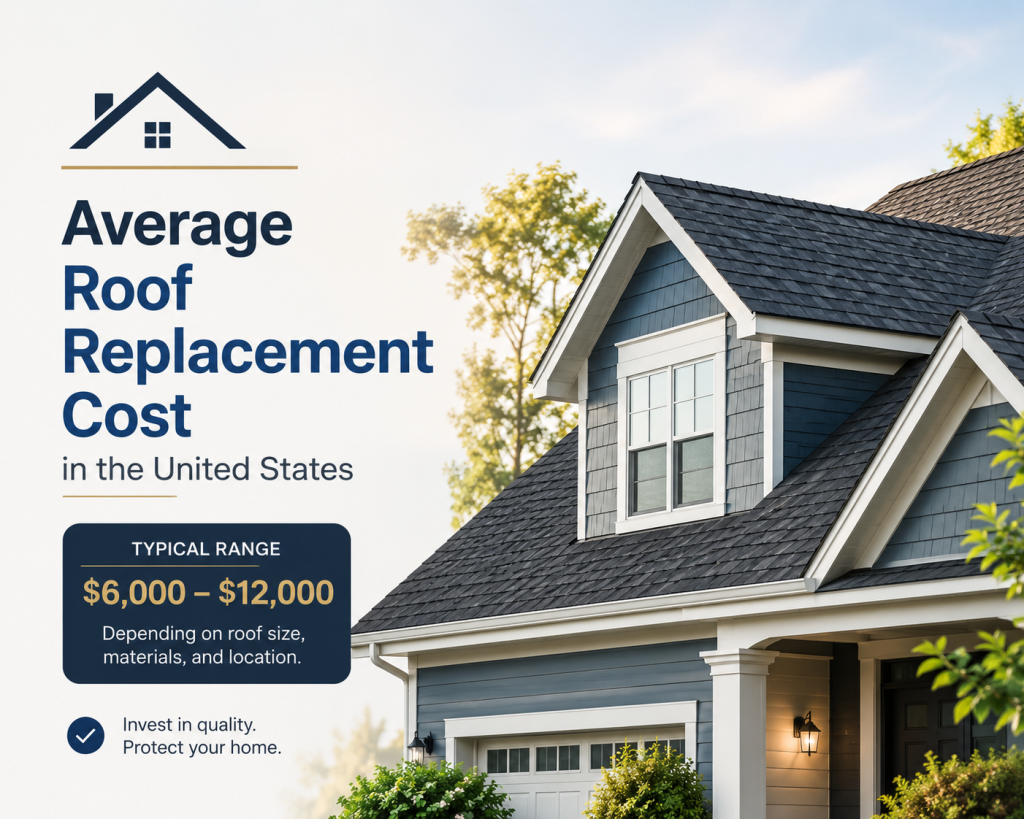
The average roof replacement cost in the United States typically ranges from $5,500 to $18,000 for a standard residential property, although premium materials and complex roof designs can push costs much higher. Most homeowners spend between $8,000 and $12,000 for a complete roof replacement using asphalt shingles, which remain the most popular roofing material nationwide. Several variables influence the final price, including roof size, material selection, roof pitch, labor availability, and local permit requirements. Homes located in major metropolitan areas such as Dallas, Houston, Chicago, or Denver often face higher installation rates because of increased contractor demand and operating costs.
When evaluating a project budget, homeowners should look beyond material pricing alone. Removal of old roofing, underlayment replacement, flashing upgrades, ventilation improvements, and warranty coverage all contribute to the overall roof replacement cost. Obtaining multiple contractor quotes can provide a clearer picture of current market rates and help identify fair pricing for your area.
Roof Replacement Cost Per Square Foot
One of the most common ways contractors calculate pricing is by measuring the roof replacement per square foot. In most markets, homeowners can expect costs ranging from $4 to $12 per square foot depending on the roofing material selected and the complexity of the installation. For example, an asphalt shingle roof generally falls at the lower end of the range, while premium materials such as slate, clay tile, and standing-seam metal roofing command significantly higher prices.
Roofs with steep slopes, multiple valleys, skylights, chimneys, or dormers often require additional labor and safety precautions, increasing the per-square-foot cost. Because square footage directly affects material quantities and installation time, understanding your roof’s size is one of the fastest ways to estimate a potential budget before scheduling professional inspections.
Roof Replacement Cost by Roof Size
Roof size is one of the biggest factors affecting the overall roof replacement cost. Larger roofs require more materials, additional labor hours, and longer installation timelines, all of which increase project expenses. Contractors typically measure roofing projects in squares, with one roofing square covering 100 square feet of roof surface.
The table below provides a general estimate based on common home sizes and standard asphalt shingle installations:
| Roof Size | Estimated Cost Range |
| 1,000 sq. ft. | $4,000 – $8,000 |
| 1,500 sq. ft. | $6,000 – $12,000 |
| 2,000 sq. ft. | $8,000 – $16,000 |
| 2,500 sq. ft. | $10,000 – $20,000 |
| 3,000 sq. ft. | $12,000 – $24,000 |
Keep in mind that these estimates can vary based on regional labor rates, roof accessibility, and material selection. Homeowners considering an asphalt roof replacement will generally pay less than those choosing premium options such as slate or metal roofing.
Beyond square footage, roof design also matters. A simple gable roof is usually less expensive to replace than a roof with multiple valleys, dormers, skylights, or steep slopes. These architectural features increase installation complexity and can significantly raise the final roof replacement cost.
Factors That Affect Roof Replacement Cost
No two roofing projects are exactly alike, which is why the final roof replacement cost can vary significantly from one home to another. While roof size is an important consideration, several other factors directly influence how much homeowners ultimately pay. Material selection often has the largest impact on pricing. Asphalt shingles are generally the most affordable option, while slate, clay tile, and premium metal systems require a larger investment. Roof pitch also affects costs because steeper roofs demand additional safety equipment and longer installation times.
Other important variables include the condition of the roof deck, local permit requirements, ventilation upgrades, flashing replacement, and the removal of existing roofing materials. Homeowners should also account for seasonal demand, as roofing projects scheduled during peak periods may result in higher pricing. Understanding these factors can help homeowners compare bids more effectively and evaluate the true value behind each contractor’s proposal.
How Roofing Labor Costs Impact Pricing
Labor is often one of the largest components of any roof replacement cost calculation. Depending on the project’s complexity, labor can account for 40% to 60% of the total budget. Installation crews are responsible for removing old materials, inspecting the roof deck, installing underlayment, replacing flashing, and completing the final roofing system according to local building codes. Several factors influence roofing labor costs, including roof pitch, accessibility, weather conditions, and regional wage rates. A single-story home with a simple roof design generally requires fewer labor hours than a multi-story property with steep slopes and multiple roof penetrations.
Contractor experience can also affect pricing. Established roofing companies often charge more than newer contractors, but they may provide stronger workmanship warranties, better project management, and higher-quality installations. When comparing estimates, homeowners should evaluate both labor quality and overall value rather than focusing solely on the lowest bid.
Regional Cost Differences Across the U.S.
Location plays a major role in determining the final roof replacement cost for homeowners. Labor rates, material availability, local regulations, and climate-related requirements can all cause significant price differences from one region to another. In states such as Florida and Louisiana, roofing systems often need to meet stricter wind-resistance standards because of hurricane exposure. These requirements can increase material and installation expenses. In northern states like Minnesota, Michigan, and Illinois, roofs must withstand heavy snow loads and freeze-thaw cycles, which may require upgraded materials and additional structural considerations.
Meanwhile, homeowners in Arizona, Nevada, and Texas frequently choose roofing products designed to reflect heat and improve energy efficiency during long summers. Urban markets such as Chicago, Denver, and Houston often experience higher contractor demand, which can further influence the overall roof replacement cost. Understanding regional pricing trends can help homeowners set realistic expectations before requesting a professional roof replacement estimate from local contractors.
Roof Replacement Cost by Roofing Material
The roofing material you choose has a direct impact on the total roof replacement cost. While some homeowners prioritize affordability, others focus on longevity, energy efficiency, weather resistance, or architectural appearance. Understanding the strengths and costs of each option can help you select a roofing system that aligns with your budget and long-term goals.
| Roofing Material | Average Cost Range | Typical Lifespan |
| Asphalt Shingles | $5,500 – $12,000 | 20–30 Years |
| Metal Roofing | $10,000 – $30,000 | 40–70 Years |
| Wood Shakes | $12,000 – $25,000 | 25–40 Years |
| Clay Tile | $15,000 – $40,000 | 50–100 Years |
| Concrete Tile | $12,000 – $35,000 | 50+ Years |
| Slate Roofing | $20,000 – $60,000+ | 75–100+ Years |
When comparing materials, homeowners should consider maintenance requirements, durability, local climate conditions, and long-term value—not just upfront pricing. While premium materials require a larger initial investment, they often deliver longer service life and stronger protection against weather-related damage.
Asphalt Roof Replacement Costs
Asphalt shingles remain the most popular roofing material in the United States because they offer an excellent balance of affordability, durability, and appearance. For many homeowners, an asphalt roof replacement provides the most cost-effective solution while still delivering reliable protection against rain, wind, and seasonal temperature changes. The average roof replacement cost for an asphalt shingle roof typically falls between $5,500 and $12,000, depending on roof size, shingle quality, geographic location, and installation complexity. Architectural shingles generally cost more than standard three-tab shingles but often provide better durability and enhanced curb appeal.
When evaluating new roof pricing, homeowners should also consider warranty coverage, underlayment quality, ventilation improvements, and flashing upgrades. These components may increase the initial investment but can improve roof performance and reduce future repair expenses. Asphalt shingles are especially popular in regions such as the Midwest, Northeast, and Southeast because they offer dependable performance across a wide range of climate conditions.
Premium Roofing Material Costs
Homeowners seeking maximum durability, architectural appeal, or long-term value often choose premium roofing materials instead of standard asphalt shingles. While these options increase the overall roof replacement cost, they can provide decades of additional service life and enhanced protection against harsh weather conditions. Metal roofing is a popular choice in states such as Texas, Arizona, and Colorado because of its durability and energy-efficient performance. Clay and concrete tiles are commonly used in warmer climates and offer exceptional longevity, while natural slate remains one of the most durable roofing materials available for luxury homes.
Although premium materials require a larger upfront investment, they can reduce maintenance needs and improve resale value over time. Many homeowners compare these products based on lifespan, appearance, and long-term ownership expenses rather than installation costs alone. Evaluating lifetime value instead of initial pricing often provides a more accurate picture of the true roof replacement cost associated with high-end roofing systems.
Roof Replacement Cost vs. Reroofing Cost
Homeowners often compare a full roof replacement with reroofing when looking for ways to reduce project expenses. While both options involve installing new roofing materials, the process and long-term results are very different. A complete roof replacement removes existing shingles, underlayment, and damaged components before installing an entirely new roofing system. This approach allows contractors to inspect the roof deck, correct hidden issues, and improve overall performance. Although the initial roof replacement cost is higher, homeowners typically receive better durability, warranty protection, and long-term value.
By contrast, reroofing cost is usually lower because a new layer of shingles is installed directly over the existing roof. This method reduces labor and disposal expenses but may not be suitable if the roof has structural damage, moisture problems, or multiple existing layers. For most homeowners planning to stay in their property for many years, a complete replacement often delivers greater reliability and fewer future maintenance concerns.
When Reroofing Makes Sense
Reroofing can be a practical option when the existing roof is nearing the end of its lifespan but remains structurally sound. Because the process involves installing a new layer of shingles over the current roofing system, it generally requires less labor, fewer materials, and a shorter installation timeline than a complete replacement. This approach may be suitable for homeowners whose roofs have only one existing layer of shingles and show no signs of significant water damage, sagging, deck deterioration, or ventilation problems.
It can also be attractive for homeowners preparing a property for sale and looking for a lower-cost upgrade that improves curb appeal. However, reroofing does not address hidden structural issues beneath the roofing surface. For that reason, homeowners should schedule a professional inspection before choosing this option. Understanding the roof’s condition is essential when comparing reroofing with the long-term benefits of a full replacement.
When Full Replacement Is the Better Investment
A complete roof replacement is often the better choice when the roof has extensive wear, multiple layers of shingles, moisture intrusion, or structural damage. Although the upfront roof replacement cost is higher, replacing the entire roofing system allows contractors to identify and correct problems that would otherwise remain hidden. Full replacement is particularly beneficial for older homes where roof decking, flashing, underlayment, or ventilation components may need upgrades. It also provides homeowners with access to modern roofing technologies that improve weather resistance, energy efficiency, and overall durability.
In regions prone to hurricanes, heavy snowfall, or extreme temperature fluctuations, investing in a new roofing system can deliver stronger long-term protection. Homeowners planning to remain in their property for many years often find that a complete replacement reduces future repair expenses and increases confidence in the roof’s performance during severe weather events.
How to Get an Accurate Roof Replacement Estimate
Obtaining an accurate roof replacement estimate is one of the most important steps before starting a roofing project. While online calculators can provide rough pricing ranges, a professional inspection is necessary to identify factors that affect the actual roof replacement cost. Experienced contractors evaluate roof size, material requirements, roof pitch, ventilation systems, flashing condition, and potential deck repairs before preparing a detailed proposal. Homeowners should request written estimates from at least three reputable roofing companies to compare pricing, warranties, project timelines, and included services.
A quality estimate should clearly outline labor charges, material specifications, permit costs, debris removal, warranty coverage, and any recommended upgrades. Reviewing these details helps homeowners avoid unexpected expenses later in the project. Rather than choosing a contractor solely based on the lowest price, it is important to evaluate workmanship quality, experience, licensing, and customer reviews. A thorough estimate often leads to better project outcomes and fewer surprises during installation.
Questions to Ask Roofing Contractors
Before signing a contract, homeowners should ask detailed questions to ensure they are hiring a qualified and trustworthy roofing professional. The answers can reveal important information about workmanship standards, project management, warranty coverage, and overall value. Start by asking whether the contractor is licensed, insured, and experienced with your preferred roofing material. Homeowners should also request references from recent projects and verify that the company has a strong reputation in the local market.
Questions about installation timelines, cleanup procedures, permit responsibilities, and warranty terms can help prevent misunderstandings later. It is also helpful to ask who will supervise the project and whether subcontractors will be involved. Understanding these details allows homeowners to compare proposals more effectively and determine whether the quoted roof replacement cost accurately reflects the quality of service being offered.
Red Flags to Avoid
Choosing the wrong contractor can lead to poor workmanship, unexpected expenses, and costly repairs in the future. Recognizing common warning signs before work begins can help homeowners protect their investment and avoid unnecessary risks. Be cautious of contractors who demand large upfront payments, provide vague estimates, or pressure homeowners into making immediate decisions. Extremely low bids may seem attractive, but they can indicate the use of inferior materials, inadequate insurance coverage, or inexperienced labor.
Homeowners should also verify business licenses, insurance certificates, and local references before signing any agreement. A reputable contractor will be transparent about pricing, project timelines, warranties, and material specifications. Written contracts should clearly define the scope of work and payment schedule. Taking time to evaluate contractors carefully can reduce project risks and help ensure the final roof replacement cost delivers the quality and protection homeowners expect.
Ways to Reduce Residential Roofing Costs
While replacing a roof is a significant investment, there are several ways homeowners can manage residential roofing costs without sacrificing quality. Careful planning and informed decision-making can often lead to substantial savings over the life of the roof. One effective strategy is to obtain multiple bids from reputable contractors. Comparing proposals helps identify fair market pricing and highlights differences in materials, warranties, and included services. Homeowners can also save money by scheduling projects during slower seasons when contractor demand may be lower.
Selecting roofing materials that balance affordability and durability is another important consideration. While premium materials offer long-term benefits, they may not always be necessary for every home or climate. In some cases, upgrading ventilation or insulation during a roofing project can also improve energy efficiency and reduce future utility expenses. A well-planned project helps homeowners maximize value while maintaining a reasonable roof replacement cost.
Financing Options for Homeowners
Many homeowners do not pay for a new roof entirely out of pocket. Fortunately, several financing options can make a roofing project more manageable while preserving household cash flow. Common solutions include home improvement loans, home equity loans, home equity lines of credit (HELOCs), and contractor-sponsored financing programs. Some roofing companies partner with lenders to offer fixed monthly payment plans that allow homeowners to spread project costs over several years.
Insurance may also help cover expenses if roof damage results from a covered event such as hail, wind, or severe storms. Before committing to financing, homeowners should compare interest rates, repayment terms, and total borrowing costs. The best financing option depends on personal financial goals, available equity, and the urgency of the project. Evaluating multiple funding sources can help homeowners move forward with confidence while keeping the overall roofing investment within budget.
Improving Long-Term Return on Investment
A roof should be viewed as more than a necessary expense—it is a long-term investment in the protection, efficiency, and value of a home. Maximizing return on investment begins with selecting quality materials and ensuring proper installation. Homeowners who prioritize durability often spend more upfront but benefit from fewer repairs, longer service life, and lower maintenance costs over time. Energy-efficient roofing products can also help reduce heating and cooling expenses, particularly in regions with extreme summer or winter temperatures.
Routine inspections and preventive maintenance further extend roof lifespan and help identify minor issues before they become major problems. Keeping gutters clean, replacing damaged flashing, and addressing small leaks promptly can prevent expensive repairs. When combined with professional installation and quality materials, these strategies can improve long-term performance while making the overall roof replacement cost a more valuable investment for years to come.
Is a Roof Replacement Worth the Cost?
For most homeowners, replacing an aging roof is a worthwhile investment that delivers benefits far beyond basic weather protection. While the initial roof replacement cost can seem substantial, a new roofing system can improve home value, enhance curb appeal, increase energy efficiency, and reduce the likelihood of costly repairs. A modern roof is often viewed favorably by prospective buyers, making it a valuable selling point in competitive real estate markets. In many cases, homeowners also benefit from improved insulation performance, better attic ventilation, and stronger protection against severe weather conditions.
Insurance considerations are another important factor. Some insurers offer favorable rates for newer roofing systems that meet current building standards and provide improved resistance to wind, hail, or fire damage. When evaluated over decades of service life, the overall roof replacement cost is often justified by increased property protection, lower maintenance requirements, and greater peace of mind. For many homeowners, a roof replacement is one of the most valuable long-term investments they can make in their property.
Conclusion
Understanding the factors that influence roof replacement cost can help homeowners plan more effectively and avoid unexpected expenses. From roof size and material selection to labor requirements and regional pricing differences, every project comes with unique considerations that affect the final investment. While cost is an important factor, homeowners should also evaluate durability, warranty coverage, energy efficiency, and long-term performance when comparing roofing options. Choosing quality materials and working with a reputable contractor can provide better value over the lifespan of the roof and reduce future maintenance concerns. Whether you’re replacing an aging roof, recovering from storm damage, or preparing your home for resale, investing in a properly installed roofing system can deliver lasting benefits. By understanding pricing factors, requesting detailed estimates, and comparing available options, homeowners can make informed decisions and achieve the best possible return on their roofing investment.
Frequently Asked Questions
What is the average roof replacement cost in 2026?
The average roof replacement cost for a U.S. homeowner typically ranges from $5,500 to $18,000. The final amount depends on roof size, material selection, labor rates, geographic location, and project complexity. Premium roofing materials such as slate and metal generally cost more than asphalt shingles.
How much does a roof replacement cost for a 2,000-square-foot home?
For a typical 2,000-square-foot home, the roof replacement cost often falls between $8,000 and $16,000 when using standard asphalt shingles. Larger roofs, premium materials, and extensive repairs can increase the final price.
Does homeowners insurance cover roof replacement?
Insurance may cover roof replacement when damage is caused by a covered event such as hail, windstorms, falling trees, or other sudden incidents. Coverage varies by policy, age of the roof, and insurer requirements.
How long does a roof replacement take?
Most residential roofing projects are completed within one to three days. Larger homes, severe weather conditions, or complex roof designs may extend the installation timeline.
What roofing material lasts the longest?
Natural slate is among the longest-lasting roofing materials and can exceed 75 to 100 years when properly maintained. Metal roofing, clay tile, and concrete tile also offer exceptional longevity.
Can a new roof increase home value?
Yes. A new roof can improve curb appeal, increase buyer confidence, reduce maintenance concerns, and enhance energy efficiency. These benefits often contribute positively to overall property value and marketability.