


Why Tile Flooring Is Ideal for Humid Climates (Benefits For US Homeowner Guide)
Understanding tile flooring benefits is especially important for homeowners living in humid US regions such as Florida, the Gulf Coast, and the Southeast. In these areas, constant moisture, high temperatures, and seasonal storms can quickly damage flooring materials that are not designed to handle humidity. Tile flooring stands out because it naturally resists water absorption and maintains structural stability even in challenging environments. Unlike wood or laminate, tile does not swell, warp, or deteriorate when exposed to moisture, making it one of the most reliable choices for long-term performance in humid climates.
Homeowners also value tile for its ability to stay cool underfoot, which improves comfort in hot weather conditions. This makes it particularly useful in homes without heavy air conditioning use or in rooms exposed to direct sunlight. In this guide, we break down why tile is considered one of the most durable flooring for humid climates and how it performs across different real-world conditions.
Moisture-Resistant Flooring Performance
One of the strongest tile flooring benefits is its excellent performance as moisture-resistant flooring, especially in regions where humidity levels stay high throughout most of the year. In US climates like Florida, Louisiana, and coastal Texas, excess moisture in the air can quickly damage flooring materials that absorb water or trap humidity underneath the surface. Tile, particularly porcelain, is engineered with a dense structure that significantly reduces water absorption. This makes it highly resistant to swelling, warping, and long-term moisture damage. Even in bathrooms, kitchens, and entryways, where spills and damp conditions are frequent, tile maintains its structural integrity over time.
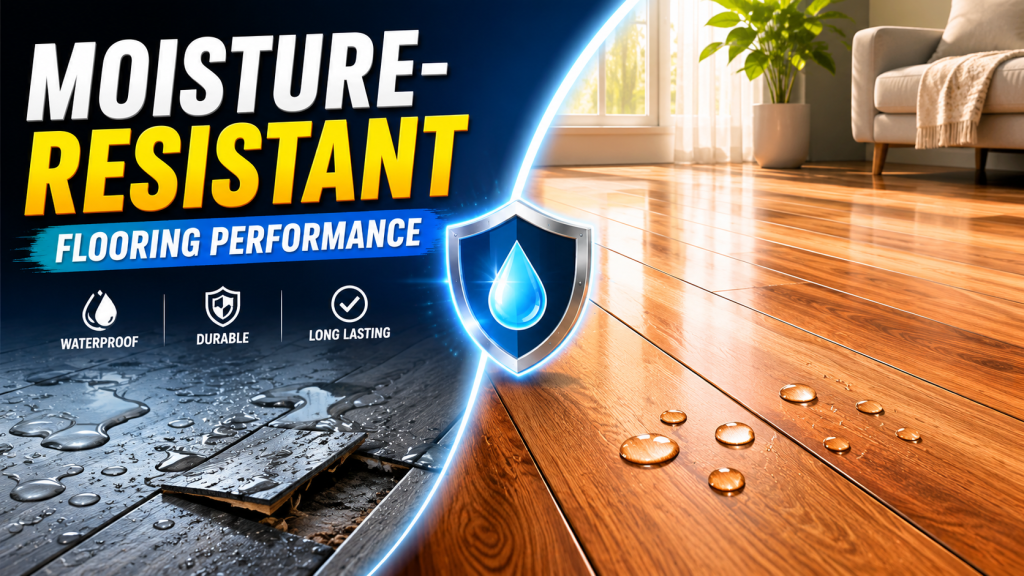
Unlike organic flooring materials, tile does not rely on surface coatings to block moisture. Its resistance is built into the material itself, which provides long-term stability in humid environments. However, grout lines still require proper sealing and maintenance to ensure full moisture protection. When installed correctly, tile flooring offers one of the most reliable defenses against humidity-related flooring failure.
Waterproof Flooring Options for High Humidity
When evaluating waterproof flooring options, tile consistently ranks as one of the most reliable solutions for humid US climates. In regions where air moisture levels remain high year-round, flooring must withstand not just direct water exposure but also long-term atmospheric humidity. Tile flooring, especially porcelain, is inherently water-resistant because of its dense composition and low porosity. This means water cannot easily penetrate the surface, making it suitable for bathrooms, kitchens, laundry rooms, and coastal homes where moisture exposure is constant. As a result, one of the strongest tile flooring benefits is its ability to maintain performance without swelling or structural damage.
Compared to many synthetic flooring options, tile does not degrade under prolonged humidity exposure. It remains stable even when temperatures fluctuate, which is a common issue in hot and humid US states. While tile itself is waterproof, grout lines must be properly sealed to prevent moisture absorption. With correct installation, tile provides one of the most dependable long-term waterproof flooring options available for residential use.
Tile Flooring Benefits for Florida Homes & Coastal Regions
In regions like Florida and other coastal US states, tile flooring benefits become especially clear due to constant exposure to humidity, salt air, and frequent rain. These environmental conditions can quickly damage flooring materials that absorb moisture or expand under heat, making tile one of the most practical long-term solutions. For tile flooring for Florida homes, porcelain tile is often the top recommendation. Its low porosity helps it resist water intrusion, while its durability allows it to handle sandy foot traffic, humidity fluctuations, and heavy daily use without degrading. This makes it ideal for coastal living rooms, kitchens, bathrooms, and entryways.
Another advantage in these regions is tile’s resistance to mold and mildew growth when properly installed and maintained. Unlike wood-based flooring, tile does not provide a food source for mold, making it a safer option in damp environments. Additionally, tile remains stable under intense heat and sunlight exposure common in southern climates, helping homeowners maintain long-term flooring performance with minimal maintenance requirements.
Durable Flooring for Humid Climates
When evaluating durable flooring for humid climates, tile consistently ranks among the most reliable choices for US homeowners living in regions with high moisture levels. Constant humidity can weaken many flooring materials over time, but tile is engineered to maintain stability even under challenging environmental conditions. One of the key tile flooring benefits is its resistance to structural damage caused by moisture absorption. Unlike wood or laminate, tile does not expand, contract, or warp when exposed to humid air. This makes it particularly valuable in southern states and coastal regions where humidity is present year-round.
Porcelain tile is especially effective in these conditions due to its dense composition and low water absorption rate. It performs well in high-traffic areas and rooms exposed to frequent temperature fluctuations, such as kitchens, bathrooms, and entryways. Durability also extends to surface wear. Tile resists scratches, stains, and general foot traffic better than many alternative flooring types, helping homeowners maintain a long-lasting and low-maintenance flooring system in humid environments.
Mold-Resistant Flooring Advantages
One of the most valuable tile flooring benefits in humid climates is its natural resistance to mold and mildew growth. In high-moisture US regions such as Florida, Louisiana, and coastal areas, excess humidity can quickly lead to organic material breakdown and unhealthy indoor conditions if the wrong flooring is installed. Tile flooring itself does not provide a food source for mold because it is non-organic and non-porous at the surface level. This makes it a strong option for mold-resistant flooring, especially when compared to materials like carpet or wood, which can trap moisture and encourage microbial growth over time.
Porcelain tile performs particularly well in this category due to its extremely low water absorption rate. It helps prevent moisture from penetrating the surface, reducing the risk of hidden damp areas where mold can develop. However, grout lines still require attention. If not properly sealed and cleaned, grout can absorb moisture and become a potential area for mold buildup. Regular maintenance ensures the full mold-resistant advantages of tile flooring are preserved.
Cool Flooring for Hot Climates
Another important tile flooring benefits advantage is its natural cooling effect, making it one of the best cool flooring for hot climates across the southern US. In states like Florida, Arizona, and Texas, where temperatures regularly climb and air conditioning use is high, flooring comfort plays a major role in everyday living. Tile has a high thermal mass, meaning it stays cooler to the touch compared to materials like vinyl, carpet, or engineered wood. Even during peak summer heat, tile floors help maintain a more comfortable indoor environment, especially in rooms with direct sunlight exposure such as kitchens, living rooms, and entryways.
This cooling property can also contribute to improved energy efficiency. By naturally maintaining a lower surface temperature, tile can reduce reliance on constant cooling in some spaces, helping homeowners manage utility costs in hot-weather regions. Porcelain tile performs particularly well because it retains this cooling effect while also offering superior durability and moisture resistance, making it ideal for long-term use in warm and humid US climates.
Easy-Clean Flooring for High-Humidity Homes
One of the most practical tile flooring benefits for homeowners in humid climates is how easy it is to clean and maintain. In regions with constant moisture, dirt, and humidity buildup, flooring needs to support quick cleaning without absorbing stains or trapping odors. Tile is widely recognized as easy-clean flooring because its hard, non-porous surface does not hold onto spills, dust, or allergens. Most everyday cleaning only requires sweeping and occasional damp mopping to maintain a clean surface. This makes it especially useful in busy households where sand, mud, or moisture is frequently tracked indoors.
In humid US climates, tile also helps reduce long-term maintenance issues compared to flooring types that can absorb moisture. Unlike carpet or wood, it does not retain humidity, which helps prevent lingering odors and surface damage over time. Porcelain tile offers the easiest maintenance overall due to its low water absorption and resistance to staining. However, grout lines still require periodic cleaning and sealing to maintain a fully hygienic surface.
Common Flooring Mistakes in Humid Regions
Even with strong tile flooring benefits, many homeowners still make avoidable mistakes when installing flooring in humid US climates. These mistakes often reduce performance and can lead to long-term moisture problems, especially in regions like Florida, the Gulf Coast, and the Southeast. One of the most common errors is ignoring proper subfloor preparation. If the base layer is uneven or not properly sealed, moisture can accumulate underneath the tile system, leading to structural issues over time. Another frequent mistake is failing to seal grout lines, which can allow humidity and water to penetrate and cause staining or mold growth.
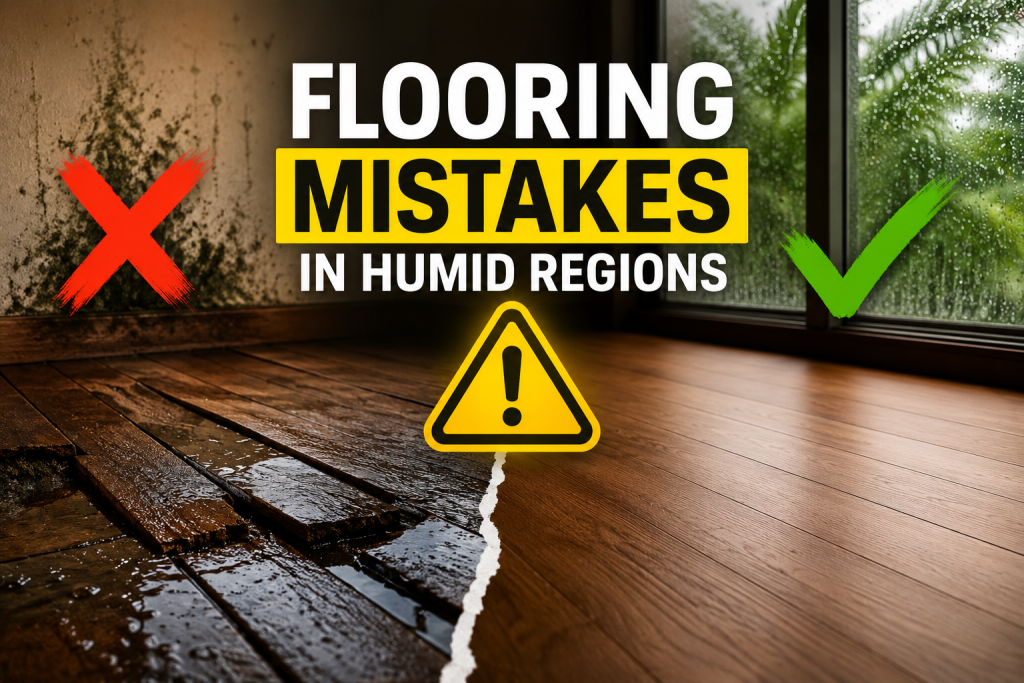
Homeowners also sometimes choose the wrong tile finish. Highly polished tiles may look attractive but can become slippery in humid environments where condensation is common. Selecting a more textured surface improves safety and performance. Finally, poor ventilation in bathrooms and kitchens can increase moisture buildup, reducing the effectiveness of even the best mold-resistant flooring systems. Proper installation and maintenance are essential to maximize long-term tile performance.
Final Verdict
When evaluating all major tile flooring benefits, tile clearly stands out as one of the most reliable flooring choices for humid US climates. Its natural resistance to moisture, long-term durability, and ease of maintenance make it especially well-suited for regions like Florida, the Gulf Coast, and the Southeast, where humidity is a constant environmental factor. Compared to other flooring types, tile performs consistently without warping, swelling, or degrading under moisture exposure. This makes it one of the most dependable options for homeowners seeking long-lasting durable flooring for humid climates.
Porcelain tile, in particular, offers the highest level of performance due to its low porosity and strong structural integrity. Tile also provides additional advantages such as improved indoor cooling, mold resistance, and simple cleaning routines, all of which are important in high-humidity environments. While grout maintenance is still required, proper installation and sealing significantly reduce long-term risks. Overall, tile remains one of the best all-around flooring solutions for humid climates, especially for homeowners prioritizing durability and moisture control.
FAQs
What are the main tile flooring benefits in humid climates?
The main tile flooring benefits include moisture resistance, durability, easy cleaning, and strong performance in high-humidity environments.
Is tile good moisture-resistant flooring?
Yes, moisture-resistant flooring like tile performs well because it does not absorb water easily and stays stable in humid conditions.
What is the best waterproof flooring option for humid areas?
Porcelain tile is one of the most reliable waterproof flooring options for humid climates due to its low porosity and durability.
Is tile flooring good for Florida homes?
Yes, tile flooring for Florida homes is ideal because it resists humidity, heat, and moisture-related damage.
Does tile help prevent mold?
Yes, tile is considered mold-resistant flooring because it does not support organic growth like wood or carpet.
Is tile comfortable in hot climates?
Yes, tile is considered cool flooring for hot climates because it stays naturally cooler than many other flooring types.
Is tile easy to maintain in humid regions?
Yes, tile is easy-clean flooring, requiring only basic sweeping and mopping for regular maintenance.