


Best White Paint Colors for American Homes
When it comes to selecting the best white paint colors, white is often the starting point for nearly every interior design plan. It’s one of the most versatile choices in neutral fence colors, and it continues to dominate American homes because it works across nearly every style, from modern farmhouse to contemporary minimalism. White paint creates a clean visual foundation that allows furniture, flooring, and architectural details to stand out. In open-concept homes especially, it helps maintain flow between rooms while keeping spaces bright and cohesive. This is one reason designers frequently recommend white as a base before introducing accent colors or textures.
Another major advantage is its ability to improve natural light. White surfaces reflect light more effectively than darker tones, making rooms feel larger, cleaner, and more open. However, not all whites behave the same; subtle undertones can shift the feel from warm and cozy to crisp and modern. Because of this flexibility, both Sherwin-Williams white color paint and Benjamin Moore white paint colors are widely used by homeowners looking for reliable, design-friendly results that also support long-term resale value.
Warm White Color Paint vs. Cool White Fence Paint
Understanding the difference between warm white paint and cool white fence paint is essential when selecting the best white paint colors for your home. While both fall under the white category, their undertones can dramatically change the mood and appearance of a space. Warm whites typically contain subtle yellow, beige, or red undertones. These shades create a softer, more inviting feel and are especially popular in best farmhouse white paint styles. They work well in living rooms, bedrooms, and spaces with natural wood finishes because they add comfort without feeling stark or clinical.

Cool white wall paint, on the other hand, leans toward blue, gray, or slightly green undertones. These whites feel cleaner and more modern, making them ideal for contemporary interiors, bathrooms, and kitchens where a crisp, fresh appearance is desired. Lighting plays a major role in how both types appear. Warm whites can feel more yellow in low light, while cool whites may appear sharper in bright, sun-filled rooms. Choosing between them depends on your home’s lighting, materials, and overall design direction, especially when working with broader neutral fence colors throughout the interior.
Sherwin-Williams best white paint colors Options
When exploring the white paint colors, many homeowners turn to Sherwin-Williams white color paint because of its wide range of reliable, designer-approved shades. Each white in their collection is formulated with subtle undertones that make it suitable for different lighting conditions and home styles. Some Sherwin-Williams whites lean warm, such as creamy off-whites that work well in traditional or best farmhouse white paint interiors. These softer tones help create a welcoming atmosphere in living rooms and bedrooms, especially when paired with wood flooring or natural textures.
Other options are cooler and more modern, featuring gray or blue undertones that fit contemporary designs. These cool white fence paint selections are often used in kitchens, bathrooms, and minimalist spaces where a clean, crisp finish is preferred. One of the key advantages of Sherwin-Williams is consistency. Their tinting systems ensure that once a white is selected, it can be accurately reproduced across trims, walls, and ceilings, helping maintain cohesive neutral fence colors throughout the home. Because white paint is highly sensitive to lighting, Sherwin-Williams also offers a variety of undertone-balanced options that help homeowners fine-tune their look based on natural and artificial light conditions.
Benjamin Moore white paint colors for Every Interior Style
When comparing the best white paint colors, Benjamin Moore white paint colors are often preferred by designers for their depth, subtle undertones, and consistent performance across different lighting conditions. Their curated whites are especially popular in both high-end residential projects and everyday home renovations. Benjamin Moore offers a wide range of warm and cool whites that fit different design needs. Warmer options, like soft creamy whites, are commonly used in traditional homes and best farmhouse white paint styles where a cozy, inviting atmosphere is important. These tones pair well with natural wood, stone, and warm metal finishes.
On the cooler side, Benjamin Moore also provides crisp, clean whites that lean slightly gray or blue. These cool white fence paint options are often used in contemporary interiors, helping create a sharp, minimal aesthetic that works well with modern furniture and open layouts. One of the key advantages of Benjamin Moore whites is their richness and consistency under different lighting conditions. This makes them a strong choice for homeowners building cohesive neutral fence colors throughout the entire home, especially in spaces where lighting changes throughout the day.
Choosing white paint for organize and Doors
Selecting the right white paint for organize and doors is just as important as choosing wall colors, especially when working with the best white paint colors for a cohesive interior design. Trim acts as the visual frame of a room, highlighting walls, ceilings, and architectural details. Most homeowners choose a slightly brighter or more durable white for trim than for walls. This creates a clean contrast that helps define spaces without feeling harsh. Semi-gloss or satin finishes are typically used because they offer better durability and are easier to clean, especially in high-touch areas like baseboards, door frames, and stair railings.
Warm whites are often preferred in traditional and farmhouse white paint interiors because they soften transitions between walls and trim. In contrast, cooler whites can create a sharper, more modern look, especially in contemporary homes with minimalist design. Consistency is key when using neutral fence colors throughout the home. Matching undertones between wall and trim whites helps avoid visual clashes, even when different shades are used. Well-chosen trim paint enhances depth, improves contrast, and gives interiors a more polished, finished appearance overall.
Modern Farmhouse best white paint colors Trends
One of the strongest design directions influencing the best white paint colors today is the continued popularity of modern farmhouse white paint. This style blends clean, bright interiors with warm, natural textures, creating a look that feels both updated and comfortable. Modern farmhouse whites typically lean warm rather than cool. Soft creamy whites, slightly beige-toned off-whites, and gentle greige-infused shades are commonly used to avoid a stark or clinical appearance. These tones pair especially well with wood beams, shiplap walls, matte black hardware, and natural stone finishes.
Unlike cooler minimalist whites, farmhouse-inspired palettes aim to create softness and warmth throughout the home. This makes them ideal for open-concept layouts where living rooms, kitchens, and dining areas flow together under consistent neutral wall colors. Lighting also plays an important role in this style. Warm whites tend to maintain their softness under both natural daylight and evening lighting, helping the home feel inviting throughout the day. As a result, modern farmhouse interiors continue to rely heavily on carefully selected white tones that balance brightness with comfort and long-term design flexibility.
Neutral Fence Colors and Why White Works Best
When building a cohesive interior design plan, neutral fence colors play a central role, and white remains the most versatile foundation among them. The best white paint colors are often chosen because they adapt easily to different styles, lighting conditions, and décor changes over time. White works especially well as a neutral because it creates a clean backdrop that allows other design elements to stand out. Flooring, furniture, artwork, and fixtures all become more visually prominent against a white base, which helps create a balanced and intentional interior look.
Compared to darker neutrals, white also improves the perception of space. It reflects natural light more effectively, making rooms feel larger and more open. This is particularly valuable in smaller homes, apartments, or spaces with limited windows. Both Sherwin-Williams white color paint and Benjamin Moore white paint colors offer extensive neutral collections that support everything from traditional interiors to modern minimalist designs. These options make it easier for homeowners to maintain consistency across multiple rooms while still allowing subtle variation in undertones. Ultimately, white remains the anchor of most neutral fence colors because it delivers flexibility, brightness, and long-term design stability.
How to Choose the Right White Paint for Your Home Like a Designer?
Choosing among the best white paint colors is easier when you break the decision into practical design factors instead of relying only on swatches. Designers evaluate white based on undertone, lighting, material pairing, and how it flows across the entire home.
Match best white paint colors to Your Flooring Materials
Flooring has a major influence on how white walls appear. Warm woods pair better with warm white color paint, while gray or stone floors often work better with cool white fence paint. This prevents visual conflict between surfaces and keeps rooms balanced.
Consider Fixed Elements Like Cabinets and Countertops
Cabinets, countertops, and built-ins should guide your white selection. For example, kitchens with bright quartz or marble often benefit from softer neutral fence colors, while wood cabinetry pairs well with creamier whites for a more cohesive look.
Use White to Control Visual Contrast
White is not just background; it controls contrast. Using white paint for trim that is slightly brighter than wall color helps define architectural lines and adds depth to rooms without introducing additional colors.
Align White Paint With Your Home’s Lighting Direction
North-facing rooms typically need warmer whites to offset cooler light, while south-facing rooms can handle cleaner, brighter tones. This helps ensure Sherwin-Williams white paint or Benjamin Moore white colors appear consistent throughout the day.
Think in Terms of Whole-Home Flow
Instead of picking white room by room, consider how it moves through the entire home. A consistent undertone across walls, ceilings, and trim creates a unified look that supports modern interior design principles and long-term resale value.
How does Lighting Change White Paint in Your Home?
Lighting is one of the most important factors when selecting white paint colors, because the same shade can look completely different depending on the room’s light exposure. This is why homeowners often test multiple samples before committing to a final choice. Natural light has the strongest impact. North-facing rooms tend to receive cooler, softer light, which can make even warm whites appear slightly gray or muted. In these spaces, a warm white paint color can help balance the coolness and create a more inviting feel. South-facing rooms, on the other hand, receive stronger warm light, which can enhance creamy undertones and make whites appear brighter.
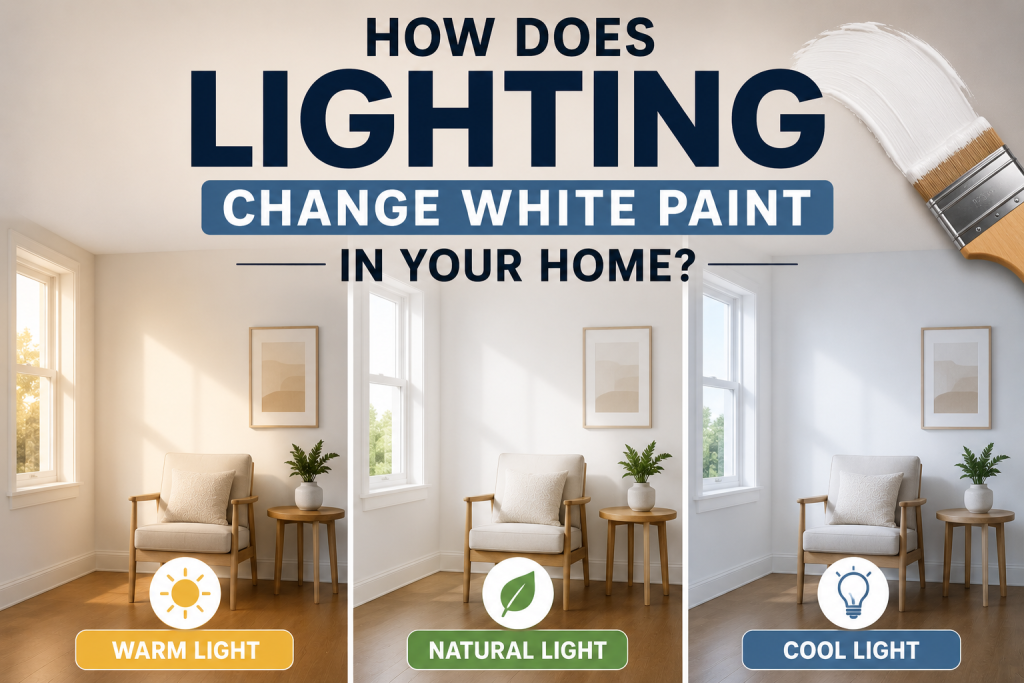
Artificial lighting also plays a major role. LED bulbs, incandescent lighting, and daylight bulbs each affect how cool white fence paint or warm tones are perceived throughout the day. A white that looks crisp and modern in daylight may feel softer or more yellow under warm indoor lighting. Ceilings, trim, and wall positioning further influence perception, especially in open-concept homes where neutral fence colors transition across large spaces. Understanding lighting conditions ensures that the chosen white performs consistently and supports the intended design style in every room.
Common Mistakes
Even though the best white paint colors seem simple, many homeowners make costly design mistakes when selecting white for their interiors. These errors often come down to overlooking undertones, lighting conditions, and finish consistency.
- One of the most common issues is ignoring undertones. Not all whites are the same; some lean warm, others cool. Mixing warm white color paint with cool white fence paint in the same space without intention can create visual imbalance and make rooms feel disconnected.
- Another frequent mistake is not testing paint in real lighting. White paint changes dramatically under natural and artificial light, and what looks perfect in a store can feel too yellow, too gray, or too stark at home.
- Homeowners also often choose overly bright whites for every surface, including walls, trim, and ceilings. While this may seem clean, it can flatten depth and remove contrast between architectural elements like trim and white paint for organized applications.
- Finally, many people overlook how white interacts with furnishings and flooring.
Without considering the broader palette of neutral fence colors, the final result can feel mismatched or unfinished.
Final Thoughts
Selecting the best white paint colors is one of the most important decisions in interior design because white sets the foundation for every other color in the home. When chosen correctly, it enhances lighting, improves spatial perception, and creates a cohesive flow across rooms. The key is understanding how different whites behave. A warm white color paint can soften traditional or best farmhouse white paint interiors, while a cool white fence paint brings clarity and structure to modern spaces. Small undertone differences can completely change how a room feels once it is finished.
Brand selection also matters. Options like Sherwin-Williams white color paint and Benjamin Moore white paint colors provide reliable, professionally formulated shades that perform consistently across varying lighting conditions and surfaces. White also plays a critical role in defining contrast, especially when used as white paint for trim alongside walls and ceilings. This layering helps create depth and architectural clarity throughout the home. In the end, white is not just a default choice; it is a design tool. When selected thoughtfully, it becomes the foundation of balanced, timeless, and visually connected interiors.
Frequently Asked Questions
What are the best white paint colors for homes?
The best white paint colors depend on your lighting, style, and room function. Warm whites work well in cozy, traditional, and farmhouse white paint interiors, while cooler whites suit modern, minimalist spaces.
What are the best white paint colors for homes?
The best white paint colors depend on your lighting, style, and room function. Warm whites work well in cozy, traditional, and farmhouse white paint interiors, while cooler whites suit modern, minimalist spaces.
What is the difference between warm white color paint and cool white fence paint?
Warm white color paint has yellow or beige undertones that create a softer, more inviting feel. Cool white fence paint leans gray or blue, giving a cleaner and more contemporary appearance.
Which Sherwin-Williams white color paint is most popular?
Sherwin-Williams white color paint options like soft warm whites and crisp modern whites are widely used because they offer consistent performance and work well across different lighting conditions.
What are the best Benjamin Moore white paint colors?
Benjamin Moore white paint colors are known for their rich undertones and balance. They are often chosen for premium interiors where subtle variation and depth are important.
What white paint works best for trim?
For trim, a durable semi-gloss or satin finish is recommended. white paint for organize is often slightly brighter than the wall color to create clean contrast and highlight architectural details.