


Why Do Paint Colors Look Different in Every Room? Complete guide
Understanding why paint colors look different in every room is one of the most important parts of interior design, yet it often surprises homeowners after a fresh paint job. The same paint can appear warm, cool, bright, or muted depending entirely on the environment it’s placed in. The biggest reason for these paint color changes is that paint does not exist in isolation. It reacts to surrounding conditions such as lighting, wall orientation, floor color, and even nearby furniture. These elements all influence how your eye perceives the final color.
Another key factor is room paint and lighting interaction. Natural sunlight, artificial bulbs, and shadows all alter how pigments are reflected to the eye. A color that looks balanced in one room may appear completely different in another due to these lighting differences. Even subtle variations in paint undertones become more noticeable once paint is applied to full walls. A slight gray or beige undertone may become stronger depending on how much light the room receives. This is why understanding these shifts is essential before committing to a full interior repaint project.
Room paint and lighting: The Biggest Factor
When trying to understand why paint colors look different, the most important factor is almost always room paint and lighting interaction. Light is what activates color, and without consistent lighting conditions, even the most carefully selected shade can shift in unexpected ways. Natural and artificial light sources behave very differently. Sunlight changes throughout the day; morning light is often cooler and softer, while afternoon light can be warmer and more intense. This variation directly impacts how fence color changes are perceived across different rooms in the same home.
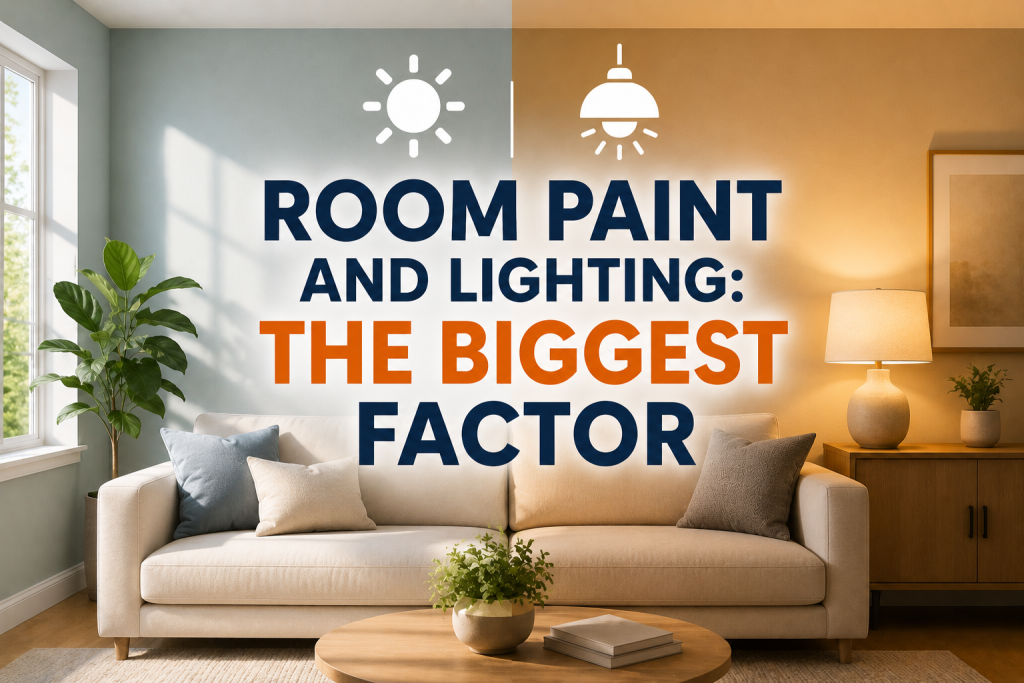
Artificial lighting adds another layer of complexity. LED bulbs, incandescent lighting, and daylight-balanced fixtures each cast different color temperatures, which can alter how paint appears on the wall. A neutral shade may look warm and inviting under soft bulbs but slightly gray or flat under cooler lighting. Room orientation also amplifies these effects. North-facing spaces receive less direct sunlight, which can make colors appear dimmer or cooler, while south-facing rooms tend to enhance brightness and warmth. Because of these variables, interior paint lighting impact is often more influential than the paint itself, making lighting one of the most critical considerations in any interior color decision.
Why paint colors look different? Natural Light Paint Results
When analyzing why paint colors look different, natural light plays a defining role in shaping how a color appears throughout the day. These natural light paint effects are often the reason a color that looked perfect on a swatch ends up feeling completely different once applied to full walls. Natural daylight is constantly changing. In the morning, light tends to be cooler and softer, which can make colors appear slightly muted or gray. Midday sunlight is brighter and more neutral, often showing the most “true” version of a paint color. By late afternoon, the light becomes warmer and more golden, which can enhance beige or warm-toned paints while softening cooler shades.
The direction of sunlight also matters. South-facing rooms receive stronger, more consistent light, which can intensify both warm and cool tones. In contrast, north-facing rooms receive indirect light, often causing colors to look cooler and less saturated, one of the most common reasons homeowners notice fence color changes after painting. These shifts are especially noticeable with neutral tones, where subtle differences in paint undertones become more visible under changing daylight conditions. A barely-there gray or beige undertone may suddenly appear stronger depending on the time of day. Understanding how natural light interacts with paint is essential for predicting how a color will truly behave in real living spaces.
Paint Undertones in Real Homes
To fully understand why paint colors look different, you have to look deeper than the surface color and focus on paint undertones explained in real environments. Undertones are the subtle base hues hidden beneath a paint color, and they become much more noticeable once paint is applied across full walls. Every paint color, especially neutrals, contains an underlying influence such as yellow, red, blue, or green. These undertones are often invisible on small swatches but become active once exposed to real room lighting and paint conditions. This is why a “simple gray” can suddenly look blue in one room and warm in another.
Undertones are also heavily affected by surrounding elements. Flooring, cabinetry, furniture, and even exterior light entering through windows can shift how a color is perceived. This is a key reason for wall color changes between rooms, even when the same paint is used throughout the home. In spaces with limited natural light, undertones often become more pronounced. This is especially common in north-facing room paint situations, where cooler light tends to exaggerate blue or gray undertones and reduce warmth. Because of this, understanding undertones is essential for predicting how a color will behave in different rooms and lighting conditions before committing to a full paint job.
Why Does Wall Color Change in Different Spaces?
One of the most confusing parts of interior design is noticing paint color changes even when the same paint is used throughout the home. This is a key reason people ask why paint colors look different from room to room, and the answer usually comes down to environmental differences rather than the paint itself. Each room creates its own visual ecosystem. Variations in room paint and lighting interaction, wall direction, ceiling height, and surrounding materials all influence how color is perceived. Even small differences, like a darker floor or larger window, can shift how a paint reads on the wall.
Another major factor is reflection. Nearby surfaces bounce light back into the room, which can subtly alter how undertones appear. A beige next to warm wood flooring may look richer, while the same color next to cool gray tile may appear flatter or more muted. This is where interior paint lighting impact becomes especially noticeable. Furniture and décor also contribute to perception changes. Bold colors in upholstery or artwork can influence how the eye interprets surrounding walls, especially in open-concept layouts. Because of these combined effects, the same paint can feel completely different across spaces, even when technically identical. Understanding these variables is essential for controlling color consistency throughout the home.
Facing North Room Paint Challenges
When homeowners notice why paint colors look different, north-facing rooms are often the biggest reason for unexpected results. facing north room paint behaves differently because these spaces receive less direct sunlight and are typically filled with cooler, indirect light throughout the day. This type of lighting tends to reduce warmth and intensity in color. As a result, many paints, especially neutrals, can appear more gray, muted, or even slightly blue. This is where paint undertones become especially important, because subtle cool undertones are often amplified in these environments.
Warm-toned paints can help balance this effect, but even they may not appear as rich as they do in brighter rooms. That’s why homeowners often experience noticeable fence color changes when using the same paint in a north-facing bedroom compared to a south-facing living space. In contrast, cooler paints can sometimes feel even colder in these rooms, making the space appear less inviting if not carefully selected. This is a key consideration in room paint and lighting planning, especially for main living areas or frequently used bedrooms. To counteract these challenges, many designers recommend testing samples directly on multiple walls and observing them at different times of day. This helps ensure the final result feels balanced despite limited natural light exposure.
Interior paint lighting impact on Paint Colors
Beyond natural sunlight, interior paint lighting impact is one of the most influential factors in why paint colors look different from room to room. Artificial light sources can significantly shift how a color appears, often altering both brightness and undertones in ways homeowners don’t expect. Different types of bulbs produce different color temperatures. Warm LED or incandescent lighting tends to enhance yellows and reds, making walls feel softer and more inviting. In contrast, cooler LED or daylight bulbs emphasize blues and grays, which can make neutral paint colors appear sharper or more clinical. This variation becomes especially noticeable in evening settings when natural light is no longer present. A color that looked balanced during the day may feel completely different under artificial lighting, leading to visible fence color changes across the same space.
Fixture placement also matters. Overhead lighting, lamps, and recessed lights all cast shadows and highlights differently, affecting how room paint and lighting interact on large wall surfaces. Even reflective surfaces like mirrors or glossy furniture can amplify these shifts. Because of this, evaluating paint under only one lighting condition is a common mistake. Understanding how interior lighting interacts with paint ensures more predictable and consistent results across all times of day.
How to Fix Paint Color Issues and Why Paint Colors Look Different?
Even with careful planning, homeowners often discover that why paint colors look different becomes a real problem after painting. The good news is that most issues can be corrected without repainting an entire home if you understand what’s causing the shift.
Adjust the Lighting Before Changing the Paint
Before assuming the color is wrong, evaluate the interior lighting impact. Switching bulbs to warmer or cooler temperatures can dramatically correct unwanted tones and reduce dramatic fence color changes caused by artificial lighting.
Add Contrast Through Furnishings and Décor
Sometimes the paint isn’t the issue; it’s the lack of balance in the room. Adding rugs, curtains, or furniture in complementary tones can help stabilize how neutral paint colors appear and reduce undertone dominance.
Re-Test Paint Under Real Conditions
If the issue persists, revisit paint sample testing. Apply larger swatches in different parts of the room to see how room paint and lighting interact throughout the day. This helps confirm whether the color itself or the environment is the problem.
Why Paint Colors Look Different: Use Accent Walls to Balance Undertones
An accent wall can help neutralize strong shifts in paint undertones. Pairing a slightly warmer or cooler shade can bring visual balance without repainting the entire space.
Repaint Only When Lighting and Layout Are Confirmed
Full repainting should be the last step. Only after testing lighting, undertones, and surrounding elements should you consider changing the paint itself, especially in difficult spaces like facing north room paint environments.
Paint Color Sample Testing: How to Do It Right
When trying to understand why paint colors look different, proper paint color sample testing is the most reliable way to prevent surprises after a full repaint. Small swatches alone are never enough because they don’t accurately show how color behaves across real wall surfaces and changing light conditions. The best approach is to apply large sample patches directly onto multiple walls in the same room. This allows you to see how room paint and lighting interact throughout the day, especially during morning, afternoon, and evening lighting shifts. A color that looks balanced at noon may appear very different at night. It’s also important to test samples near key fixed elements like flooring, cabinets, and trim. These surfaces influence how neutral paint colors are perceived and can subtly shift undertones in ways that aren’t visible on a standalone sample card.

For homes with challenging lighting conditions, such as facing north room paint environments, testing becomes even more critical. Cooler light can exaggerate gray or blue undertones, making early testing essential for avoiding unwanted fence color changes later. Ultimately, effective sampling is about observing real-world behavior, not just initial appearance. This step ensures that final paint choices align with both design intent and everyday living conditions.
Final Thoughts
At its core, why paint colors look different comes down to one simple truth: paint is never static. It constantly responds to its environment, shifting with changes in room paint and lighting, surface reflection, and surrounding materials. Once you understand paint undertones, you start to see why the same shade can behave so differently across spaces. A color is never just “gray” or “white”; it carries hidden warmth or coolness that becomes more visible under real-world lighting conditions. This is why natural light paint results and artificial lighting must always be considered together. A color that looks perfect in daylight may feel completely different at night, especially in spaces with strong interior paint lighting impact. Room orientation also plays a major role. Spaces affected by north-oriented room paint conditions often appear cooler and more muted, while brighter rooms can intensify warmth and contrast. These subtle shifts are what create noticeable paint color changes throughout a home. Ultimately, successful color selection is not about finding a perfect paint; it’s about understanding how paint behaves in real environments. With proper paint color sample testing and attention to lighting, homeowners can make confident, consistent choices that hold up in every room.
Frequently Asked Questions
Why paint colors look different in every room?
Paint colors look different in every room because of variations in room paint and lighting, wall direction, and surrounding materials. Even the same paint can shift depending on how much natural or artificial light a space receives.
How does natural light affect paint colors?
Natural light paint results change throughout the day. Morning light is cooler, midday is more neutral, and evening light is warmer, which can make the same color appear brighter, duller, or more yellow depending on the time.
What role do paint undertones play?
Paint undertones simply mean the hidden base color inside a paint shade. These undertones become more visible under different lighting conditions and are a major reason for fence color changes between rooms.
Why do north-facing rooms change paint color the most?
North-oriented room paint tends to look cooler and more muted because these rooms receive indirect light. This often exaggerates gray or blue undertones and reduces warmth in the color.
How important is paint color sample testing?
Paint color sample testing is essential because it shows how a color behaves in real conditions. Testing large samples helps you see how lighting, undertones, and surroundings affect the final result before committing.