

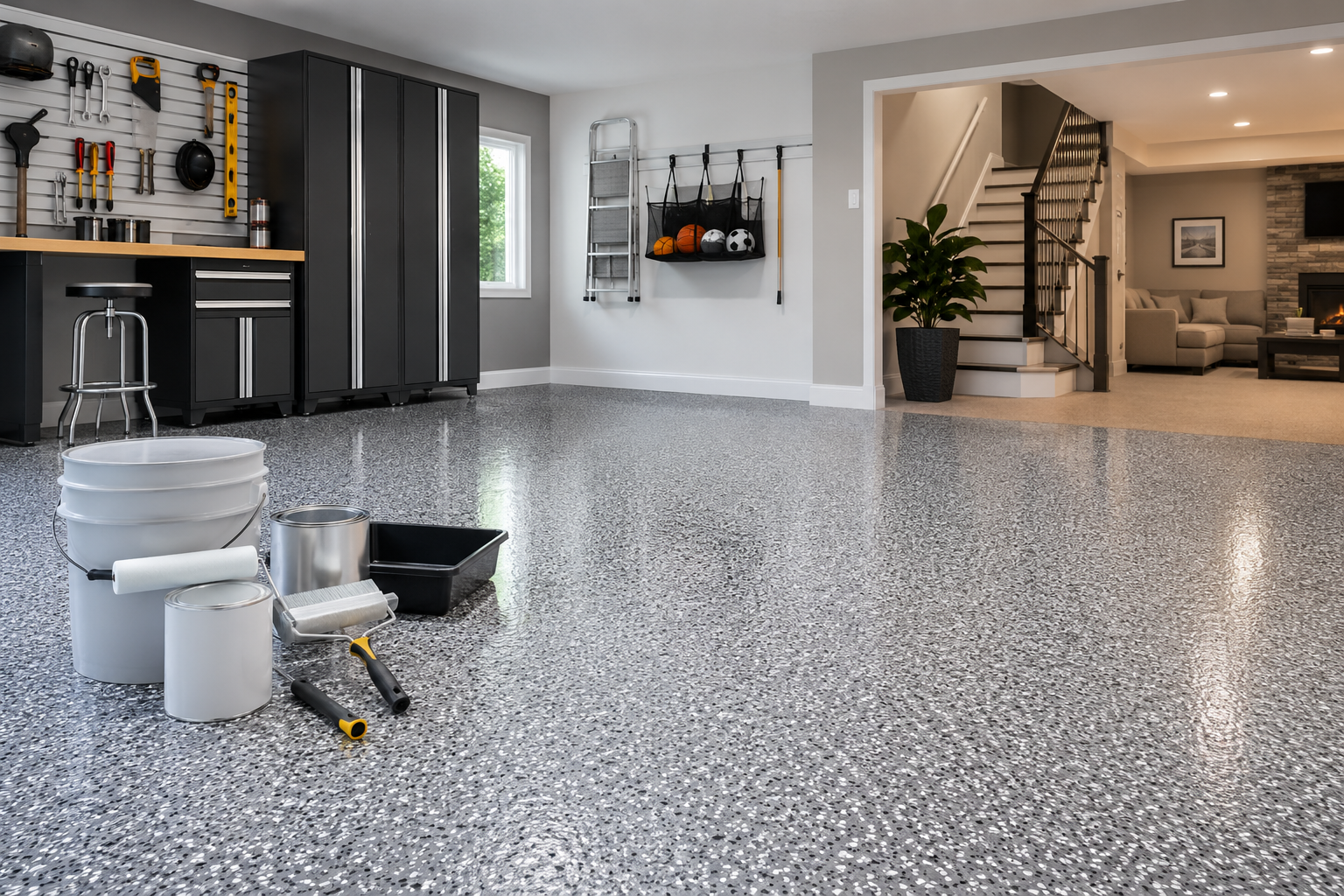
Best Epoxy Flooring Kits for Homeowners in 2026 (Garage & Basement Guide)
DIY flooring upgrades have become increasingly popular among U.S. homeowners looking for affordable ways to improve garages, basements, and utility spaces without hiring contractors. Among these options, best epoxy flooring kits stand out as one of the most practical solutions for creating a durable, professional-looking surface at home. These kits are designed to simplify what used to be a contractor-only process, allowing homeowners to apply protective coatings with basic tools and clear instructions. However, not all products deliver the same level of durability, ease of installation, or long-term performance. Understanding what separates high-quality systems from basic entry-level kits is essential before making a purchase.
When evaluating best epoxy flooring kits, homeowners should consider factors such as surface preparation requirements, curing time, resistance to moisture, and overall lifespan. This guide breaks down top options, use cases, and performance differences to help you choose the right kit for your garage, basement, or residential flooring project in 2026.
What Are Epoxy Flooring Kits?
Epoxy flooring kits are pre-packaged systems designed to help homeowners apply a protective resin coating over concrete surfaces without needing professional installation. These kits typically include a resin and hardener that chemically bond when mixed, creating a strong, durable surface that adheres directly to properly prepared concrete.
Most modern kits are designed for garages, basements, workshops, and utility spaces where durability and stain resistance are important. They often include optional decorative flakes, primers, and topcoats to enhance both appearance and performance. The quality of results depends heavily on surface preparation, including cleaning, grinding, and repairing cracks before application.
When comparing best epoxy flooring kits, homeowners will encounter both 1-part and 2-part systems. Two-part systems are generally more durable because they form a stronger chemical bond during curing. These are commonly used in higher-quality DIY epoxy floor kit applications where long-term performance is a priority. Understanding what is included in each system helps homeowners choose the right product for their skill level, project size, and expected durability requirements.
Best Epoxy Flooring Kits (Top Picks Section)
When selecting the best epoxy flooring kits, homeowners should focus on durability, ease of application, and suitability for specific spaces like garages or basements. Not all kits are designed for the same performance level, so choosing the right one depends on surface condition, traffic load, and expected lifespan.
For garages, a garage floor epoxy kit with strong hot-tire resistance and chemical protection is ideal, especially in U.S. homes where vehicles, tools, and storage create heavy wear. These kits are typically thicker and include additives for improved abrasion resistance. For interior spaces, residential floor coating kits are often designed with lower odor formulations and smoother finishes, making them more suitable for basements, laundry rooms, and utility areas.
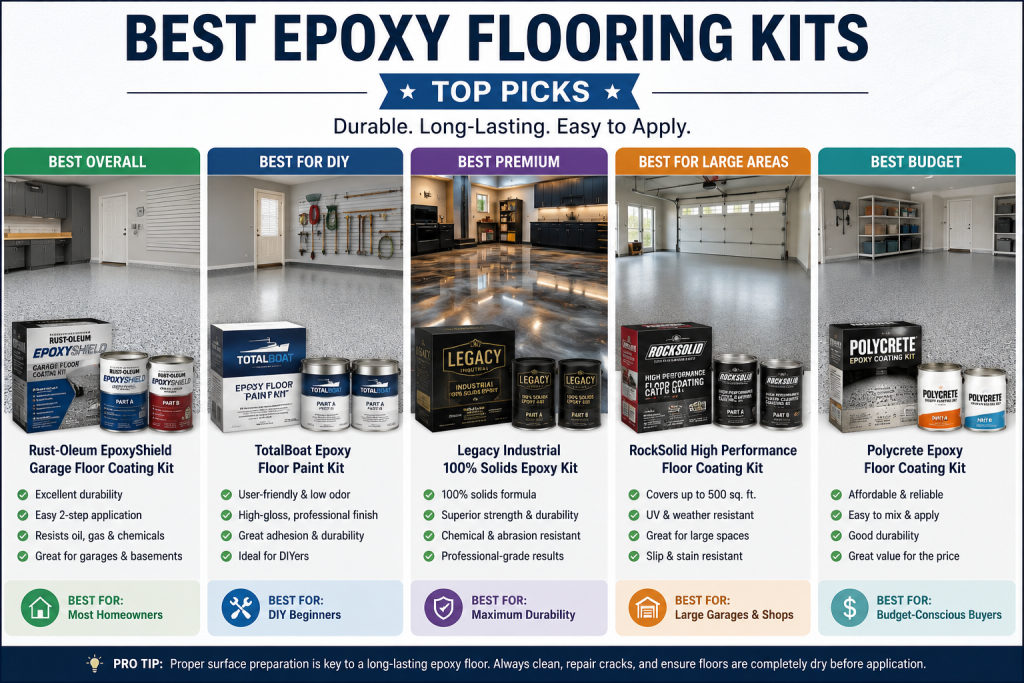
Homeowners looking for stronger performance often prefer concrete floor epoxy kits that include multi-layer systems for added durability. Meanwhile, premium options are marketed as durable epoxy kits, offering enhanced resistance to cracking, staining, and long-term wear. The right choice ultimately depends on whether the project prioritizes affordability, ease of installation, or maximum long-term durability.
DIY Epoxy Floor Kit vs Professional Systems
Choosing between a DIY solution and a professional installation is one of the most important decisions when evaluating best epoxy flooring kits. DIY kits are designed for homeowners who want a cost-effective way to upgrade surfaces like garages or basements without hiring contractors. They typically include pre-measured materials and step-by-step instructions, making them accessible for first-time users. However, a DIY epoxy floor kit has limitations in terms of coating thickness, surface preparation tools, and long-term durability. Many failures in DIY applications come from inadequate concrete grinding or poor environmental conditions during curing, which can lead to peeling or bubbling over time.
Professional systems, on the other hand, use industrial-grade materials and equipment to achieve deeper concrete penetration and stronger adhesion. These systems are more expensive but provide significantly longer lifespan and better resistance to heavy traffic and chemical exposure. For homeowners comparing best epoxy flooring kits, the decision often comes down to budget versus performance. DIY kits work well for light-use spaces, while professional systems are better suited for high-traffic garages or long-term investments.
Garage Floor Epoxy Kit Buying Guide
Selecting the right best epoxy flooring kits for a garage requires more than just choosing a popular brand. Homeowners need to evaluate how well a product performs under real-world garage conditions, including hot tires, oil spills, heavy tools, and seasonal temperature changes common across U.S. homes. A high-quality garage floor epoxy kit should offer strong adhesion to concrete, resistance to automotive fluids, and durability under frequent vehicle traffic. Kits with thicker coatings and added aggregate or flakes tend to perform better in high-use garages because they provide extra surface protection and slip resistance.
It is also important to consider surface preparation requirements before installation. Some kits demand full mechanical grinding, while others are more forgiving but may sacrifice long-term durability. Cure time is another factor, especially for homeowners who need quick garage access. When comparing best epoxy flooring kits, garage-specific systems typically outperform general-purpose products because they are engineered for higher impact and chemical exposure. Choosing the right kit ensures better long-term performance and reduces the risk of premature wear or peeling.
Residential Floor Coating Kits Explained
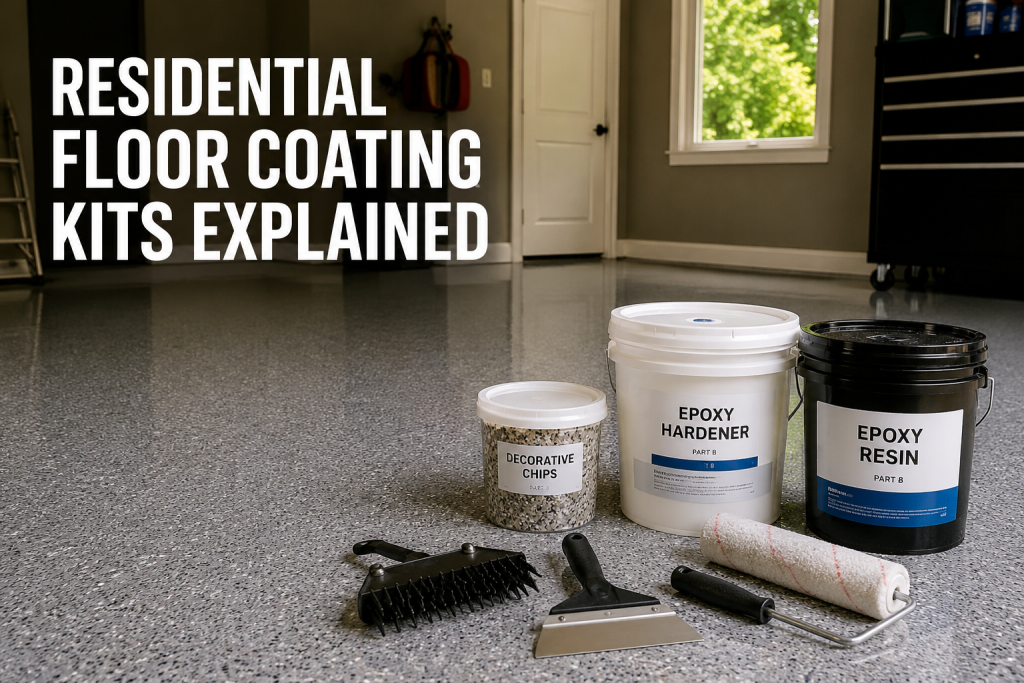
Residential epoxy systems are designed to improve and protect concrete surfaces inside the home, offering a balance between durability, appearance, and ease of application. When evaluating best epoxy flooring kits, homeowners will often see products marketed specifically as residential floor coating kits, which are tailored for garages, basements, laundry rooms, and utility areas.
These kits typically include epoxy resin, a hardener, and optional decorative additives such as color flakes or metallic pigments. Compared to industrial systems, residential kits are formulated to be easier to apply while still providing solid resistance to stains, moisture, and everyday wear. However, performance can vary widely depending on surface preparation and product quality.
Some systems use hybrid chemistry, combining epoxy with polyurea or polyaspartic components to improve flexibility and reduce curing time. These advanced options are often positioned as premium best epoxy flooring kits because they offer better resistance to cracking and yellowing over time. For homeowners, choosing the right residential system depends on expected traffic levels, moisture exposure, and long-term maintenance expectations.
Concrete Floor Epoxy Kits for Basements
Basements present unique challenges for flooring systems because of moisture levels, temperature fluctuations, and potential for concrete vapor transmission. This is why selecting the right best epoxy flooring kits for below-grade spaces requires more careful consideration than standard garage applications.
A concrete floor epoxy kit designed for basements typically includes moisture-tolerant formulas that help reduce the risk of bubbling or delamination. These systems are often paired with vapor barriers or primers to improve adhesion on older or porous concrete slabs. Proper surface preparation is especially important, as basement floors are more likely to have hidden dampness or minor cracking.
Compared to garage-focused products, basement kits usually prioritize smooth finishes and low-odor application, making them more suitable for indoor environments. However, they may not always offer the same level of abrasion resistance needed for heavy vehicle traffic. When choosing from best epoxy flooring kits, homeowners should ensure basement-specific formulations are rated for moisture resistance and long-term stability in below-grade conditions.
Durable Epoxy Kits Comparison
Durability is one of the most important factors when evaluating best epoxy flooring kits, especially for homeowners who expect long-term performance in high-traffic or heavy-use areas. Not all kits are engineered with the same level of strength, and differences in formulation can significantly impact how well the surface holds up over time. A durable epoxy kits option typically includes thicker epoxy solids content, stronger bonding agents, and enhanced resistance to abrasion, chemicals, and impact. These higher-grade systems are often recommended for garages where vehicles, tools, and storage equipment create constant wear.
Standard entry-level kits may look similar during installation but tend to wear down faster, especially in areas exposed to hot tires or frequent foot traffic. Premium systems, on the other hand, are designed to maintain their finish for many years with minimal maintenance. When comparing best epoxy flooring kits, homeowners should evaluate not only price but also expected lifespan, coating thickness, and resistance to environmental stress. A more durable system may cost more upfront but often delivers better long-term value and fewer repairs.
Conclusion
Many homeowners assume that all epoxy systems perform similarly once applied, but in reality, long-term results depend heavily on preparation quality and product limitations. When reviewing best epoxy flooring kits, it becomes clear that marketing often highlights ease of use while underemphasizing the technical steps required for a successful installation. A key factor professionals stress—but DIY guides often minimize—is surface preparation. Even the highest-quality homeowner epoxy systems will fail prematurely if the concrete is not properly ground, cleaned, and repaired before application. Moisture issues, oil contamination, and uneven slabs can all reduce adhesion strength and shorten lifespan. Another overlooked detail is environmental timing. Temperature and humidity during application significantly affect curing results, yet many kits provide only general guidance rather than strict installation conditions.
Frequently Asked Questions
Are epoxy flooring kits worth it for homeowners?
Yes, best epoxy flooring kits can be worth it for homeowners who want an affordable way to upgrade garages, basements, or utility spaces. They provide durability and a cleaner finish when properly installed.
How long do DIY epoxy floors last?
A properly installed DIY epoxy floor kit can last 3–7 years depending on surface preparation, traffic levels, and maintenance. Poor prep work can significantly reduce lifespan.
What is the best use for a garage floor epoxy kit?
A garage floor epoxy kit is best used in residential garages where resistance to oil, tire marks, and heavy foot traffic is needed.
Can residential floor coating kits be used indoors?
Yes, residential floor coating kits are commonly used in basements, laundry rooms, and workshops where moisture resistance and durability are important.
What makes concrete floor epoxy kits different from regular paint?
Concrete floor epoxy kits chemically bond with the surface, unlike paint which only sits on top. This makes epoxy more durable and resistant to wear.
How do durable epoxy kits compare to standard options?
Durable epoxy kits typically include higher solids content and stronger bonding agents, resulting in longer-lasting finishes compared to entry-level kits.
Is basement floor epoxy safe for indoor air quality?
Yes, modern basement floor epoxy systems are formulated with low-VOC options, making them safer for indoor residential environments.
What are homeowner epoxy systems best used for?
Homeowner epoxy systems are best for DIY-friendly upgrades where durability, cost savings, and improved surface appearance are the main goals.