

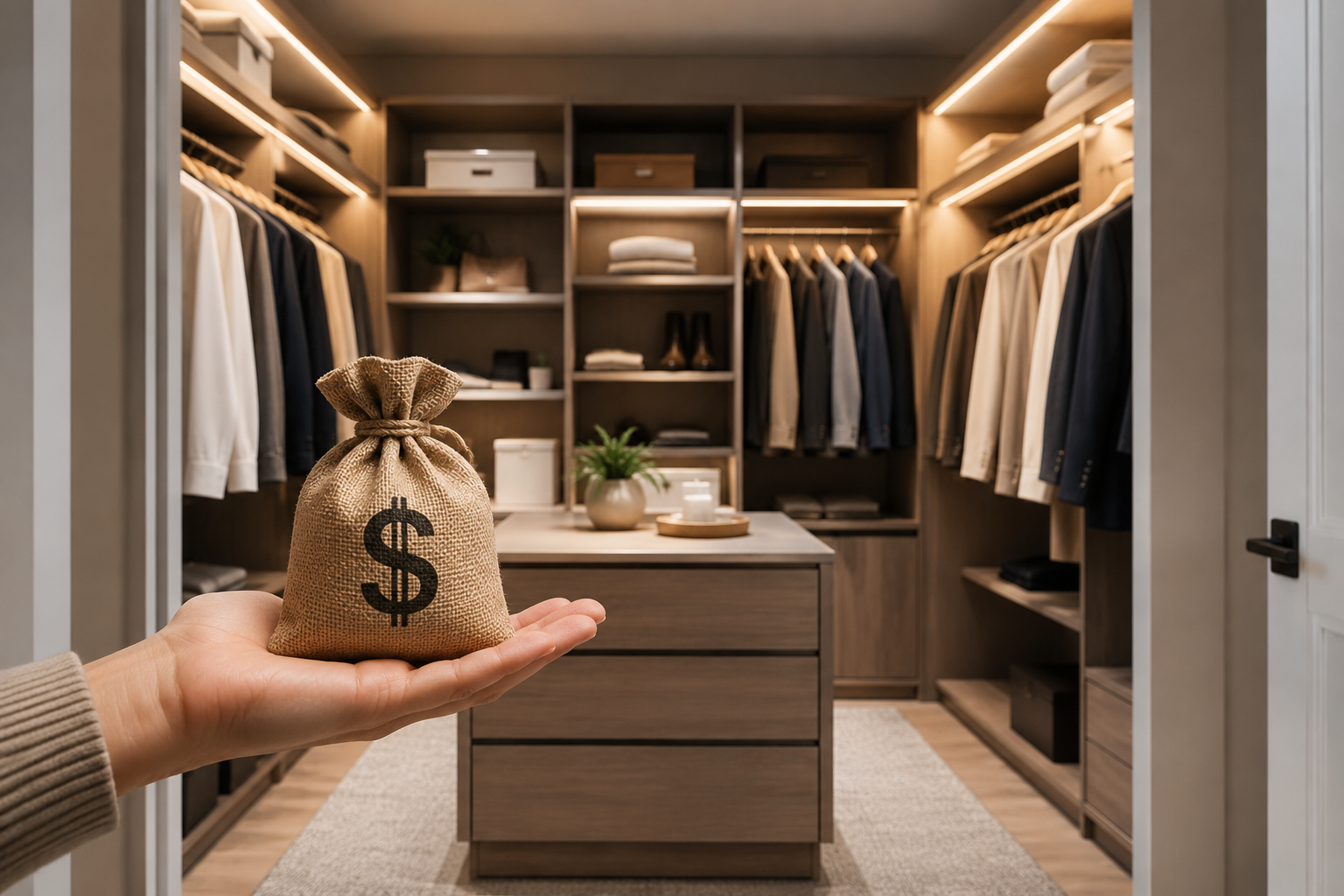
Average Walk-In Closet Cost in the US
The average walk-in closet cost in the United States ranges from $2,500 to $10,000, with most homeowners spending around $5,500 for a professionally installed custom closet. Basic walk-in closets with standard shelving and hanging rods typically cost between $2,500 and $4,000, while mid-range projects featuring built-in drawers, upgraded finishes, and improved lighting usually range from $5,000 to $8,000. Luxury walk-in closets with custom cabinetry, premium materials, center islands, and designer accessories can easily exceed $15,000.
Another common way to estimate custom closet pricing is by square footage. Most professionally installed walk-in closets cost approximately $100 to $300 per square foot, depending on materials, layout complexity, and local labor rates. Homeowners in states such as California and New York generally pay more than those in Texas or the Midwest due to higher labor and construction costs. Establishing a realistic budget early helps you manage closet installation cost, prioritize upgrades, and avoid unexpected expenses during your bedroom closet remodel.
Walk-In Closet Cost by Size
The size of your closet has a significant impact on the total walk-in closet cost. Larger closets require more shelving, cabinetry, flooring, lighting, and labor, which increases both material and installation expenses.

Estimating costs by size can help you establish a realistic budget before selecting finishes and storage features.
| Walk-In Closet Size | Typical Dimensions | Average Cost |
| Small | 25–40 sq. ft. | $2,500–$4,500 |
| Medium | 40–70 sq. ft. | $4,500–$8,000 |
| Large | 70–120+ sq. ft. | $8,000–$15,000+ |
A small walk-in closet can provide efficient storage with adjustable shelves, double hanging rods, and a few drawers. Medium-sized closets offer space for expanded closet organization systems, while larger layouts can accommodate center islands, seating, custom cabinets, and premium finishes. If you’re exploring walk-in wardrobe ideas, choose a design that fits both your storage needs and the available bedroom space to maximize functionality without overspending. If the closet upgrade is part of a larger bedroom renovation, factoring in bedroom painting costs can help you create a more accurate overall budget.
Walk-In Closet Cost by Material
The materials you choose play a major role in determining your overall walk-in closet cost. Budget-friendly options offer practical storage at a lower price, while premium materials provide greater durability, a more refined appearance, and longer-lasting performance. Selecting the right material depends on your budget, desired style, and how heavily the closet will be used.
| Material | Average Cost | Best For |
| Wire Shelving | $100–$500 | Budget-friendly storage |
| Melamine | $500–$2,500 | Affordable custom closet systems |
| MDF | $1,000–$3,500 | Painted built-in shelving and cabinets |
| Plywood | $2,000–$5,500 | Durable mid-range closet systems |
| Hardwood | $5,000–$15,000+ | Luxury closet design and custom cabinetry |
Melamine and MDF remain popular choices because they provide a clean, modern appearance at a reasonable price. Homeowners seeking premium finishes often choose plywood or hardwood for increased durability and a custom-built look. When evaluating custom closet pricing, consider both the upfront investment and the material’s long-term maintenance requirements. Choosing quality materials can reduce future repairs while enhancing the overall value of your bedroom closet remodel.
Closet Organization Systems and Their Costs
A well-designed storage system can make your walk-in closet more functional and easier to use every day. The overall walk-in closet cost increases as you add custom features, but investing in the right closet organization systems can maximize storage space and reduce clutter. Choose components based on your wardrobe, lifestyle, and available space rather than adding features you may never use.
| Organization Feature | Average Cost |
| Adjustable shelving | $200–$1,000 |
| Built-in drawers | $300–$2,000 |
| Hanging rods | $100–$500 |
| Shoe storage system | $200–$1,500 |
| Pull-out baskets | $150–$600 |
| Jewelry organizer | $200–$800 |
| Closet island | $1,500–$5,000+ |
| LED closet lighting | $300–$1,500 |
When estimating closet shelving cost, remember that custom-built shelving is typically more expensive than modular systems but offers a tailored fit and a premium appearance. Combining adjustable shelves, drawers, and specialized storage creates a highly efficient closet that keeps clothing and accessories organized while adding long-term value to your home.
Labor and Closet Installation Cost
Labor is a major component of the total walk-in closet cost, especially for custom-built designs that require precise measurements and professional installation. In most projects, labor accounts for 40% to 60% of the total budget. Depending on the complexity of the design, homeowners can expect closet installation cost to range from $1,000 to $4,000 or more. If your project involves electrical work, drywall modifications, new flooring, or custom cabinetry, additional trades may be needed, increasing the overall expense.
While DIY closet kits can reduce labor costs, they are generally best suited for simple layouts with basic shelving and hanging rods. Complex bedroom closet remodel projects that include built-in storage, custom drawers, or luxury finishes are usually worth entrusting to experienced professionals. Proper installation ensures that shelving is securely anchored, drawers operate smoothly, and the finished closet meets both safety standards and your long-term storage needs. Comparing multiple contractor estimates and reviewing previous work can help you find quality craftsmanship at a competitive price.
Budget vs. Luxury Walk-In Closet Designs
The final walk-in closet cost depends on the level of customization and the quality of materials you choose. While a budget-friendly closet provides efficient storage, luxury designs offer premium finishes, personalized organization, and high-end features that create a boutique-style dressing space. Comparing remodeling levels helps you determine which option best fits your needs and budget.
| Closet Type | Average Cost | Typical Features |
| Budget | $2,500–$4,500 | Wire or melamine shelving, standard hanging rods, basic drawers, simple lighting |
| Mid-Range | $5,000–$10,000 | Custom shelving, soft-close drawers, upgraded finishes, integrated lighting, improved closet organization systems |
| Luxury | $10,000–$25,000+ | Hardwood cabinetry, center island, glass display cabinets, premium lighting, seating, and personalized luxury closet design |
If you’re exploring walk-in wardrobe ideas, prioritize features you’ll use every day rather than adding unnecessary upgrades. Investing in durable shelving, efficient storage, and quality hardware often provides better long-term value than focusing solely on decorative elements. A well-designed closet should combine functionality, organization, and style while complementing the overall design of your bedroom.
Factors That Affect Walk-In Closet Cost
Several variables influence the final walk-in closet cost, so no two projects are priced exactly the same. Closet size is one of the biggest factors, as larger spaces require more shelving, cabinetry, flooring, lighting, and labor. Material selection also has a major impact. Basic wire shelving and melamine systems are generally more affordable than custom hardwood cabinetry or premium built-in storage. Additional features such as glass doors, center islands, integrated lighting, and custom accessories will further increase custom closet pricing.
Your location also affects project costs. Homeowners in areas with higher labor rates, such as California and New York, typically pay more than those in many parts of Texas, the Midwest, or the Southeast. Structural modifications, electrical upgrades, and permit requirements can also add to the total closet installation cost. To avoid unexpected expenses, include a contingency fund of 10%–20% in your renovation budget. Careful planning and thoughtful material selection will help you complete your bedroom closet remodel while staying within your financial goals.
How to Save Money on a Walk-In Closet
Building a functional walk-in closet doesn’t have to exceed your budget. One of the best ways to reduce walk-in closet cost is to prioritize the features you need most and avoid unnecessary customizations. Modular storage systems, standard cabinet sizes, and durable mid-range materials often provide excellent value at a lower price than fully custom designs. Keeping the existing closet layout can also reduce construction costs by eliminating the need for major framing, electrical work, or drywall modifications.
To lower custom closet pricing, request estimates from multiple contractors and compare the scope of work, materials, and warranties, not just the final price. You can also save by installing simple accessories, painting the closet, or assembling modular shelving yourself if you have basic DIY skills. When evaluating walk-in wardrobe ideas, invest in upgrades that improve daily functionality, such as adjustable shelving or efficient closet organization systems, instead of purely decorative features. Smart planning and selective spending allow you to create a stylish, organized closet while keeping closet installation cost under control.
Is a Walk-In Closet Worth the Investment?
For many homeowners, a walk-in closet is more than a luxury, it’s a practical upgrade that improves organization, convenience, and everyday comfort. While the exact return on investment depends on your local real estate market and the quality of the renovation, a thoughtfully designed walk-in closet can make your home more appealing to prospective buyers. Modern storage solutions, efficient layouts, and quality finishes are especially attractive in primary bedrooms, where buyers often expect ample storage space.

Beyond resale value, the long-term benefits often justify the walk-in closet cost. Custom storage reduces clutter, protects clothing and accessories, and makes daily routines more efficient. Features such as adjustable shelving, built-in drawers, and energy-efficient LED lighting improve both functionality and aesthetics. If you’re considering a bedroom closet remodel, focus on durable materials and timeless designs rather than short-lived trends. A well-planned investment can enhance your home’s functionality today while supporting its value for years to come.
Walk-In Closet Planning Checklist
A successful closet project begins with careful planning. Before construction starts, use this checklist to organize your budget, compare options, and avoid costly surprises. Following these steps will help you manage your walk-in closet cost while creating a storage space that meets your current and future needs.
- Measure the available space and create a detailed floor plan.
- Set a realistic budget, including a 10%–20% contingency fund.
- List your storage needs for clothing, shoes, accessories, and seasonal items.
- Compare modular and custom closet organization systems.
- Choose durable materials that balance quality and affordability.
- Request estimates from at least three licensed contractors.
- Plan electrical work for lighting, outlets, or smart closet features if needed.
- Select shelving, drawers, hanging rods, and accessories before installation begins.
- Confirm the project timeline and material delivery schedule.
- Inspect the completed installation to ensure all components function properly before making the final payment.
Using this checklist helps streamline your bedroom closet remodel, minimize delays, and ensure every dollar invested contributes to a functional, well-designed walk-in closet.
Conclusion
Building a walk-in closet is an investment that can improve organization, simplify your daily routine, and enhance the overall appeal of your home. Understanding the walk-in closet cost before starting your project allows you to set a realistic budget, compare material options, and prioritize features that provide lasting value. Whether you’re planning a simple storage upgrade or a fully customized dressing room, thoughtful planning helps you avoid unnecessary expenses while achieving a functional and attractive result.
The most successful closet renovations balance practicality, quality, and design. By selecting durable materials, investing in efficient closet organization systems, and working with experienced professionals, you can create a space that meets your storage needs for years to come. Whether your goal is a budget-friendly bedroom closet remodel or a premium luxury closet design, careful planning ensures your new walk-in closet adds both everyday convenience and long-term value to your home.
Frequently Asked Questions
How much does it cost to build a walk-in closet?
The average walk-in closet cost in the United States ranges from $2,500 to $10,000, while luxury custom closets can exceed $15,000. The final cost depends on the closet’s size, materials, storage features, and labor requirements.
Is a custom walk-in closet worth the investment?
Yes. A custom closet maximizes storage, improves organization, and enhances the functionality of your bedroom. It can also increase buyer appeal, particularly in primary suites where spacious storage is a desirable feature.
What is the most expensive part of a walk-in closet?
Custom cabinetry, hardwood materials, center islands, premium hardware, and built-in lighting are typically the largest contributors to custom closet pricing. Labor costs can also increase if structural or electrical modifications are required.
Can I build a walk-in closet on a budget?
Absolutely. Choosing modular shelving, standard cabinets, and affordable finishes such as melamine can significantly reduce closet installation cost. Completing simple DIY tasks like painting or installing accessories can lower costs even further.
How long does it take to install a walk-in closet?
Most walk-in closet installations take two days to two weeks, depending on the size and complexity of the project. Custom-built closets with electrical work or specialty finishes generally require more time than modular systems.
What features should every walk-in closet include?
A functional walk-in closet should include adjustable shelving, hanging rods, drawers, shoe storage, and adequate lighting. Depending on the available space, you may also want to add pull-out baskets, jewelry organizers, or a center island to improve organization and everyday convenience.