


Roof Repair vs Replacement: Which Option Makes More Sense for Your Home?
Discovering roof damage can put homeowners in a difficult position: fix the problem now or invest in a complete replacement. The decision is rarely straightforward because the right choice depends on factors such as roof age, extent of damage, climate exposure, insurance considerations, and long-term ownership plans. When evaluating roof repair vs replacement, many homeowners focus only on upfront cost. In reality, the better decision often comes down to overall value, expected lifespan, energy performance, and future maintenance needs.
A lower-cost repair today may become more expensive if recurring issues continue over the next few years. Across the United States, weather patterns also influence roofing decisions. Homes in Florida often face hurricane exposure, while properties in Colorado and Texas may experience hail-related damage. Understanding when repair is enough, and when replacement creates better long-term outcomes, helps protect both your home and your investment.
Roof Repair vs Replacement: What’s the Actual Difference?
Understanding the difference between roof repair vs replacement starts with the scope of work and the condition of the existing roofing system. Roof repair focuses on correcting isolated problems while preserving most of the current roof. Typical repairs include replacing damaged shingles, resealing flashing, fixing small leaks, or addressing localized weather damage. Repairs usually make sense when the roof structure remains healthy, and the issue has not spread.
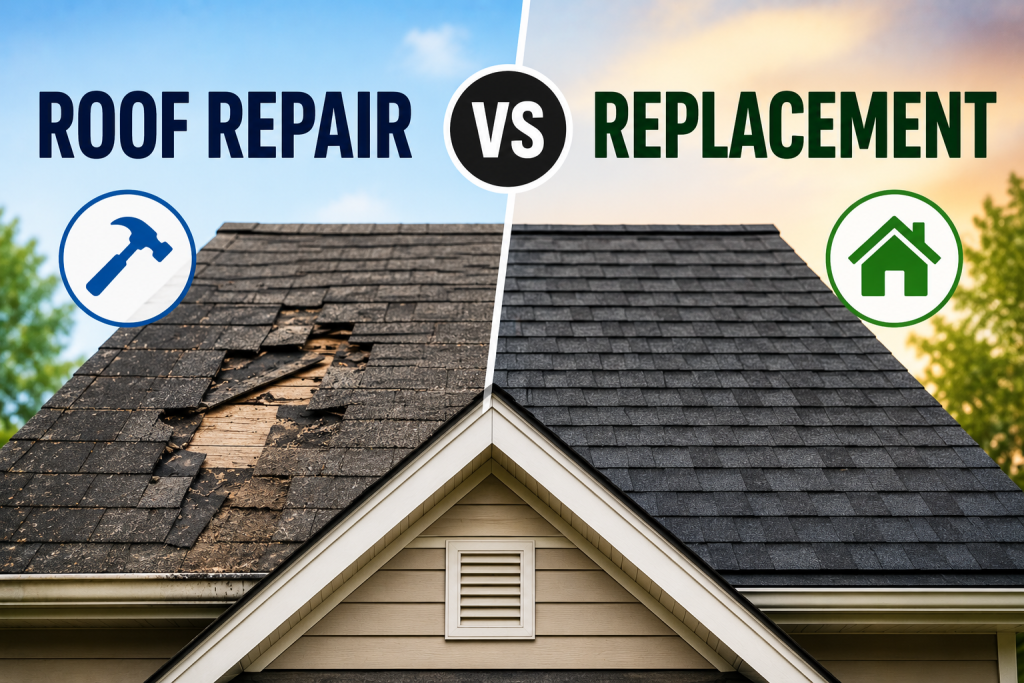
Roof replacement is a larger investment that removes aging or compromised roofing materials and installs a new system designed to restore long-term performance. Replacement may also improve ventilation, efficiency, and curb appeal. Homeowners sometimes compare reroof vs repair when exploring options. Reroofing generally adds a new layer over an existing roof under limited conditions, while repair targets specific problem areas without changing the full system. A practical decision should consider roof age, remaining service life, and expected ownership horizon.
Signs Roof Repair May Be the Smarter Choice
Not every roofing problem requires a full replacement. In many situations, targeted repairs can restore performance and extend usable life without the cost of rebuilding the entire system. When evaluating roof repair vs replacement, repair is often the better choice when damage is limited to a small section, the roof is relatively young, and the underlying decking remains in good condition. Common examples include a few missing shingles, minor flashing failures around vents, isolated leaks, or weather-related surface damage.
After severe weather events, homeowners should also evaluate storm damage roofing carefully before assuming replacement is necessary. Wind and hail can create visible damage that appears extensive but may still qualify for localized correction. Another option worth discussing with a contractor is partial roof replacement, which can address one damaged area while preserving the remaining roof. This approach may work best when the existing roof still has meaningful service life left. For homeowners focused on preserving value while controlling short-term spending, repairs can often be the more efficient first step.
Signs It’s Time to Replace Your Roof Instead
There comes a point when repairs stop delivering meaningful value and replacement becomes the smarter long-term investment. Recognizing that point early can prevent repeated expenses and reduce the risk of hidden structural damage. If your roof is approaching the end of its expected lifespan, shows widespread granule loss, has recurring leaks, or displays signs of sagging, replacement should move higher on the list of options. Multiple repair visits over a short period often indicate that underlying materials are wearing out rather than failing in isolated areas.
One of the most overlooked factors in roof repair vs replacement is total ownership cost. A new roof may reduce future maintenance demands, improve insulation performance, and strengthen resale positioning. Many homeowners also consider the long-term roof replacement benefits, especially when planning to stay in the home for years or preparing for a future sale. Updated roofing can improve curb appeal, support insurance discussions, and create greater confidence during inspections.
Cost Comparison , Repair vs Replacement
For many homeowners, cost is the factor that drives the final decision. However, evaluating only the initial price can lead to expensive outcomes later. Small repairs may cost a fraction of a replacement project and can make sense when the roof still has strong remaining life. Typical repair work includes replacing shingles, sealing penetrations, and correcting localized leaks. Understanding local labor rates and roofing repair costs helps create a more accurate budget instead of relying on national averages alone. Complete replacement requires a larger upfront investment but may lower long-term maintenance expenses and reduce the likelihood of repeated service calls.
| Project Type | Typical Scope | Long-Term Impact |
| Minor Repair | Isolated damage | Extends short-term life |
| Major Repair | Multiple localized issues | Moderate lifespan extension |
| Full Replacement | Entire roofing system | Resets roof lifecycle |
When considering roof repair vs replacement, homeowners should compare total ownership cost over the next 10–15 years rather than only the next invoice.
Climate Matters More Than Most Homeowners Realize
Roofing decisions are not the same across the United States. Regional weather patterns can dramatically change whether repair or replacement delivers better value. In Florida, hurricane exposure and moisture can accelerate deterioration and make recurring repairs less practical. Texas homeowners often deal with intense sun and hail, while Colorado roofs experience repeated impact stress. In northern states, freeze–thaw cycles can shorten material life by allowing moisture to expand inside vulnerable areas.
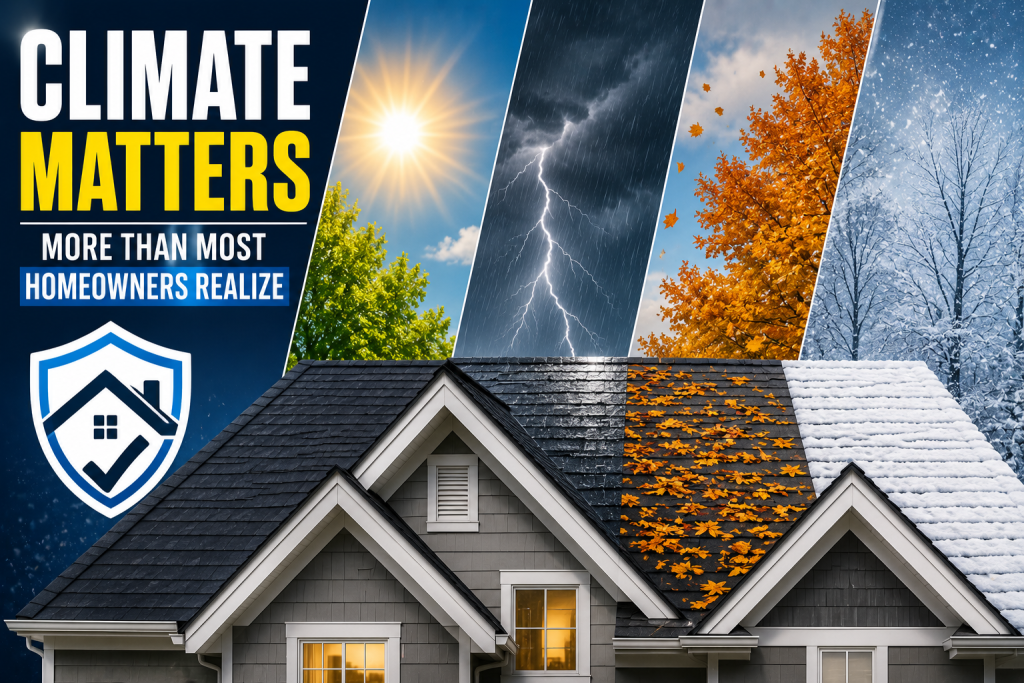
These local conditions are why homeowners should review available roofing restoration options before committing to a full replacement. In some climates, restoration and targeted repairs can preserve performance for several additional years. A thoughtful roof maintenance comparison should also account for annual upkeep, insurance considerations, expected lifespan, and future weather exposure. The same roofing strategy that performs well in Arizona may not be the right fit for homes in the Midwest or Northeast.
A Simple Homeowner Decision Framework
If you are still uncertain, a structured approach can make the decision easier. Instead of focusing only on project price, evaluate the condition of the entire roofing system. Use these questions as a homeowner checklist:
- Is the damage isolated or spread across multiple areas?
- Is the roof less than 15 years old?
- Have repairs been repeated in the last few years?
- Are there signs of moisture reaching decking or insulation?
- Will improved energy performance create long-term savings?
- Are you planning to sell or stay in the home?
When evaluating roof repair vs replacement, one “yes” answer rarely determines the outcome. Patterns matter more than individual issues. In general, newer roofs with localized damage lean toward repair. Older roofs with recurring problems often justify replacement because the investment may reduce maintenance uncertainty and improve long-term property performance.
Final Verdict
There is no universal answer because every roof reaches decision points differently. The best outcome depends on age, extent of damage, climate conditions, future ownership plans, and the overall condition of the roofing system. For most homeowners, repair makes sense when problems are isolated, the roof still has meaningful service life, and corrective work can prevent additional deterioration. Replacement becomes easier to justify when repairs become repetitive, performance declines, or the roof approaches the end of its expected lifespan.
The goal should not be choosing the cheapest option, it should be selecting the option that creates the strongest long-term value. When deciding between roof repair vs replacement, think beyond immediate project pricing and evaluate maintenance exposure, insurance considerations, energy performance, and resale impact. A thoughtful decision today can help avoid larger expenses and provide greater confidence in your home over the years.
Frequently Asked Questions
Is it cheaper to repair or replace a roof?
Roof repair is usually less expensive upfront because it addresses isolated issues instead of rebuilding the entire roofing system. However, replacement may provide better long-term value if repairs become frequent or the roof is nearing the end of its lifespan. Homeowners should compare expected future expenses rather than only immediate project cost.
Can you replace only part of a roof?
Yes, replacing only one section may be possible when damage is localized, and surrounding materials remain in good condition. Matching existing roofing materials and maintaining consistent performance are important considerations before moving forward.
How many repairs before roof repair vs replacement becomes the better decision?
There is no fixed number, but repeated repairs over a short period often indicate broader deterioration. When deciding on roof repair vs replacement, homeowners should look for patterns of recurring issues rather than counting repair visits. If problems continue to appear in different areas or costs begin to add up, replacement may become the more practical long-term solution.
Does homeowners insurance cover roof replacement or affect roof repair vs replacement decisions?
Coverage depends on the cause of damage and policy terms. Insurance may help pay for roof replacement after covered events such as wind, hail, or severe storms. When evaluating roof repair vs replacement, homeowners should review policy details carefully because damage caused by age, wear, or neglected maintenance is commonly excluded.
How long does a typical residential roof last?
Roof lifespan depends on material, installation quality, ventilation, and climate. Asphalt shingle roofs commonly last around 20–30 years, while metal and premium roofing systems may last significantly longer with proper maintenance.
Does replacing a roof increase home value?
A new roof can improve curb appeal, strengthen buyer confidence, and reduce concerns during inspections. While replacement does not always return full project cost immediately, it may support resale positioning and improve overall marketability.