


Exterior Paint vs Stain: Which Is Better for Your Home?
Choosing between paint and stain is one of the most important decisions homeowners make when updating their home’s exterior. The debate over exterior paint vs stain goes beyond appearance—it also affects durability, maintenance, weather protection, and long-term costs. While paint creates a solid protective coating that hides imperfections, stain penetrates the surface to enhance the natural beauty of wood while providing a more subtle finish.
The best option depends on your home’s exterior material, local climate, and maintenance preferences. Whether you’re updating wood siding, refinishing a deck, or restoring exterior trim, understanding the strengths and limitations of each product can help you make a confident decision. This guide compares exterior paint vs stain, explains where each performs best, and provides practical recommendations to help you choose the right finish for long-lasting protection and curb appeal.
Exterior Paint vs Stain: What’s the Difference?
Understanding the difference between paint and stain is the first step in choosing the right finish for your home. In an exterior paint vs stain comparison, paint forms a protective coating on the surface, completely covering the material beneath it. This creates a uniform appearance while providing excellent resistance to moisture, UV rays, and weather exposure. Stain, on the other hand, penetrates the wood instead of covering it, allowing the natural grain and texture to remain visible while offering protection from the elements.
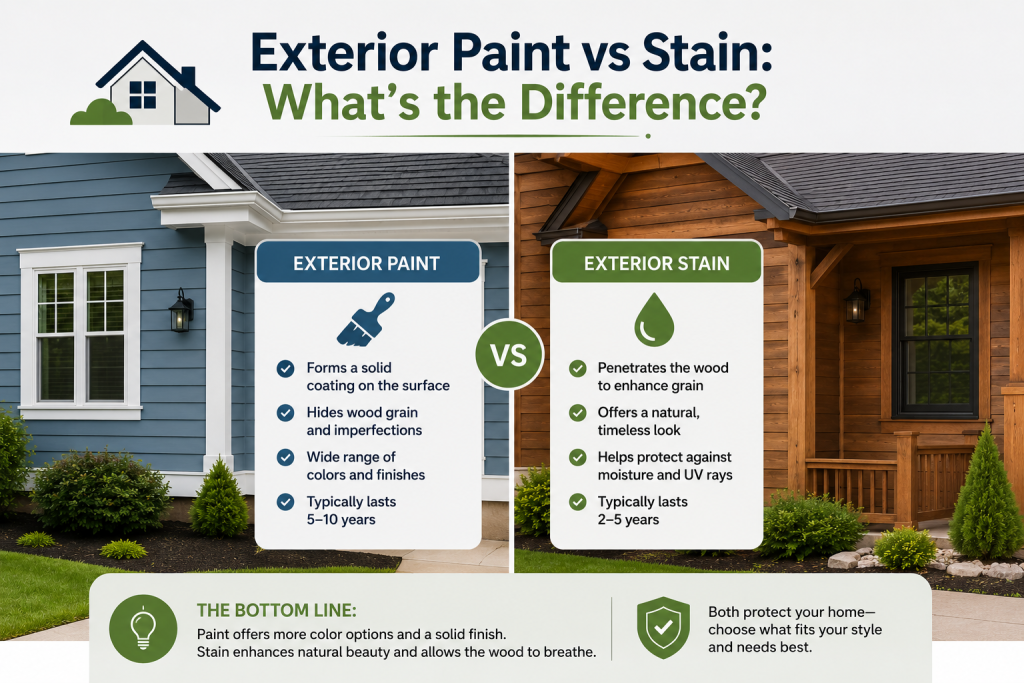
The right choice often depends on the surface being treated and your long-term maintenance goals. An exterior coating comparison shows that paint is generally better for homeowners seeking maximum durability and a wide range of color options, while stain is ideal for preserving the natural look of wood. Both finishes can perform well when applied correctly, but each offers unique advantages depending on the project’s requirements.
Pros and Cons of Exterior Paint
Exterior paint is a popular choice because it provides a durable, protective barrier against moisture, sunlight, and changing weather conditions. In an exterior paint vs stain comparison, paint generally offers better coverage, hides imperfections, and is available in a wide range of colors and finishes. It is especially effective for homeowners looking for a long-lasting exterior finish that enhances curb appeal while protecting siding, trim, and other exterior surfaces from premature wear.
However, paint also has some drawbacks. Over time, it may crack, blister, or peel if the surface is not properly prepared or if moisture becomes trapped beneath the coating. Repainting often requires scraping loose paint, sanding, and priming before applying a new finish, making painted siding maintenance more labor-intensive than maintaining stained wood. Despite these considerations, quality exterior paint remains one of the most durable options for long-term protection and visual appeal.
Pros and Cons of Exterior Stain
Exterior stain is designed to penetrate wood rather than form a thick surface coating, making it an excellent choice for homeowners who want to preserve the natural texture and grain of their exterior wood. One of the biggest stain benefits is that it allows moisture to escape more easily, reducing the likelihood of peeling or blistering over time. Stain is commonly used on wood siding, decks, fences, and other outdoor structures where maintaining a natural appearance is a priority.
Although stain offers easier maintenance than paint, it generally provides less protection against harsh weather and UV exposure. In an exterior paint vs stain comparison, stained surfaces often require more frequent reapplication, particularly in areas exposed to intense sunlight or heavy rain. While stain is ideal for highlighting the beauty of natural wood, homeowners seeking maximum durability and long-term color retention may find paint to be the better choice for certain exterior applications.
Paint vs. Stain for Different Exterior Surfaces
The best finish depends on the surface you’re protecting. For wood siding, paint offers superior durability and longer-lasting color, while stain highlights the wood’s natural character and is easier to maintain. When comparing paint vs stain siding, homeowners should consider the age and condition of the wood. Older siding with visible imperfections often benefits from paint, whereas newer cedar or redwood siding is well suited for stain that enhances the wood grain.
Decks, fences, and exterior trim also have different requirements. In a deck stain vs paint comparison, stain is usually the preferred choice because it penetrates the wood, reducing the risk of peeling on high-traffic surfaces. Paint can become slippery and may chip over time when exposed to foot traffic and changing weather. Choosing the right finish for each exterior surface improves wood siding protection, extends service life, and helps reduce future maintenance costs.
Exterior Paint vs Stain: Which Lasts Longer?
When comparing durability, paint generally lasts longer than stain on most exterior surfaces. A high-quality exterior paint job can last 8 to 15 years, depending on the climate, surface preparation, and paint quality. Exterior stain typically lasts 3 to 7 years, although premium solid stains may perform longer under favorable conditions. In an exterior paint vs stain comparison, paint usually provides stronger resistance to moisture, UV rays, and harsh weather, making it the better choice for homeowners seeking a long-lasting exterior finish.
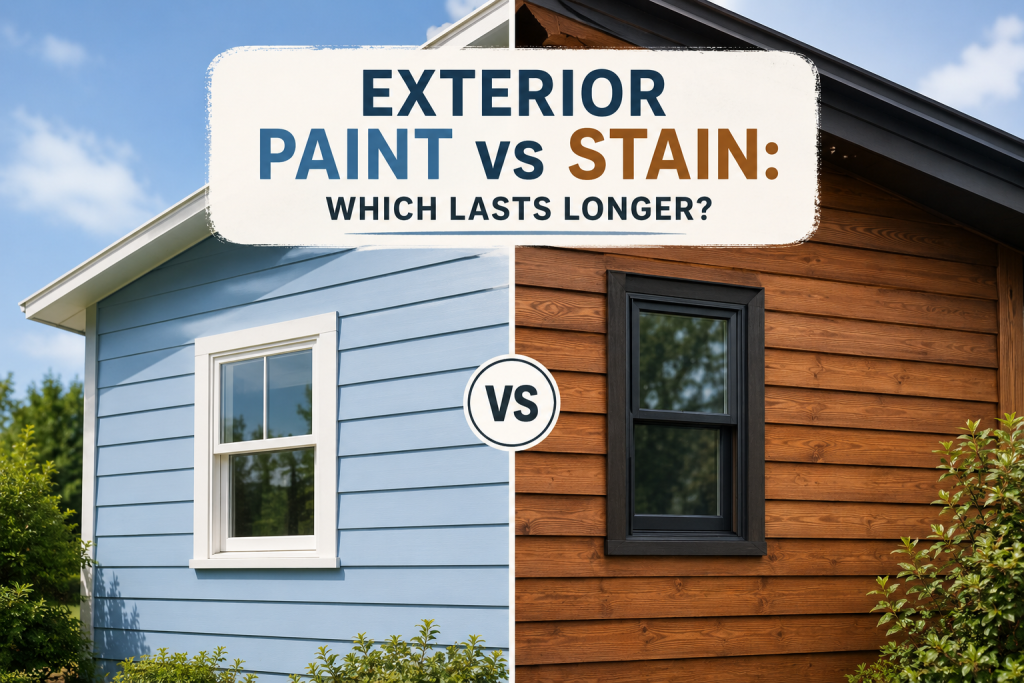
However, longevity is only one part of the decision. While paint lasts longer, it often requires more extensive preparation when it’s time to repaint because peeling or cracked coatings must be removed. Stain gradually fades instead of peeling, making maintenance simpler and less labor-intensive. Choosing the right finish depends on the surface, local climate, and how much maintenance you’re willing to perform over the years.
Which Option Is Better for Your Home?
The best choice ultimately depends on your home’s exterior materials, desired appearance, and long-term maintenance preferences. If you want maximum durability, a wide selection of colors, and strong weather protection, exterior paint is often the better option. It works especially well on older wood siding and homes where hiding imperfections is a priority. Homeowners seeking a clean, uniform finish generally prefer paint because it offers excellent protection and long-lasting curb appeal.
If preserving the natural beauty of wood is your goal, exterior stain is usually the better investment. Stain enhances the wood grain, is easier to maintain, and requires less intensive preparation during future reapplications. An exterior coating comparison also shows that stain is ideal for cedar siding, decks, fences, and other natural wood surfaces where appearance is just as important as protection. By evaluating your home’s condition, climate, and maintenance expectations, you can confidently choose the finish that provides the best balance of performance, appearance, and long-term value.
Conclusion
Choosing between exterior paint vs stain depends on your home’s exterior materials, desired appearance, and long-term maintenance expectations. Paint offers outstanding durability, weather resistance, and color variety, while stain highlights the natural beauty of wood and simplifies future maintenance. By understanding the strengths of each option and matching the finish to the appropriate surface, homeowners can protect their investment, improve curb appeal, and enjoy an exterior that looks great for years to come.
Frequently Asked Questions
In an Exterior Paint vs Stain Comparison, Which Is Better for Wood Siding?
An exterior paint vs stain comparison shows that the best choice depends on the condition of the wood and your long-term maintenance goals. Paint provides superior durability, weather resistance, and coverage, making it an excellent option for older siding or surfaces with visible imperfections. Stain, on the other hand, preserves the natural wood grain and is easier to maintain, making it ideal for newer cedar or redwood siding. For homeowners prioritizing wood siding protection, selecting the right finish depends on both the appearance they want to achieve and the level of maintenance they are willing to perform.
Does paint last longer than exterior stain?
Yes. High-quality exterior paint generally lasts 8 to 15 years, while exterior stain typically lasts 3 to 7 years, depending on climate, surface preparation, and product quality.
Should I paint or stain my deck?
For most wooden decks, stain is the better option. In a deck stain vs paint comparison, stain penetrates the wood, reducing the risk of peeling and making future maintenance easier. Paint may chip or peel more quickly on surfaces exposed to heavy foot traffic.
Is stain easier to maintain than paint?
Yes. One of the biggest stain benefits is that it gradually fades rather than peeling. Reapplying stain usually requires less preparation than repainting, which often involves scraping and sanding loose paint.
Can you stain over painted wood?
No. Stain needs to penetrate bare wood to perform properly. If a surface has already been painted, the paint must be completely removed before stain can be applied successfully.
Which lasts longer: exterior paint or stain?
In most cases, exterior paint lasts longer than stain because it forms a thicker protective layer. Paint typically lasts 8–15 years, while stain usually lasts 3–7 years depending on climate, surface type, and maintenance.
Is paint or stain better for wood siding and decks?
Paint is better for full coverage and long-term protection on siding, while stain is preferred for wood surfaces like decks and fences because it penetrates the wood and reduces peeling or flaking risks.