


The Ultimate Roofing Guide: Everything Homeowners Need to Know
A roof is one of the most important investments a homeowner can make. It protects your property from rain, snow, wind, hail, and extreme temperatures while also contributing to energy efficiency, curb appeal, and long-term home value. Whether you’re building a new house, planning a replacement project, or simply learning more about your roof, understanding how modern roofing systems work can help you make informed decisions. This roofing guide is designed to help American homeowners navigate every stage of the roofing process. From selecting the right materials and understanding installation requirements to maintaining your roof and recognizing when replacement becomes necessary, each step plays a role in protecting your investment.
Today’s roofing industry offers a wide range of options, including asphalt shingles, metal roofing, clay tiles, and synthetic products from manufacturers such as GAF, Owens Corning, and CertainTeed. The best choice often depends on your local climate, budget, maintenance expectations, and long-term goals. By following this roofing guide, you’ll gain a clearer understanding of what makes a roofing system durable, efficient, and well-suited to your home’s needs.
What Is a Roofing System?
A roof is more than just the visible covering on top of a house. Modern home roofing systems consist of multiple components working together to protect the structure from moisture, weather damage, and temperature fluctuations. Understanding these layers helps homeowners evaluate roof performance and make smarter renovation decisions.
Core Components Every Homeowner Should Understand
Most roofing systems include roof decking, underlayment, flashing, ventilation components, and the exterior roofing material. The decking serves as the structural base, while underlayment provides an additional moisture barrier. Flashing is installed around chimneys, skylights, and roof valleys to prevent water intrusion. Proper attic ventilation helps regulate temperature and reduce moisture buildup, which can extend the life of the entire roofing assembly. Manufacturers such as GAF, CertainTeed, and Owens Corning design complete roofing systems that are engineered to work together for maximum durability and warranty protection.
How Different Home Roofing Systems Protect Your Property
Different roof designs and material combinations provide varying levels of protection. Homes in Florida may prioritize impact resistance and wind performance, while properties in northern states often require roofing systems that can withstand heavy snow loads and freeze-thaw cycles. A well-designed roof helps prevent leaks, improves indoor comfort, and contributes to lower energy costs over time. As this roofing guide will explain throughout the article, selecting the right roofing system involves balancing climate conditions, performance expectations, and long-term maintenance requirements.
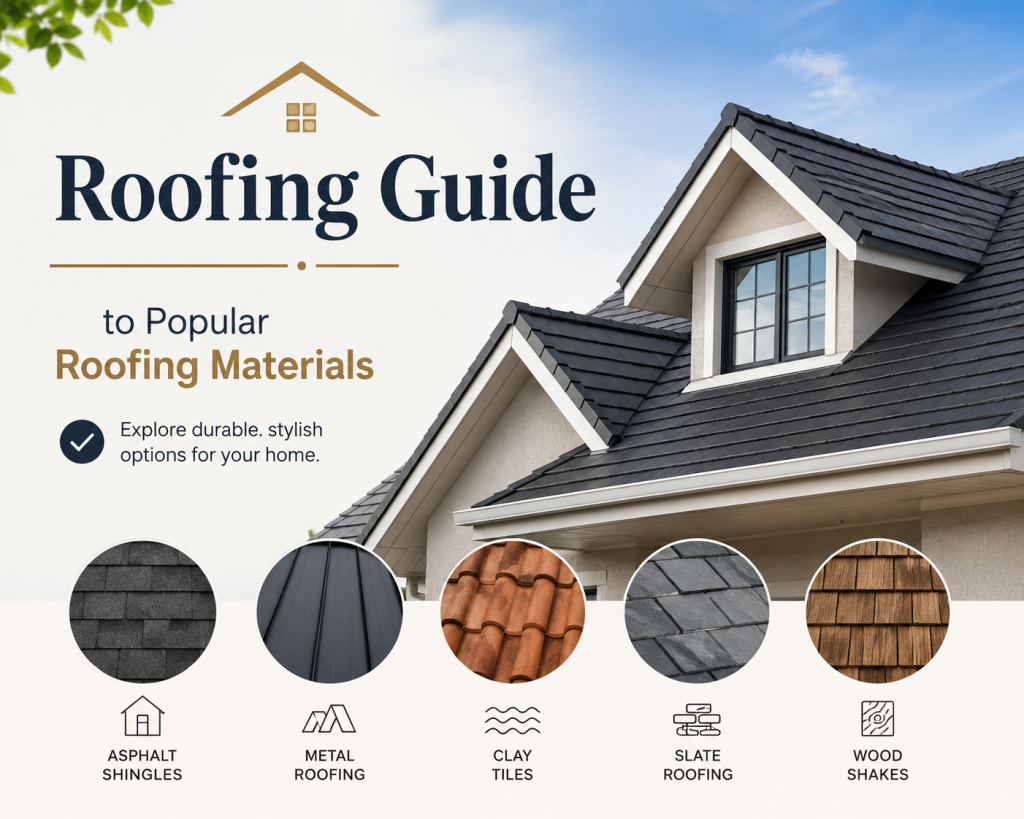
Roofing Guide to Popular Roofing Materials
Choosing the right roofing materials is one of the most important decisions homeowners face. Material selection affects durability, maintenance requirements, energy efficiency, appearance, and overall project cost. While many products are available, the best choice depends on your climate, budget, and long-term goals.
Asphalt Shingles vs Metal Roofing
Asphalt shingles remain the most widely used roofing option in the United States because they offer a balance of affordability, performance, and design flexibility. Many homeowners choose architectural shingles from brands like GAF and Owens Corning for their durability and curb appeal. Metal roofing has gained popularity in states such as Texas, Arizona, and Colorado due to its exceptional longevity and energy efficiency. Properly installed metal roofs can last 40 to 70 years and often perform well in areas exposed to high winds, intense sunlight, and severe weather conditions.
Slate, Tile, and Premium Roofing Options
Homeowners seeking premium performance may consider slate, clay tile, or synthetic roofing products. Natural slate can last more than a century when properly maintained, while clay tile performs exceptionally well in warm climates such as Florida and Southern California. This roofing guide recommends evaluating lifespan, maintenance expectations, local weather conditions, and structural requirements before selecting a roofing material. The most expensive option is not always the best fit for every home, especially when long-term ownership goals vary from one homeowner to another.
Roofing Guide for Roof Installation Planning
Proper planning can significantly improve the outcome of any roofing project. Before work begins, homeowners should understand project timelines, material delivery requirements, permit considerations, and contractor expectations. Careful preparation helps reduce delays, avoid unexpected costs, and ensure a smoother experience from start to finish.
Preparing Your Home for a New Roof
A successful roof installation begins long before the first shingle is placed. Homeowners should clear driveways, move outdoor furniture, protect attic belongings, and communicate with neighbors about upcoming construction activity. It’s also important to review warranties, insurance coverage, and local building requirements. Many roofing professionals recommend scheduling projects during favorable weather conditions whenever possible. This helps reduce the risk of moisture exposure and installation interruptions.
Common Roof Installation Mistakes to Avoid
One of the most common mistakes is focusing solely on material costs while overlooking ventilation, flashing quality, and underlayment performance. Improper installation of these components can lead to leaks, reduced energy efficiency, and premature roof failure. Another frequent issue is hiring contractors without verifying licenses, insurance coverage, or local experience. Throughout this roofing guide, one key theme remains consistent: quality workmanship is just as important as selecting the right materials. Even premium roofing products may underperform when installation standards are not followed correctly.
Choosing the Best Residential Roofing Solution
Selecting the right residential roofing system requires more than comparing product prices. Homeowners should consider regional weather patterns, expected lifespan, maintenance needs, energy performance, and future resale value. A roofing system that performs exceptionally well in one part of the country may not be the ideal solution elsewhere.
Roofing Recommendations by Climate Region
Climate plays a major role in roofing performance. In hurricane-prone states such as Florida and Louisiana, impact-resistant shingles and metal roofing systems are often preferred because of their wind resistance. In northern regions like Minnesota and Michigan, homeowners typically prioritize materials that can withstand snow accumulation and freeze-thaw cycles. Homes located in hot climates such as Arizona, Nevada, and Texas often benefit from reflective roofing products that help reduce cooling costs and improve energy efficiency during the summer months.
Matching Roofing Materials to Your Budget
Budget planning should focus on long-term value rather than upfront cost alone. Asphalt shingles generally provide the most affordable entry point, while metal, slate, and tile roofing options require larger initial investments but may deliver longer service lives. As highlighted throughout this roofing guide, the best roofing choice balances cost, durability, climate suitability, and maintenance expectations. Evaluating all of these factors together can help homeowners avoid costly mistakes and maximize their return on investment.
Roofing Replacement Guide for Aging Roofs
Every roof eventually reaches the end of its service life. While regular maintenance can extend longevity, aging materials, severe weather exposure, and structural wear may eventually require a full replacement. Understanding the warning signs can help homeowners act before minor issues become expensive repairs.
Warning Signs You Need Roof Replacement
A quality roofing replacement guide starts with recognizing common indicators of roof failure. Missing shingles, recurring leaks, sagging roof sections, excessive granule loss, and visible daylight in the attic are often signs that a roof is nearing the end of its useful life. Homeowners should also pay attention to rising energy bills, moisture stains on ceilings, and storm-related damage. In many cases, these problems indicate deeper roofing issues that may not be visible from the ground.
Repair vs Replacement Decision Factors
Not every roofing problem requires a complete replacement. Isolated damage affecting a small area may be addressed through repairs when the overall roofing system remains in good condition. However, repeated repairs on an older roof often become less cost-effective over time. As this roofing guide emphasizes, replacement decisions should be based on roof age, damage severity, long-term costs, and future homeownership plans. Investing in a replacement at the right time can improve protection, enhance curb appeal, and increase property value while reducing the risk of unexpected repair expenses.
Essential Roof Maintenance Tips
Routine maintenance is one of the most effective ways to extend the lifespan of a roof and protect a home’s structural integrity. Consistent inspections and timely repairs can help homeowners identify minor issues before they develop into costly problems that require extensive work.
Seasonal Roof Inspection Checklist
Following practical roof maintenance tips throughout the year can significantly improve roof performance. Homeowners should inspect shingles for damage, check flashing around roof penetrations, clear debris from valleys, and ensure gutters are functioning properly. Spring and fall are often ideal times to perform visual inspections because weather conditions are generally less extreme. After major storms, homeowners should also look for signs of wind damage, hail impacts, or displaced roofing materials that may compromise the roof’s ability to shed water effectively.
Preventing Water Damage and Ventilation Issues
Proper attic ventilation plays a critical role in maintaining roof health. Poor airflow can lead to moisture buildup, mold growth, wood rot, and premature roofing deterioration. Adequate intake and exhaust ventilation help regulate attic temperatures while reducing excess humidity. Throughout this roofing guide, one recurring principle remains clear: preventive maintenance is usually far less expensive than major repairs or premature replacement. A proactive approach can help homeowners maximize roof performance and avoid unnecessary expenses over the long term.
Roofing Contractor Tips for Homeowners
Hiring the right roofing professional is one of the most important decisions in any roofing project. Even the highest-quality materials may fail to deliver expected performance if they are installed incorrectly. Taking time to evaluate contractors carefully can help homeowners avoid costly mistakes and ensure a successful outcome.
Questions to Ask Before Hiring
Reliable roofing contractor tips begin with asking the right questions. Homeowners should verify licensing, insurance coverage, local experience, manufacturer certifications, and warranty details before signing a contract. Requesting references and reviewing completed projects can also provide valuable insight into a contractor’s workmanship and reputation. It is equally important to obtain a detailed written estimate outlining materials, labor costs, project timelines, cleanup responsibilities, and warranty coverage.
Red Flags During Contractor Selection
Contractors who demand large upfront payments, refuse to provide proof of insurance, or pressure homeowners into immediate decisions should be approached with caution. Unusually low bids may also indicate the use of substandard materials or shortcuts during installation. As emphasized throughout this roofing guide, selecting a qualified contractor is an investment in the long-term performance of your roof. A reputable professional will communicate clearly, follow local building codes, and provide transparent documentation that protects both the homeowner and the project.
Roofing Costs and Long-Term Value
Roofing costs can vary significantly depending on material selection, roof size, labor rates, geographic location, and project complexity. While many homeowners focus on upfront expenses, evaluating long-term value often leads to better financial decisions and greater satisfaction with the final investment.

Factors That Affect Roofing Costs
Several factors influence the total cost of a roofing project. Roof pitch, accessibility, structural repairs, ventilation upgrades, and material quality all contribute to pricing. Premium options such as slate and metal roofing generally cost more initially than asphalt shingles, but they may offer longer service lives and reduced maintenance requirements. As highlighted in this roofing guide, local labor markets can also impact project budgets. Roofing projects in major metropolitan areas often involve higher labor costs compared to smaller communities and rural regions.
How Roofing Impacts Home Value
A well-maintained roof can enhance curb appeal, improve energy efficiency, and increase buyer confidence during a home sale. Many prospective buyers view a newer roof as a valuable feature because it reduces the likelihood of immediate repair expenses after purchase. As this roofing guide has demonstrated, roofing decisions should be evaluated from both a protection and investment perspective. Choosing durable materials, maintaining the roof properly, and working with qualified professionals can help homeowners maximize long-term value while protecting one of their most important assets.
Conclusion
Choosing the right roof is one of the most important decisions a homeowner can make. From understanding roofing materials and installation requirements to evaluating maintenance needs and replacement timelines, every decision affects your home’s protection, energy efficiency, and long-term value. This roofing guide has covered the essential factors homeowners should consider when planning a roofing project, including climate suitability, material performance, maintenance strategies, and contractor selection. Whether you’re installing a new roof, replacing an aging system, or simply planning for future upgrades, taking a well-informed approach can help you avoid costly mistakes and maximize your investment. A high-quality roofing system does more than shield your home from the elements—it enhances curb appeal, improves comfort, and contributes to long-term property value. By focusing on durable materials, proper installation, and proactive maintenance, homeowners can ensure their roof continues to perform reliably for decades to come.
Frequently Asked Questions
What roofing material lasts the longest?
Natural slate is generally considered the longest-lasting roofing material available. A properly installed slate roof can last more than 100 years, making it one of the most durable roofing options for homeowners. Metal roofing systems can also provide exceptional longevity, often lasting 40 to 70 years with proper maintenance.
How Often Should a Roof Be Inspected?
Most roofing professionals recommend a thorough roof inspection at least once per year. Additional inspections should be performed after severe weather events such as hailstorms, hurricanes, or high-wind conditions. Regular inspections help identify small issues before they develop into expensive repairs.
Is Metal Roofing Worth the Cost?
For many homeowners, metal roofing is a worthwhile long-term investment. Although installation costs are typically higher than asphalt shingles, metal roofs often offer superior durability, energy efficiency, and weather resistance. Their extended lifespan may offset higher upfront expenses over time.
How Much Does Roof Replacement Cost According to This Roofing Guide?
Roof replacement costs vary based on roof size, material selection, labor rates, and regional market conditions. As explained throughout this roofing guide, homeowners should obtain multiple estimates and compare warranties, materials, and contractor qualifications before making a final decision.
Can Homeowners Install Roofing Themselves?
While some experienced homeowners may attempt roofing projects, professional installation is generally recommended. Roofing work involves safety risks, specialized tools, building code requirements, and warranty considerations. Improper installation can result in leaks, structural damage, and costly repairs that outweigh any initial savings.