


Ultimate Vinyl Flooring Guide (Complete US Homeowner Guide)
This vinyl flooring guide is designed to help US homeowners understand one of the most popular and versatile flooring options used in modern residential construction and renovation. Vinyl flooring has evolved significantly over the past decade, moving from basic sheet flooring to high-performance luxury products that closely mimic wood and stone. Today’s vinyl flooring is commonly used in kitchens, bathrooms, basements, and living areas because it offers a strong balance of affordability, water resistance, and design flexibility. Options like luxury vinyl plank (LVP) and luxury vinyl tile (LVT) have become especially popular in home remodeling projects due to their realistic appearance and easy installation.
For homeowners comparing flooring systems, vinyl stands out as a practical alternative to traditional materials, especially when budget and moisture resistance are key concerns. However, performance varies depending on product quality, installation method, and room conditions. This guide breaks down everything you need to know about residential vinyl flooring, from installation and maintenance to durability and real-world applications.
Luxury Vinyl Plank Flooring Explained
Luxury vinyl plank flooring (LVP) is one of the most widely used categories within modern vinyl flooring guide topics because it combines realistic design with practical performance. In US homes, LVP is often chosen as a substitute for hardwood flooring due to its similar appearance and significantly lower cost. LVP is constructed in multiple layers, typically including a backing layer for stability, a core layer for strength, a printed design layer that mimics wood or stone, and a protective wear layer that resists scratches and stains. This layered structure is what gives modern vinyl floors their durability and visual appeal.
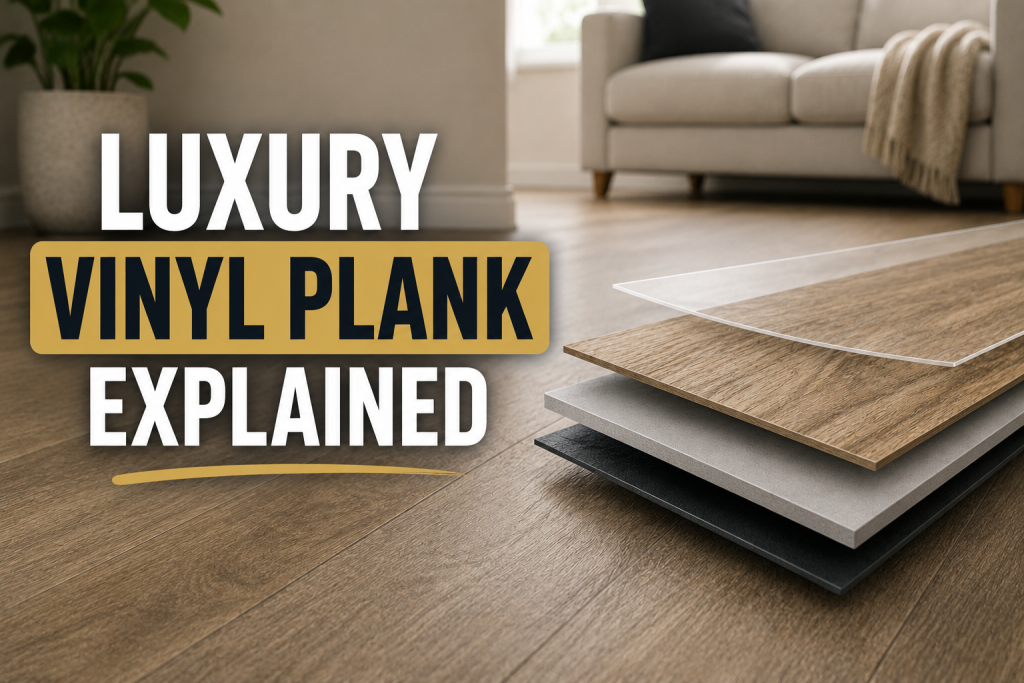
One of the biggest advantages of LVP is its ability to perform well in moisture-prone areas. Many products are fully waterproof, making them suitable for kitchens, bathrooms, and basements where traditional hardwood would fail. It is also softer and warmer underfoot compared to tile, which improves comfort in everyday living spaces. Because of its balance between style, durability, and cost, LVP has become a leading choice in residential vinyl flooring upgrades across the US.
Vinyl Floor Installation Overview
Understanding vinyl floor installation is essential when evaluating the full vinyl flooring guide, especially for homeowners deciding between DIY and professional installation. One of vinyl’s biggest advantages is that it is generally easier and faster to install compared to tile or hardwood, making it a popular choice in US residential remodeling projects. Most modern vinyl floors use a click-lock (floating floor) system, where planks snap together without the need for glue or nails. This method allows installation over many existing subfloors, provided they are clean, level, and dry.
Other installation types include glue-down vinyl, which offers stronger adhesion for high-traffic areas, and peel-and-stick options commonly used for budget-friendly renovations. Proper subfloor preparation is critical. Even minor unevenness can cause shifting, gaps, or premature wear over time. Moisture barriers may also be required in basements or ground-level installations to protect against humidity and water intrusion. Overall, vinyl installation is considered one of the most accessible flooring upgrades for homeowners seeking a balance between affordability and convenience.
Waterproof Vinyl Flooring Performance
Waterproof vinyl flooring is one of the strongest selling points in any modern vinyl flooring guide, especially for US homeowners dealing with kitchens, bathrooms, and basements where moisture exposure is constant. Unlike traditional hardwood or laminate, vinyl is engineered to resist water damage at both the surface and core level. Most modern vinyl floors, particularly luxury vinyl plank (LVP) and luxury vinyl tile (LVT), are designed with waterproof or water-resistant cores such as SPC (stone plastic composite) or WPC (wood plastic composite). These cores prevent water from penetrating the plank, helping protect subfloors from damage and reducing the risk of warping or swelling.
This makes vinyl an excellent option for spill-prone areas like kitchens, laundry rooms, and entryways, where moisture is a daily concern. It also performs well in humid climates where airborne moisture can impact traditional flooring materials. However, while the planks themselves are waterproof, installation quality still matters. Poor seams or unsealed edges can allow water to reach the subfloor, so proper installation is essential for long-term performance in residential vinyl flooring systems.
Residential Vinyl Flooring Guide & Uses in US Homes
Residential vinyl flooring has become a go-to solution in many US homes because it offers flexibility across nearly every room type. In a complete vinyl flooring guide, understanding where vinyl performs best helps homeowners make smarter renovation decisions based on traffic, moisture levels, and comfort needs. In kitchens, vinyl flooring is widely used due to its resistance to spills, stains, and daily wear. It provides a softer surface than tile, making it more comfortable for long periods of standing while cooking. In bathrooms, waterproof vinyl flooring is especially popular because it handles humidity and occasional standing water without damage.
Basements are another major application area, as vinyl performs well in below-grade environments where moisture control is critical. In living rooms and bedrooms, it is often chosen for its quiet underfoot feel and wood-look designs that mimic hardwood at a lower cost. While vinyl is highly versatile, its performance depends on product quality and proper installation. When used correctly, it delivers a balanced combination of durability, comfort, and affordability across most residential spaces.
Modern Vinyl Floors – Styles and Trends
Modern vinyl floors have evolved significantly, making them one of the most design-flexible options in any vinyl flooring guide. Today’s products are engineered not only for performance but also for visual realism, allowing homeowners to achieve high-end looks without the cost of natural materials. One of the biggest trends in residential vinyl flooring is ultra-realistic wood-look planks. These designs replicate oak, maple, and hickory textures with embossed surfaces and natural color variation, making them nearly indistinguishable from real hardwood at first glance. Stone-look vinyl is also growing in popularity, offering the appearance of marble or slate without the maintenance requirements.
Wide planks, matte finishes, and neutral tones are especially popular in US interior design trends, as they create a clean, modern aesthetic that works well in open-concept homes. Additionally, waterproof and scratch-resistant coatings have improved durability without sacrificing style.These design advancements make vinyl a strong competitor in both budget-friendly renovations and mid-range home upgrades where appearance and practicality must work together.
Vinyl Flooring Maintenance Tips
Proper vinyl flooring maintenance is one of the key reasons homeowners choose vinyl in a complete vinyl flooring guide, especially for busy US households that need low-effort cleaning and long-term durability. While vinyl is known for being easy to maintain, consistent care helps extend its lifespan and preserve its appearance. Routine cleaning typically involves simple sweeping or vacuuming to remove dust, dirt, and grit that can dull the surface over time. A damp mop with a mild, non-abrasive cleaner is usually enough to maintain a clean finish. Unlike hardwood, vinyl does not require polishing, sanding, or sealing, which significantly reduces long-term maintenance effort.
One important consideration is avoiding harsh chemicals or abrasive scrubbers, which can damage the wear layer and reduce resistance to scratches and stains. Protective pads under furniture can also help prevent dents or surface impressions in high-use areas. Overall, residential vinyl flooring is designed for convenience, making it one of the lowest-maintenance flooring options available for modern homes.
Affordable Flooring Options Comparison
When evaluating affordable flooring options, vinyl consistently ranks as one of the most cost-effective choices in a full vinyl flooring guide, especially for US homeowners planning renovations on a budget. Its affordability comes from both lower material costs and reduced installation expenses compared to tile or hardwood. Luxury vinyl plank (LVP) and sheet vinyl offer different price points depending on quality, thickness, and design features. Entry-level vinyl is extremely budget-friendly, making it ideal for rental properties or quick home updates, while premium modern vinyl floors with thicker wear layers and realistic textures sit in the mid-range price category.
Installation also plays a major role in overall cost savings. Many residential vinyl flooring systems use click-lock installation, which can reduce or eliminate professional labor costs if homeowners choose DIY installation. This makes vinyl especially attractive for large surface areas like basements or open-plan living spaces. While vinyl is inexpensive upfront, it also delivers solid long-term value when properly maintained, balancing affordability with durability better than many traditional flooring alternatives.
Where Vinyl Flooring Works Best (Room Guide)
Choosing where to install flooring is a key part of any vinyl flooring guide, and residential vinyl flooring performs best when matched to the right room conditions. Vinyl is designed for versatility, but its real strength shows when used in moisture-prone, high-traffic, or comfort-focused areas of the home. In kitchens, vinyl is an excellent choice due to its resistance to spills, stains, and heavy daily use. It provides a softer and warmer surface compared to tile, making it more comfortable for long cooking sessions.
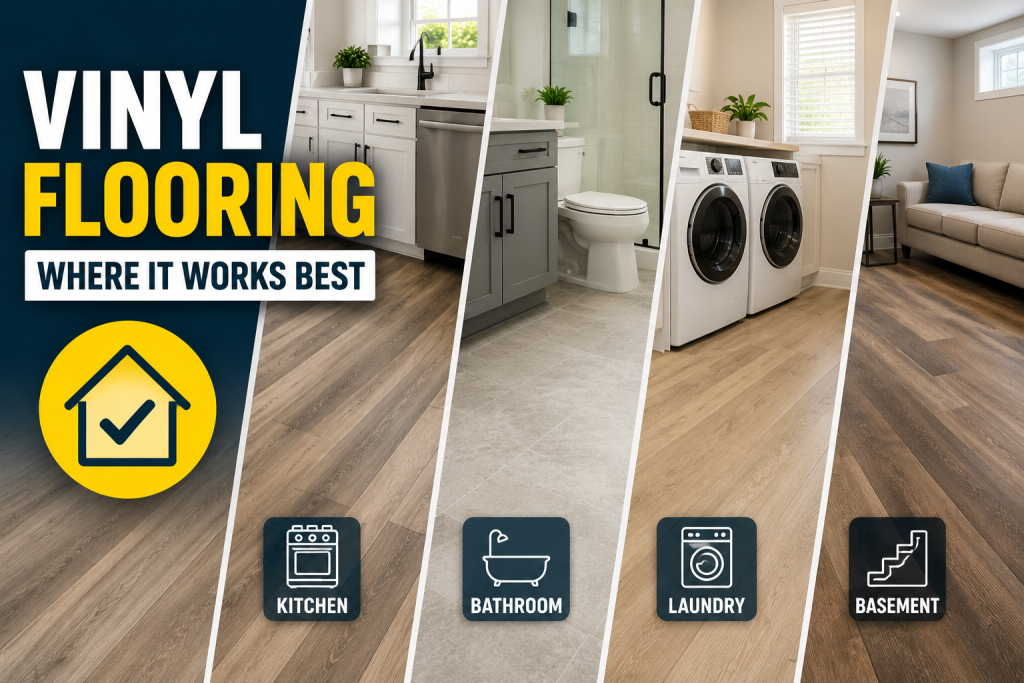
Bathrooms also benefit from waterproof vinyl flooring, especially in spaces where humidity and splashes are constant. Basements are another ideal application because vinyl performs well in below-grade environments where moisture levels are higher. Its waterproof structure helps protect against potential water intrusion and seasonal humidity changes. For living rooms and bedrooms, modern vinyl floors are popular because they offer a quiet, comfortable surface and realistic wood-look designs. However, in extremely high-traffic commercial-like areas, higher-end wear layers are recommended for long-term durability.
Final Verdict
Deciding whether vinyl is the right choice comes down to balancing budget, performance, and long-term expectations within your vinyl flooring guide decision process. For many US homeowners, residential vinyl flooring offers one of the most practical combinations of affordability, water resistance, and design flexibility available today. If your priority is cost-effective renovation, vinyl stands out as one of the best affordable flooring options, especially for large areas like basements, kitchens, and open living spaces. Its waterproof properties also make it a strong performer in bathrooms and humid climates where traditional materials may struggle.
However, vinyl does have limitations. While modern vinyl floors are durable, they are not as long-lasting as tile or hardwood in extreme high-traffic environments. Heavy furniture, sharp impacts, or poor installation can also reduce lifespan over time. Overall, vinyl is an excellent choice for homeowners seeking a low-maintenance, stylish, and budget-friendly flooring solution. When properly installed and maintained, it delivers strong value for most residential applications.
FAQs
What is included in a vinyl flooring guide?
A complete vinyl flooring guide covers types, installation methods, waterproof performance, maintenance, and cost considerations for homeowners.
Is luxury vinyl plank flooring better than sheet vinyl?
Luxury vinyl plank flooring is generally more durable and realistic in appearance, while sheet vinyl is more affordable and easier to install in large areas.
How difficult is vinyl floor installation?
Vinyl floor installation is considered easy to moderate, especially with click-lock systems that allow DIY installation over properly prepared subfloors.
Is waterproof vinyl flooring really waterproof?
Yes, waterproof vinyl flooring is designed to resist surface water and prevent damage, making it ideal for kitchens, bathrooms, and basements.
Where is residential vinyl flooring best used?
Residential vinyl flooring works best in kitchens, bathrooms, basements, and living areas due to its durability and moisture resistance.
What are modern vinyl floors made of?
Modern vinyl floors are made of layered synthetic materials, often including SPC or WPC cores for strength and water resistance.
How do you maintain vinyl flooring?
Vinyl flooring maintenance includes regular sweeping, damp mopping, and avoiding harsh chemicals or abrasive cleaning tools.