


Vinyl vs Laminate Flooring Comparison (Complete US Homeowner Guide)
The vinyl vs laminate flooring debate is one of the most common decisions US homeowners face when planning a flooring upgrade. Both options are popular in residential construction because they offer affordable alternatives to hardwood while still delivering attractive wood-look flooring designs. At a high level, vinyl flooring is made from synthetic materials designed for flexibility and moisture resistance, while laminate flooring is built around a fiberboard core topped with a photographic wood layer. This structural difference plays a major role in how each performs in real-world conditions.
Homeowners typically compare these two flooring types based on durability, water resistance, installation ease, and long-term maintenance. For example, vinyl is often preferred in moisture-prone areas like kitchens and bathrooms, while laminate is frequently chosen for bedrooms and living rooms due to its rigid feel and realistic wood appearance. This guide breaks down the full durable flooring comparison, helping you choose the best option based on performance, cost, and room-specific needs.
Waterproof Flooring Comparison Explained
A key factor in the vinyl vs laminate flooring decision is moisture resistance, making the waterproof flooring comparison one of the most important parts of the buying process for US homeowners. While both materials can handle everyday spills, their long-term response to water is very different. Vinyl flooring is naturally water-resistant and, in many cases, fully waterproof. Its synthetic construction prevents water from penetrating the surface or damaging the core, which makes it a strong choice for kitchens, bathrooms, laundry rooms, and basements. This is why vinyl is often recommended in homes where humidity or spills are common.
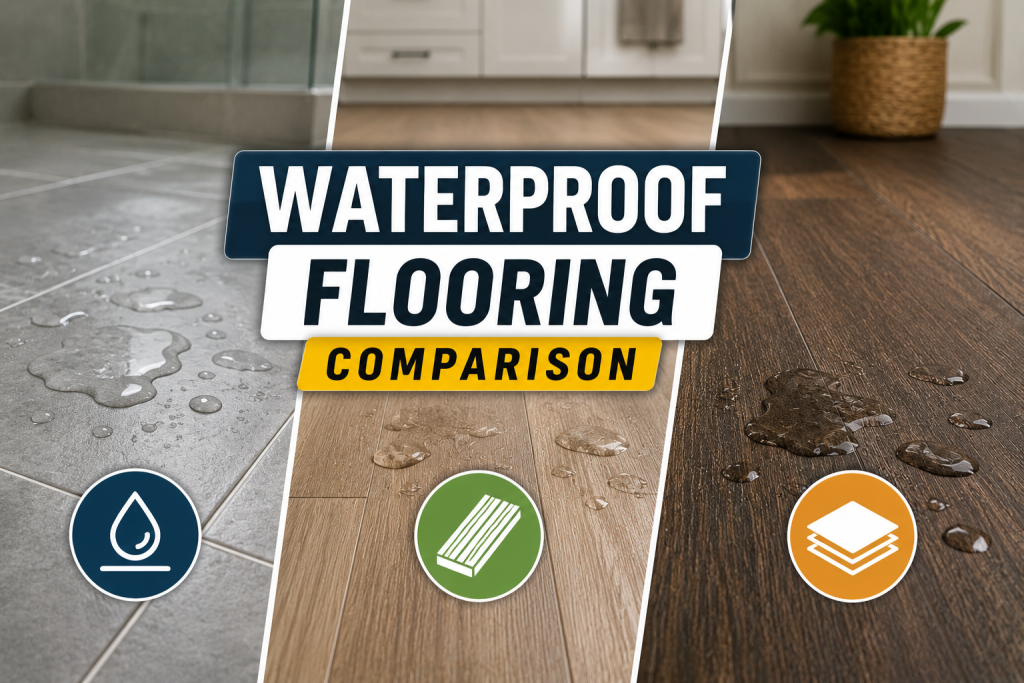
Laminate flooring, on the other hand, is more vulnerable to moisture. Its fiberboard core can absorb water if spills are not cleaned quickly, leading to swelling, warping, or edge damage over time. While some newer laminate products offer improved water resistance, they still generally do not match vinyl in wet environments. Because of this difference, moisture performance is often the deciding factor for homeowners comparing these two flooring types in real residential settings.
Vinyl Flooring Pros and Cons
When evaluating vinyl vs laminate flooring, understanding the vinyl flooring pros and cons helps homeowners make a practical decision based on real-world performance rather than appearance alone. Vinyl flooring is widely used in US homes because it offers strong moisture resistance and versatile design options, but it also has a few limitations. On the positive side, vinyl flooring is highly water-resistant, and many modern products are fully waterproof. This makes it ideal for kitchens, bathrooms, basements, and laundry rooms where spills and humidity are common. It is also softer underfoot compared to laminate, which improves comfort in high-use areas. Additionally, vinyl is generally easier to install, especially with click-lock systems, and requires low maintenance over time.
However, vinyl can be more prone to dents from heavy furniture or sharp impacts compared to laminate. Lower-quality products may also show wear more quickly in high-traffic areas. While premium options from brands like Shaw Floors and COREtec improve durability, product quality still plays a major role in performance. Overall, vinyl is best suited for moisture-prone and comfort-focused spaces.
Laminate Flooring Pros and Cons
Understanding the laminate flooring pros and cons is essential when comparing vinyl vs laminate flooring, especially for homeowners who prioritize a realistic wood appearance and a firm underfoot feel. Laminate has been a popular flooring choice in US homes for decades because it delivers strong visual appeal at an affordable price point. One of laminate’s biggest advantages is its ability to replicate hardwood flooring very closely. High-quality laminate products, including those from brands like Pergo, feature detailed textures and realistic grain patterns that make them a strong option for living rooms, bedrooms, and hallways. Laminate is also typically more scratch-resistant than many entry-level vinyl products, making it suitable for active households with pets or furniture movement.
However, laminate has a key limitation: moisture sensitivity. Its fiberboard core can swell or warp when exposed to water for extended periods, which makes it less ideal for bathrooms, kitchens, and basements. Even water-resistant laminate options still require careful spill management. Overall, laminate performs best in dry, climate-controlled areas where appearance and scratch resistance are priorities.
Durable Flooring Comparison for US Homes
When it comes to durable flooring comparison, the vinyl vs laminate flooring debate often comes down to how each material handles daily wear, impact, and long-term residential use in US homes. Both options are considered durable compared to traditional hardwood, but they perform differently under stress. Vinyl flooring is generally more flexible and better at absorbing impact from foot traffic, pets, and everyday spills. This flexibility helps reduce cracking or structural damage, especially in busy households. However, softer vinyl can sometimes show dents from heavy furniture or sharp objects if the wear layer is not high quality.
Laminate flooring, by contrast, has a harder surface due to its high-density fiberboard core and protective top layer. This makes it more resistant to scratches and surface abrasions, which is why it is often chosen for living rooms, bedrooms, and hallways where furniture movement is common. In terms of long-term durability, both materials perform well when properly installed and maintained, but the best choice depends on whether a homeowner prioritizes impact resistance (vinyl) or scratch resistance (laminate).
Affordable Flooring Options Breakdown
When evaluating affordable flooring options, the vinyl vs laminate flooring decision becomes highly dependent on upfront material cost versus long-term value. Both flooring types are widely used in US residential projects because they offer budget-friendly alternatives to hardwood without sacrificing visual appeal. Vinyl flooring is often slightly more expensive in premium waterproof versions, especially luxury vinyl plank (LVP). However, entry-level vinyl remains one of the most cost-effective solutions for large areas like basements, kitchens, and rental properties. Its lower maintenance requirements can also reduce long-term upkeep costs.
Laminate flooring is typically very competitive in price and can sometimes be cheaper than mid-range vinyl. It offers strong visual appeal at a lower initial cost, making it attractive for homeowners focused on budget renovations in dry areas of the home. Installation costs also influence affordability. Click-lock systems for both vinyl and laminate can reduce labor expenses, especially in DIY projects. However, vinyl may save more in moisture-prone spaces by avoiding future repair costs linked to water damage. Ultimately, both options rank highly among affordable flooring options, with the best choice depending on room conditions and long-term expectations.
Wood-Look Flooring Aesthetic Comparison
A major reason homeowners debate vinyl vs laminate flooring is the quality of their wood-look flooring appearance. Both materials are designed to replicate natural hardwood, but they achieve this in different ways, which impacts realism, texture, and overall interior design appeal in US homes. Vinyl flooring uses high-resolution printed layers combined with embossed textures to mimic wood grain. Premium products from brands like COREtec and Shaw Floors often include enhanced embossing that aligns texture with the printed grain, creating a more realistic and natural feel underfoot. This makes vinyl especially popular in modern open-concept homes where visual consistency matters.
Laminate flooring, on the other hand, traditionally excels at replicating hardwood visuals due to its rigid structure and photographic surface layer. Brands like Pergo have improved realism with detailed imaging and synchronized textures that closely resemble real wood patterns. While both options offer strong aesthetic appeal, vinyl tends to perform better in moisture-prone design areas, whereas laminate often delivers a slightly sharper wood-like appearance in dry, controlled environments.
Kitchen Flooring Ideas – Vinyl vs Laminate
When exploring kitchen flooring ideas, the vinyl vs laminate flooring decision becomes especially important because kitchens are high-traffic, spill-prone environments in most US homes. Flooring in this space must balance durability, ease of cleaning, and resistance to moisture from cooking, cleaning, and accidental spills. Vinyl flooring is often the preferred choice for kitchens due to its strong water resistance. In many cases, it is fully waterproof, making it ideal for areas around sinks, dishwashers, and refrigerators where leaks are more likely. It also provides a softer underfoot feel, which is beneficial for homeowners who spend long periods standing while cooking. This makes vinyl a practical and comfortable option for busy family kitchens.
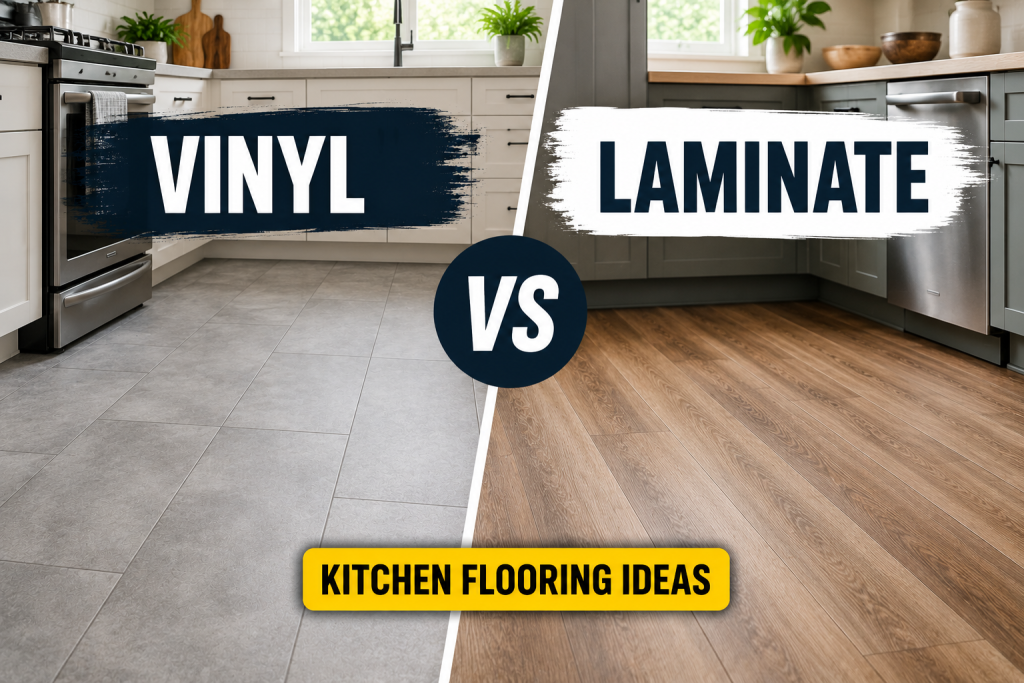
Laminate flooring can still be used in kitchens, but it requires more caution. While some modern laminate products offer improved water resistance, prolonged exposure to moisture can still cause swelling or edge damage. For this reason, laminate is typically better suited to kitchen-adjacent dining areas rather than direct cooking zones. Overall, vinyl generally provides a safer and more practical solution for kitchen environments in most US homes.
Where Vinyl Wins vs Where Laminate Wins
Understanding where vinyl wins vs where laminate wins is the most practical way to finalize a vinyl vs laminate flooring decision, especially for US homeowners planning room-by-room renovations. Vinyl flooring clearly wins in moisture-prone areas. Bathrooms, kitchens, laundry rooms, and basements are all better suited for vinyl because of its waterproof or highly water-resistant construction. It also performs well in homes with pets or children due to its resistance to spills and ease of cleaning. In humid regions, vinyl provides added protection against climate-related moisture issues that can affect flooring stability over time.
Laminate flooring, however, often wins in dry, controlled environments where appearance and surface hardness are priorities. Bedrooms, living rooms, and hallways benefit from laminate’s rigid structure and strong scratch resistance. It often delivers a more realistic hardwood feel underfoot in these spaces, making it a strong aesthetic choice for homeowners focused on design. In short, vinyl is the better functional performer in wet or variable conditions, while laminate excels in dry, design-focused living spaces.
Final Verdict
Choosing between vinyl vs laminate flooring ultimately comes down to your home’s conditions, lifestyle needs, and long-term expectations. Both are strong affordable flooring options, but they serve different priorities in US residential design. Vinyl flooring is the better overall choice for moisture-prone environments. If you need flooring for kitchens, bathrooms, basements, or laundry rooms, vinyl offers superior protection thanks to its waterproof construction. It also performs well in homes with pets or children, where spills and frequent cleaning are common.
In terms of versatility, vinyl is often the safer long-term investment. Laminate flooring is best suited for dry, stable environments where appearance and scratch resistance matter most. Bedrooms, living rooms, and hallways benefit from its rigid structure and realistic wood-look flooring aesthetic. It can also be a more cost-effective option in certain mid-range installations. In most modern US homes, a hybrid approach is common, using vinyl in wet areas and laminate in dry spaces. This strategy maximizes both durability and design efficiency.
FAQs About Vinyl vs Laminate Flooring
What is the main difference between vinyl vs laminate flooring?
The main difference in vinyl vs laminate flooring is moisture resistance, vinyl is waterproof or highly water-resistant, while laminate is more vulnerable to water damage.
Which is better for kitchens?
Vinyl is generally better for kitchens because it handles spills and humidity, making it ideal for kitchen flooring ideas in US homes.
Is laminate flooring cheaper than vinyl?
In many cases, laminate can be slightly cheaper upfront, making both options strong affordable flooring options depending on quality.
Which flooring is more durable?
Durability depends on use, vinyl is better for moisture and impact, while laminate is often better for surface scratch resistance.
Can vinyl look like wood flooring?
Yes, modern wood-look flooring technology allows vinyl to closely replicate hardwood appearance, especially in premium LVP products.
What is best for bathrooms?
Vinyl is the preferred choice because it is water-resistant or waterproof, unlike laminate.
Which flooring lasts longer?
Both can last many years with proper installation, but vinyl typically performs better in high-moisture environments.