


Tile vs Vinyl Flooring (Complete US Homeowner Comparison Guide)
Understanding tile vs vinyl flooring is essential for US homeowners planning a renovation or new installation, especially in kitchens, bathrooms, and high-traffic living areas. These two flooring options are among the most popular choices because they both offer durability, style flexibility, and water resistance, but they perform very differently in real-world conditions. Tile flooring is traditionally made from ceramic or porcelain and is known for its strength, long lifespan, and resistance to heat and moisture.
Vinyl flooring, especially luxury vinyl plank (LVP), is a synthetic material designed to mimic natural surfaces like wood or stone while offering comfort underfoot and easier installation. Choosing between them is not just about appearance, it involves considering cost, maintenance, durability, and how each material behaves in different rooms and climates. This guide breaks down the full luxury vinyl vs tile comparison to help homeowners confidently choose the right flooring for their space.
Luxury Vinyl vs Tile Overview
When comparing luxury vinyl vs tile, the biggest differences come down to material composition, installation method, and long-term performance. Both are widely used in US homes, but they serve slightly different homeowner needs depending on budget, comfort, and durability expectations. Tile flooring, typically ceramic or porcelain, is made from natural clay materials fired at high temperatures. This creates a hard, dense surface that is highly resistant to heat, scratches, and moisture. It is commonly used in bathrooms, kitchens, and entryways where durability is a priority.
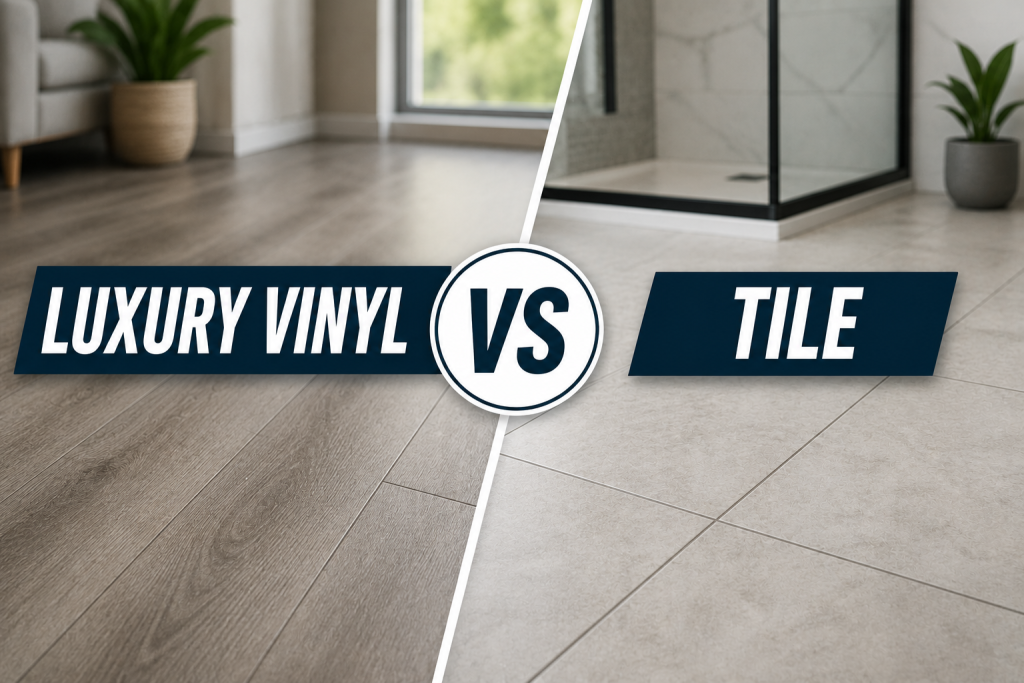
Luxury vinyl flooring, on the other hand, is a synthetic layered product designed to replicate the look of wood or stone. It is softer underfoot, quieter, and generally easier to install, often featuring click-lock systems that reduce labor complexity. In terms of usage, tile is often chosen for long-term structural durability, while vinyl is favored for comfort, affordability, and faster installation. Both play strong roles in modern kitchen flooring ideas and residential upgrades.
Waterproof Flooring Comparison
A waterproof flooring comparison between tile and vinyl is one of the most important factors for homeowners choosing between the two. Both options are widely used in US homes for moisture-prone areas like bathrooms, kitchens, and basements, but they handle water differently in structure and long-term performance. Tile flooring, especially porcelain, offers excellent water resistance because it is dense and non-porous. Water does not penetrate the tile surface itself, making it a reliable choice for long-term wet-area installations. However, grout lines between tiles can absorb moisture if not properly sealed and maintained.
Luxury vinyl flooring is fully waterproof in most modern products, meaning water cannot pass through the planks themselves. This makes it highly effective for spill-prone areas and lower-level installations where moisture control is a concern. In real-world use, tile performs better in extreme heat and long-term durability, while vinyl offers superior ease of installation and consistent waterproof performance across the entire surface.
Kitchen Flooring Ideas – Tile vs Vinyl Flooring
When exploring kitchen flooring ideas, the choice between tile and vinyl often comes down to durability needs, comfort, and design goals. Both materials are widely used in US kitchens, but they offer different advantages depending on how the space is used. Tile flooring is a popular choice in kitchens because it handles heat, spills, and heavy foot traffic extremely well. Porcelain tile in particular is highly resistant to stains and scratches, making it ideal for busy cooking environments. It also offers a premium, long-lasting look that can increase home value.
Luxury vinyl flooring, however, has gained popularity in modern kitchen designs due to its comfort and ease of installation. It feels softer underfoot, reduces noise, and is easier to replace or repair compared to tile. It also provides a wide range of wood-look and stone-look designs at a lower cost. In the tile vs vinyl flooring debate for kitchens, tile leads in durability, while vinyl wins in comfort and affordability.
Bathroom Flooring Comparison
A bathroom flooring comparison between tile and vinyl is essential because bathrooms are one of the most moisture-heavy spaces in any US home. Both materials are commonly used, but they perform differently when exposed to constant humidity, water splashes, and temperature changes. Tile flooring, especially porcelain, is widely considered the gold standard for bathrooms in the tile vs vinyl flooring debate. It is highly resistant to water, heat, and long-term wear. Its solid surface makes it ideal for showers, bathroom floors, and high-moisture zones where durability and hygiene are priorities. However, grout lines must be properly sealed and maintained to prevent moisture buildup.
Luxury vinyl flooring offers a softer, warmer surface that many homeowners prefer in colder climates. It is fully waterproof in most modern versions, making it a practical alternative for bathrooms where comfort and fast installation are important. It also reduces slipping risk compared to some glossy tile finishes. Overall, tile is often chosen for longevity, while vinyl is preferred for comfort and ease of installation.
Affordable Flooring Options Breakdown
When comparing affordable flooring options, both tile and vinyl can fit different budget levels, but they achieve affordability in very different ways. In the tile vs vinyl flooring decision, cost often becomes the most influential factor for US homeowners planning renovations. Luxury vinyl flooring is generally the more budget-friendly option upfront. It has lower material costs and significantly easier installation, especially with click-lock systems that can reduce or eliminate professional labor. This makes vinyl attractive for large projects or full-home flooring updates where keeping costs low is a priority.
Tile flooring, especially ceramic, can also be relatively affordable in terms of materials, but installation costs are usually higher due to the need for precise cutting, leveling, adhesive application, and grouting. Porcelain tile increases both material and labor costs further, but it offers stronger long-term durability. While vinyl is cheaper initially, tile may provide better long-term value due to its lifespan, especially in high-traffic or moisture-prone areas.
Tile Flooring Pros and Cons
Understanding the tile flooring pros and cons is essential when evaluating tile vs vinyl flooring, especially for US homeowners balancing durability, cost, and long-term maintenance. On the positive side, tile flooring is extremely durable and resistant to heat, scratches, and moisture. Porcelain tile in particular performs exceptionally well in high-traffic areas and can last for decades when properly installed. It also offers strong design flexibility, making it a popular choice in kitchens, bathrooms, and entryways where both aesthetics and performance matter.
However, tile also has drawbacks. It is harder underfoot, which can make it less comfortable for long standing periods. Installation is more complex and expensive compared to vinyl, requiring skilled labor and careful subfloor preparation. Additionally, grout lines require regular maintenance to prevent staining and moisture buildup. In the overall tile vs vinyl flooring comparison, tile leads in durability and longevity, while vinyl offers advantages in comfort, cost efficiency, and easier installation.
Vinyl Flooring Durability Explained
Understanding vinyl flooring durability is key when comparing tile vs vinyl flooring, especially for homeowners who want a balance of performance, comfort, and affordability. Modern luxury vinyl flooring (LVP and LVT) has improved significantly in recent years, making it a strong competitor to traditional tile in many US homes. Vinyl flooring is designed with multiple layers, including a protective wear layer that resists scratches, stains, and daily wear. It performs well in high-traffic areas and is especially popular in busy households due to its ability to handle spills and moisture without damage. Most modern luxury vinyl products are fully waterproof, making them suitable for kitchens, bathrooms, and basements.
However, vinyl is generally less durable than tile over the long term. It can be more susceptible to dents from heavy furniture and may show wear sooner in extremely high-traffic environments. Unlike tile, it also has a shorter lifespan and may need replacement sooner depending on usage. In the tile vs vinyl flooring debate, vinyl wins in comfort and practicality, while tile still leads in long-term structural durability.
Where Tile Performs Better vs Where Vinyl Wins
Choosing between tile vs vinyl flooring becomes much easier when you look at real-world room performance rather than general features. Each material has clear strengths depending on where it is installed in US homes. Tile performs best in areas that demand long-term durability and resistance to heat and moisture. This includes bathrooms, kitchen floors, entryways, and mudrooms. Porcelain tile, in particular, is ideal for spaces exposed to heavy foot traffic, spills, and temperature changes. It also adds strong resale value due to its premium, permanent finish.
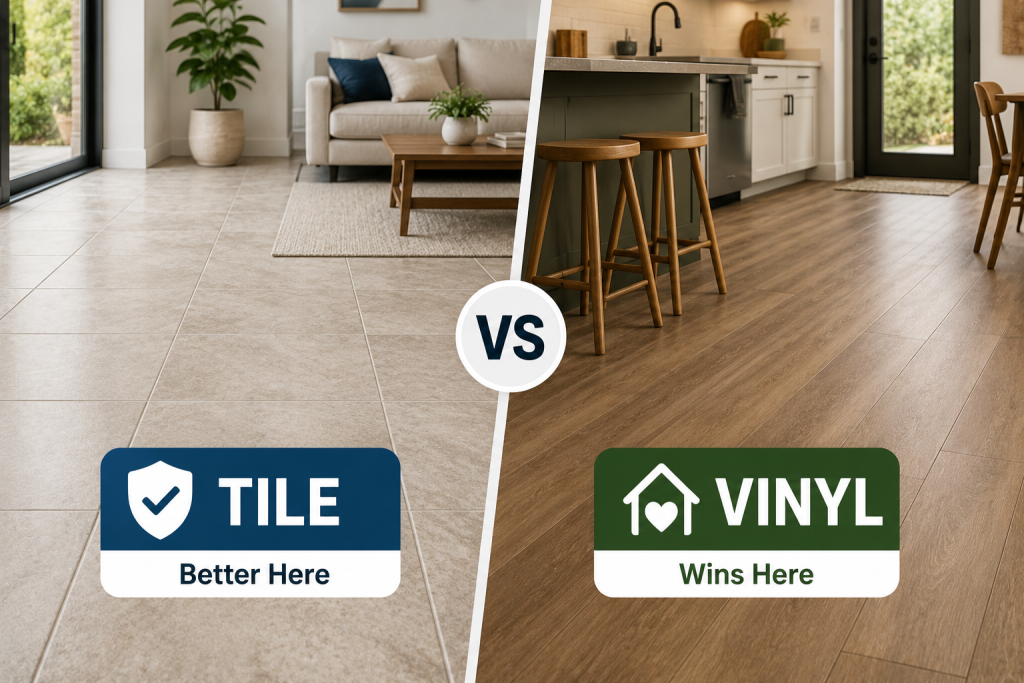
Vinyl flooring, on the other hand, performs better in areas where comfort and flexibility matter more than extreme durability. It is commonly used in bedrooms, basements, and family living areas because it feels softer underfoot and reduces noise. Its waterproof nature also makes it suitable for kitchens and bathrooms, especially in budget-focused renovations. In most modern US homes, homeowners often use a hybrid approach, tile in high-performance zones and vinyl in comfort-focused spaces.
Final Verdict
The final decision in the tile vs vinyl flooring comparison depends on your priorities: durability, comfort, budget, and long-term value. Both options are strong performers in US homes, but they serve different homeowner needs. Tile flooring is the better choice if you want maximum durability and long-term performance. It handles heat, moisture, and heavy traffic extremely well, making it ideal for bathrooms, kitchens, and entryways. In the long run, tile often adds more perceived value to a home due to its permanent, high-end finish.
Vinyl flooring is the better option if you prioritize comfort, affordability, and ease of installation. It is softer underfoot, quieter, and generally cheaper to install, making it ideal for bedrooms, basements, and budget-friendly renovations. Modern luxury vinyl also performs well in moisture-prone areas, narrowing the gap in functionality. Ultimately, many homeowners choose a blended approach, tile for durability-focused zones and vinyl for comfort-driven spaces, to get the best of both worlds.
FAQs
What is the main difference between tile vs vinyl flooring?
The main difference in tile vs vinyl flooring is material and durability, tile is rigid ceramic or porcelain, while vinyl is a flexible synthetic flooring material.
Which is more waterproof: tile or vinyl?
Both perform well, but modern vinyl is fully waterproof, while tile is water-resistant but depends on sealed grout lines.
Is tile more durable than vinyl flooring?
Yes, tile is generally more durable and longer-lasting, especially porcelain, making it ideal for high-traffic areas.
Which is better for kitchens: tile or vinyl?
For kitchen flooring ideas, tile offers better heat and scratch resistance, while vinyl provides comfort and easier installation.
Which flooring is more affordable?
Vinyl is usually more affordable upfront, making it a top choice for affordable flooring options in budget renovations.
What about bathroom flooring comparison?
In a bathroom flooring comparison, tile is often preferred for longevity, while vinyl is chosen for warmth and comfort.
How long does vinyl flooring last compared to tile?
vinyl flooring durability is good but shorter than tile; tile can last decades, while vinyl may need replacement sooner.