


Types of Tile Flooring Explained (Complete US Guide 2026)
Understanding the types of tile flooring is essential for US homeowners planning renovations, especially in kitchens, bathrooms, and high-traffic living spaces. Tile flooring is not a single material, it includes several categories, each with different performance levels, aesthetics, and cost structures. The most common types include ceramic, porcelain, natural stone, marble, mosaic, and terracotta tiles. Each option serves a different purpose depending on durability needs, moisture exposure, and design preferences.
For example, porcelain is known for strength and water resistance, while natural stone offers a more premium, organic appearance. Choosing the right tile is not only about style, it also affects long-term maintenance, installation cost, and overall home value. Climate, room function, and daily usage all play a role in selecting the best option. This guide breaks down the most important tile flooring styles so homeowners can confidently choose the right material for their space.
Ceramic Floor Tile Overview
Ceramic floor tile is one of the most widely used options in US residential construction due to its affordability, versatility, and ease of installation. In the broader types of tile flooring category, ceramic is often considered the entry-level choice for homeowners looking to balance cost and design flexibility. Made from natural clay and fired at lower temperatures, ceramic tile is slightly softer and more porous than porcelain. This makes it easier to cut and install, which helps reduce labor costs and overall project complexity. It also comes in a wide range of colors, patterns, and finishes, making it suitable for many tile flooring styles, from traditional to modern interiors.

Ceramic performs well in low to moderate traffic areas such as guest bathrooms, laundry rooms, and decorative kitchen spaces. However, it is less resistant to moisture and heavy impact compared to denser materials, so proper sealing and maintenance are important for long-term performance. Overall, ceramic remains a practical and budget-friendly flooring option for many US homes.
Porcelain Floor Tile Explained
Porcelain floor tile is one of the strongest and most durable options within the types of tile flooring, widely used in US homes where long-term performance and moisture resistance are priorities. It is made from refined clay and fired at higher temperatures than ceramic, resulting in a denser, harder, and less porous material. This low porosity makes porcelain highly resistant to water absorption, stains, and daily wear. As a result, it is commonly used in bathrooms, kitchens, entryways, and even outdoor spaces where exposure to moisture and temperature changes is frequent.
Among all tile flooring styles, porcelain stands out for its ability to mimic natural materials like wood, marble, or stone while maintaining superior durability. It is also well-suited for high-traffic areas, making it a preferred choice for busy households. However, porcelain is more difficult to cut and install, which can increase labor costs compared to ceramic. Despite this, its long lifespan and low maintenance requirements often make it a strong long-term investment for homeowners.
Natural Stone Tile Flooring Options
Natural stone tile is a premium category within the types of tile flooring, valued in US homes for its organic beauty, unique patterns, and long-lasting durability. Unlike manufactured tiles, natural stone is quarried directly from the earth and cut into flooring pieces, meaning no two tiles are exactly alike. Common stone options include granite, slate, travertine, and limestone. Each type offers different levels of hardness, texture, and porosity, which directly affects performance in different areas of the home. For example, granite is highly durable and suitable for high-traffic spaces, while travertine offers a softer, more rustic appearance often used in luxury interiors.
In terms of tile flooring styles, natural stone is often chosen for upscale kitchens, bathrooms, and entryways where homeowners want a high-end, timeless look. However, it typically requires sealing to protect against moisture and staining, especially in wet areas. While more expensive than ceramic or porcelain, natural stone provides unmatched visual depth and long-term aesthetic value when properly maintained.
Marble Flooring – Luxury Tile Option
Marble flooring is one of the most luxurious choices within the types of tile flooring, widely used in high-end US homes where aesthetics and premium design are top priorities. Known for its natural veining and polished surface, marble creates a sophisticated, elegant look that elevates interior spaces instantly. As part of advanced tile flooring styles, marble is commonly installed in entryways, bathrooms, formal living areas, and luxury kitchens. It offers a timeless appearance that can significantly enhance a home’s resale appeal, especially in upscale real estate markets.
However, marble is softer and more porous compared to porcelain or granite, making it more susceptible to scratches, etching, and staining. It requires regular sealing and careful maintenance to preserve its appearance over time, particularly in moisture-prone environments. Despite its maintenance needs, marble remains a top-tier flooring option for homeowners seeking a high-end, classic design statement. Its natural variation ensures each installation is unique, adding strong visual character to any space.
Mosaic Tile Flooring Styles
Mosaic tile flooring is a highly decorative category within the types of tile flooring, known for its small tile pieces arranged in patterns, grids, or artistic designs. In US homes, mosaic tiles are often used to add visual interest, texture, and customization to both floors and accent areas. Mosaic tiles are commonly made from ceramic, porcelain, glass, or natural stone, giving homeowners flexibility across different budgets and design goals. Because of their small size, they are especially useful for creating detailed tile flooring styles such as geometric patterns, borders, or custom inlays.
In residential applications, mosaic flooring is frequently installed in bathrooms, shower floors, kitchen backsplashes (in some cases extending to floors), and entryway accents. One of its key advantages is improved slip resistance due to the higher number of grout lines, which adds traction in wet areas. However, mosaic installation can be more labor-intensive, increasing overall cost. Maintenance may also require more attention due to the greater amount of grout surface compared to larger tile formats.
Terracotta Floor Tile Characteristics
Terracotta floor tile is a traditional and earthy option within the types of tile flooring, widely recognized for its warm tones and rustic appearance. In US homes, it is often used to create Mediterranean, Southwestern, or farmhouse-style interiors where natural textures and color warmth are desired. Terracotta is made from natural clay that is fired at relatively low temperatures, resulting in a softer and more porous material compared to porcelain or granite. This gives it a distinctive handcrafted look but also means it requires more maintenance to protect against moisture and staining.
In terms of tile flooring styles, terracotta is commonly used in kitchens, patios, sunrooms, and rustic living spaces. It performs best in dry or semi-dry environments and is less suitable for high-moisture areas unless properly sealed and maintained. One of its key advantages is its natural aging process, which can enhance its character over time. However, without proper sealing, it can absorb water and become vulnerable to damage. Terracotta remains a strong design-focused choice for homeowners prioritizing warmth and traditional aesthetics.
Types of Tile Flooring Styles by Room (US Homes)
Choosing among the types of tile flooring becomes much easier when you match materials to specific rooms and real-life usage. In US homes, each space has different demands for moisture resistance, durability, and design impact, which directly influences the best tile flooring styles to use. For bathrooms, porcelain and mosaic tiles are the most common choices due to their strong water resistance and slip-resistant options. These materials perform well in wet environments and handle humidity changes effectively. In kitchens, porcelain and ceramic tiles are widely used because they balance durability with design flexibility and are easy to clean after spills and cooking activity.
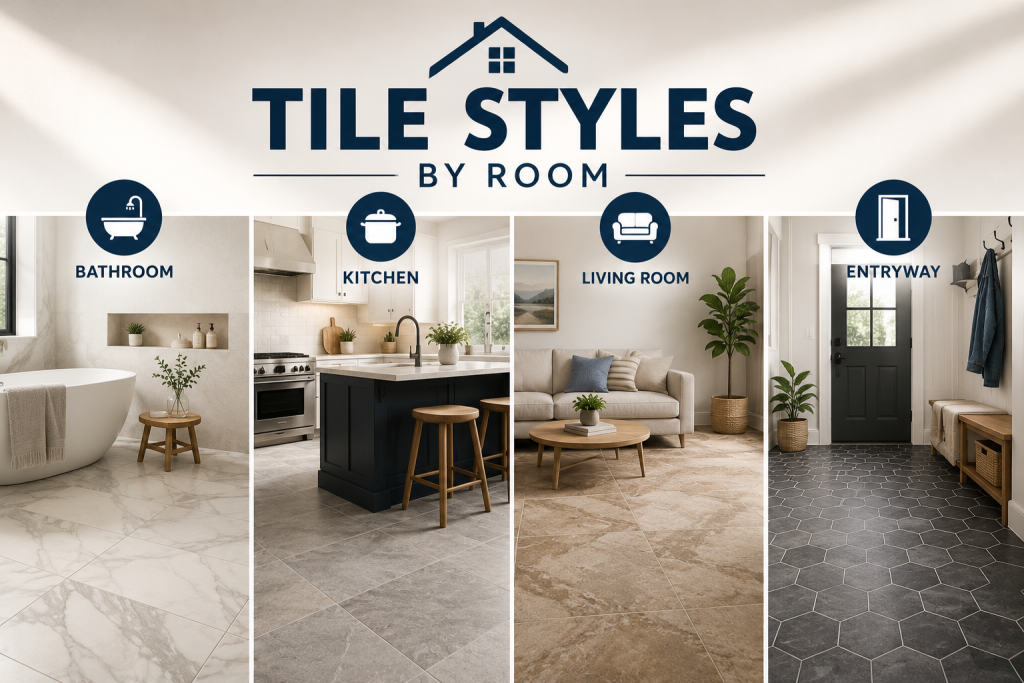
For living rooms and entryways, natural stone and porcelain tiles are preferred for their durability and high-end appearance. These areas experience heavier foot traffic, so stronger materials help maintain long-term performance. Terracotta is often used in sunrooms or rustic-style spaces where aesthetics matter more than heavy-duty resistance. Matching tile type to room function ensures better performance, lower maintenance, and longer flooring lifespan.
Durability, Cost, and Maintenance Comparison
When evaluating the types of tile flooring, three major factors determine the best choice for US homeowners: durability, cost, and maintenance. Each tile type performs differently across these categories, making the selection process highly dependent on budget and intended use. In terms of durability, porcelain leads the category due to its dense structure and resistance to moisture, scratches, and heavy foot traffic. Natural stone also offers strong longevity but varies depending on the specific material, while ceramic and terracotta are generally softer and more prone to wear over time.
From a cost perspective, ceramic is typically the most affordable option, making it ideal for budget-friendly renovations. Porcelain sits in the mid-to-high range depending on quality, while marble and natural stone are the most expensive due to sourcing and installation complexity. Maintenance also varies significantly. Porcelain is the easiest to maintain, requiring minimal upkeep, while natural stone and marble often need regular sealing. Terracotta requires careful maintenance to preserve its surface and prevent moisture damage.
Final Verdict
Choosing the best option among the types of tile flooring ultimately depends on your home’s needs, budget, and design goals. There is no single “best” material for every situation, but there are clear winners for specific use cases in US homes. For maximum durability and low maintenance, porcelain floor tile is the strongest overall choice. It performs exceptionally well in kitchens, bathrooms, and high-traffic areas where moisture resistance and long-term strength are essential. It is often the most balanced option for modern households.
For budget-conscious projects, ceramic floor tile remains the most practical choice. It offers strong design flexibility and lower installation costs, making it ideal for secondary rooms or lower-traffic areas. For luxury and visual impact, marble flooring and natural stone tile deliver unmatched aesthetic value but require more maintenance and higher investment. Meanwhile, mosaic tile flooring and terracotta floor tile are best suited for design-focused or specialty spaces. In most US homes, a mixed approach, combining different tile types by room, offers the best balance of cost, performance, and style.
FAQs
What are the main types of tile flooring?
The main types of tile flooring include ceramic, porcelain, natural stone, marble, mosaic, and terracotta tiles, each with different performance levels and uses.
Which is the most durable tile flooring type?
Porcelain floor tile is generally the most durable due to its high density and resistance to moisture, scratches, and heavy traffic.
What is the most affordable tile flooring option?
Ceramic floor tile is usually the most affordable option, making it popular for budget-friendly home renovations.
Where should natural stone tile be used?
Natural stone tile works best in entryways, kitchens, and living spaces where homeowners want a premium, natural look.
Is marble flooring practical for bathrooms?
Marble flooring can be used in bathrooms, but it requires regular sealing and maintenance to prevent staining and moisture damage.
What are mosaic tile flooring styles used for?
Mosaic tile flooring is commonly used for decorative designs, bathroom floors, and accent areas due to its texture and slip resistance.
Which tile flooring styles are best for kitchens?
For kitchens, porcelain and ceramic are the most practical tile flooring styles because they balance durability, cost, and easy cleaning.